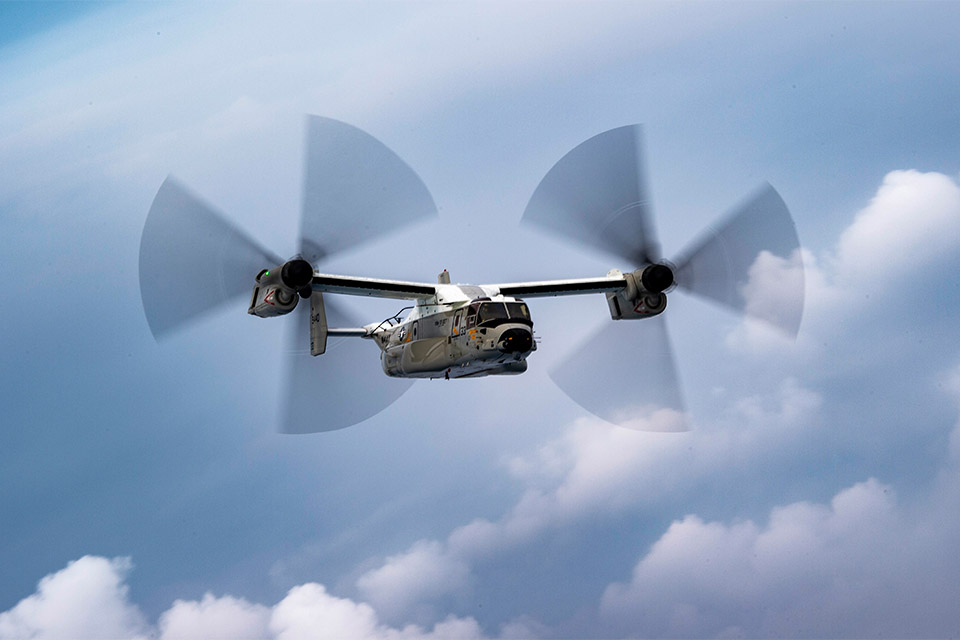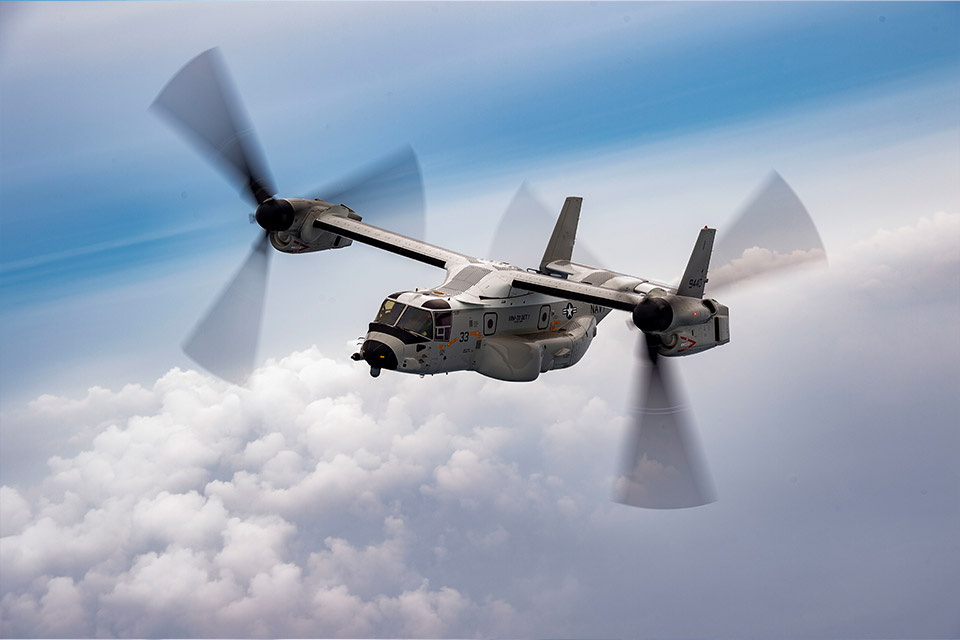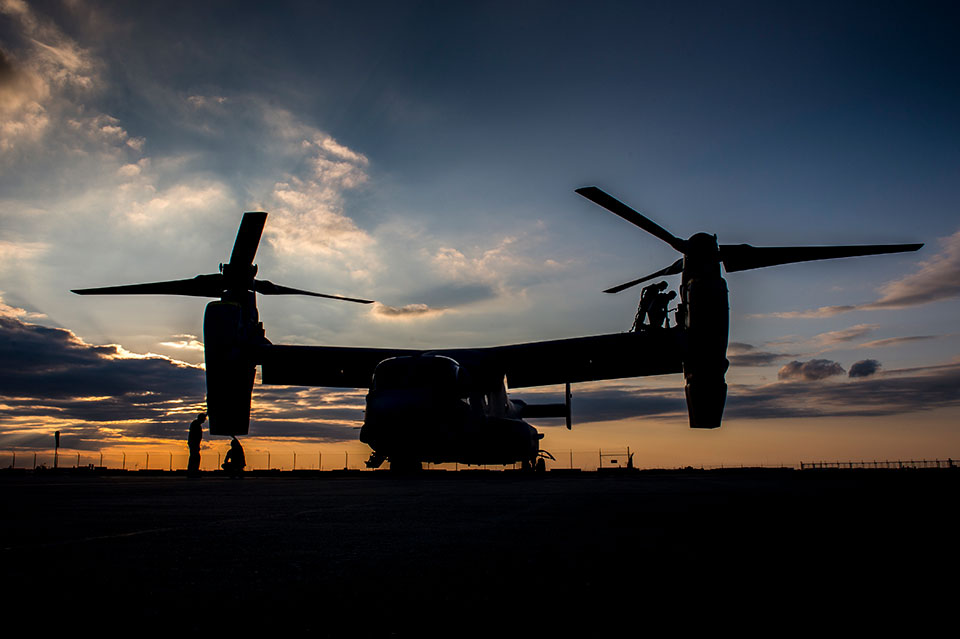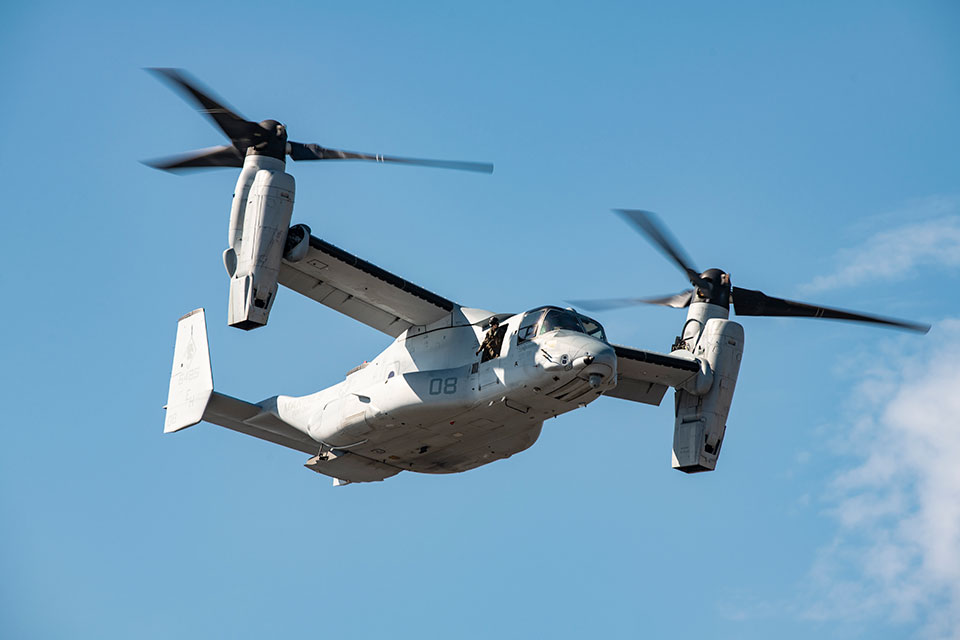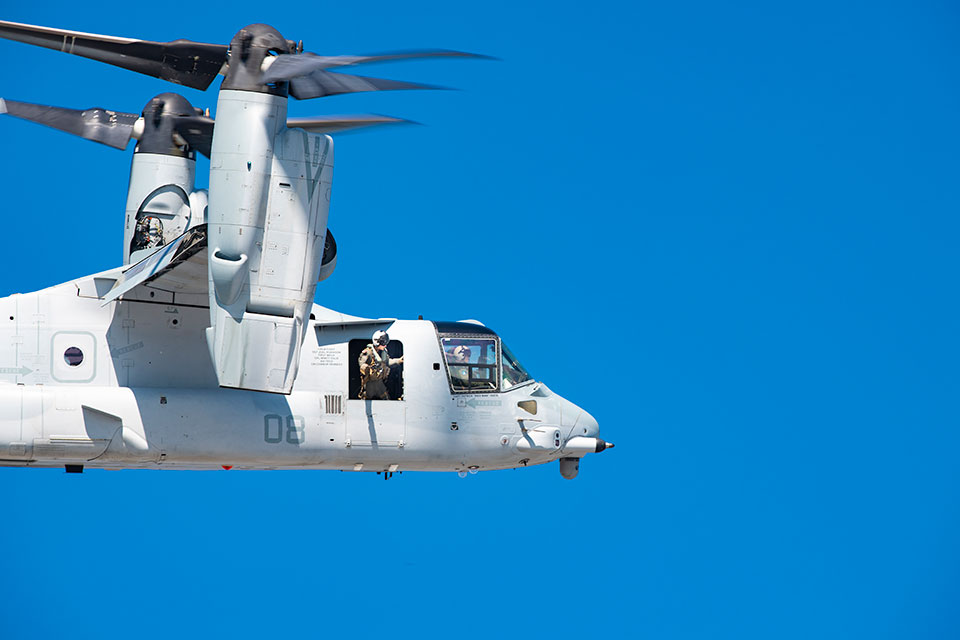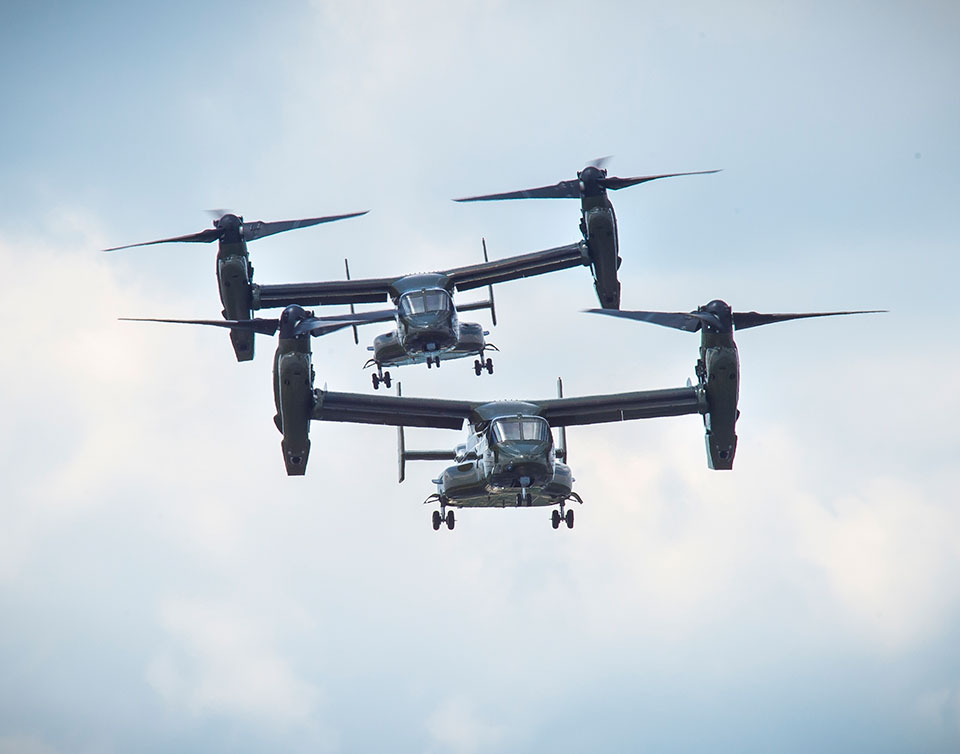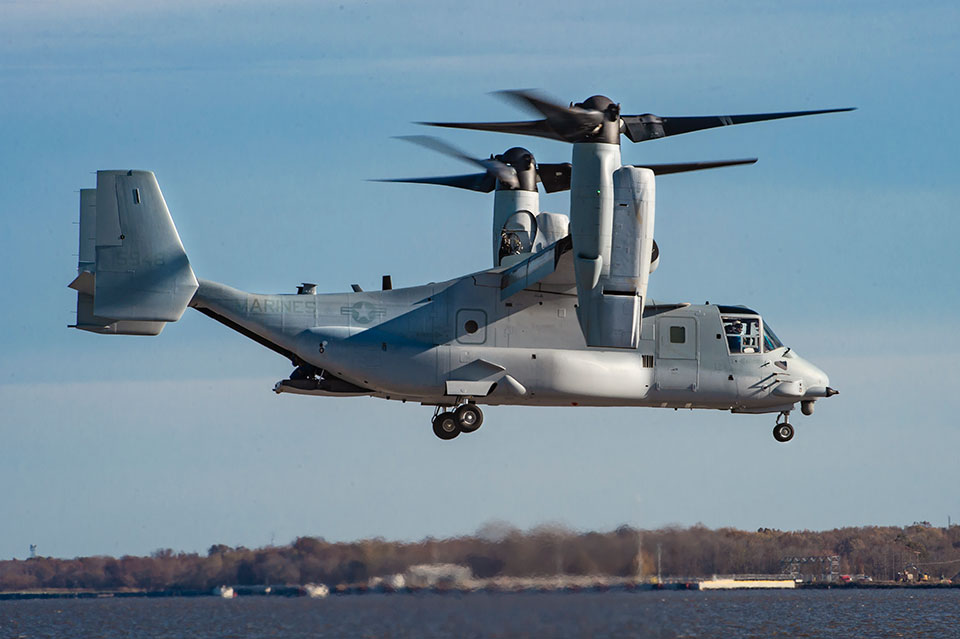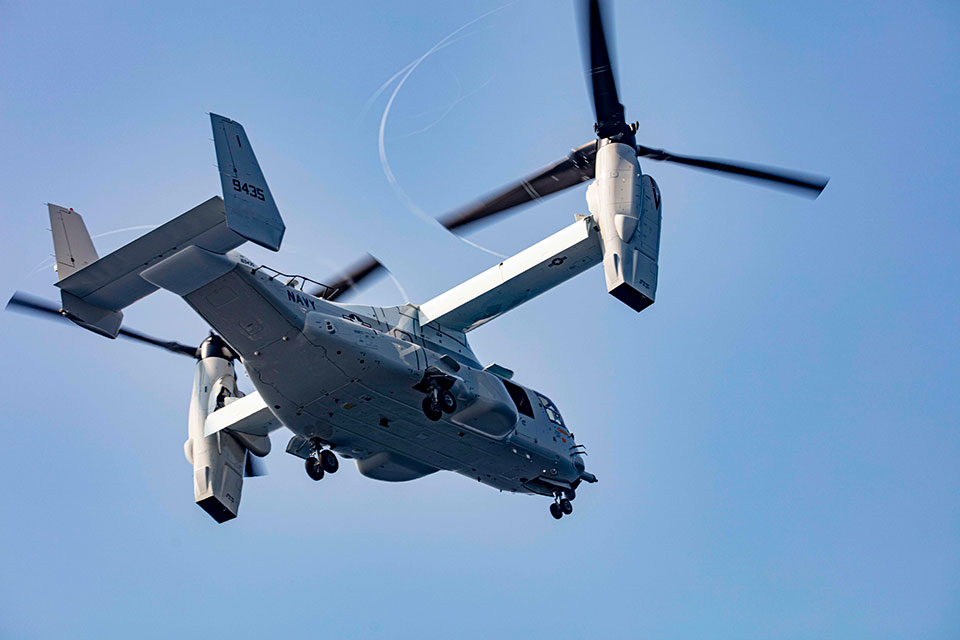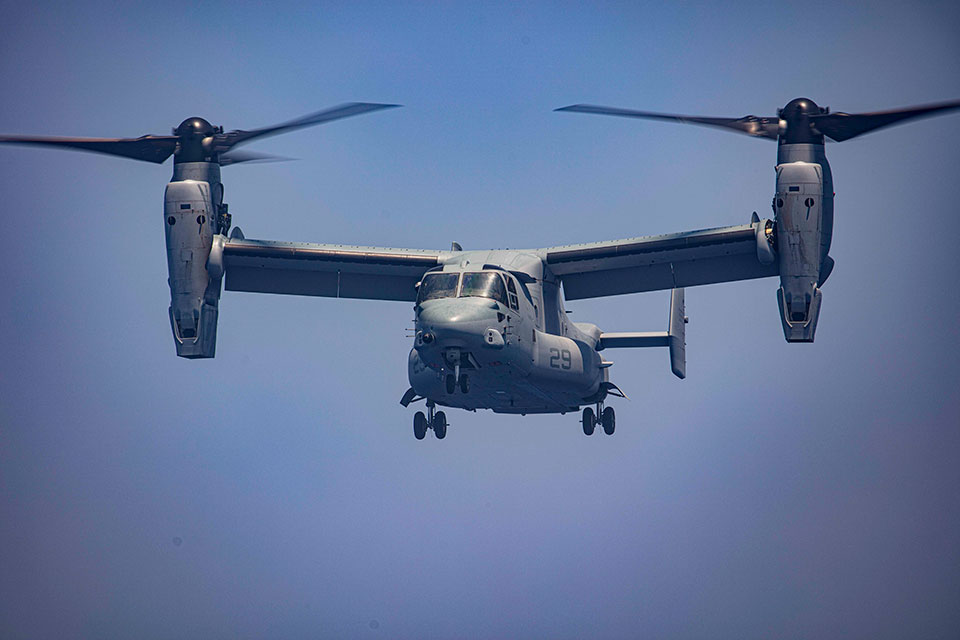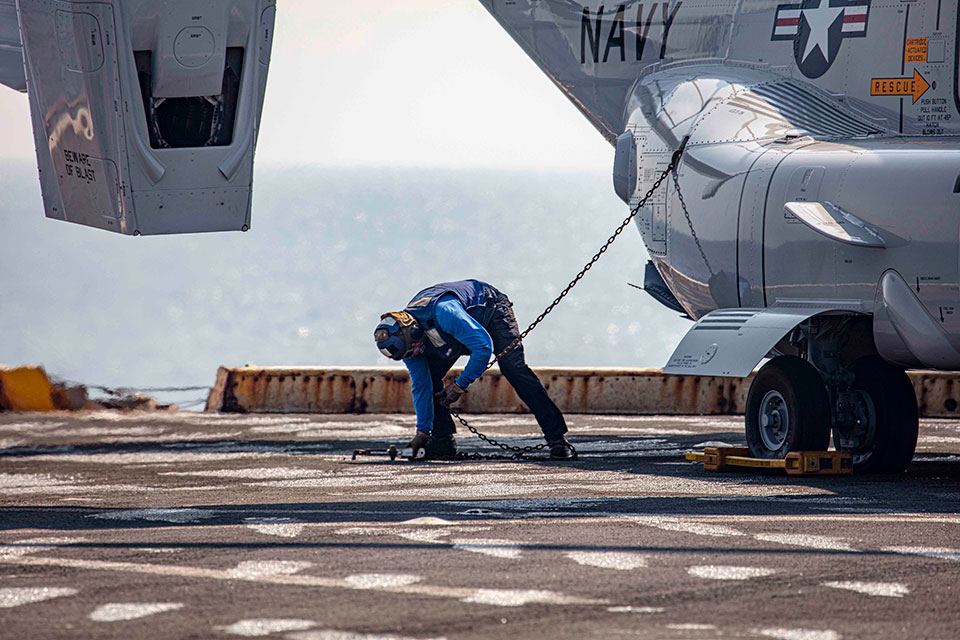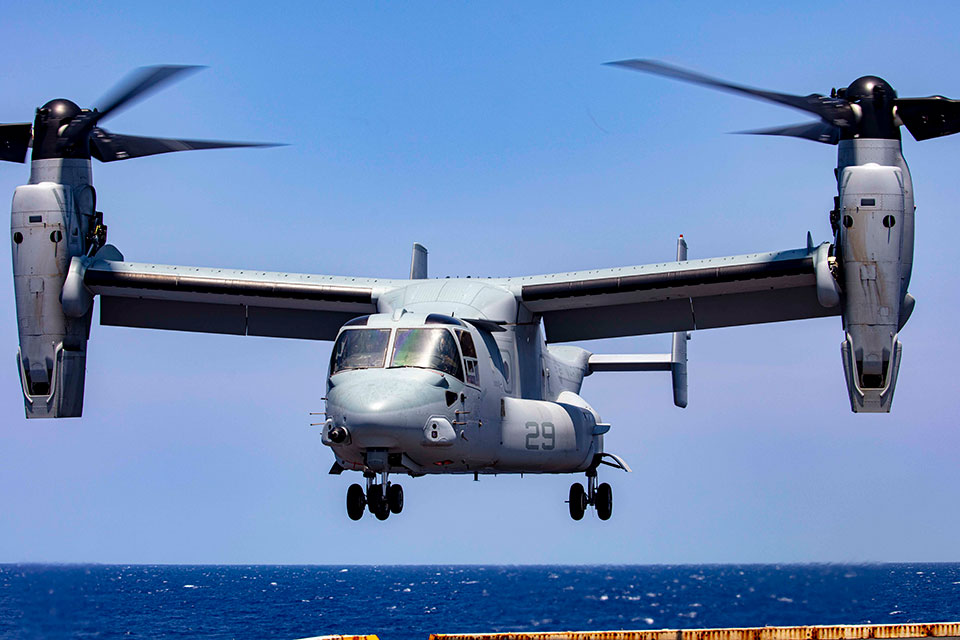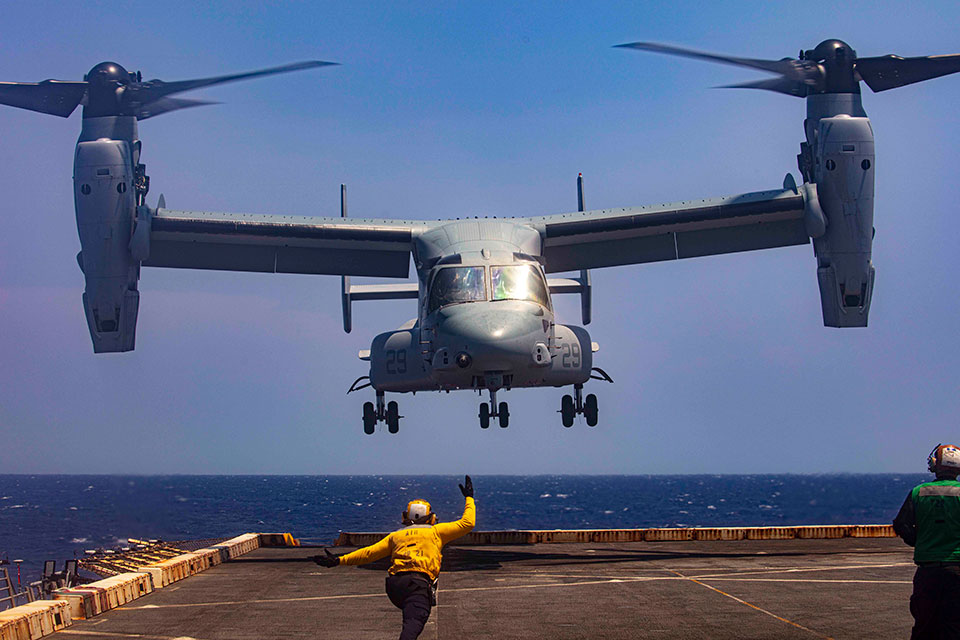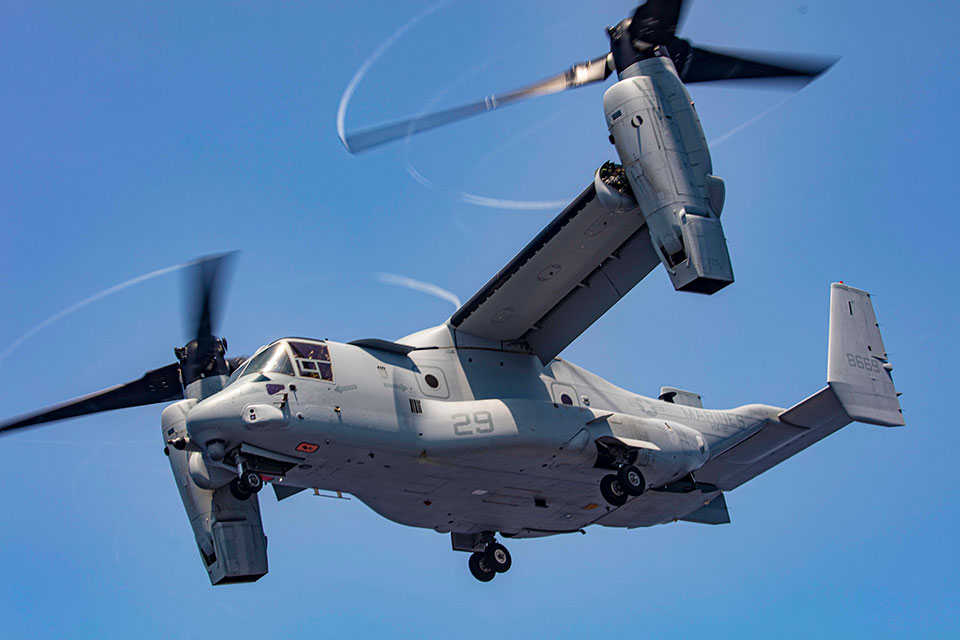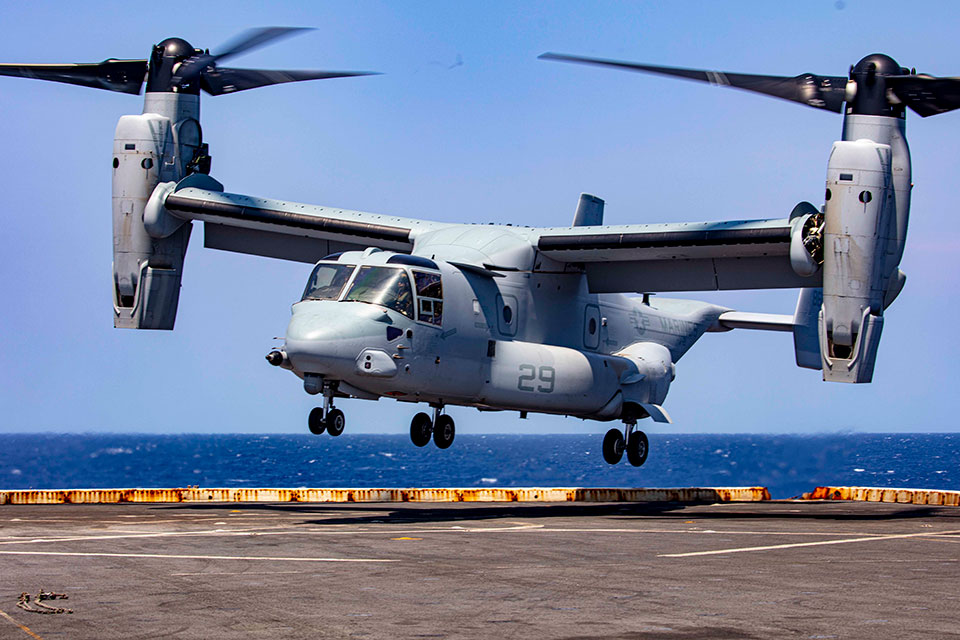

If you believe Colonel Gregory L. Masiello and some of the Air Force and Marine Corps pilots who have flown the V-22 Osprey recently, you can safely say that after a tumultuous almost two decades in existence, the controversial aircraft's program has reached a safe cruising altitude.
CAMP LEATHERNECK, Afghanistan – The MV-22 Osprey, after more than 20 years of development, testing, failure and success, is wrapping up its first combat deployment in Afghanistan, with solid proof it is ready to replace the Corps’ aging fleet of CH-46 Sea Knight helicopters as the maritime forces’ go-to medium-lift aircraft.
While the V-22 Osprey has seen political, financial and developmental battles over its decades old history, proponents of the tiltrotor aircraft say it’s day has come as squadrons on the West Coast are beginning to be outfit with it.
The V-22 Osprey’s range and speed, the twin talents of the aircraft most heavily promoted by the U.S. Marine Corps, are revealing themselves in Afghanistan, as readiness and reliability numbers begin to climb steadily throughout the fleet.
CAMP LEATHERNECK, Afghanistan — Three MV-22 Ospreys from Marine Medium Tiltrotor Squadron 261, Marine Aircraft Group 40, Marine Expeditionary Brigade-Afghanistan, transported a raid force into an area of Marjah in support of Operation Moshtarak, Feb. 19.
We were initially slated to join a marine expeditionary unit but found out in January/February 2008 that we weren’t doing that but were going to Iraq instead, so we had to re-plan our pre-deployment training to tailor it towards here. We went through all the lessons learned and started corresponding with the squadrons out here at the time to find out what we needed to do to get ready.
The CV-22 Osprey, the world's first tilt-rotor aircraft, supported Iraqi Special Operations Forces (ISOF) during a recent early-morning mission in the Iraqi capital.
The US Marine Corps’ MV-22 Ospreys should now be considered regular aircraft of the line. The ending of VMM-266’s deployment out of Al Asad Air Base in Al Anbar province in western Iraq brings to an end the operational deployment of three tiltrotor squadrons who have flown for 18 consecutive months without mishap from this sprawling centre of aviation activity. The first to deploy was VMM-263 ‘Thunder Chickens’, immediately followed by VMM-162 ‘Golden Eagles’.
After a long wait, the joint force is growing accustomed to using the V-22 Osprey tilt-rotor in operational missions. However, it will probably take a good deal longer before Osprey missions become routine, because no military force has ever before possessed a combat aircraft that combines the speed and range of a fixed-wing plane with the vertical agility of a helicopter.
Local Haitians look up to the sky while a thundering sound grows louder as a Marine helicopter appears over top a field of palm trees and thick vegetation, within no time the Marines are on the deck.
Few military missions are more dangerous than combat search and rescue (CSAR). Warfighters and noncombatants stranded in remote locations must be found and retrieved, often while enemies are doing their best to shoot down the rescuers. Sometimes those being rescued are badly wounded, and must receive life-saving first aid even before reaching hospitals.
In another history-making moment for Marine Expeditionary Brigade-Afghanistan, the first MV-22B Ospreys entered the Task Force Leatherneck area of operations on Nov. 6, 2009, alighting in three waves at Camp Bastion Airfield.
For the first time ever, a detachment of V-22 Ospreys deployed from its home base in the United States, flying across the Atlantic Ocean to an exercise in northern Africa.
The 22nd Marine Expeditionary Unit made history by using two MV-22B Ospreys, assigned to Marine Medium Tiltrotor Squadron 263, to conduct a ship-to-shore emergency medical evacuation of a Sailor from USS Bataan in June 2009. It was the first time the aircraft had been used to conduct such a mission from the sea.
Accessing remote villages in the mountainous areas of Honduras poses problems for many nongovernmental agencies when they try to deliver life-saving supplies to villages along trails not accessible by conventional vehicles. Except, of course, when the CV-22 Osprey, and its unique capabilities, just so happen to be in the area already.
The V-22 Osprey has had to work hard to earn the trust and respect of the USMC and those who will end up working alongside it. Tony Osborne visited the home of the Osprey at Marine Corps Air Station New River in North Carolina, USA, to find out why.
The mystique of the V-22 Osprey is alluring.
Today our Fox News team was invited to climb aboard an incredible aviation invention known as the "Osprey" during Fleet Week celebration here in New York City.
The MV-22 Osprey, long touted by the Marines as an advanced, flexible, transformational and all-around "great piece of gear," didn’t do anything spectacular in a landing zone capability exercise at LZ 16 at the Robert E. Bush Naval Hospital here March 9.
Marine Medium Helicopter Squadron 161 will transition into a Marine Medium Tiltrotor Squadron, VMM-161, by January 2010 aboard the air station.
On Nov. 6, 2009, The 22nd Marine Expeditionary Unit flew 10 MV-22B Ospreys from multi-purpose amphibious assault ship USS Bataan (LHD 5) to Camp Bastion, Afghanistan, in support of Operation Enduring Freedom.
The 8th Special Operations Squadron took a human owner’s manual with them on their first operational deployment with the CV-22 Osprey. Boeing contractor Julius Banks preferred to call himself the “Maytag repairman” for an aircraft that gave him very little to do.
U.S. Naval Air Systems Command introduced about 30 people from 12 nations to the V-22 Osprey at a recent embassy day, Marine Corps Col. Greg Masiello, V-22 program manager, tells AVIATION WEEK.
Digital video is coming to the V-22. Under an advanced communications technology development initiated by Boeing Rotorcraft Systems, two U.S. Marine Corps MV-22 Ospreys made their debut in the U.S. Air Force-sponsored Joint Expeditionary Force Experiment 2010 (JEFX 10) in April at Nellis Air Force Base in Nevada, demonstrating high speed data transfer for combat operations.
On May 13 at Naval Air Warfare Center Patuxent River, Maryland, the first Block C modified MV-22 Osprey tiltrotor aircraft successfully completed its first test flight.
More than 20 years after its completed fuselage first left the Boeing Rotorcraft factory, MV-22 Osprey Aircraft 10 (A/C 10) returned to Ridley Park, Pennsylvania this week to begin the next stage in its pioneering life cycle.
This is the V-22 Osprey, the only aircraft in the world today that can take off and hover like a helicopter, then fly at speeds and altitudes like an airplane. In May, The Jerusalem Post was the guest of the US Marine Corps and received the rare opportunity to fly on this once extremely controversial aircraft.
MARINE CORPS AIR STATION MIRAMAR, Calif. — The MV-22 “Osprey’s” computerized avionics system is more advanced than that of its predecessor, the CH-46E “Sea Knight,” and the mechanics at Marine Medium Tiltrotor Squadron161 are finding it easier to maintain.
On July 1, Bell Helicopter took possession of a 176,072-square-foot expansion of the main assembly building at its Military Aircraft Assembly and Delivery Center in Amarillo, Texas.
The first MV-22 Containerized Flight Training Device was delivered to the U.S. Marines at Marine Corps Air Station, Miramar, Calif., in October 2009. The production team, led by Bell-Boeing, delivered the device to the customer with a 20 percent reduction in cycle time and the lowest cost to date for a V-22 flight simulator.
In September 2009, Bell Boeing received a contract from NAVAIR to upgrade the CV-22 Cabin Part Task Trainer (CPTT) with modifications including an Aircrew Flight Simulation (AFS) that deploys a fused reality system that fuses video images with virtual reality.
Accessing remote villages in the mountainous areas of Honduras poses problems for many nongovernmental agencies when they try to deliver life-saving supplies to villages along trails not accessible by conventional vehicles. Except, of course, when the CV-22 Osprey, and its unique capabilities, just so happen to be in the area already.