
Flight Test Journal http://www.boeing.com/commercial/777family/200LR/flight_test/ 777-200LR Flight Test Journal Copyright 2005 Thu, 22 Dec 2005 09:38:18 -0800 http://www.movabletype.org/?v=3.15 http://blogs.law.harvard.edu/tech/rss Thanks for riding with us Joe Kranak, Chief Engineer, Test and Validation, 747, 767, 777

Well, it's been quite a ride.

When we published the first entry for this journal back on May 20, we started by saying that "time flies." It certainly has. Flight testing the 777-200LR over the past few months has been both eventful and rewarding.

The Flight Test Program and this journal have both covered a lot of territory. And while our support of the test program presented a fairly typical challenge from a technical standpoint, we "broke new ground" with the publication of our journal. For the first time at Boeing, it provided the men and women who test and certify our products the opportunity to share their skill and enthusiasm for their profession directly with you. We hope that you found their stories of interest.

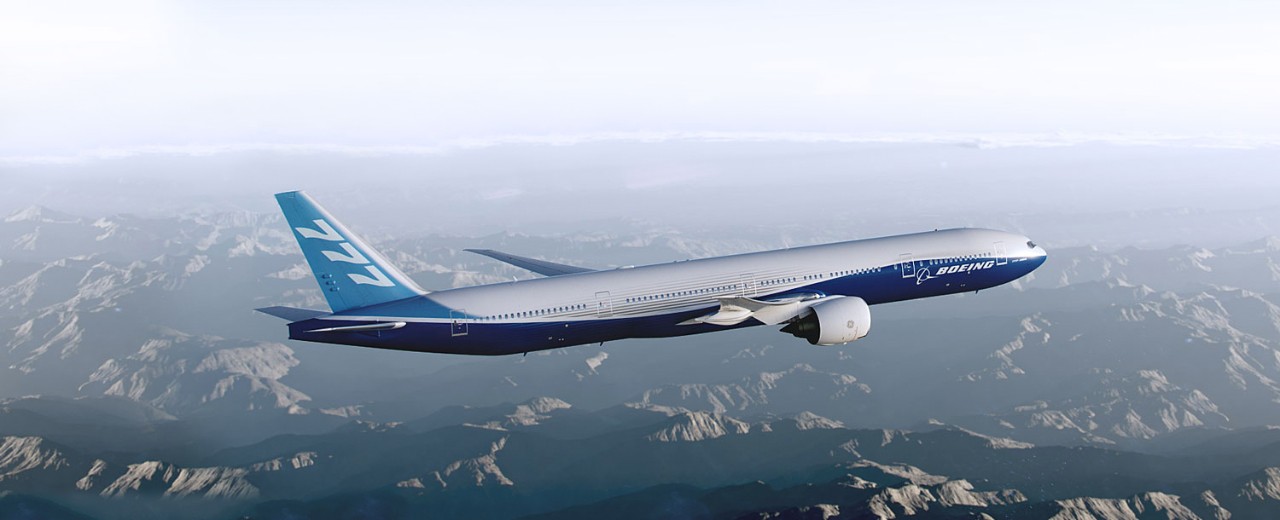
Boeing 777-200LR Worldliner Photo

The 777-200LR and this Flight Test Journal have covered a lot of territory during the past seven months. We hope you have enjoyed the ride.

The -200LR itself was also a major focus of our writings, and for good reason. Following its highly successful stop at the Paris Air Show and ensuing 24-city "Going the Distance" world tour, the Worldliner made headlines around the world by setting a world distance flight record of 11,664 nautical miles (21,601 kilometers) in 22 hours 42 minutes without refueling. From the terrific sendoff that the crew and passengers received in Hong Kong to the reception that was waiting in London - and the two sunrises in between - it is the type of memory that remains with one forever.

While conducting the -200LR Flight Test Program, we also supported the Quiet Technology Demonstrator-2 (QTD2) research testing as well as the certification testing of the 777-300ER Enhanced version, and its entry into commercial service. Our airline customers are already realizing the benefits of the 777-300ER enhancements, while it will take a little longer before the benefits of the technologies tested on the QTD2 are incorporated.

You may recall that we also pointed out some of the "turbulence" encountered along the way: uncooperative weather in California, a disruptive runway project at Boeing Field, a bird strike in Moses Lake that required repair, and having to wait until September to do our cross-wind autoland testing (and then having to commute between Iceland and Ireland to get it done because a movie crew had reserved all of the local accommodations).

In our view, the highs definitely outnumbered the lows. Some of the facts associated with what was accomplished include:

  • From first flight to last flight, the 777-200LR test program and World Tour consumed 423 flow days.
  • The two 777-200LRs in the test fleet accumulated 886 flight hours on 328 flights, and 318 ground hours of testing.
  • In addition, 27.8 miles of instrumentation wiring were fabricated and installed and 73 terabits (that's 73 followed by 12 zeros) of data were recorded and analyzed.
  • During the test program and associated World Tour and world-record flight, 33 cities were visited (many more than once).
  • An estimated 50,000 visitors took the opportunity to see our airplanes.
  • More than 70 authors helped produce about 50 entries for our journal.

So, with this entry, we are closing the final chapter of the 777-200LR Flight Test Journal. Since publication of this journal has been somewhat of an experiment, we'd like to ask you for your comments - what you liked and didn't like, where we hit the mark and where we missed it. We've spent the last seven months sharing our passion for airplanes with you. Now, it's your turn. Please share your thoughts with us at bcaflighttest@pss.boeing.com.

It has definitely been quite a ride, and we're glad you were able to come along.

]]>
http://www.boeing.com/commercial/777family/200LR/flight_test/archives/2005/12/thanks_for_ridi.html http://www.boeing.com/commercial/777family/200LR/flight_test/archives/2005/12/thanks_for_ridi.html Thu, 22 Dec 2005 09:38:18 -0800
Stamp of approval Tim Braxmeyer, Maintenance Planning/Quality Supervisor
John Malone, Flight Test Quality Supervisor

In the 777-200LR Flight Test Program, Quality Assurance was the group responsible for developing and verifying compliance to airplane inspection programs supporting both airplanes - WD001 and WD002. We tailored the maintenance and inspection to match the actual flight test operational environment for each airplane. For WD001, testing was intensive and aggressive, while the majority of the WD002 airplane test program was basically straight and level flight operations. These are the same type of maneuvers you'd expect in service, so our oversight didn't need to be as intensive.

WD001's testing was far more stringent and included the "work horse" type of systems and procedures, like with stability and control and auto-lands - the testing that can be pretty hard on the airplane. Tests are rated at different "risk levels" with the highest-risk tests performed off-site at remote locations, such as Edwards Air Force Base, located 100 miles north of Los Angeles, Calif. Many tests also can be weather and condition dependent, which requires traveling to remote areas, like Iceland for crosswinds or Australia for heat. Typically, we develop a thorough pre-flight, post-flight and servicing regiment that we put the airplanes through every night to prepare for the next day's test.

Quality management ensures that type-certified and developmental airplane parts used in flight test are operated in accordance with appropriate established standards. We operate the type-certified systems, parts and components much like an airline. We release the routine scheduled maintenance requirements and exercise unscheduled maintenance for events such as hard or overweight landings, engine chops, blown tires, brake fires, bird strikes or lightning strikes, just to name a few. We do a lot of tests for conditions that will rarely occur to an aircraft in service. For instance, the aircraft will take off at maximum gross weight and the crew will intentionally turn off an engine. The aircraft will prove that with an engine out in this condition it still has the ability to take off and climb.

Boeing 777-200LR Worldliner Photo

If you look at the big picture of the 777 program, there really isn't a break in quality involvement from one derivative to the next. In getting ready to flight test the -200LR, we started with lessons learned and all of our experience from past models. In this case, the last program was the -300ER. We are always asking the question, "How can we do things a little better?"

There is a big difference with quality management in a flight test environment compared to an airline's in-service fleet. We use cutting-edge technology everyday. For example, we'll discover there's a problem with a system under development, like if the nose-wheel doors are coming apart in flight. Quality works with manufacturing and engineering during the redesign and manufacturing stages to develop testing procedures that maintain the safe operation of the airplane. The engineering doesn't exist yet to explain the procedure; we have to work it out.

In flight test we want things to fail safely. This environment is where we test to define the parameters and ring out the aircraft problems before type certification. Engineering sets the performance parameters and standards and then develops the testing requirements needed to demonstrate the airplanes capabilities. Quality works with maintenance and engineering to complete the test and demonstrate final compliance.

It's extraordinary playing a part in the continued development of our products. To us, the wonderful part of our work is that the job description can change daily. It is a very fluid, dynamic environment that is so unique in the aviation world. We take a great deal of pride in testing a new model aircraft that symbolizes the talent of so many great minds working toward one goal. We know it's the best job there is at Boeing.

]]>
http://www.boeing.com/commercial/777family/200LR/flight_test/archives/2005/12/stamp_of_approv.html http://www.boeing.com/commercial/777family/200LR/flight_test/archives/2005/12/stamp_of_approv.html Tue, 20 Dec 2005 16:15:31 -0800
Where it all comes together George Trampus, 777 Flight Deck Crew Operations Model Focal

The flight deck is where all of the airplane information comes together and is displayed so the pilot can operate the airplane safely and efficiently. My group's main focus is the flight crew interface. We work with the pilots to generate the requirements for the flight deck and make sure all the crew interfaces are integrated. As model focal for the 777, I am the primary contact between the program, chief pilots and the Flight Crew Operations (Ops) Integration group. My primary responsibility is to facilitate communications and to act as the problem manager for specific issues.

On a brand new airplane model, Flight Crew Ops gets heavily involved early in the program to ensure that everything the pilot interfaces with meets basic 'human factor' requirements and maintains commonality between our models. For the -200LR, much of the basic design and functionality was determined by earlier 777 derivatives. There was new functionality in the Flight Master Computer and the addition of auxiliary fuel tanks in the cargo compartment. During flight test, my group identifies flight deck changes and ensures they get into the Flight Operations Manual. If new procedures are required, such as for the auxiliary fuel tank option, we help draft the procedures for normal and non-normal use. It's important to make sure the procedures are intuitive and simple from the pilots' perspective.

Boeing 777-200LR Flight Deck Photo

Much of the basic design and functionality for the 777-200LR flight deck (shown here) was determined by earlier 777 derivatives.

If new features are added to the pilot interface in the flight deck, we help develop prototypes in the engineering simulator for evaluation. Once procedures are evaluated, we send finalized requirements to avionics, where they are incorporated into the next avionics software load. The incremental software loads are validated in the simulator prior to being installed on the airplane.

Many people may not realize how important the flight simulator is to our work. The engineering simulator is used extensively for software development and for familiarizing Boeing and FAA pilots on new features and handling characteristics. At the start of flight test, we have the simulator updated for the new model; in this case the -200LR. We test new functionality and software in the simulator to make sure they're ready for pilot evaluations, which in turn determine if they're flight-worthy. The pilots use the simulator evaluations as a confidence test for how well the program is doing and how well we have integrated the new features into the flight deck.

Our biggest focus with integration testing in the engineering simulator is to ensure new problems don't slip in with the software upgrades. A lot of our time and effort is spent retesting existing functionality - or regression testing - along with any new functionality. Surprisingly we do tend to find problems that way. We try to be the pilots' eyes and ears and project ourselves into the way they think and fly airplanes. We'll take something they notice that doesn't feel or look right and try to isolate it on the simulator. The pilots' intuition is incredible. They'll get a funny feeling that something is wrong but they don't know what it is. They'll point us in the right direction and we troubleshoot and, low and behold, we validate there is a problem. We have learned not to discount their gut feelings.

Of all the 777 models, the -200LR was absolutely the sweetest airplane to work on; it has been almost effortless. The program came together quite well. We had a terrific team with some really great members. I can't help but think I have the greatest job in the company - I get to work one-on-one with the best test pilots in the world. We in Flight Deck Crew Operations have to pinch ourselves every once in a while to make sure it's not a dream.

]]>
http://www.boeing.com/commercial/777family/200LR/flight_test/archives/2005/12/where_it_all_co.html http://www.boeing.com/commercial/777family/200LR/flight_test/archives/2005/12/where_it_all_co.html Mon, 19 Dec 2005 15:47:56 -0800
'Refurbing' the Worldliner Andres Sanchez, Refurb Manufacturing Supervisor
Kirk Foster, Industrial Engineering Methods Analyst

There are many challenges to refurbishing a flight test airplane, and we are experiencing many of them right now. "Refurb" is the task of removing flight test equipment, reconditioning worn or damaged parts and installing customer-unique equipment. This includes the installation of seats, lavatories, galleys and painting the customer livery.

It sounds relatively simple, but it is not for a variety of reasons. A fact that few people realize is that it takes longer to refurbish a plane than it did to build it in the first place. It is kind of like the difference between building or remodeling a house. Remodeling is made more complicated because you have to deal with the structure that is already there.

Our number one hurdle is that we just don't do this often - a couple of planes every two or three years on average. At Boeing, we are good at building airplanes. We do it all the time - every day - and we do it efficiently. You just can't get efficient when you do something so rarely. A lot of information and knowledge is lost during the down times. We are making a real effort on this program to document issues and "lessons learned" in order to prepare for future refurb projects.

For the 777-200LR Worldliner program, we are basically refurbishing one plane at a time - WD001 first and WD002 after the first one is complete. WD001 has been in refurb for a little over a month now. We are working hand-in-hand with Flight Test as they continue to pull out wiring. Right now we are split into three teams - interior, exterior and skin. That will evolve as the project goes forward.

Boeing 777-200LR Photo

WD001 was brought back to the Everett factory in early November to begin the "refurb" process.

We removed the flight test galleys and lavatories and stripped the interior down to the studs. Then we began installing the customers' galleys, lavatories and interior. In the middle of the process, we sent the plane to the paint hangar, where it was sanded and repainted in the livery of its owner, Pakistan International Airlines. Normally, we would wait to paint it at the end, but not all of our paint hangars are equipped for both sanding and painting, and we had to take the time that was available to us.

WD002 will be a smaller job in some regards. For instance, it already has the customers' lavatories and galleys in it. Shortly after it was handed off to us just a couple weeks ago, its custom interior was removed and will be put on display at the new Passenger Experience Center.

One of the first things we learned is that the space we set aside for this project just isn't big enough. This kind of work requires a lot of tooling and lots of staging area. Right now our crew members have to do a lot of snake walking through all the jacks and tooling. In the future, we'll look for space that is better suited to our needs.

Another issue we have to deal with is the fact that we are bringing previously fuel-flown planes back into the hangar. That is completely out of the ordinary. There are a lot of additional safety and fire regulations when it comes to previous fuel-flown airplanes. We have to work very closely with the fire department when opening fuel cells, and we have to get a permit from the fire department prior to using any heat-producing tools.

Yes, refurb is a challenge, but it is the kind of challenge that keeps you on your toes. Our motto is "Whatever it takes!" And, it is the kind of challenge that will be very satisfying when we deliver these planes in top shape early next year.

]]>
http://www.boeing.com/commercial/777family/200LR/flight_test/archives/2005/12/refurbing_the_w.html http://www.boeing.com/commercial/777family/200LR/flight_test/archives/2005/12/refurbing_the_w.html Tue, 13 Dec 2005 14:13:01 -0800
Troubleshooting on the go Greg Lichneckert - Flight Systems Analyst
John Stoesz - Flight Analyst (WD002)

We sometimes describe the job of Flight Analyst as an in-flight trouble shooter, swapping out parts or getting something that's not working correctly to work again. There are 13 of us in Flight Test and airplane production. Although the job may vary somewhat by location, we all are points of reference and have experience with most airplane systems.

Boeing 777-200LR Photo

Flight analysts were on board about 95 percent of the test flights for the 777-200LR.

In flight test we work with almost everybody - pilots, test directors, ground operations, project and analysis engineers and shop personnel. When there's an airplane problem we try to convey what's wrong to maintenance and engineering. We don't go onboard and test systems arbitrarily; if there is a problem, we'll get a call. But we don't necessarily wait for the pilots to call us. A good description of what we do is maintain an overview; we're watching what's going on and paying special attention to what's being tested. An analyst is onboard almost every test flight, unless there are restrictions, like the first flight for airworthiness.

If we can't solve a problem on the spot, there are different ways of dealing with it. We may write a squawk or communicate with engineering and the pilots to see how we need to work and document the situation. Some problems can be fixed right away. You see things and say, "We've seen this before and this is how we fixed it." We'll talk about what the system is supposed to do and work out a solution. But there are so many variables in some of the systems that nobody is going to know it all. Some systems' software, like in the autopilot, might need to be swapped out and changed every flight.

Once we write up a problem, it is the maintenance crew's responsibility to follow through, and Quality Assurance has general oversight. Different groups - not just the analysts - are involved in the process and keep an eye on problem resolution. Sometimes the flight crew will come back to us and ask more questions about what we saw when the problem came up.

It might be fair to say, though, we actually keep track of various airplane problems and issues more than other groups. We think that is one of the reasons they like us going along on all the flights. It's a measure of continuity; we're pretty consistent. We were on more than 95 percent of the test flights for WD001 and WD002. We pretty much know what's going on.

The 777-200LR has performed amazingly well. There were no chronic problems, nothing recurring; no single common thread came through the whole program. It's a pretty clean airplane. What else we like about the work is the variety - the airplane programs are all so different!

]]>
http://www.boeing.com/commercial/777family/200LR/flight_test/archives/2005/12/troubleshooting.html http://www.boeing.com/commercial/777family/200LR/flight_test/archives/2005/12/troubleshooting.html Fri, 09 Dec 2005 13:15:58 -0800
Certification innovations Bob Buchholz, 777 Safety, Certification and Performance
Catherine Weaver, 777-200LR Certification Project Lead

The 777-200LR - the world's longest range commercial airplane - is full of innovations, nose to tail. Therefore, it seems very fitting that the certification process for this plane is breaking new ground as well.

Much of the certification data that Boeing is providing to the Federal Aviation Administration (FAA) for the Worldliner is being approved by Boeing people who are acting on behalf of that regulatory agency. These people are designated engineering representatives (DERs) and authorized representatives (ARs) who are members of the Boeing Commercial Airplanes Delegated Compliance Organization (BDCO). This is the first time Boeing has certified an airplane using the BDCO process.

What this really means is that Boeing has agreed to take on certain administrative overhead from the FAA. In theory, this new process should make the certification process more efficient and flexible for us. When we're doing the administrative portion, we can work around the clock if necessary, whereas FAA personnel work standard business hours.

As with almost any first-time process, this one has had its ups and downs, and we're still working through some of the issues. We're using it as a springboard so that future programs can take full advantage of the efficiency and flexibility it offers.

Boeing 777-200LR Photo

Here's an up-close and personal look at one of the 777-200LR's GE90-115B engines, the world's most powerful jet engine.

In this case about two-thirds of all the compliance submittals are delegated to Boeing engineers who are ARs or DERs and who have authority from the FAA to say "yes." Once they have the compliance data, they sign a piece of paper that says, "I approve of this data." For the other third of the data, they still have to sign the same piece of paper, but they say, "I recommend approval of this data." Then the whole package goes to the FAA for review and approval.

Although there is a certification organization, every engineer on the program is responsible in some way for certification. It's viewed as a company responsibility - for the first time, we're all responsible.

The certification organization is the bookkeeper and the conduit for all this information. We are also the facilitator/translator between the certification agencies and Boeing. We are responsible for making sure that the parties get together and talk things out, and also for making sure that the decisions and conclusions at those meetings are well recorded and understood so they can be referred to.

When the DERs are fulfilling the function of finding compliance, they are responsible to the FAA or to the BDCO. They are technically outside The Boeing Company. They are paid by Boeing, but they are acting on behalf of the agencies. It's a unique relationship and it's one that puts a lot of responsibility and stress on those individuals. That's why we only take very experienced engineers, people who have that broad view and understand their job very well.

]]>
http://www.boeing.com/commercial/777family/200LR/flight_test/archives/2005/12/certification_i.html http://www.boeing.com/commercial/777family/200LR/flight_test/archives/2005/12/certification_i.html Wed, 07 Dec 2005 16:05:53 -0800
Certified from nose to tail Bob Buchholz, Chief Engineer, 777 Safety, Certification and Performance
Catherine Weaver, 777-200LR Certification Project Lead

Certification regulations created by governmental aviation organizations around the world - most notably the Federal Aviation Administration (FAA) and European Aviation Safety Agency -- help ensure airplane safety. If we comply with those regulations, in their eyes we have a safe airplane. The whole point of certification is proving that the airplane meets the regulations that have been spelled out and is therefore safe.

First, we have to tell these agencies how we plan to meet the regulations, and that's called a certification plan, or what we like to call a "cert" plan. It's an agreement between Boeing and the certifying agency, in this case primarily the FAA, about how we plan to demonstrate compliance to their regulations. Once we agree on that, Boeing can start collecting the information: the analyses, the ground tests, the qualification tests, the flight tests that all have to be documented and approved.

Certification is kind of a rollup of data. We have substantive data, which comes from the testing, and the collection of drawings that is the descriptive data portion. All that together actually defines the type-design data for this new minor model (derivative), but it also presents the entire certification package on which the certification is based - the Type Certification.

On this program, we have approximately 90 to 95 cert plans: avionics has 15 to 20, electrical has 15, propulsion has 10 and so on. All the different areas have many, many cert plans, because the plane has to be certified from nose to tail. Every part of that new minor model - everything - has to show compliance to the rules. And in the end that's the point that they're focused on.

Boeing 777-200LR Photo

Admirers get an up-close and personal look at WD002 in Mexico City during a stop on the "Going the Distance" world tour earlier this year.

In any case, once the cert plans are in place, we start actually working on compliance. We typically try to have all the certification plans completed well in advance, certainly by the beginning of flight test, because we have to be able to assure the FAA that the airplane is sufficiently airworthy for their people to get aboard. Once we have all the certification plans essentially complete and have done a certain amount of Boeing flying, we submit data prior to Type Inspection Authorization (TIA). The TIA brings the FAA personnel on board the airplane to conduct the certification testing.

The other thing that comes into play here is conformity: conformity means that we have sufficiently defined and described, and it has been verified that it's been built as described, the pieces of the airplane that are used to define compliance data. The airplane may not be in final configuration, but what we're assuring the FAA and ourselves is that the airplane as tested on a given date is in a configuration that will match the final configuration. That way, the FAA is guaranteed that we actually tested everything that we're ultimately going to build.

The regulatory agencies have delegated approval or the finding of compliance of two-thirds of the data collected in the 777-200LR program to Authorized Representatives (ARs). ARs are Boeing engineers who know what is required to show compliance to the regulations. The FAA recognizes this skill and experience and grants ARs the right to act in same capacity as an FAA employee in finding compliance. So, we are able to submit the data already approved. But the other third, which includes some significant items and much of what remains in this program, has to be approved by the FAA. Just because we submit it doesn't mean it will be accepted. So we send it in and hope that they will respond in a timely fashion. We hope that they will send then a formal approval back to us. But until we get the Type Certificate, we're on the hook.

]]>
http://www.boeing.com/commercial/777family/200LR/flight_test/archives/2005/11/certified_from.html http://www.boeing.com/commercial/777family/200LR/flight_test/archives/2005/11/certified_from.html Wed, 30 Nov 2005 16:31:39 -0800
Fueling the world record flight Scott Fortman, 777-200LR propulsion program manager
Tracy Tweet, 777 fuel systems design lead

A lot of credit for the 777-200LR's record-distance flight between Hong Kong and London goes to the tremendous work done by the flight crew and people in the 777 flight test programs. Playing important roles, too, were this great airplane's technology, engineering and special features, such as the auxiliary fuel tanks. Getting the tanks ordered, installed and tested in time for the record flight had our team in Fuel Systems scrambling over the past year or so.

Boeing 777-200LR Photo

Here is a picture of us (Scott Fortman, left, and Tracy Tweet) standing next to the auxiliary fuel tanks in the WD002's aft cargo compartment.

The 777-200LR Worldliner was meant from the beginning to have up to three auxiliary fuel tanks, but we put the system design on hold in mid-2004 until the market turned around and customers started ordering the extra tank option. Without the extra tanks, the -200LR carries about 47,890 gallons of fuel, each of the optional tanks adds 1,875 gallons. The tanks are designed to take up as little space as possible and not reduce the plane's cargo space any more than necessary.

About a year ago, the 777 program leadership approached us with the idea of setting a new non-stop distance record. But first they needed to know if we could get enough fuel on board since design work had stopped on the auxiliary tank system. Could we find something already available on the market and somehow make it work? Fortunately, the answer was "yes." We had the tank supplier, Marshall Aerospace, continue building two auxiliary tanks to have on hand for testing once the design work restarted. Then we worked with Marshall and our Structures group to get a third tank and all of the tank supports built in time. Now we had our tanks.

That, however, was just the start; it's a lot more than just sticking a few tanks in the cargo hold. Plumbing, wiring, a control system and other parts had to be installed or revised, which affected a lot of people in other design groups. Most of their design work was stopped, as well, and we didn't have time to do the full production design we had planned. We had to figure out a design and installation plan that would be temporary - enough for a safe auxiliary fuel system for several test flights and the world record attempt. We knew whatever we installed would come out when the plane went to 'refurb' and made ready for the customer.

By November 2004 we had a basic plan in place to get WD002 ready to set a world record in June, to coincide with the Paris Air Show. To make the deadline, the tanks and other hardware needed to be available and installed between March and May. We had to get everything functionally tested and lined up for WD002's first flight on May 21.

Since the auxiliary fuel system was 'temporary,' it wasn't installed with everything operating in a fully automatic mode; a lot of the valves had to be operated manually. After several successful test flights, we were confident the system was going to work well. A few weeks later the decision was made to move the record flight to the fall, in part to take advantage of more favorable wind and weather conditions. The rest, as they say, is now aviation history.

We were really impressed with the way everyone pulled together on the installation and other work necessary to make this happen. Considering the parts availability issues we had and the unusual production schedule and work flows, it was frustrating at certain points. There were several times when different teams could have thrown their hands up and said "We've had enough!" but they really were great and rolled with the punches and stuck with it. We wanted to show off a great airplane and 'going the distance' was a great way to do it.

]]>
http://www.boeing.com/commercial/777family/200LR/flight_test/archives/2005/11/fueling_the_wor.html http://www.boeing.com/commercial/777family/200LR/flight_test/archives/2005/11/fueling_the_wor.html Tue, 29 Nov 2005 15:46:48 -0800
777 Makes Big Showing at Dubai Air Show Chuck Cadena, 777 Program - Public Relations

Here at the Dubai air show, visitors can stand in one spot and see aircraft of all types, shapes and sizes. Aerospace companies and governments from around the world bring their very best to display here at the final major air show of the year.

Boeing 777-200LR Photo

H.H. Sheikh Nahyan Bin Mubarak Al Nahyan, Minister of Education, United Arab Emirates (UAE) toured the static display and exhibits with other United Arab Emirates officials.

However, and I may be a little biased here, no other airplane made as grand an entrance as the 777-200LR Worldliner. Just a week removed from its world-record distance flight, WD002 arrived Saturday, the day before the start of the air show. The notoriety of the airplane and speculation about possible orders kept anticipation high for its arrival. This is the second time the airplane has been to Dubai this year, having been here during its "Going the Distance" world tour last summer.

As the communicator for the 777 program, my duties at the air show include working with media who are interested in doing reports about the 777-200LR. I coordinate media tours of the plane and arrange media interviews with 777 Program leaders, crew members and others who have accompanied the airplane to the show.

My job is made easier because many of my PR colleagues who are more "senior" and experienced with air shows are here with me. Also, the crew accompanying the airplane has been with it through the Paris Air Show and world tour, so they know how to do this better than I do!

The first day of the air show, Sunday, was BIG. That day the 777 Program received its largest firm order in the history of the program when Emirates announced an order for 42 777s. The news dominated the air show and created tremendous momentum for Boeing throughout the remainder of the show.

The airplane was on static display at the air show Sunday through Tuesday. We held daily media briefings onboard the 777-200LR and conducted numerous interviews with media from around the world. Also, we saw a lot of Emirates employees walk through the airplane. From what I saw, I think they were impressed.

Among the most popular features of the 777-200LR for the guests that toured the airplane were the flight deck, the overhead crew rests and the signage commemorating the record distance flight. Displayed onboard was a map detailing the route we flew on the record flight and some statistics from the journey.

Boeing 777-200LR Photo

United Arab Emirates officials tour the 777-200LR Worldliner with Lars Andersen, vice president and program manager, 777 Program, Boeing Commercial Airplanes.

As I write this journal, it is the evening of Tuesday, Nov. 22. For the WD002, the air show is over. It returns tomorrow to Seattle. This is the last time we will show the 777-200LR in the Boeing livery and the configuration used for the Paris Air Show and "Going the Distance" world tour. WD002 is scheduled for one more test flight and then it goes back to the Everett, Wash., factory for "refurb" and will be prepared for delivery to Pakistan International Airlines, the launch customer for the airplane.

I'm so proud of this airplane. The 777-200LR has performed flawlessly for Boeing this year. It dramatically represents our point-to-point product strategy. In fact, the flight to Dubai for the air show and the return flight home demonstrate the capability this airplane offers airlines in the Middle East - direct flights to the West Coast of the United States from this region.

Unfortunately, I have a commercial flight back to Seattle that includes a connecting flight. That journey will last about 27 hours, including a layover (and will be longer than the record distance flight that I was on!!!!). My colleagues flying back on WD002 have a quick 16-17-hour direct flight home ... anyone care to ask me which flight I prefer?

]]>
http://www.boeing.com/commercial/777family/200LR/flight_test/archives/2005/11/777_makes_big_s.html http://www.boeing.com/commercial/777family/200LR/flight_test/archives/2005/11/777_makes_big_s.html Wed, 23 Nov 2005 13:24:51 -0800
For the life of your airplane Kurt Wipior, business and process analysis manager, Maintenance Engineering, Commercial Aviation Services CAS
Barbara Ecola, non-recurring, new airplane program manager, Maintenance Engineering, CAS
Neil Goedhard, CAS representative on the 777-200LR Program Leadership Team, Maintenance Engineering, CAS

Boeing's relationship with its customers doesn't stop with the delivery of an airplane. In fact, you might say that's where it begins. Just like when we buy a car, we depend on the owner's manual -- and often the dealership -- to help keep our vehicle in top shape. So it is with a commercial jetliner, only on a much bigger scale because of the integration and complexity of the aircraft. Boeing provides technical documentation in a suite of manuals to help customers keep their airplanes operating safely and efficiently.

Maintenance Engineering in Customer Aviation Services (CAS) develops and produces maintenance and repair data to support the lifecycle of Boeing aircraft. It's a lot of information. The documents include:

  • Aircraft Maintenance Manual
  • Fault Isolation Manual
  • Structural Repair Manual
  • Component Maintenance Manual
  • Illustrated Parts Catalog, and
  • Wiring Diagram Manual

We also develop Ground Support Equipment tooling and scheduled maintenance programs. All of these manuals work together to provide the maintenance and repair data the operators need and are customized to the aircraft, operator, or model level.

These documents are included in what the industry calls Instructions for Continued Airworthiness (ICAs). ICAs are a required part of the certification program. As part of the BCA Delegated Compliance Organization effort, Boeing and the FAA have further clarified the definition of ICAs and Boeing's responsibility for showing compliance.

The Aircraft Maintenance Manual (AMM) is widely used in the Boeing Flight Test program and by the airline and its operators to perform line maintenance. The manual has two parts: book one and book two. Each book is broken down into chapters that represent the major mechanical and avionics and electrical systems on the aircraft. For example, chapter nine is towing and taxing, chapter 24 is electrical power, and the engines are covered in chapters 70-80.

Book one is the system description section and contains description and operation information for each major aircraft system. It is mainly used as a training aid for airline mechanics and planners. Book two is maintenance practices and contains all the procedures that a mechanic can perform in the line-maintenance environment. If an issue comes up on an airplane, the Fault Isolation Manual is used to troubleshoot and isolate the problem. The mechanics then replace and test components using the AMM. They look for parts in the Illustrated Parts Catalog and the wiring information they need in the Wiring Diagram Manual or System Schematics Manual.

Boeing 777-200LR Photo

Boeing provides critical, technical documentation in a suite of manuals to help customers keep their airplanes operating safely and efficiently.

Components are taken to the bench to be overhauled using the Component Maintenance Manual. If the airplane has sustained structural damage, the Structural Repair Manual contains allowable damage limits and procedures to fix the structure. You can see how these documents fit together to provide the maintenance and repair information the customer needs. Many of the documents undergo a verification and validation process to ensure they are complete, accurate and efficient.

In the spirit of working together on the 777 program a few years ago, we forged a great relationship between Maintenance Engineering and Flight Test. For new airplane programs, Maintenance Engineering provides its documents to support the aircraft's first flight, and the Flight Test personnel use the manuals as the customer would. Most of the manuals are published one to three times per year to incorporate data for new airplanes, engineering changes and customer requests. There also is a temporary revision process to issue safety data immediately. The manual revisions continue even after the airplane is out of production to keep including safety information.

As you can see, it's a long-term commitment. Maintenance Engineering and Commercial Aviation Services as a whole are in business to support Boeing's customers and keep their aircraft flying safely and economically throughout the aircraft's life. So from our vantage point, the 777-200LR program is just beginning its journey.

]]>
http://www.boeing.com/commercial/777family/200LR/flight_test/archives/2005/11/for_the_life_of.html http://www.boeing.com/commercial/777family/200LR/flight_test/archives/2005/11/for_the_life_of.html Fri, 18 Nov 2005 10:03:48 -0800
Writing the instructions Rebecca Kolbet, 777 Airplane Flight Manual editor

Every Boeing airplane is delivered to customers with detailed documentation to help guide its safe operations and maintenance. I collect and edit the data that the FAA requires for the Airplane Flight Manual, a document whose content is specified by law and is geared toward safety. The manual gets much of its data from the airplane's flight tests and is usually one of the final documents the FAA reviews and approves before airplane certification.

The manual is divided into four sections; section one covers what are called "limitations," and is the most important. Limitations tell the pilots what the operational limits are for the airplane, like the maximum operational weights, airspeed limits, engine limits, fuel limits and so on. Limitations are basically the airplane's envelope.

Boeing 777-200LR Photo

Every Boeing airplane is delivered with an Airplane Flight Manual, which contains detailed documentation to help customers guide its safe operation and maintenance. The flight manual gets much of its data from the airplane's flight tests.

Sections two and three cover normal and non-normal procedures for the airplanes operation. Non-normal procedures would include operational conditions, like ditching the airplane, cargo or engine fires, smoke and severe engine damage or separation. Normal procedures are for items like the autopilot flight director, flight management computing system, flight deck communications and so on.

Sections two and three have a limited amount of description for each procedure. The detailed information is in the Operations Manual, which is also on the airplane. The difference between the flight and the operations manual is in the level of detail. The procedures in the flight manual are not complete and are unique to each airplane model; they are what, for safety reasons, the FAA has deemed the flight crews should know. These same procedures with a lot of detail are contained in the operations manual.

Section four contains the airplane's performance data. In older manuals, the performance data included a lot of paper charts. Newer versions are on data diskettes or downloadable from the Web. The performance data covers takeoff, landing, runway lengths, altitudes, temperatures and so on.

When we start putting together the flight manual, we follow the same format we've used in the past. It's basically the four sections that I described before. First, we put together the basic information, using an existing flight manual that is similar in design. The engineering groups for the different airplane systems send us their information generally obtained during flight test. So the 'weights' group will send us weight information, 'fuels' sends us data on fuel quantities and usage, 'aerodynamics' sends the performance data, and so on. This data is considered major since it is model specific. Sometimes I have to do a little encouraging. I'll send off e-mails to everybody and ask, "Come on...Where's my data?"

The manual is a critical part of getting the airplane certified and is one of the last things to get done. In fact, those two things generally happen at the same time. The FAA says we agree with all your documentation; we looked at the flight manual and everything is fine. Formal type certification usually takes place the same day or the day after the flight manual is approved.

Updating and revising the flight manuals is a never-ending process. A lot of different activities can trigger the need for a revision, such as a customer requested change to an airplane configuration or updated software on airplane systems. Also, an FAA mandated revision (Airworthiness Directive) will go in all affected flight manuals. We'll change one manual first, get the FAA's approval and then add it to all the other manuals at one time.

Obviously, you have to be detail-oriented to do this job, but the system makes it pretty straightforward. It keeps me busy, which is one reason why I like it.

]]>
http://www.boeing.com/commercial/777family/200LR/flight_test/archives/2005/11/writing_the_ins.html http://www.boeing.com/commercial/777family/200LR/flight_test/archives/2005/11/writing_the_ins.html Wed, 16 Nov 2005 15:14:52 -0800
Mission accomplished! 777-200LR sets world distance record Rodney Skaar, world record flight navigator and flight test production pilot

Boeing's 777-200LR Worldliner (WD002) landed this morning at London's Heathrow Airport and earned a spot in aviation history by setting a new distance record on a non-stop flight from Hong Kong. The jetliner flew 11,664 nautical miles (21,601 kilometers) in 22 hours 42 minutes with 35 crew members, media and company officials onboard. (Read Boeing's news release). I had the privilege, and thrill, of being part of the crew.

Boeing 777-200LR Photo

The 777-200LR Worldliner touches down at London Heathrow Airport after its record-breaking flight.

For those of us in flight test or the 777-200LR program, setting a new record is probably the most exciting way to demonstrate the airplane's capabilities. The advanced, fuel-efficient General Electric GE90-115B engines and the auxiliary fuel tanks that are available -200LR options are the most important factors in being able to fly 11,664 nautical miles. But finding favorable tailwinds, pinpointing the best route and many other variables are taken into account, too, which makes planning a record flight more complex than most people realize.

I was the lead route planner on this flight because of my experience with previous Boeing records. In 1997 a Boeing 777-200ER set a distance record of 10,823 nautical miles on a flight from Seattle to Kuala Lumpur. That's equal to half-way around the world at the equator. Even though the 200LR's flight exceeds that distance, the 200ER's record still stands unbroken. How can that be? This is where the official rules and regulations of setting aviation flight records come into play. Records are categorized by method of propulsion - jet engine, turbo-prop or piston - and by weight. The 777-200ER and -200LR are in different weight categories, which explains how they both can claim distance records. So which record did the -200LR break today? It was a 9,200 nautical mile non-stop flight from London to Sydney by a 747-400 in 1989.

The National Aeronautics Association (NAA) is the group that sanctions all aviation records. Part of the NAA is the Contest and Records Board, which sets guidelines and keeps track of record-flight attempts. I serve on the board with other aerospace industry and general aviation volunteers. An NAA representative was onboard the flight to officially record the results.

Boeing 777-200LR Photo

The Worldliner receives a water cannon salute from the London Heathrow Airport firefighters.

There are other NAA rules that affect the airplane's final route on a record attempt. Once the airplane takes off, we can't change our declared route or chosen "turn points." For the purpose of computing the record distance, the NAA rules allowed us to declare three turn points, between Hong Kong and London. The flight's official distance is measured by adding up the miles between points: Hong Kong to point A...point A to point B...point B to point C...then point C into London. The trick is to put those turn points where they will maximize the wind advantage and take into account all of our other flight restrictions.

Before we took off from Hong Kong we spent a lot of time checking weather charts for where the jet stream was going to be - all the way across the north Pacific, North America and north Atlantic. We were trying to pinpoint a route of flight that maximized tail winds to help give us the greatest distance. We made the final decision just hours before takeoff.

In addition to favorable winds, another critical factor in setting a new record is fuel. I already mentioned the auxiliary fuel tanks. Two other variables are fuel density, as measured by pounds per gallon, and BTUs per pound (BTU stands for British Thermal Unit, a measure of energy.) The highest energy fuel available comes out of southern California; typically, the lowest density fuel in the world is in southeast Asia, where we took off. We thought about shipping fuel from California to Hong Kong, but it just wasn't practical.

We also had to pick the best cities for our departure and arrival. We wanted big cities with a lot of impact and public exposure and eventually chose Hong Kong and London. The planning started about six months ago and now, with a world record under our belt, all of us involved with the flight think the hard work and extra effort were well worth it.

]]>
http://www.boeing.com/commercial/777family/200LR/flight_test/archives/2005/11/mission_accompl.html http://www.boeing.com/commercial/777family/200LR/flight_test/archives/2005/11/mission_accompl.html Thu, 10 Nov 2005 10:22:07 -0800
'Going the Distance' and setting a world record This is a very proud and exciting time for everyone at Boeing, especially for those in the 777-200LR program. As most readers of this journal know, the -200LR motto is "Going the Distance." In a matter of hours, that motto will be tested in a very big way. WD002, the second 777-200LR will depart Hong Kong and fly eastbound to London's Heathrow Airport, without stopping anywhere in between - attempting to set a world distance record. The flight is scheduled to take off late in the evening on Nov. 9, Hong Kong time. That's just a few hours from now.

The 777-200LR will take off with a full load of fuel and 35 passengers and crew, flying nonstop on a route that is likely to exceed a distance of more than halfway around the world. The flight is expected to last about 23 hours and will require two sets of pilot crews.

A representative from the National Aeronautics Association will fly with the airplane to monitor the record attempt. In addition, representatives of the Guinness Book of World Records will meet the airplane when it lands.

Boeing 777-200LR Photo

The 35 crew members and passengers who will be onboard for the world record-flight attempt were individually weighed by a representative of the National Aeronautics Association prior to the flight.

The Worldliner will fly farther than any previous commercial jetliner and will surpass two notable current distance records. For an airplane its size and class, the 777-200LR will break and replace the current distance record set by a 747-400 in 1989 that flew 9,200 nautical miles nonstop from London to Sydney. Also the 777-200LR is expected to exceed the distance traveled by a 777-200ER that flew 10,823 nautical miles from Seattle to Kuala Lumpur in 1997, setting a speed and distance record. This record will continue to stand because the 777-200ER was classified in a lighter weight category for its record attempt.

The general flight plan is to come out of Hong Kong across Taiwan, up across the north Pacific, across North America - either the U.S. or Canada - across the Atlantic and into London. The exact route of flight won't be decided until three hours before take-off to take maximum advantage of winds.

The long flight is made possible primarily by three auxiliary fuel tanks that will be available options on production -200LR airplanes and the super-fuel-efficient, reliable General Electric GE90-115B engines. Favorable tail winds and good overall weather are important factors, too.

Coming Thursday

Did the 777-200LR set a new record? Exactly how far did it fly? How long did it take? Plus, a look at the planning required to attempt a record flight.

]]>
http://www.boeing.com/commercial/777family/200LR/flight_test/archives/2005/11/going_the_dista.html http://www.boeing.com/commercial/777family/200LR/flight_test/archives/2005/11/going_the_dista.html Tue, 08 Nov 2005 14:44:17 -0800
Looking back Suzanna Darcy-Hennemann, lead pilot, 777-200LR

As lead test pilot on WD001, the first 777-200LR, I have mixed feelings about reaching the milestone of completing our certification flight testing. We finished testing Oct. 30 and flew our baby back to the factory for refurbishing Oct. 31.

I have been with WD001 all year except for the Paris Air Show, when I worked with the WD002 crew. Everyone worked incredibly hard to get from the first flight to the last certification flight, so we were looking forward to completion. But, I knew we would all feel somewhat nostalgic on the 31st. Everyone becomes attached to the airplane - it's our baby for seven months. So now we're done and it goes back to its rightful owner, which in this case is Pakistan International Airlines.

After the Paris Air Show, WD002 went on a world tour while WD001 continued its flight testing for airworthiness, stability and control, aero dynamics and auto-lands. In early summer we transitioned from testing for Boeing specifications to doing all the FAA certification testing. Some people may not realize that when the airplane goes back to the factory, refurbishing may take longer, about three months, than it did to manufacture it in the first place.

In "refurb," they remove all of the orange flight test wiring, test racks, the water barrels that we used to control the airplane's center of gravity on different tests and a lot of other equipment. It is stripped down to the core from the flight deck back to the rear of the airplane and then put into the client's configuration. Our beautiful paint job comes off, but Pakistan's colors are great, too.

WD001 and WD002 both have flown flawlessly. It has been amazing and it's a credit to everyone's hard work and commitment to doing their job. One of the things on my mind as I look back on the Flight Test program is that it makes me appreciate even more how many people it takes to build and do something like this. It really requires that everybody is dedicated and focused on their particular task. One of my great pleasures is seeing it all come together. I have the privilege and pleasure of flying the airplane, but it's the teamwork and camaraderie that are the really great things.

Suzanna Darcy-Hennemann, lead pilot, 777-200LR and other flight test crew photo

In addition to flying, paperwork takes up most of our time during the Flight Test program.

As far as surprises go, every flight test program has them. Some can be quite humorous and some can require a lot of hard work. As the program started, the decision was made to test at 110,000 pounds of thrust. But we have potential clients who want 115,000 pounds of thrust. We decided to test at both levels and it meant a 60 percent increase in flight hours, which is huge, on the number one airplane. Here again, everybody pulled together and said, "Okay, this is the decision and we're going to make it work."

Boeing Field was resurfacing its runway for 120 days. We ended up operating out of Paine Field in Everett and had to split the crews and go back and forth. Logistics were a challenge for us. And for whatever reason, we had 11 bird strikes on this airplane. The engines weren't damaged but it required extra inspections. We've had bird strikes on other airplanes, but we call WD001 the bird magnet. One of the mechanics painted 11 little birds on our nose gear door. Everybody in flight test has a great sense of humor.

In fact, I think the high-point for me was having such a great crew - the factory and field guys, division engineering, Flight Test people and everybody that supports the airplane. Going from a plan on a piece of paper to watching the airplane come out the factory; from first flight to meeting our test schedule day after day with whatever challenges came our way.

What's next? I have a little more flying to do on the -200LRs and then - sleep! And time on a sunny beach.

]]>
http://www.boeing.com/commercial/777family/200LR/flight_test/archives/2005/11/looking_back.html http://www.boeing.com/commercial/777family/200LR/flight_test/archives/2005/11/looking_back.html Fri, 04 Nov 2005 14:15:18 -0800
Heart of the plane Anngelique Bowen, AIMS Platform Engineer
Rochelle Mai, Displays Lead Engineer
Wayne Fortner, Technical Focal, Flight Data Acquisition & Recording Systems, Flight Deck Printers
Edward Nolte, Jr., Avionics-Flight Management/Guidance Lead Engineer

For us in the Aircraft Information Management System (AIMS) group, Flight Test is the fun part of our jobs. It's when we see the new functions actually working on the airplane. It's always rewarding to see what you've designed on paper actually working in the air. Then, after you fly it, the best is when the pilots and customers say the addition is a good thing. That is what we strive to do.

777-200LR photo

Front and center with the 777-200LR flight deck.

AIMS is the heart of the plane. It provides flight and maintenance crews pertinent information concerning the overall condition of the airplane and interfaces with more than 70 different systems. This critical information converges in the flight deck. There are eight main AIMS functions: Displays, flight management, central maintenance, thrust management, flight deck communications, aircraft condition monitoring, data conversion gateway and flight data recorder.

Our group, about 25 people, works in Everett, Wash. We don't travel to exotic places for testing. Our test flights takeoff from Renton, Wash., and usually last 2 to 3 hours. The Flight Test for the 777-200LR Worldliner has had its hurdles. Our time between verification tests and the certification tests has been compressed. Plus, we are testing the 777-300ER Enhanced simultaneously.

Our biggest challenge is communicating between engineering and Flight Test so everyone understands the new features. Some of the new functions specific to the 777-200LR are an upgrade to the Aero Engine Database for the new airframe and larger thrust engines, an airspeed correction change required for the location of the static probes and auxiliary fuel tanks.

We work in cycles of 18 to 24 months, called Blockpoint updates. We are working on Blockpoint 05 right now. Flight Test is the final stage of that cycle. In the beginning, we gather input on new features from member groups, pilots, customers, and the sales team. We have strategies across Boeing and synthesize what's most important. We ask the supplier the cost. If management approves, we design and specify the new systems. We send specifications to our partner supplier, Honeywell, which builds it. The system comes back, and we do the higher level validation testing. If there are problems, we work with our supplier to fix the bugs.

Before a flight test, we develop a tip sheet. It's the procedure of conditions we want to check. We lab test the changes before we fly. There is a tip sheet dry-run on the ground. We always have an AIMS engineer on board to video tape the displays.

After the flight, we get a flight test report, typically the same day. We might also receive a "squawk" report, the pilots' comments when something does not work as expected. When a problem occurs, we help determine the root cause. Many times our displays are the messengers of trouble in other parts of the plane. First we have to understand if it is a tip problem: the way it was written, or a logic problem, or maybe it wasn't performed correctly. We request flight data and match it to the video, if necessary. Our displays are always guilty until proven innocent.

We also have to be nimble. For example, the 777-200LR has space for auxiliary fuel tanks. We planned on testing instruments to monitor the auxiliary tanks, but they weren't installed, so we could not test it. The customer has since decided to add the tanks, so it will be tested at a later time before delivery.

We are finishing final certification for Blockpoint 05 and then we'll start some small changes, referred to as Block 05A enhancements. We always look for ways to make the airplane more useable, more valuable to customers, more accurate and more efficient.

Flight Test is the way we prove that we accomplished our goals.

]]>
http://www.boeing.com/commercial/777family/200LR/flight_test/archives/2005/10/heart_of_the_pl_1.html http://www.boeing.com/commercial/777family/200LR/flight_test/archives/2005/10/heart_of_the_pl_1.html Mon, 31 Oct 2005 15:18:43 -0800