
About an hour and a half north of Seattle – less than 50 miles from the Canadian border – dozens of P-8A Poseidons call Naval Air Station Whidbey Island home. These aircraft and the men and women who operate them tirelessly support missions and deployments in the Indo-Pacific and around the globe.
NAS Whidbey Island is the U.S. Navy’s “West Coast hub” for the P-8, according to Tim Thompson, a senior business development representative at the base and a retired U.S. Navy captain with more than 30 years of service. Built in the 1940s, NAS Whidbey Island joins NAS Jacksonville in Northeast Florida as the two main operating wings for the P-8. The former is located about 100 miles from the Tukwila, Washington facility where the aircraft’s advanced mission systems are installed.
The U.S. Navy most commonly uses the Poseidon for anti-submarine warfare (ASW) and intelligence, surveillance & reconnaissance (ISR). The P-8 executes ASW through an integrated sensor suite to conduct search, detection, classification, localization, tracking and attack of submarines. The aircraft’s wide array of sensors is also used for intelligence-gathering missions in the Pacific and beyond.
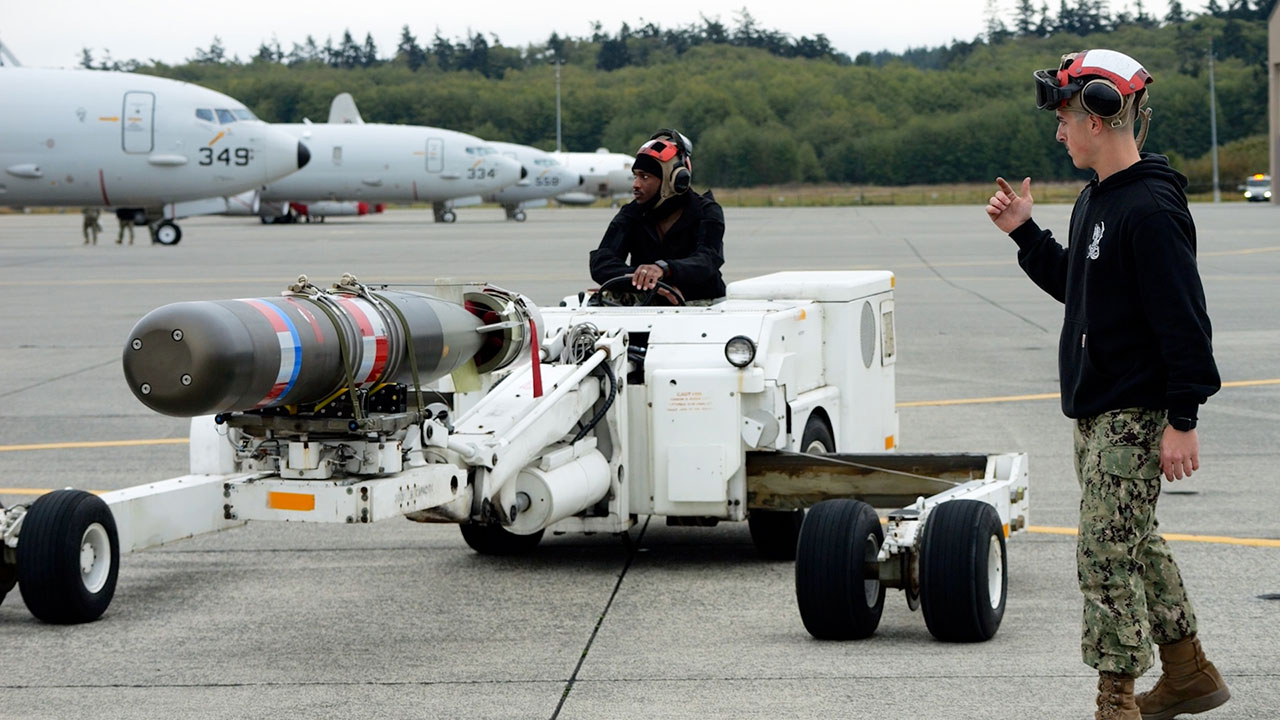 Aviation ordnancemen deliver an inert training torpedo to a P-8A Poseidon on the NAS Whidbey Island flight line. (Boeing photo)
Other mission sets include anti-surface warfare, humanitarian and search and rescue missions. No matter the mission, the range of the P-8 is a common denominator for its effectiveness.
“We can fly very far distances for a great amount of time and aerial refueling – the capability that the P-8 has that the P-3 (the aircraft it replaced) doesn’t – is something that makes that possible for us,” said Lt. Stephen Sauter, a P-8 Poseidon Aircraft Commander for Patrol Squadron FOUR (VP-4) stationed at NAS Whidbey Island.
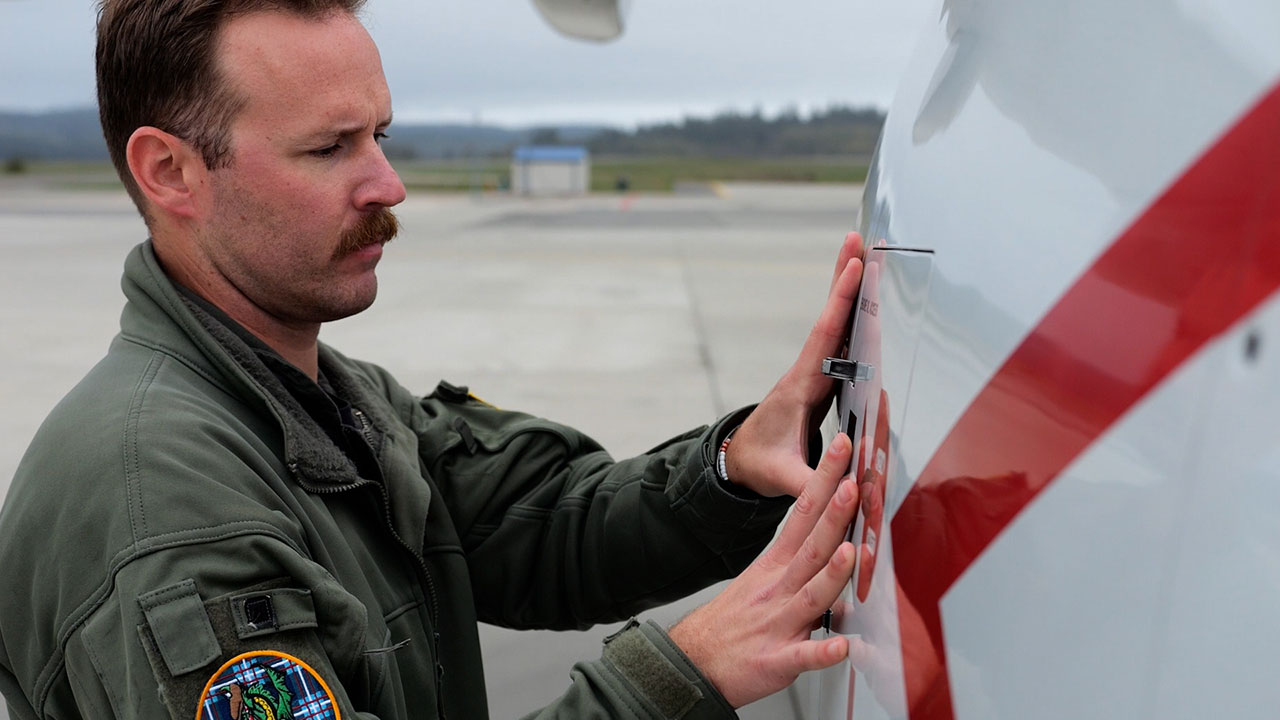 Lt. Stephen Sauter, a P-8 Aircraft Commander for Patrol Squadron FOUR (VP-4), performs an aircraft inspection. (Boeing photo)
Sauter and Lt. Matt Stachura, a P-8 pilot for VP-4, stressed that interoperability—the ability to operate with other branches of the U.S. military and allies in a coordinated way—is a key focus for the six P-8 squadrons based at NAS Whidbey and for the fleet.
“Interoperability is a very big part of our mission set,” Stachura said. “And due to our ability to go a long distance, we’re able to spread a force projection (and) shake hands with other countries.”
“With the times right now geopolitically… it’s becoming very apparent that our relations with our allies are super important,” Sauter said. “Being able to work with other counties and showing them the P-8 and what it’s capable of is strengthening those relationships.”
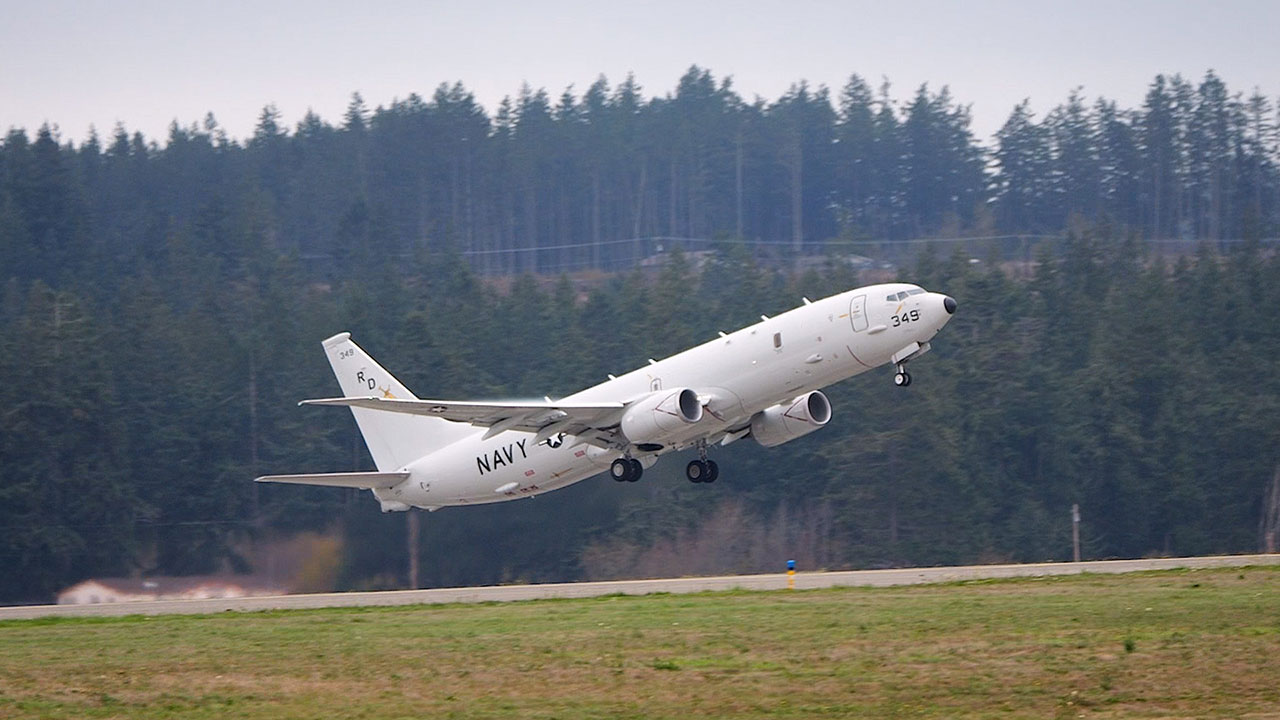 A P-8A Poseidon takes off from NAS Whidbey Island. Forty-three of the U.S. Navy’s Multi-Mission Maritime Aircraft are currently assigned to the base. (Boeing photo)