


The people behind the innovations
The work we do changes the world and our engineers are at the forefront of driving innovation across our products and services.

Quantum technology represents one of the most significant scientific breakthroughs humanity has ever embarked on. It is rapidly evolving with potential advancements in fields as diverse as medicine, navigation, and secure communication. It can revolutionize multiple aspects of our society.
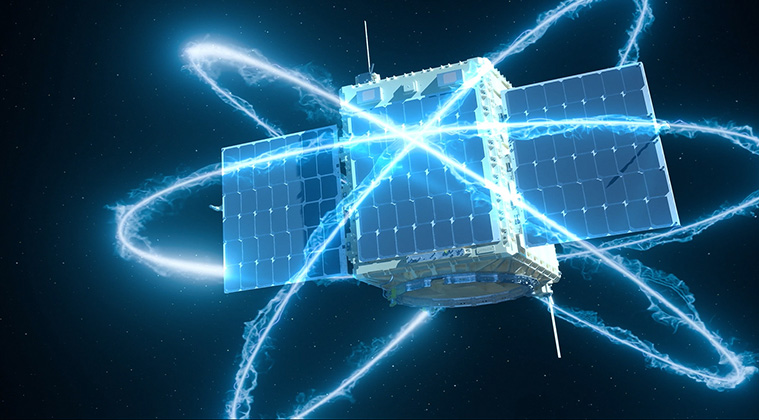
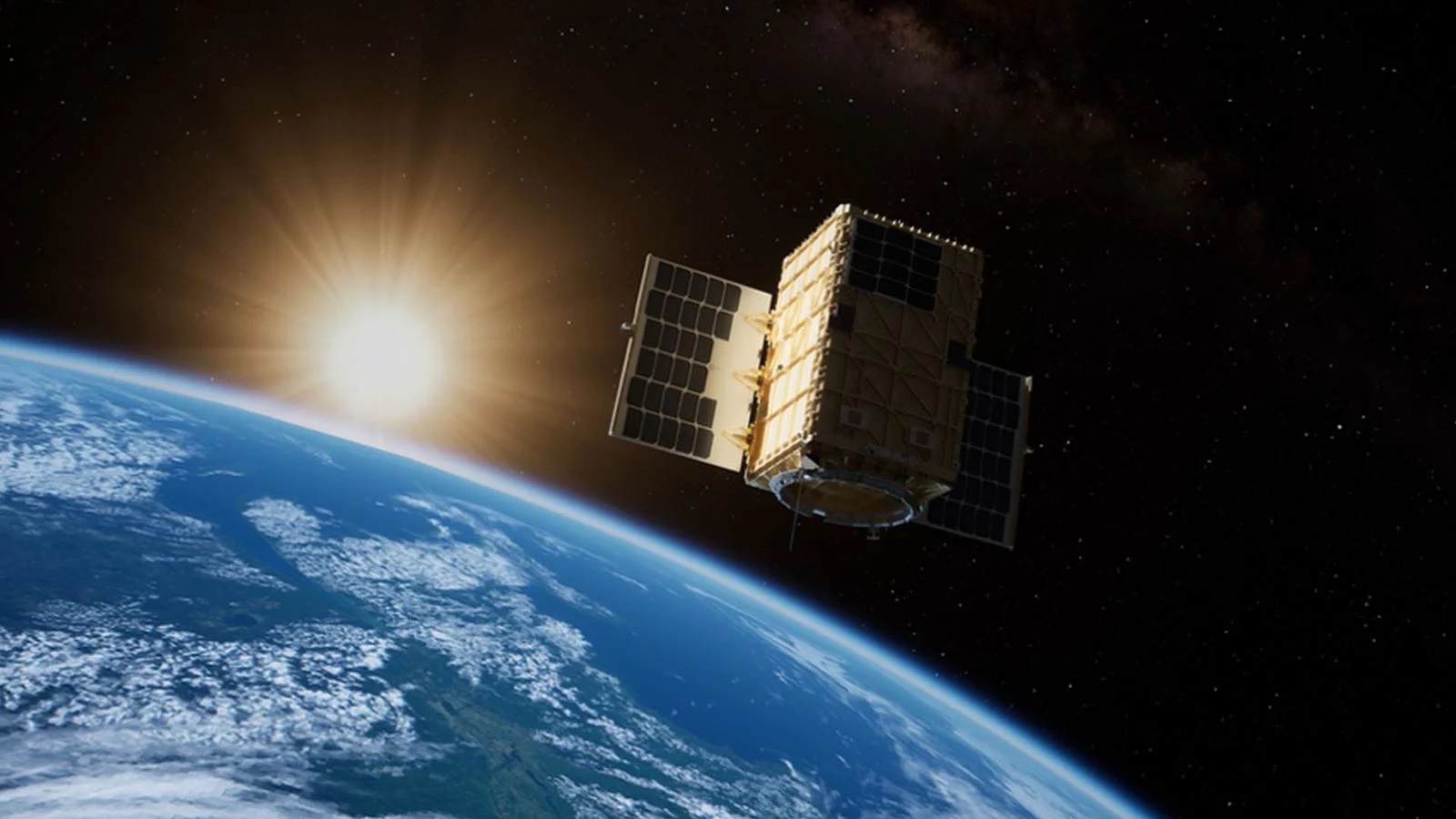
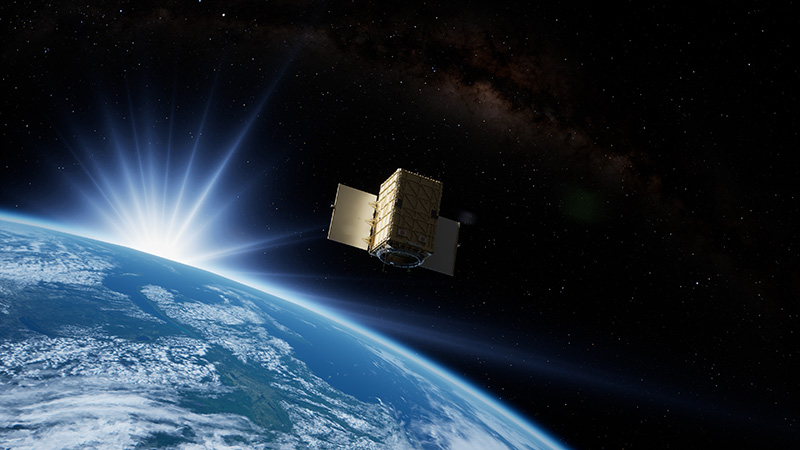
Boeing is making a big bet on quantum, launching a self-funded quantum entanglement swapping demonstration satellite. The Q4S mission – slated for launch in 2027 – highlights Boeing’s desire to push the boundaries of quantum technology and its applications.
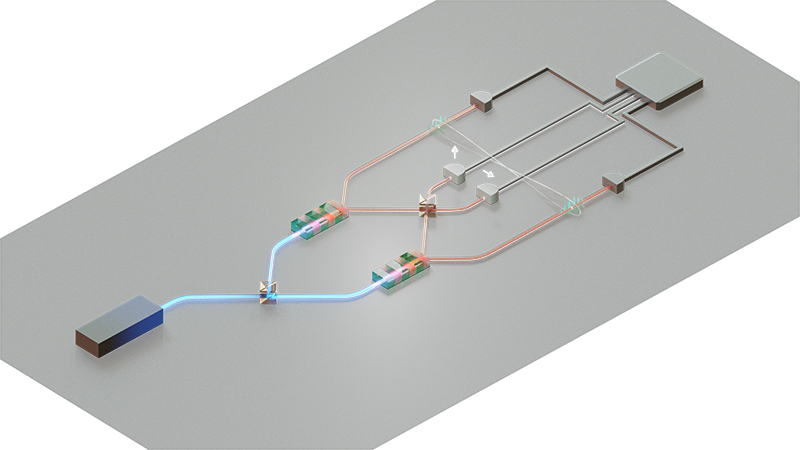
The year-long Q4S demonstration involves two entangled-photon pair sources housed within the space vehicle. These sources create the needed quantum states which are manipulated by precision optics to entangle the appropriate photons. Onboard single-photon-sensitive detectors measure the photons to ensure the swap has taken place, with frequent data downlinks for program scientists to analyze.
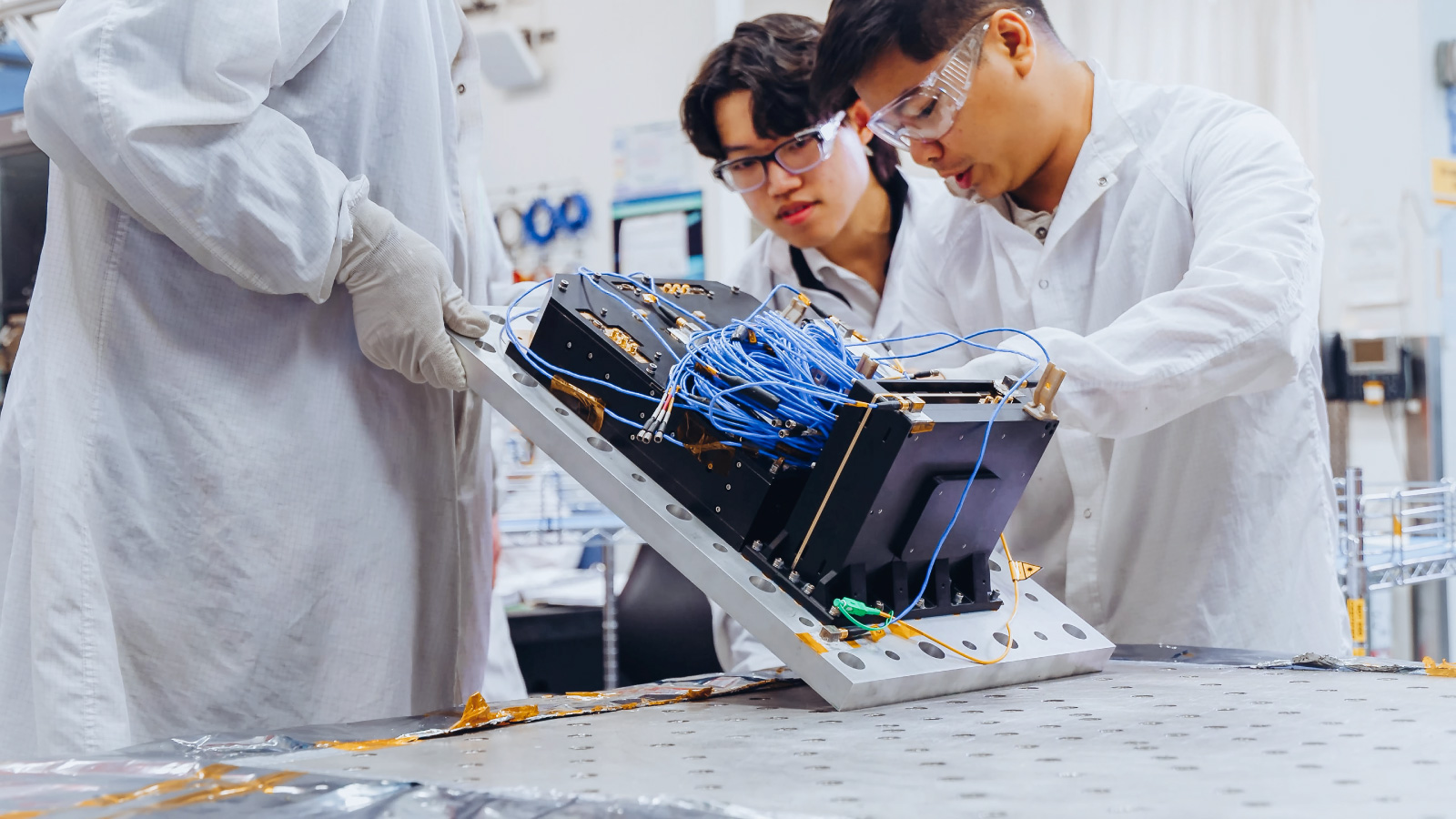
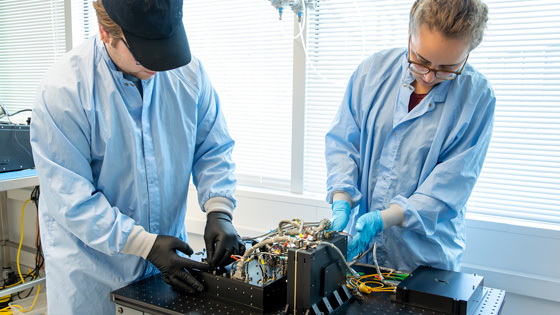
Our payload and technology partner, HRL, has made significant advancements in benchtop exercises as we improve our technical designs and progress towards launch. HRL is well known for their cutting-edge research in quantum sciences. All this takes place on an Astro Digital Corvus satellite platform in sun-synchronous orbit.
This demo aims to solidify Boeing’s role as a pioneer, pushing the boundaries of what’s possible. Boeing is doing much more than participating in quantum research, we are leading the way to operationalize and scale quantum technologies for global applications.
By taking on the challenge of entanglement swapping in space, Boeing is setting the stage for a future where quantum technology enhances how we connect, protect and explore the world and beyond.

Quantum communication enables humanity to create a global network that senses and processes large amounts of data with unprecedented accuracy and precision.

This power can unlock incredible potential, helping researchers gather more data about the Earth and space environments– areas where current instrument sensitivity and resolution limit progress.

It also protects user data and communications because quantum communication is inherently secure. It uses the laws of physics to ensure that any attempt to intercept or eavesdrop on a communication will disrupt the signal in a way that the original parties can detect.

By enabling secure, quantum-enhanced applications, such as fault-tolerant systems that reduce errors in computing, secure voting mechanisms that protect electoral integrity, and blind quantum computing which allows data to be processed without exposure, Boeing is setting the stage for a revolution in how we handle information.

There are also computing applications in and from space, but those will likely be the last to emerge. Future systems will leverage quantum information from a sensor in space that can be delivered via entanglement swapping to a quantum computer on the ground.

The precision of quantum sensors offers observability of very faint effects in space or on Earth which has immense impact on ISR, space domain awareness, and space control missions.
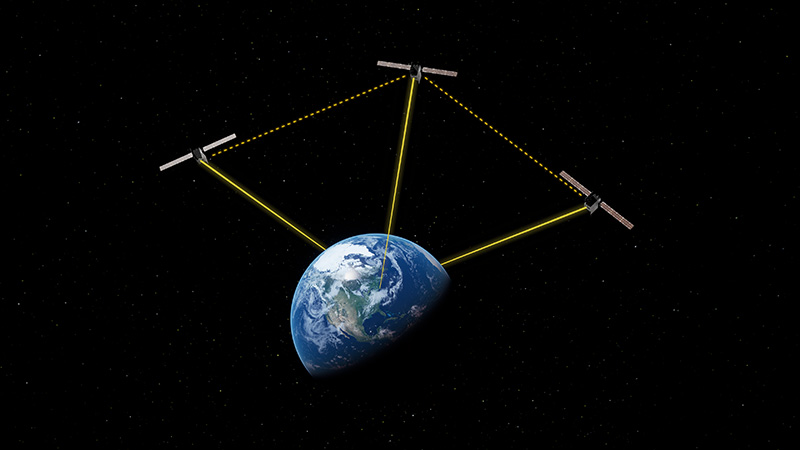
Entanglement swapping establishes the core capability of quantum communication by allowing networks to expand beyond simple point-to-point communication. It relies on quantum teleportation – a method where the quantum state of a particle can be transferred without having to move the particle itself across the distance. In entanglement swapping, teleportation occurs between two entangled photon pairs, resulting in a shared state between particles that have never interacted.
This ethereal concept – which understandably makes sense to very few people – is what Albert Einstein famously referred to as “spooky action at a distance.” It underscores the unique nature of quantum mechanics which is generally not observable in our day-to-day lives.
By demonstrating entanglement swapping, we can create a scalable network where quantum information can be transmitted over vast distances, something currently limited by decoherence (the degradation of quantum information caused by external factors) and loss (where a portion of the transmitted quantum information does not reach the receiver). This advancement is crucial for global quantum networks that could connect any two points on Earth with high security and reliability.

Establishing a quantum network requires the efficient routing of quantum information. Local quantum networks at the scale of buildings, campuses, or even cities are effectively implemented using fiber-optic networks. Extending the reach of a quantum network to regional, national, or global scales is limited by the transmission loss across the network. At a threshold of a few hundred kilometers, the losses in fiber-optics are greater than losses in free-space-optical channels—it becomes more efficient to transmit quantum information between telescopes than across fiber-optic cable.
Airborne or orbital quantum networking nodes can extend the range of practical quantum networks. The higher the altitude, the wider the range of the quantum network. For these reasons, satellite-enabled quantum networks are viewed by the quantum networking community as a necessity for establishing a global quantum internet.
Performing entanglement swapping, especially in space, involves overcoming significant technical hurdles. Quantum states are delicate, and maintaining entanglement through environmental factors like temperature and radiation presents added layers of complexity. The process requires precision engineering and first-of-its-kind technology to stabilize and sustain these states in a way that was previously thought to be impractical, if not impossible.


The work we do changes the world and our engineers are at the forefront of driving innovation across our products and services.