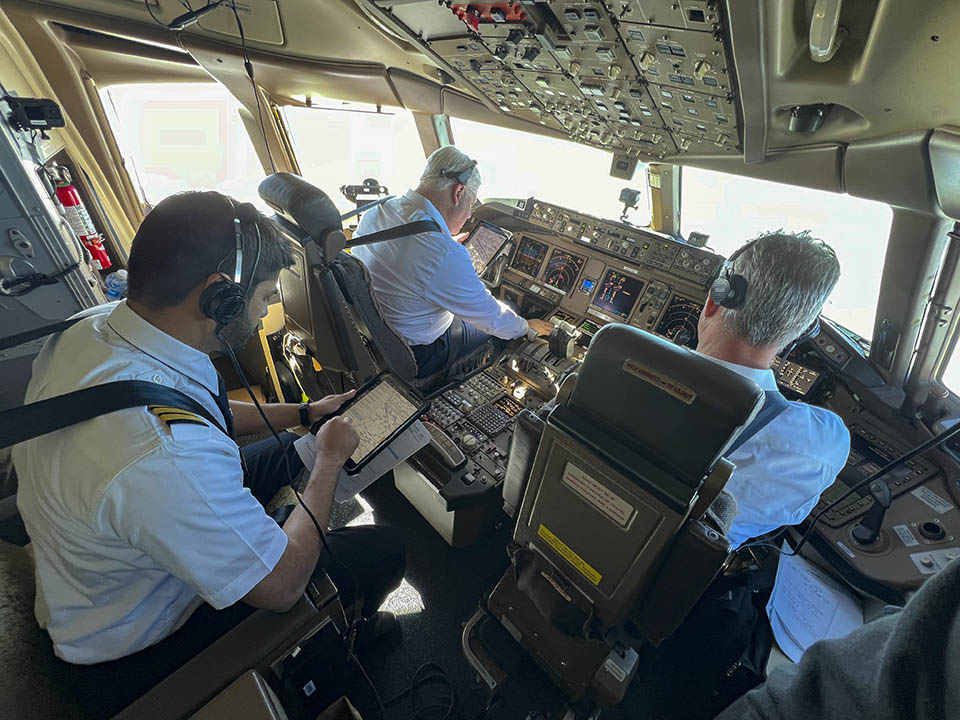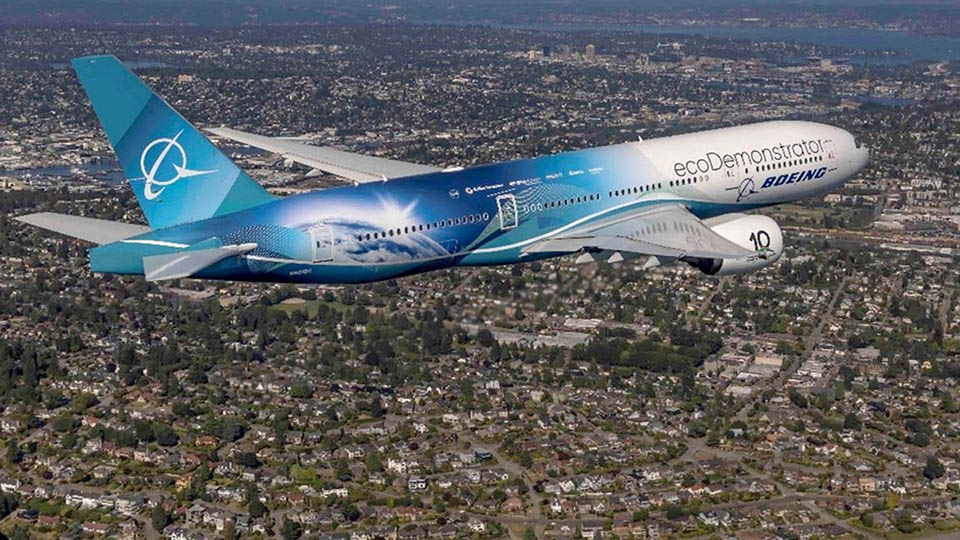
During several test flights this year, Boeing ecoDemonstrator pilots used operational procedures on approach to Boeing Field near Seattle to measure their environmental benefits — procedures like continuous descent approaches, less flaps settings and steeper glide slope.
- A team of Boeing’s operational efficiency and flight-test engineers quantified the fuel savings and noise reduction using in-flight, noise and weather measurements combined with computer modeling.
- They observed that some of these measures, already adopted by the International Civil Aviation Organization, have the potential to save up to 800 pounds (363 kilograms) of fuel per landing on a 777-200ER (Extended Range) and reduce noise by up to several decibels.
Why it matters: “These operational procedures demonstrated a reduction in fuel use and noise, and the testing provided valuable real-world data to quantify those benefits and validate our models,” said Kirk Vining, Flight Operations functional chief engineer and a Senior Technical Fellow.
- Vining added that, because these procedures can require additional coordination with air traffic control, the ability to use them can vary at different airports.