
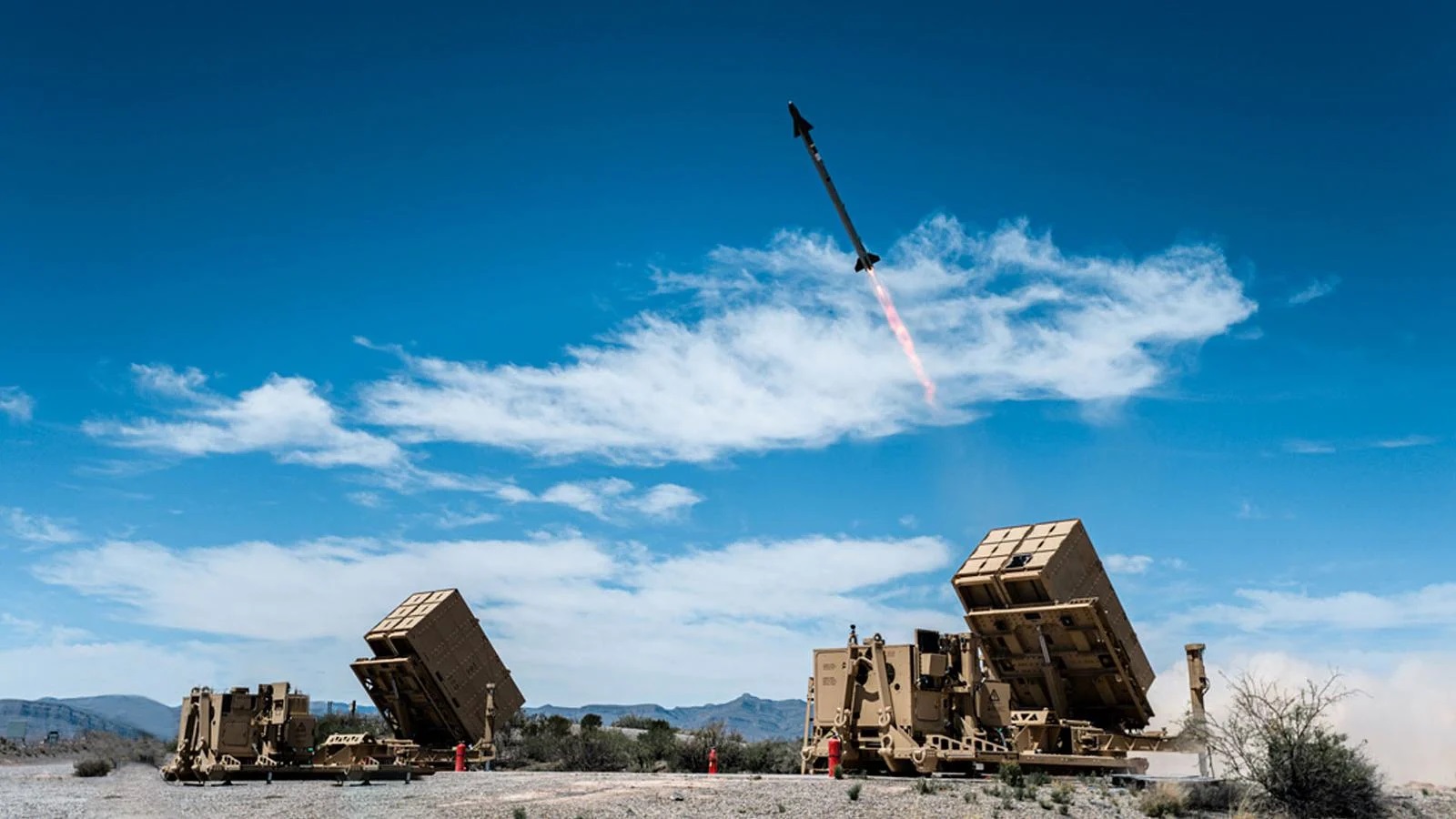
The Integrated Fires Protection Capability (IFPC) Increment 2 system is designed to defend fixed and forward operating bases against emergent aerial threats. (U.S. Army image)
Boeing has partnered with Anduril Rocket Motor Systems in the U.S. Army’s Integrated Fires Protection Capability (IFPC) Increment 2 Second Interceptor competition. Anduril will provide the solid rocket motor for the team’s medium-range interceptor offering.
- Boeing was awarded an Other Transaction Authority (OTA) Project Agreement on Dec. 5 to develop the new midrange interceptor as part of the Army’s efforts to enhance defenses against emerging aerial threats.
Why it matters: The Boeing-Anduril team aims to complement existing short- and long-range air defense systems with an affordable, capable solution to counter increasing low-flying, mid-range threats such as cruise missiles and militarized drones.
- “This partnership underscores our commitment to forming innovative, disruptive and agile industry teams that deliver new capabilities to warfighters sooner,” said Bob Ciesla, vice president, Boeing Precision Engagement Systems. “We’re confident that this partnership will result in a novel solution that helps meet the Army’s evolving air defense needs.”
- “Boeing and Anduril are partnering to deliver a critical, scalable rocket motor systems capability for the U.S. Army," said Burhan Muzaffar, senior vice president at Anduril Industries. "This partnership is a major step forward in strengthening the industrial base and ensuring our warfighters receive the reliable, modern capabilities they need.”
The big picture: The Army expects the IFPC Increment 2 Second Interceptor to integrate with and improve existing systems, delivering more robust, enhanced and cost-effective layered air and missile defense for future combat environments.
What’s next: The Army tentatively plans to choose companies to move forward to the prototype stage of the competition in 2026.