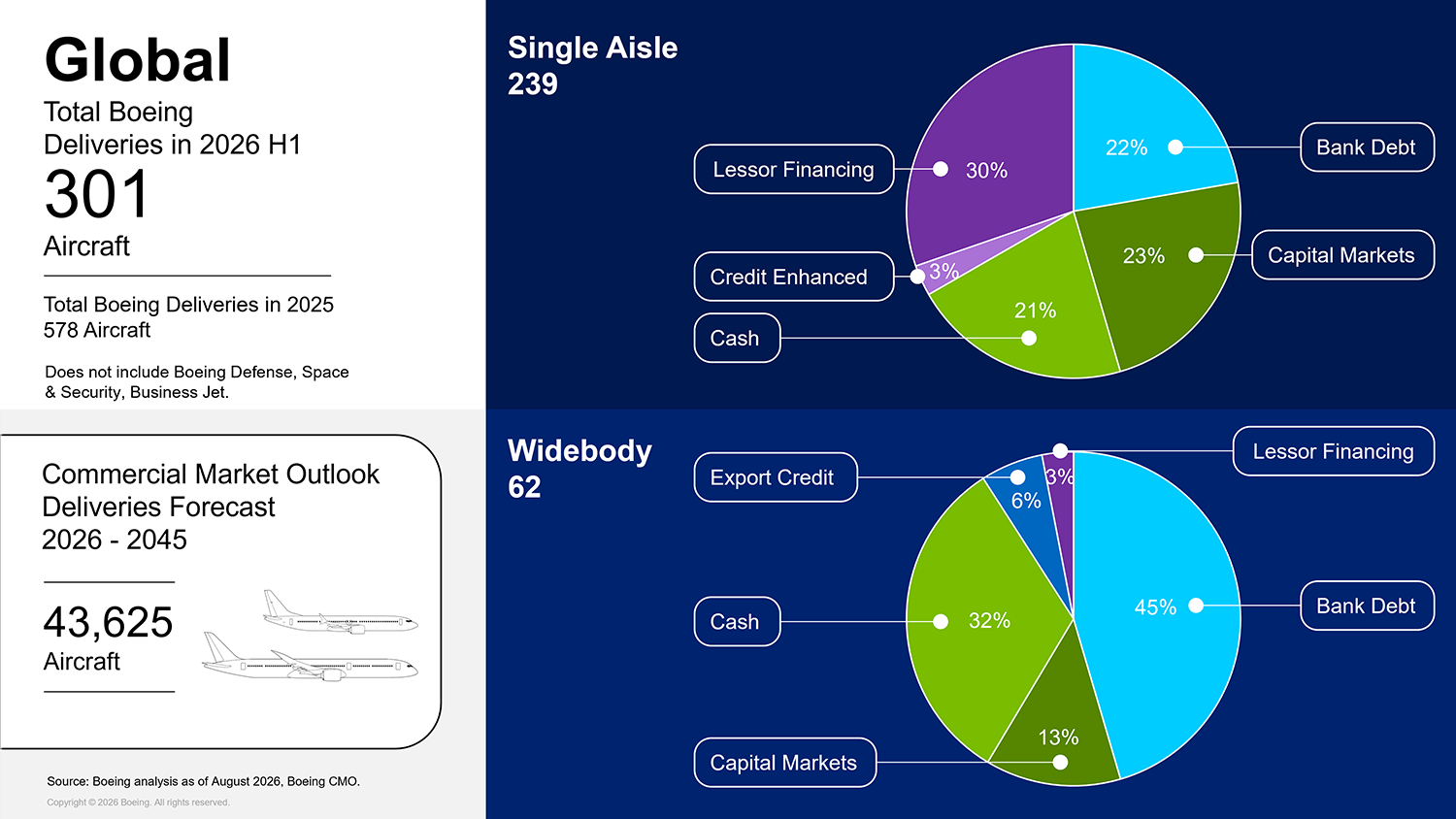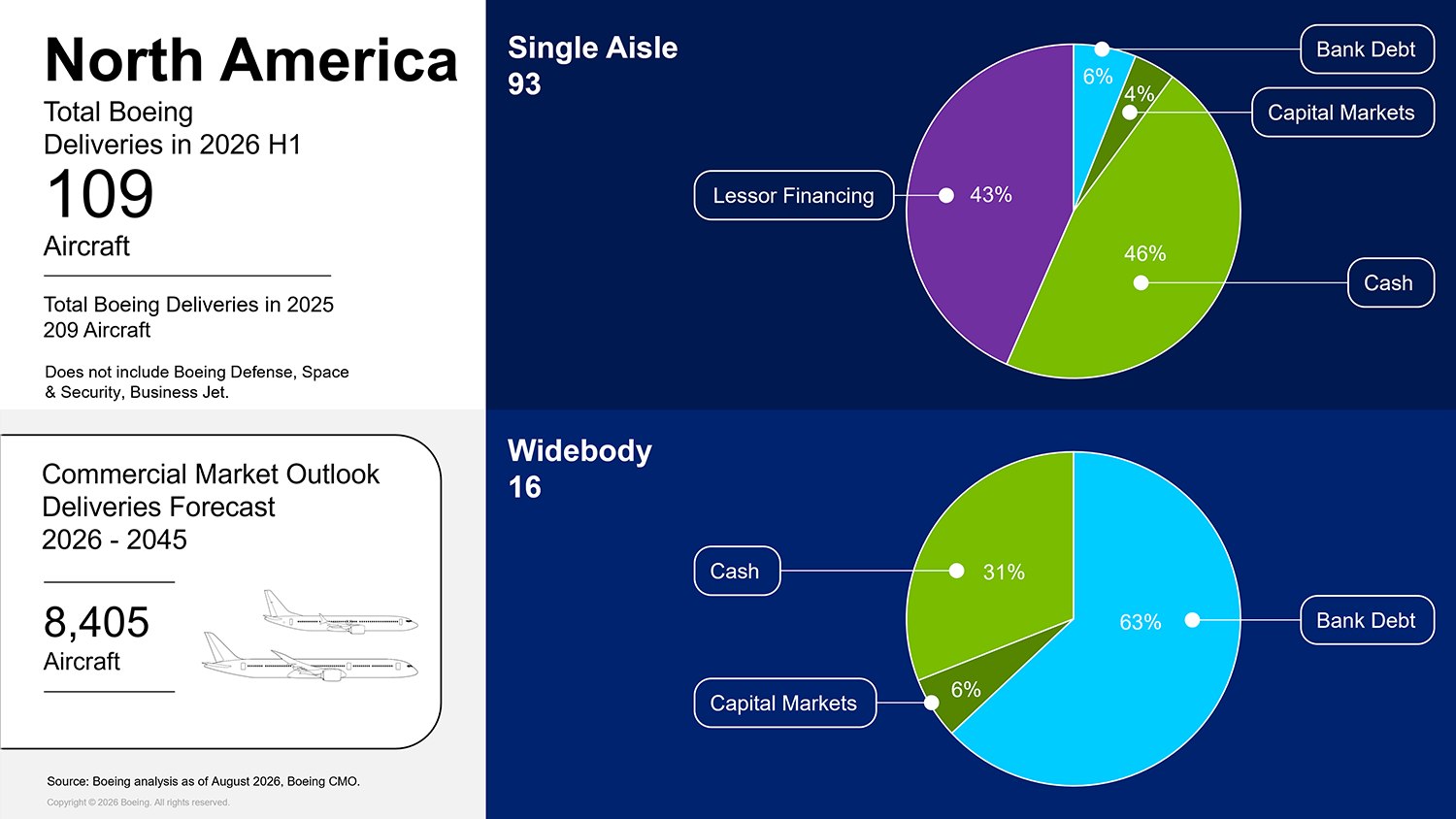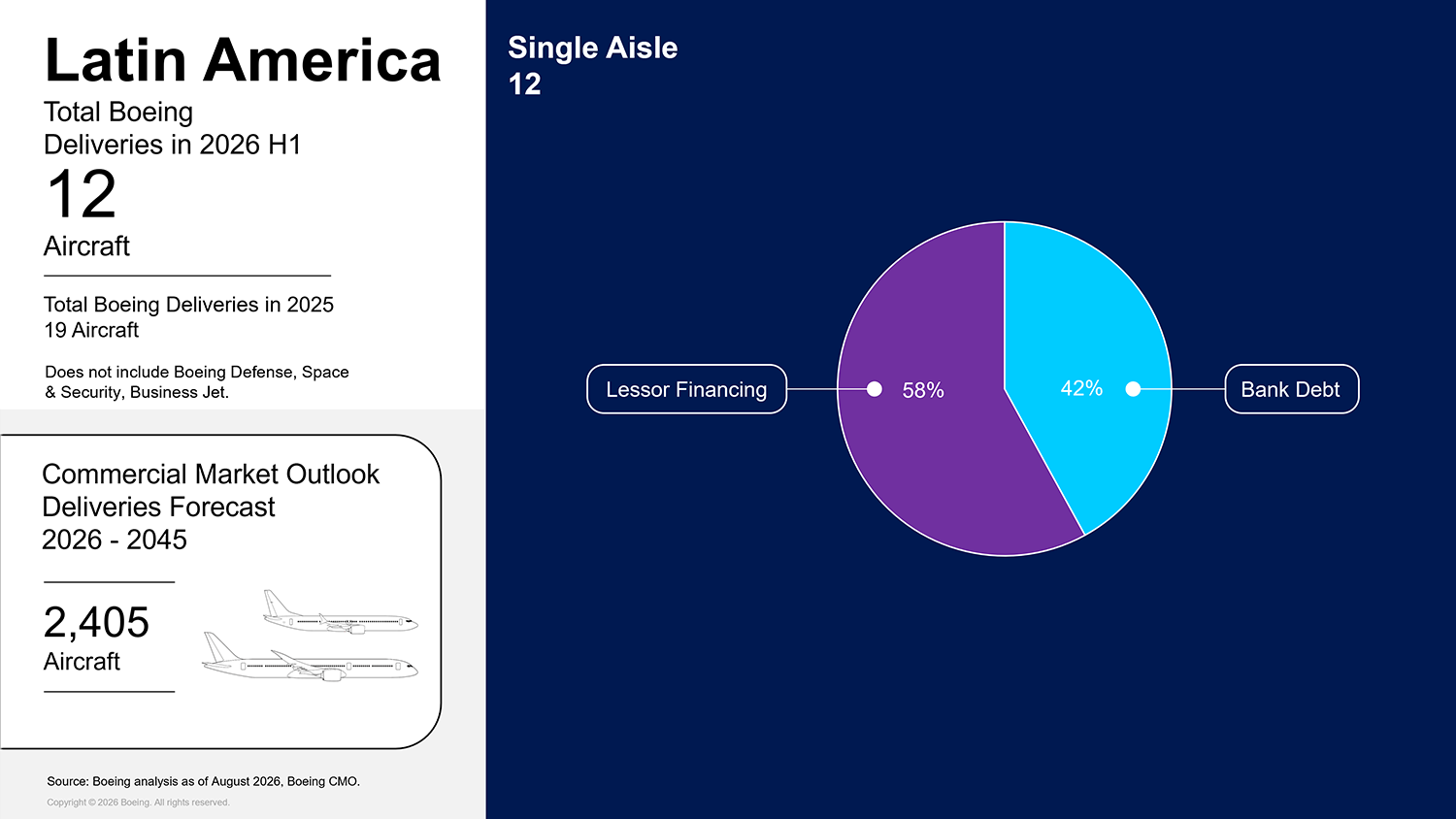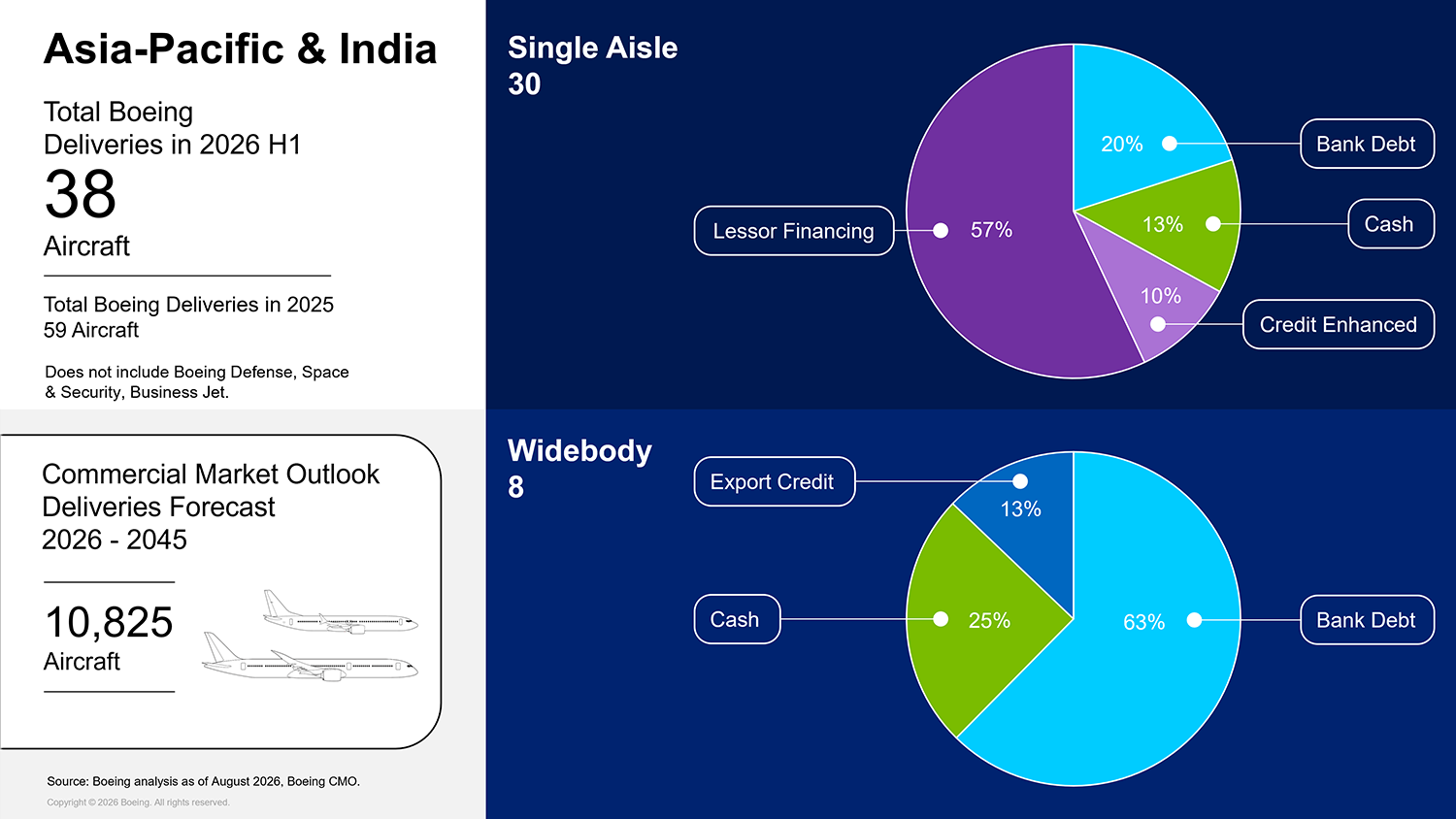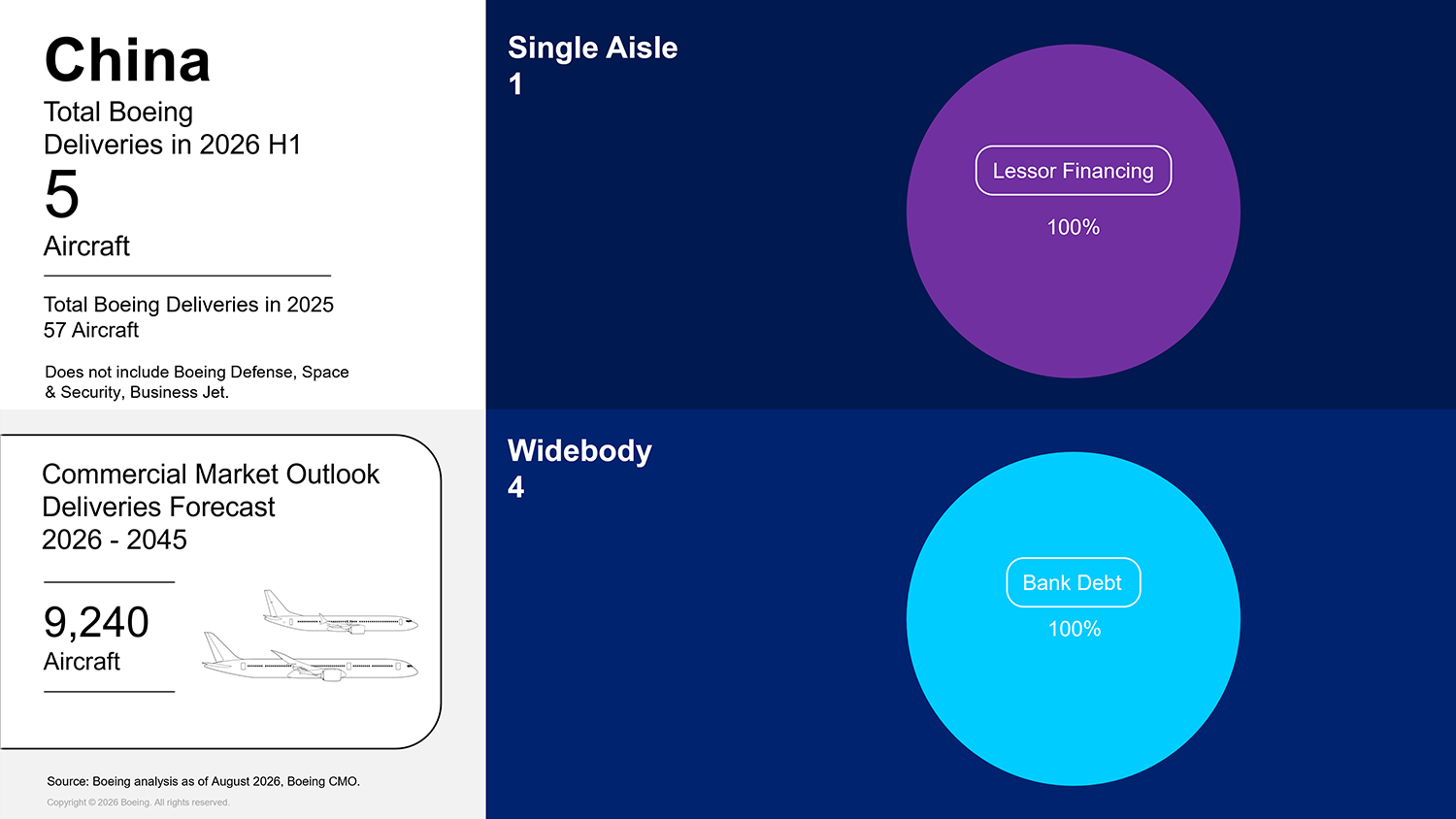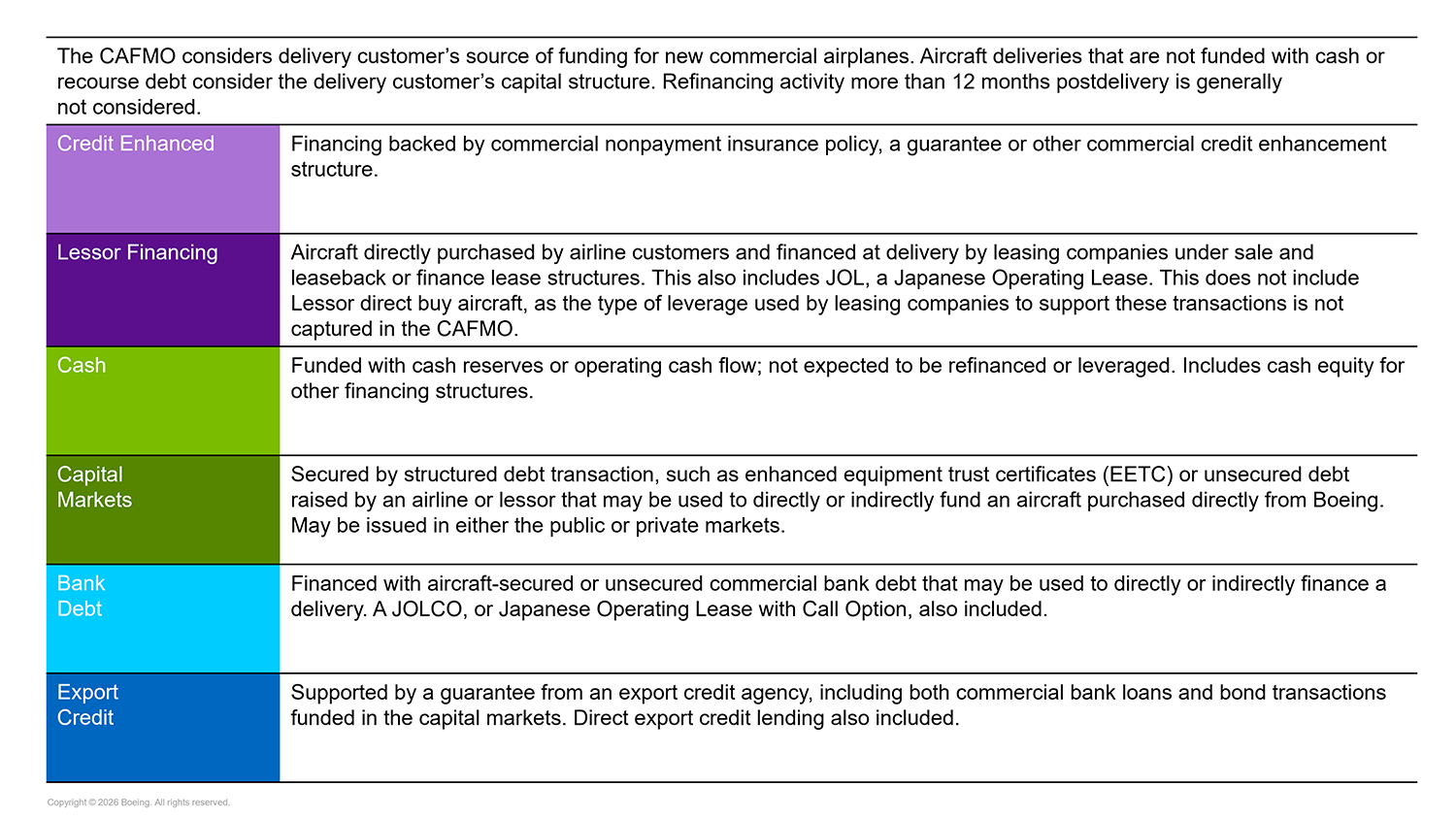
Welcome to the mid-year CAFMO, reviewing new aircraft delivery financing in H1 2026. This abridged document focuses on Boeing deliveries, with market insights & trends provided by our regional teams. We have also updated our previous deck with data from the latest version of the industry-leading Boeing CMO, which forecasts aircraft deliveries over the next 20 years.
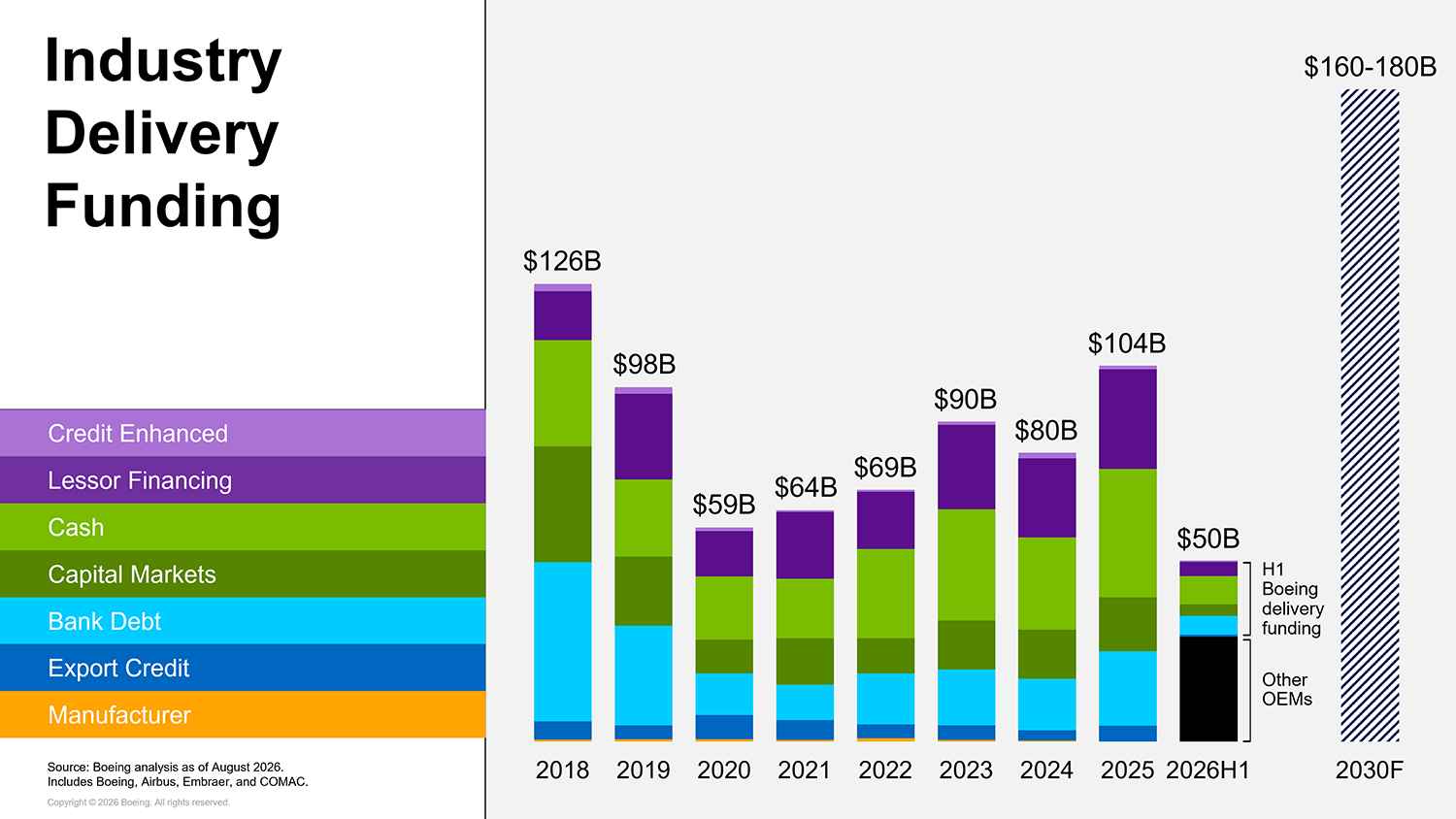
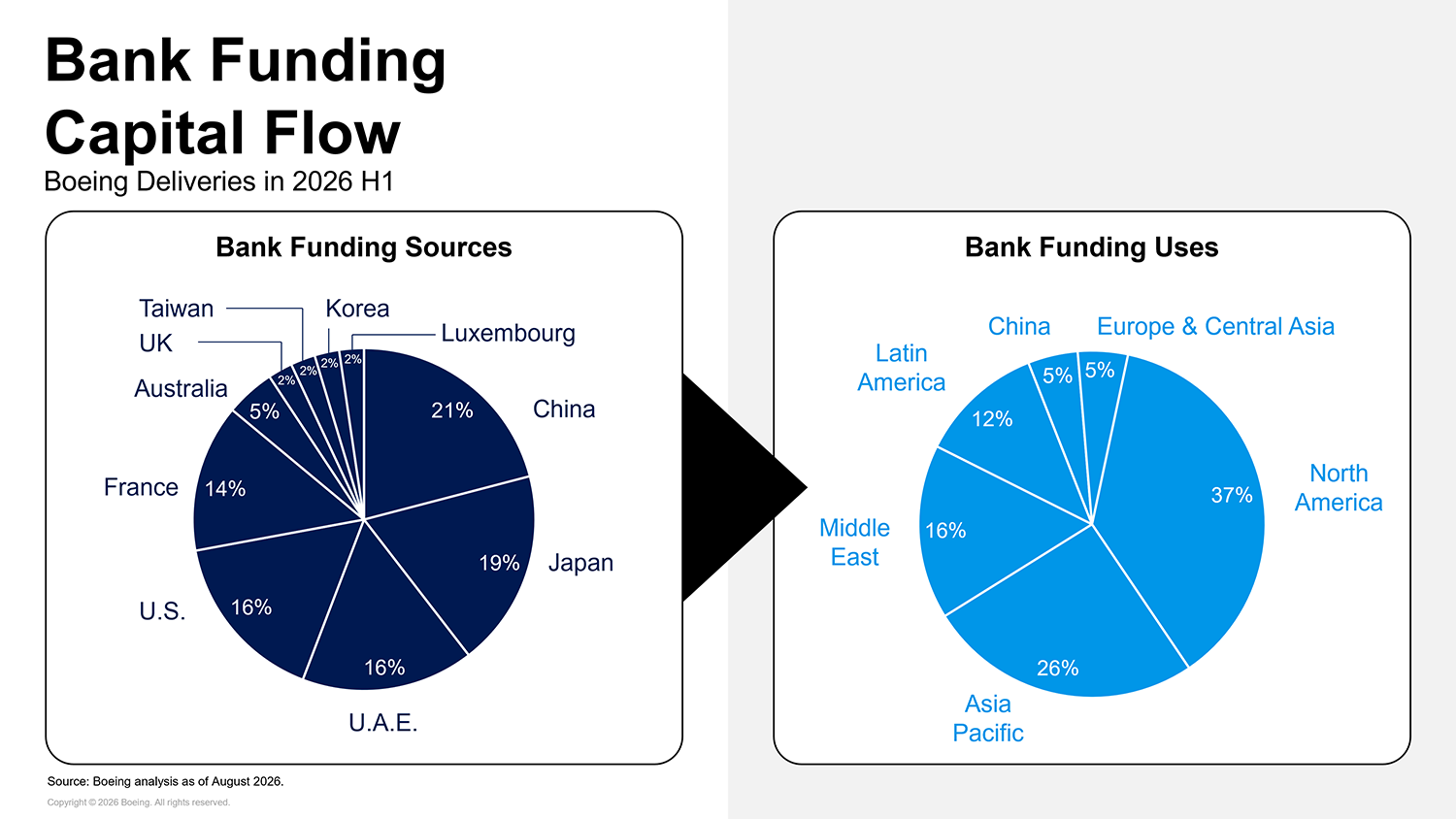
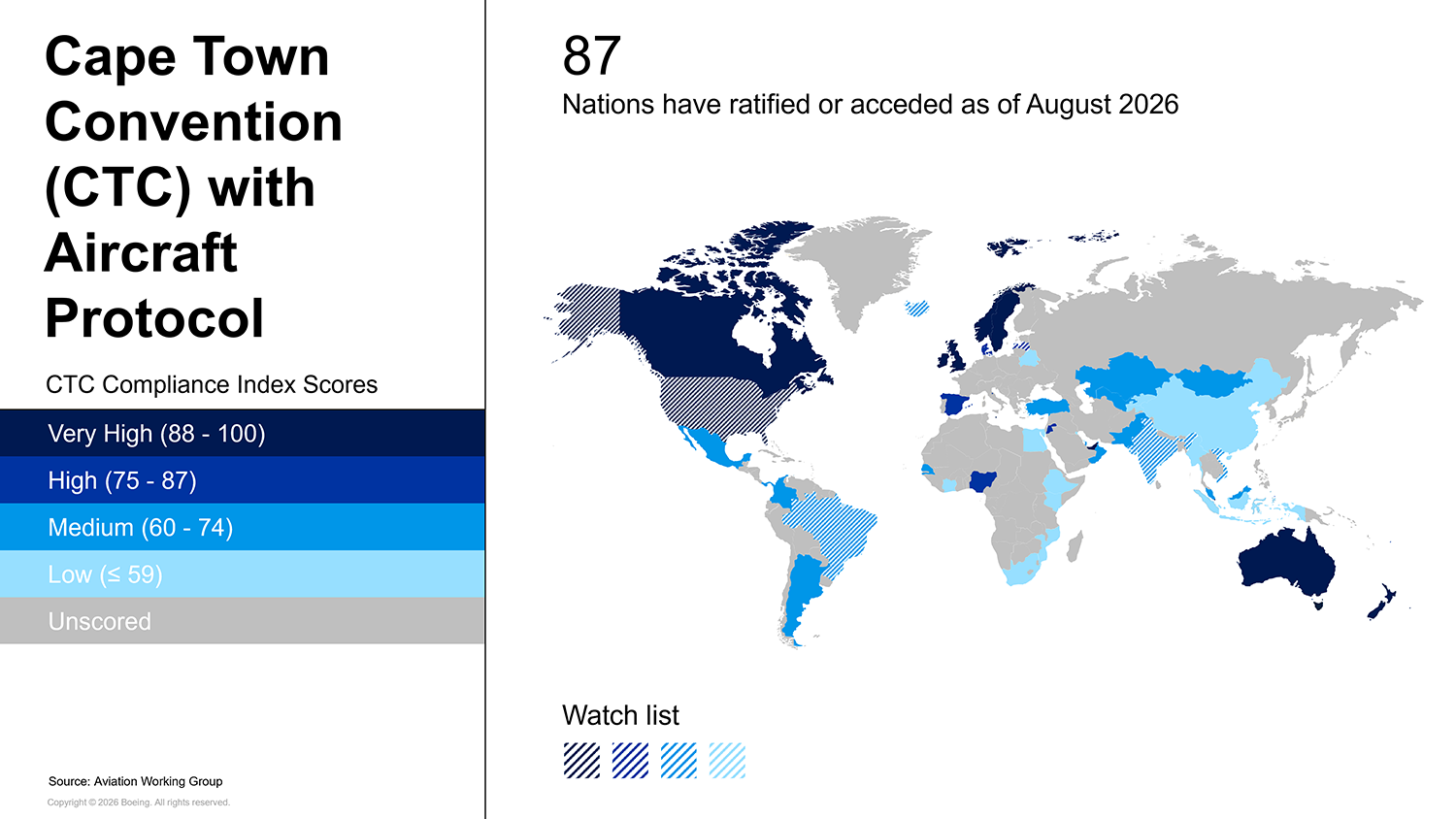
Alongside a healthy delivery schedule across the industry in H1 2026, there is steady progress towards reaching the previous record full-year $ delivery volume, last seen in 2018. Looking through the most recent data, we have seen customer funding strategies having to adapt to increasing geopolitical tensions and associated impacts from these events. We observed more regional variances in respect of financial product selection and a growing local and regional bank penetration across many of our markets. Underscoring all the preceding comments, is a pleasing level of competition for new aircraft delivery financing on a global basis. Pricing has remained tight from 2025 into 2026, particularly for strong credits.
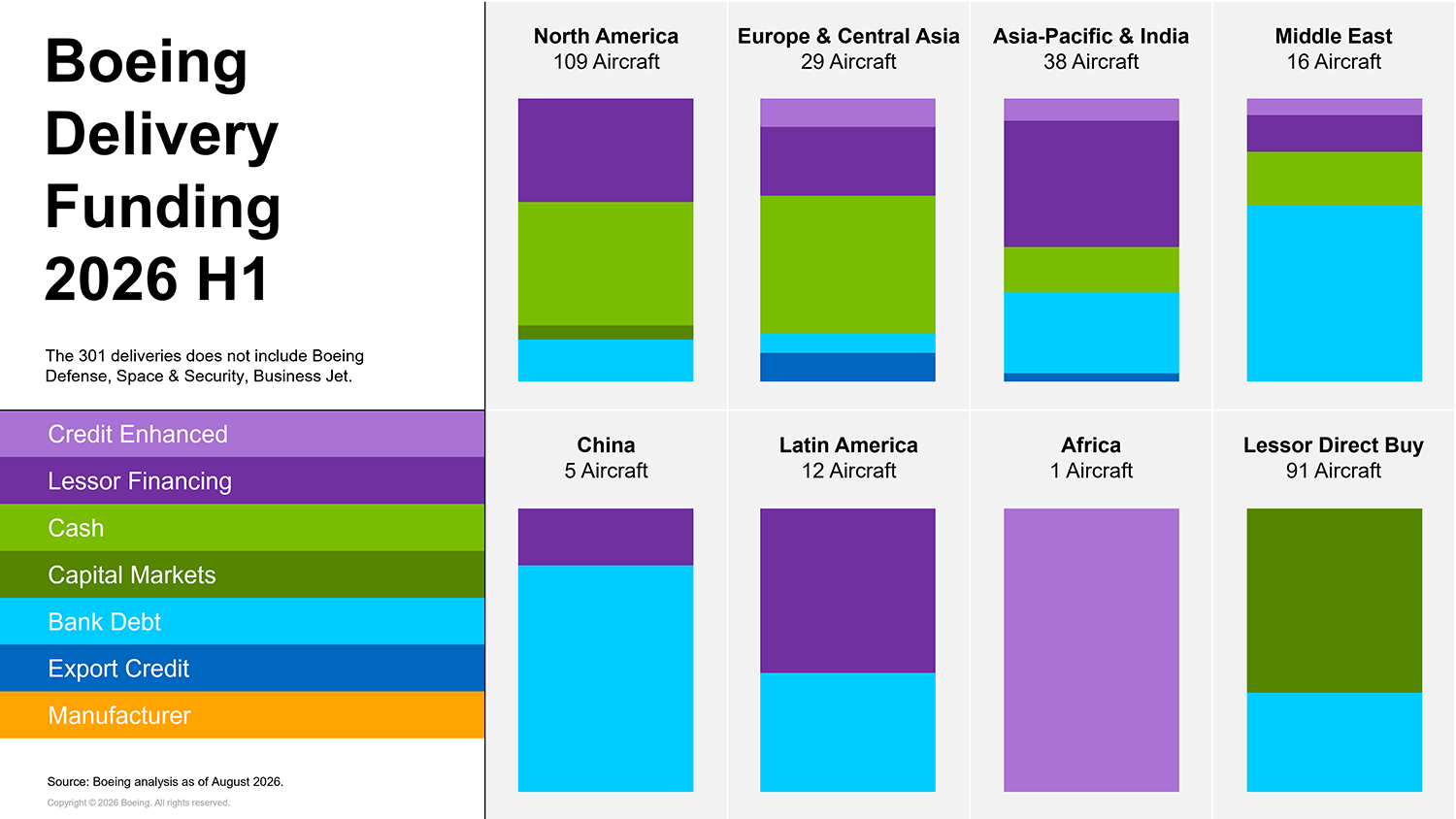
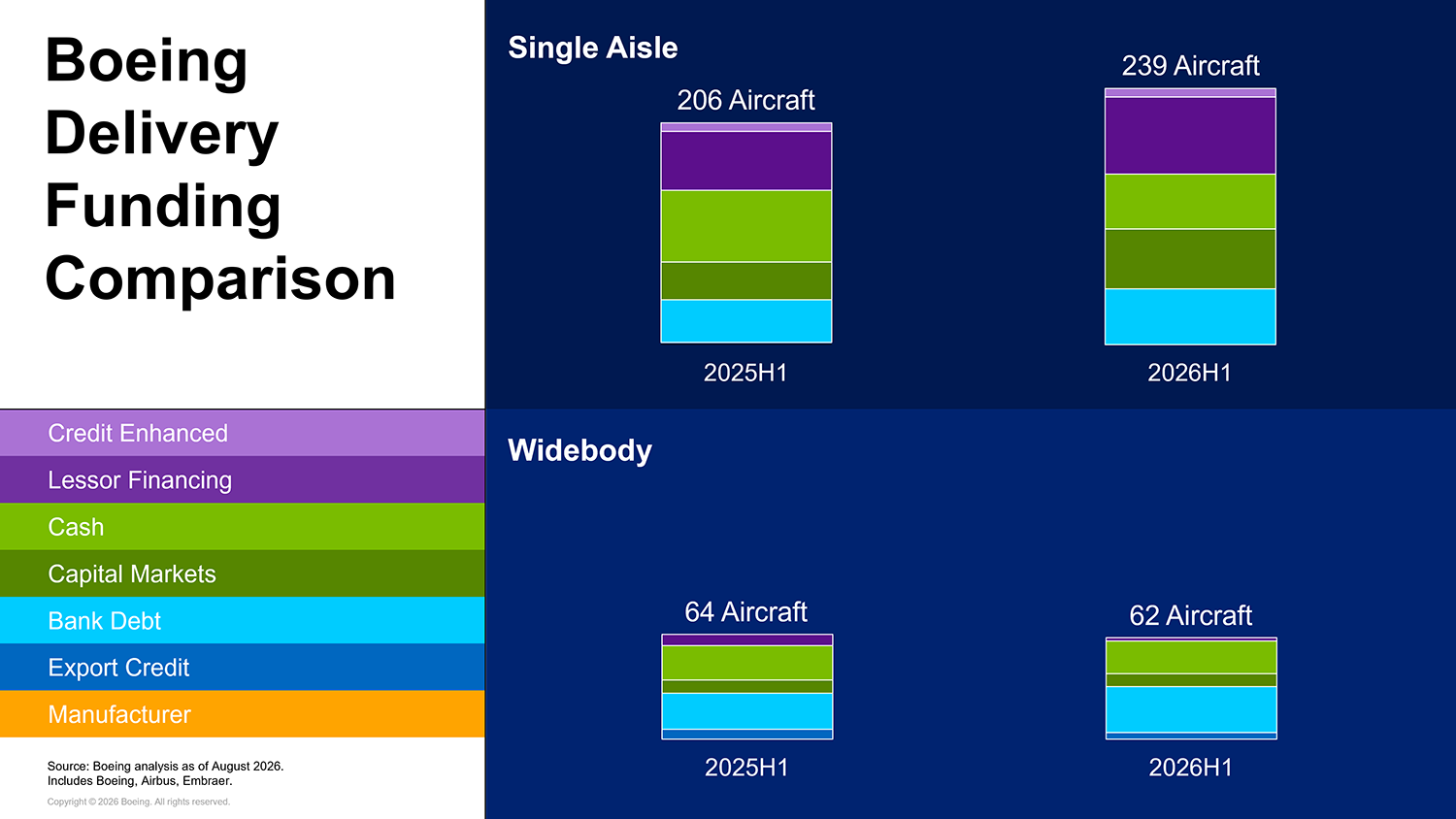
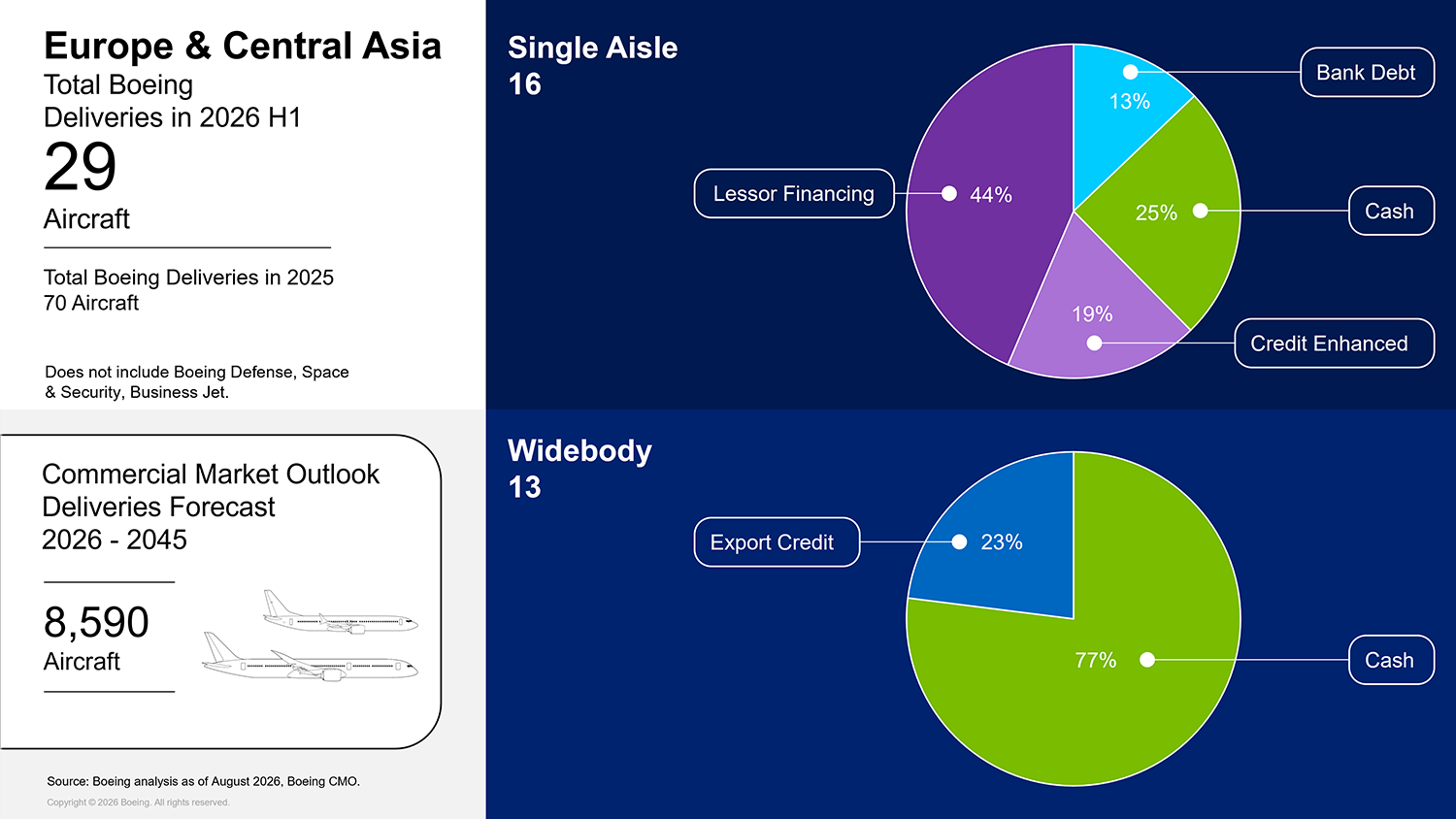
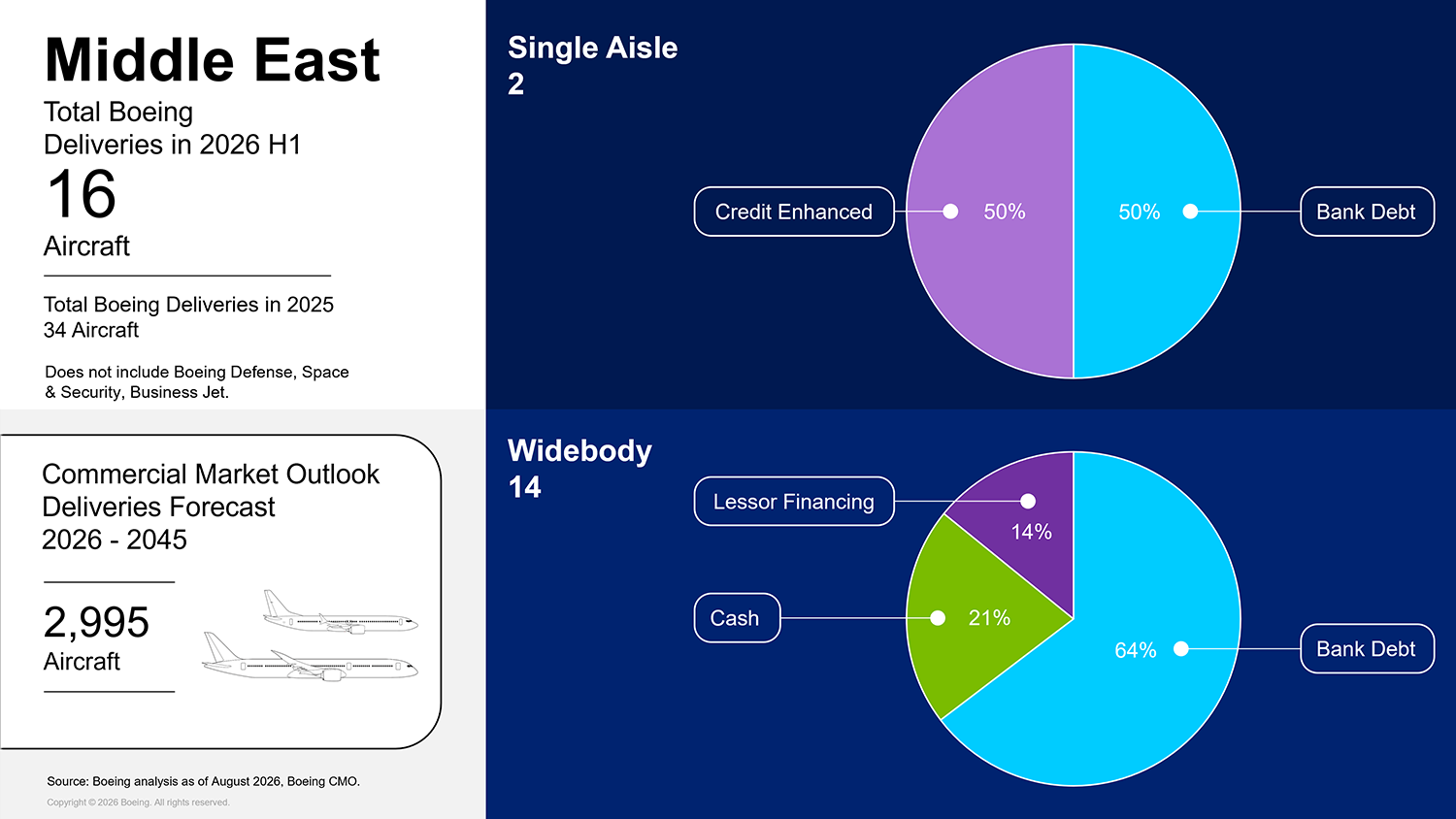
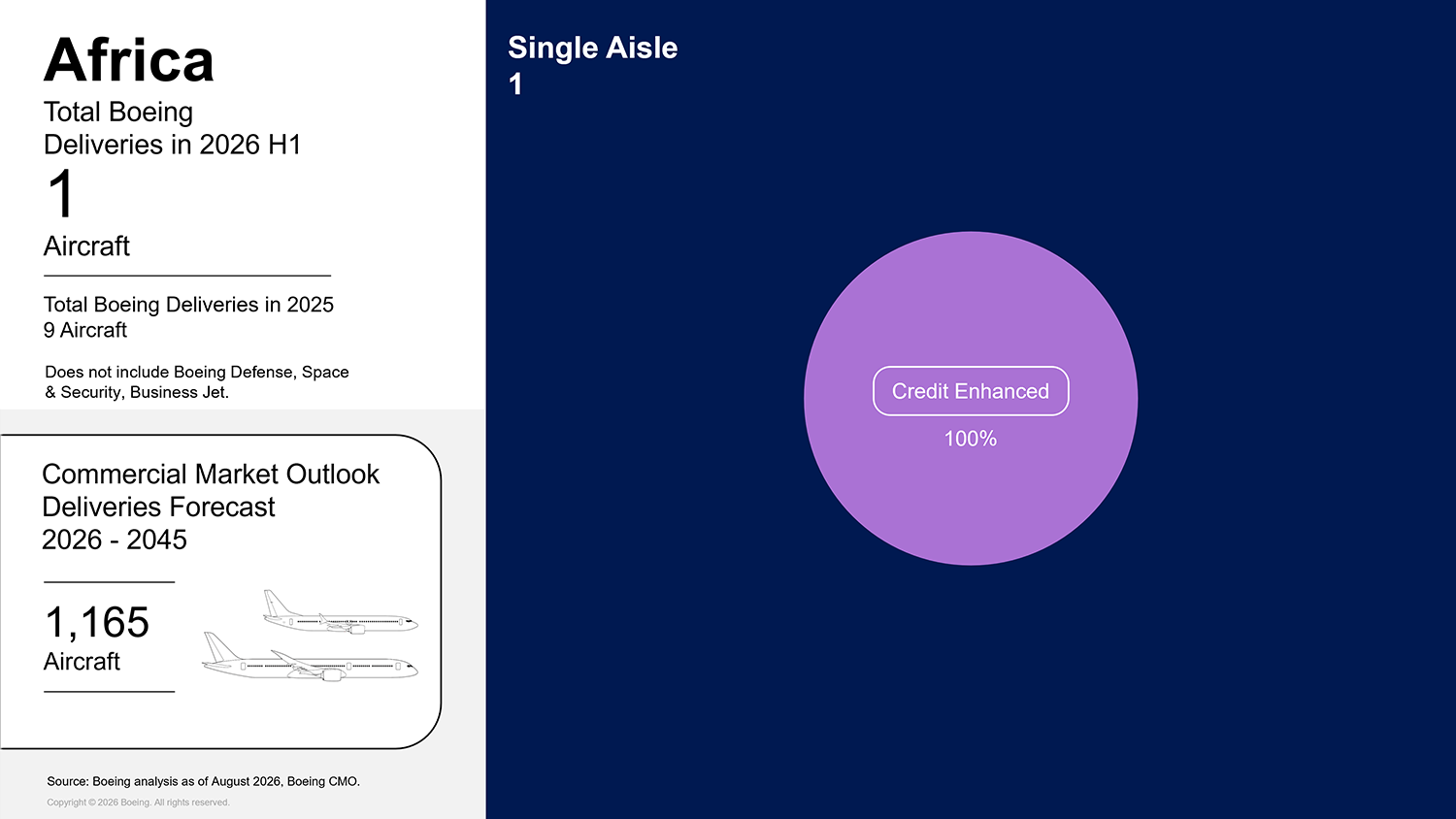
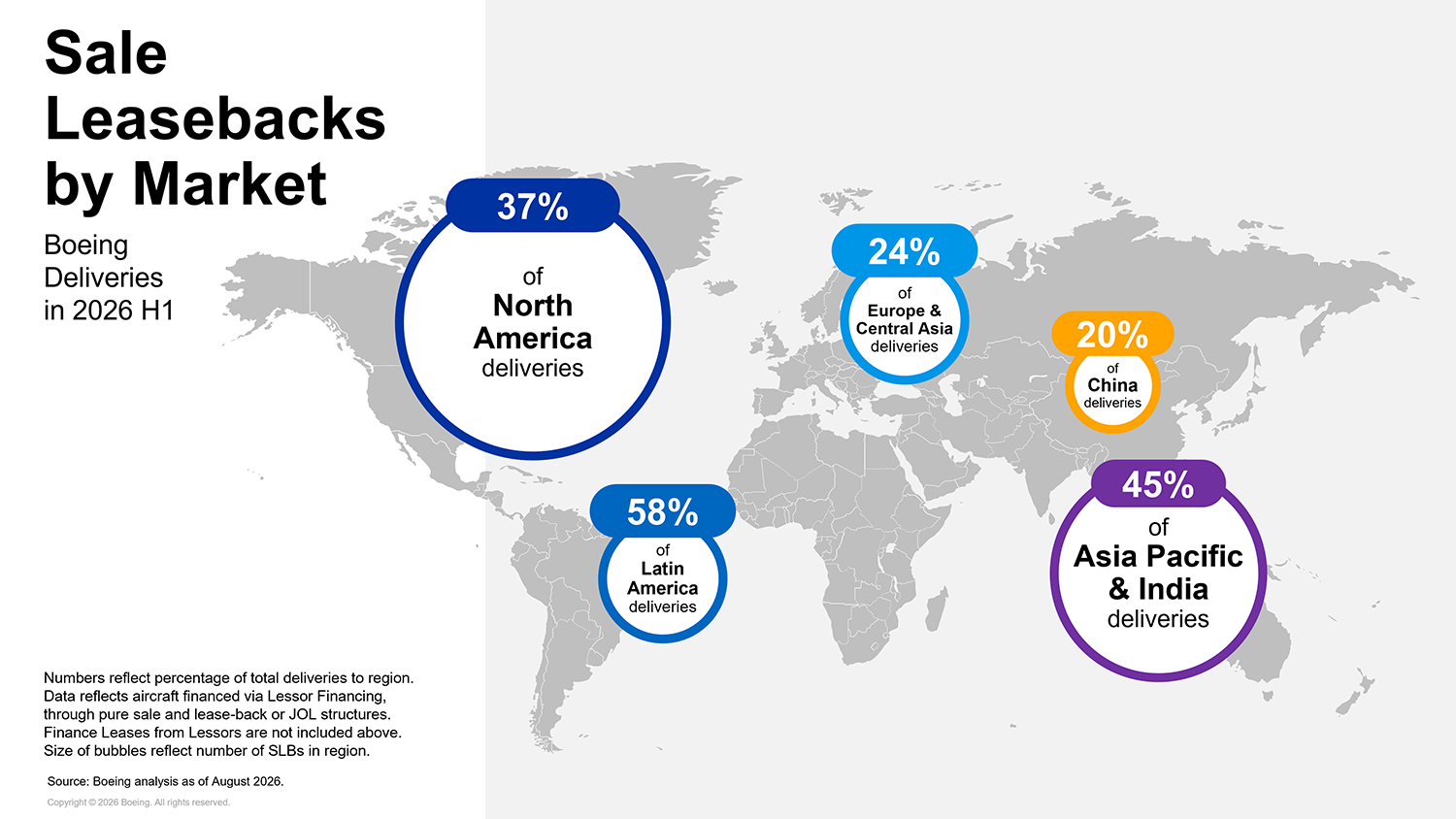
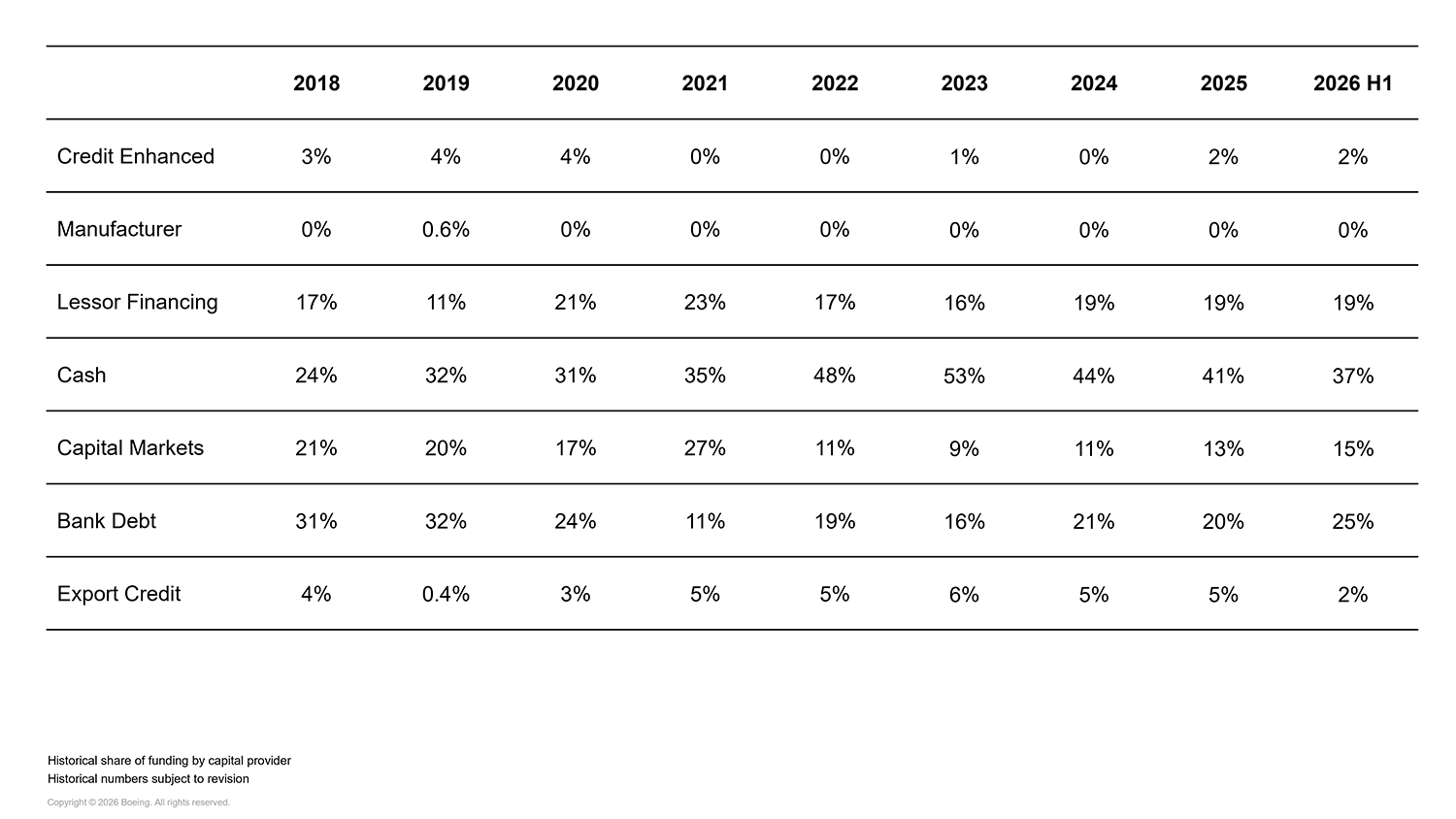
Each of our regional teams has assessed trends in customer delivery finance product selection, with consideration to customer mix, aircraft type and jurisdiction. We have, for example, seen bank financing being notably successful in global widebody deliveries in H1 2026, often underpinned by long established relationships built with local/regional institutions. The leasing channel continues to be a force in single aisle aircraft deliveries with strength and depth in emerging and developed markets alike, bringing creative solutions both for pre-delivery and delivery financing requirements. Both of these financing channels actively trade/syndicate their loans and leases to a healthy secondary market that recognizes the inherent value in aircraft as an asset class.
With record order books across the industry, we acknowledge the importance to our customers of a robust financing ecosystem, offering broad and comprehensive transaction solutions. The new delivery aircraft financing market is set to grow by more than 50% by the end of this decade, and this step-up in scale will demand new market entrants, product innovations and level playing fields across jurisdictions. Our team at Boeing Customer Finance is already working with you to deliver those solutions that will support our customers' deliveries, and we appreciate the energy and passion that you bring to each and every transaction.