
On Dec. 3, 2010, the X‑37B completed its first mission (OTV‑1). Fifteen years later, the reusable orbital test vehicle has flown seven missions, returned hardware after each and matured into a trusted test bed, helping the U.S. Space Force learn faster under real conditions.
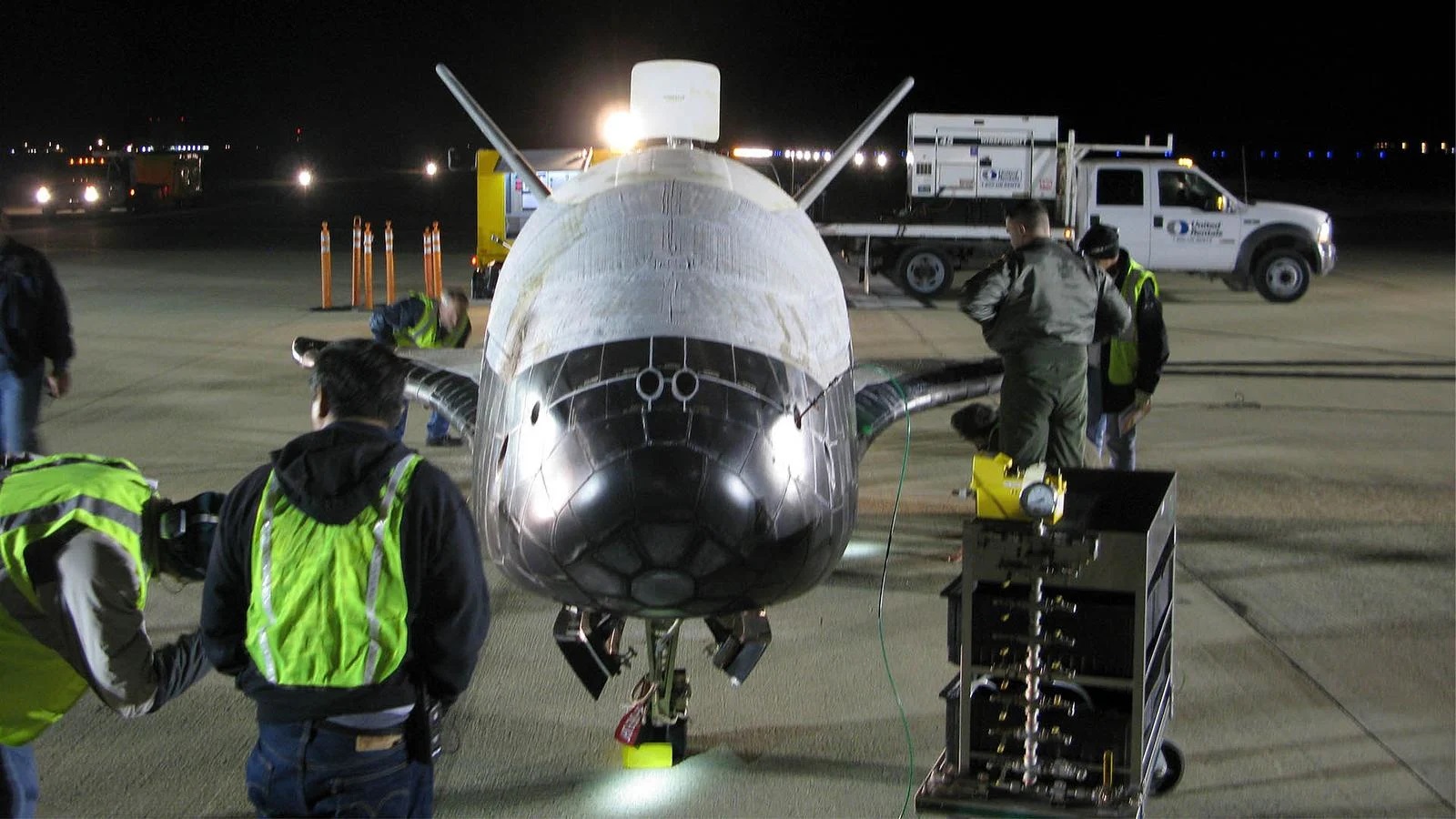 The X-37B vehicle after landing at Vandenberg Air Force Base (now Vandenberg Space Force Station), California, on Dec. 3, 2010, concluding its first mission.
Why it matters: A vehicle that returns home lets the customer touch hardware, validate results and iterate without signaling sensitive details.
- “Anniversaries matter because they mark momentum,” said Michelle Parker, vice president of Space Mission Systems. “X‑37B’s strength is persistence: fly, learn, improve, refly. Our teams and partners have built a rhythm that shortens the distance from concept to dependable capability. With OTV‑8 underway, we’re applying that rhythm again. We’re disciplined, data‑driven and mission-first.”
By the numbers: The spaceplane has completed seven missions since first flight in 2010. OTV‑7 landed on March 7 at Vandenberg Space Force Base, California. Totals below reflect OTV‑7 completion and continue to accrue on OTV‑8.
- 4,200+ cumulative days in space across the fleet
- 908 days — duration of longest single mission (OTV‑6, landed November 2022)
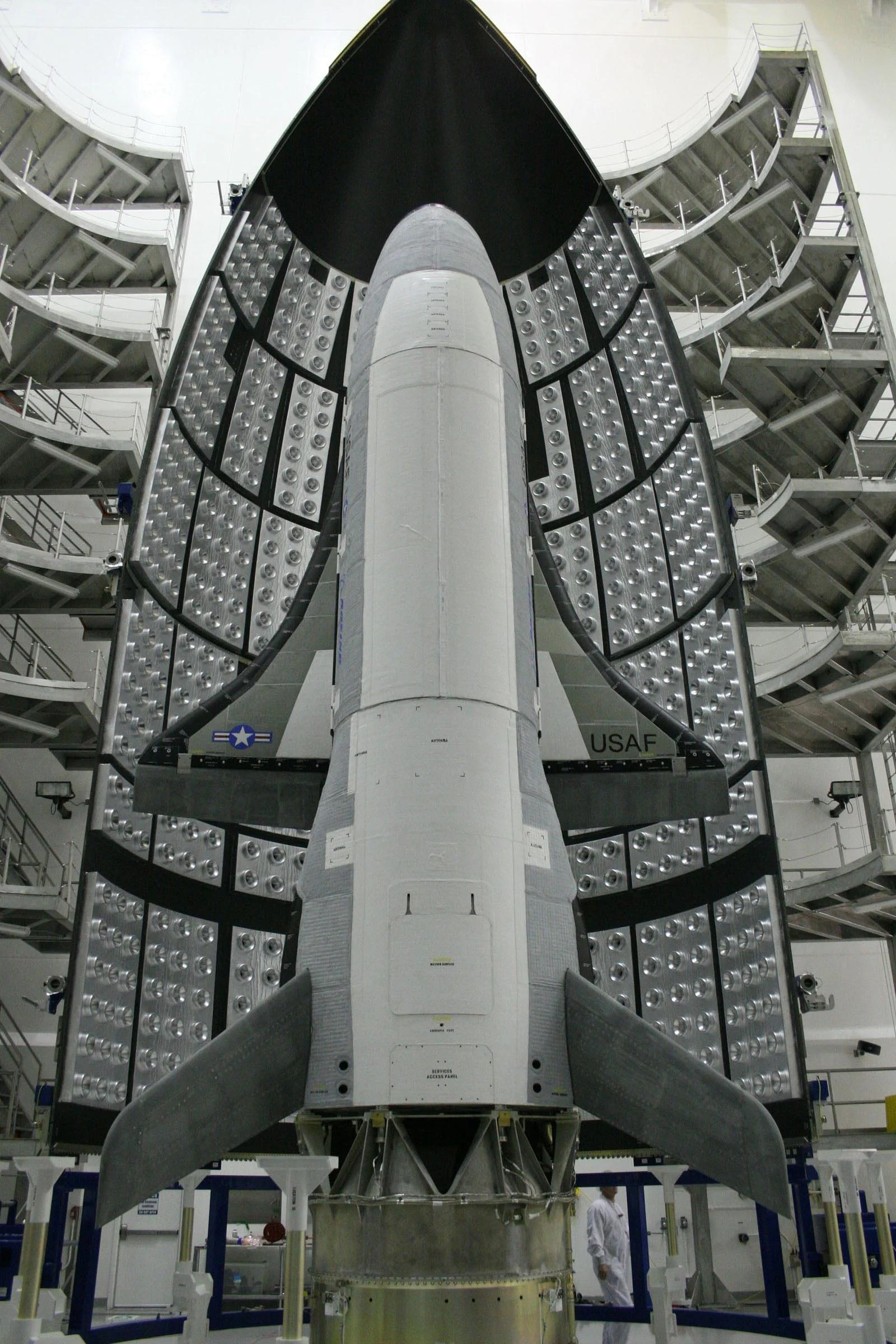 The X-37B before its first launch from Cape Canaveral Air Force Station (now Cape Canaveral Space Force Station), Florida.
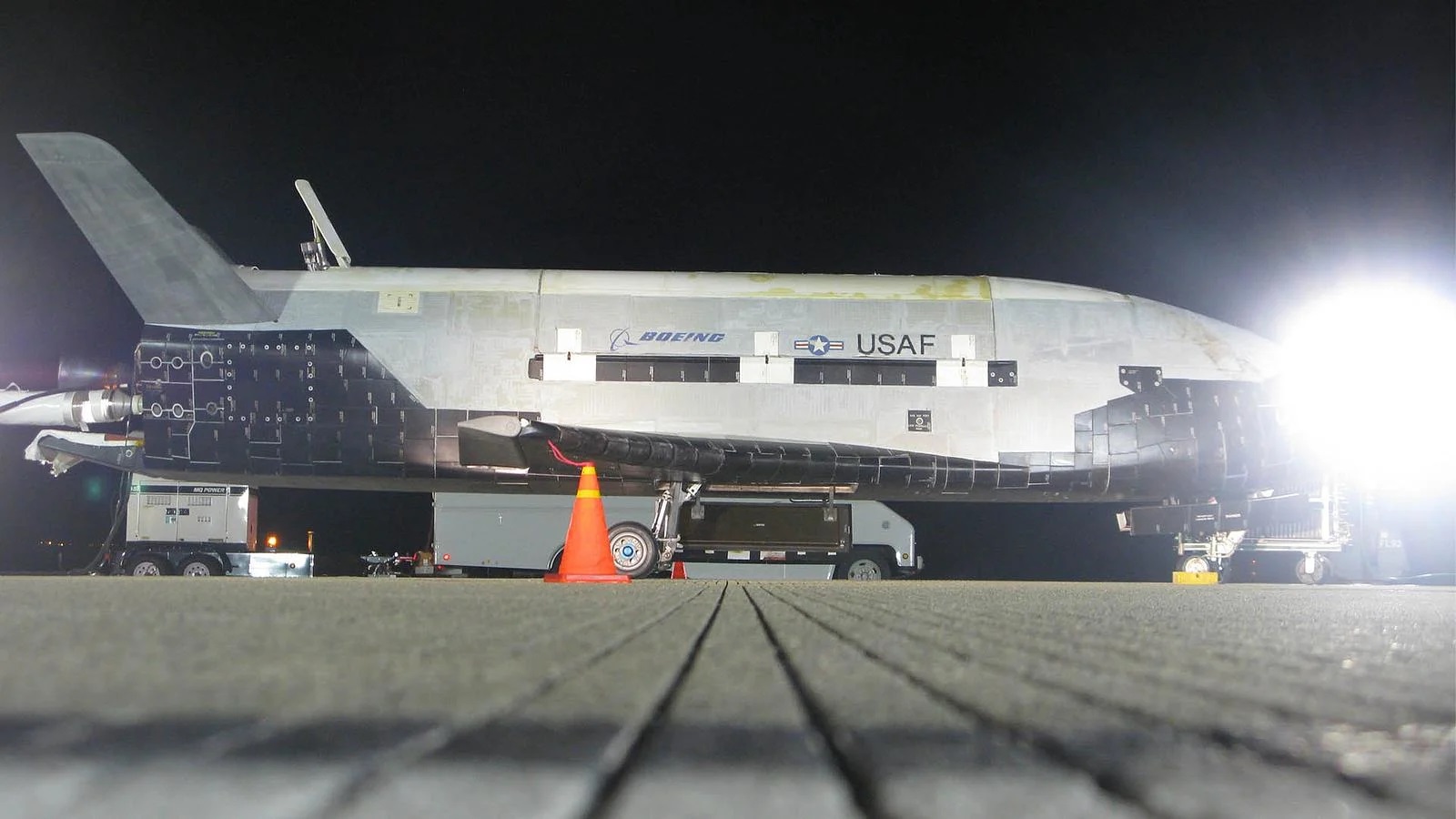 The X-37B vehicle after landing at Vandenberg Air Force Base (now Vandenberg Space Force Base), California, on Dec. 3, 2010, concluding its first mission and setting the standard for returnable space missions.
Behind the scenes: Primary teams include the U.S. Air Force Rapid Capabilities Office (program lead), U.S. Space Force (operations) and Boeing (design, integration, operations).
- Launch vehicles used: Atlas V, Falcon 9, Falcon Heavy
This video features music only, no narration. (Allie Graves video)
Mission timeline highlights
- OTV‑1 launched in 2010 and completed its first mission on Dec. 3, validating core orbital operations and proving the vehicle’s ability to return for inspection and upgrade.
- OTV‑2 flew from 2011 to 2012, extending time on orbit and broadening the experimentation envelope to inform future operations.
- OTV‑3, spanning 2012 to 2014, focused on long‑duration reuse, with teardown and refurbishment learning that strengthened the platform’s reliability.
- OTV‑4, conducted between 2015 and 2017, continued maturation of the spaceplane and demonstrated mission flexibility across an evolving set of test objectives.
- OTV‑5 flew from 2017 to 2019 for roughly 780 days, sustaining operations on orbit and returning hardware for analysis to feed improvements into subsequent flights.
- OTV‑6, from 2020 to 2022, set the longest single‑mission mark at 908 days, showcasing extended reuse and durable performance across a protracted on‑orbit period.
- OTV‑7 launched in 2023 and landed on March 7, 2025, marking a first‑of‑its‑kind aerobraking sequence to change orbits with minimal propellant and hosting multiple experiments for government partners.
- OTV‑8 was launched on Aug. 21 and is in progress, flying with an expanded service module that increases capacity to carry experiments. The mission includes testing of laser communications and a quantum inertial sensor designed to support navigation in GPS‑denied environments.