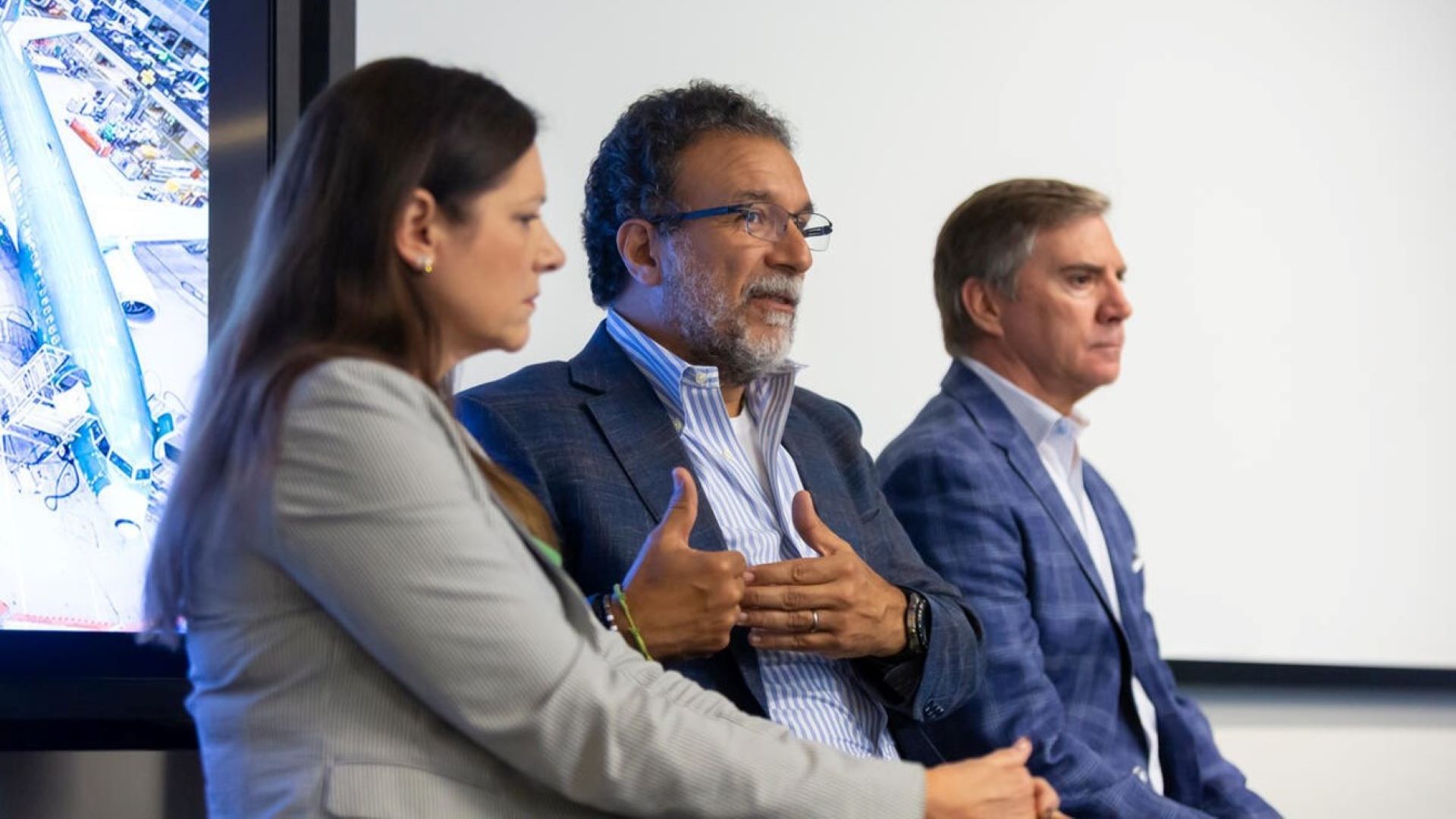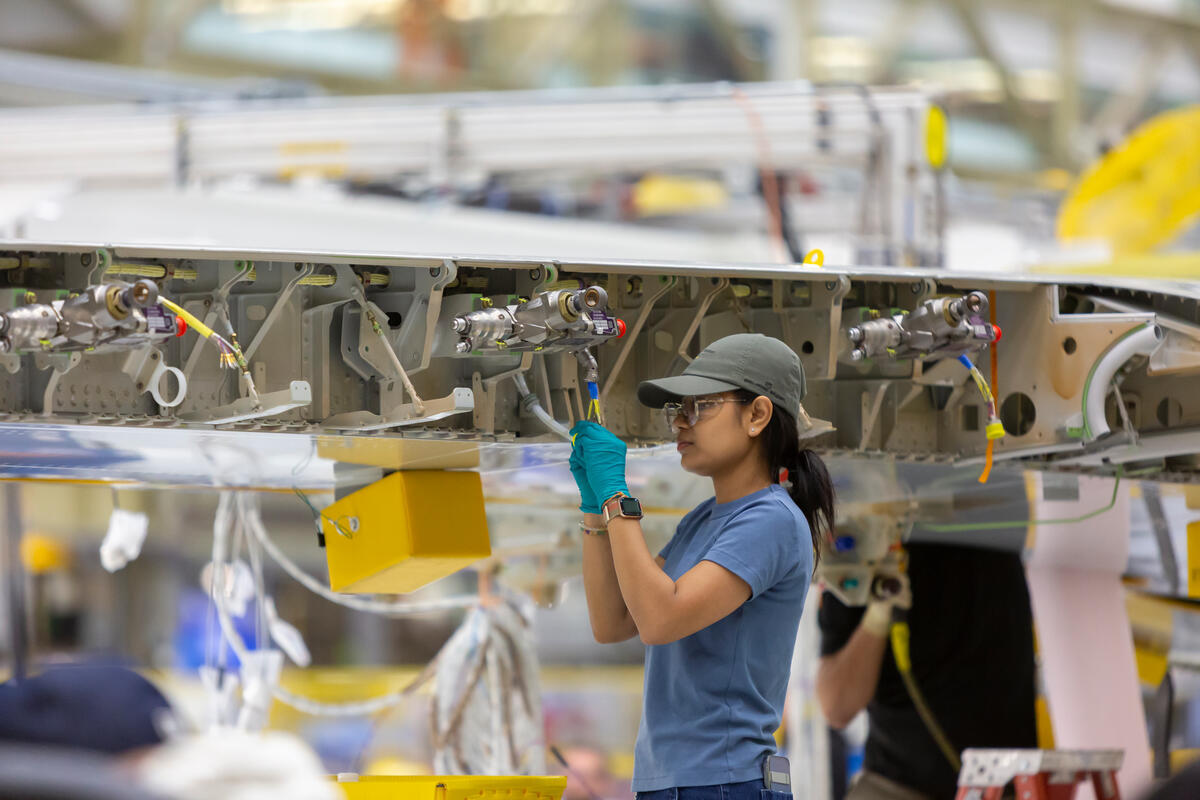
Boeing’s commercial production system is improving, leaders said, as the company works to strengthen safety, quality and supply chain performance while preparing for future rate increases.
“We had to make a lot of changes, and I think first it started with our mindset and how we thought about things, and thinking about going back to safety and quality,” said Mike Fleming, senior vice president of Commercial Airplane Programs and Customer Support.
Ihssane Mounir, senior vice president of Commercial Airplanes Supply Chain and Fabrication, added, “It's been a big learning process, and I would say a major shift in our approach, how we're dealing with the supply base.”
Why it matters: Improvements are making airplane production more stable as the company increases output, as well as giving customers and regulators more predictable results.
Driving the news: During a session with journalists ahead of the 2026 Farnborough International Airshow, leaders shared progress improving the production system, including how airplanes are built, strengthening collaboration with suppliers, and integrating the company’s Safety & Quality Plan in daily operations.
Kim Pastega, vice president of Commercial Airplanes Manufacturing and Safety, said the plan was “a significant investment” by the company. “It was really around focus, it was around transparency, and it was around consistency,” Pastega said.
“It all starts with helping our people, how we train them, how we prepare them every day to be their very best,” said Fleming.
Supply chain: Mounir explained Boeing is focusing on ensuring the work of suppliers meets all requirements. That begins with building relationships and focusing on a clear set of requirements. The recent acquisition of Spirit AeroSystems, now Boeing Wichita, allowed Boeing to share lessons with suppliers.
“Our Safety & Quality Plan definitely increased the intensity of the work that we've been doing with suppliers and partners across the whole value system,” Mounir said. “We're really talking about the extended production system outside of our own four walls, all the way into the supply base, all the way into our partners outside The Boeing Company."
Talent pipeline: Labor challenges have led to a new approach to hiring and training, that continues to be improved. Boeing has extended training timelines, enhanced on-the-job mentorship, and implemented strict manager sign-offs to ensure that personnel are fully qualified before working independently
“We are managing all the way through our hiring, our training, through our rate readiness by achieving the right capacity levels,” said Pastega.