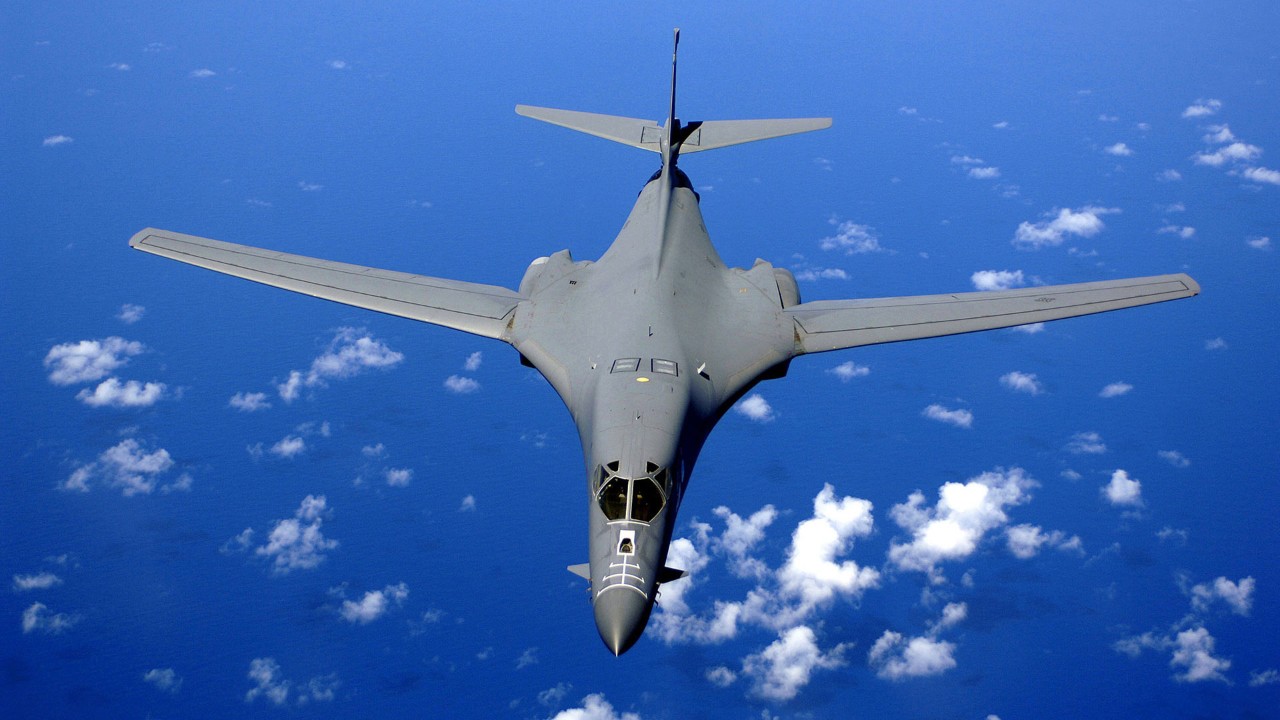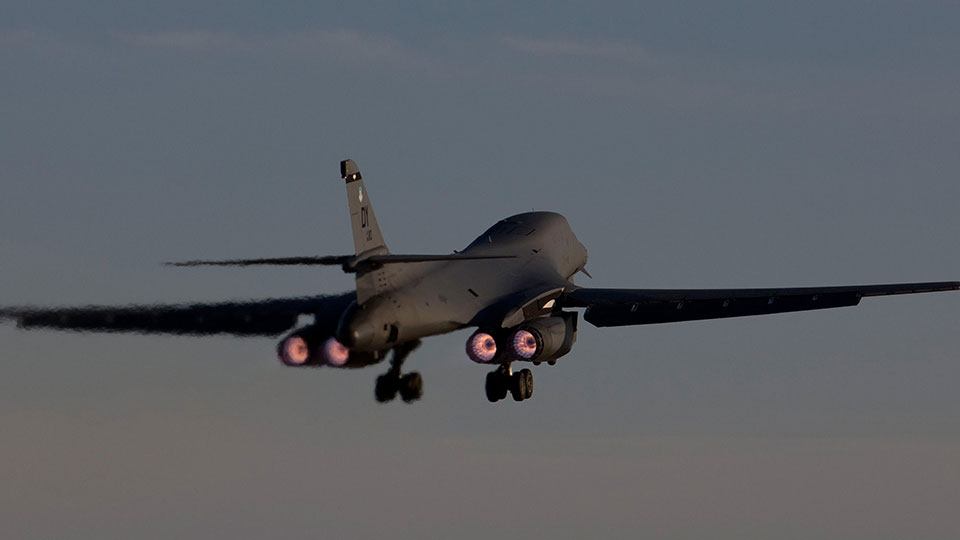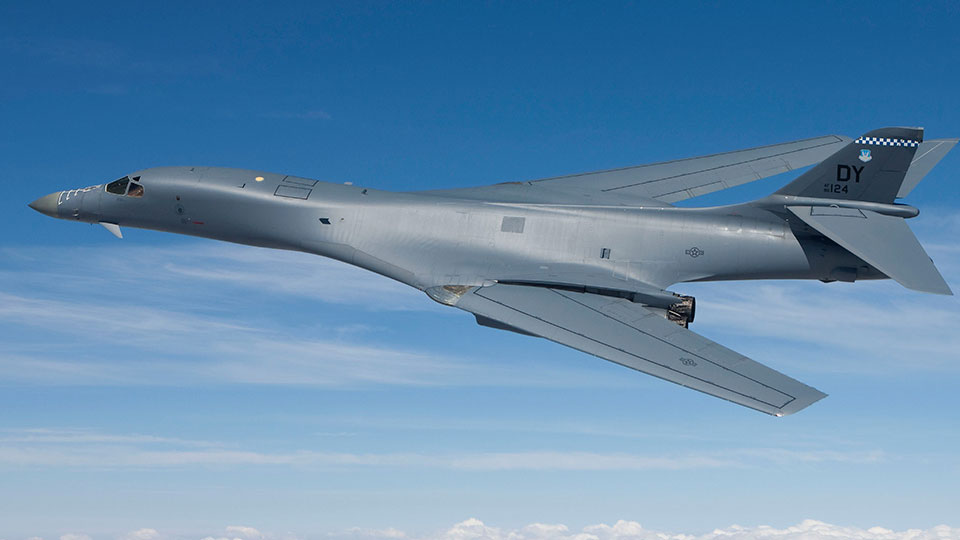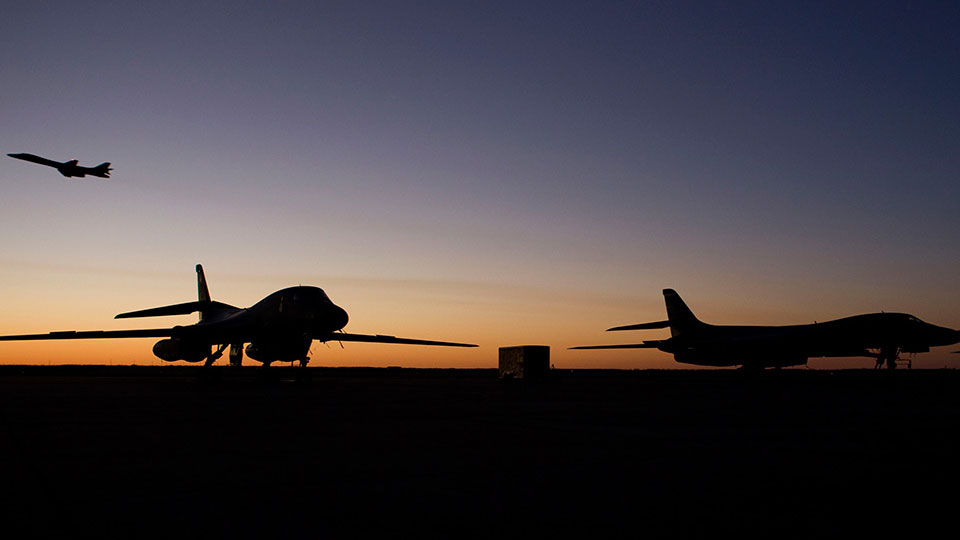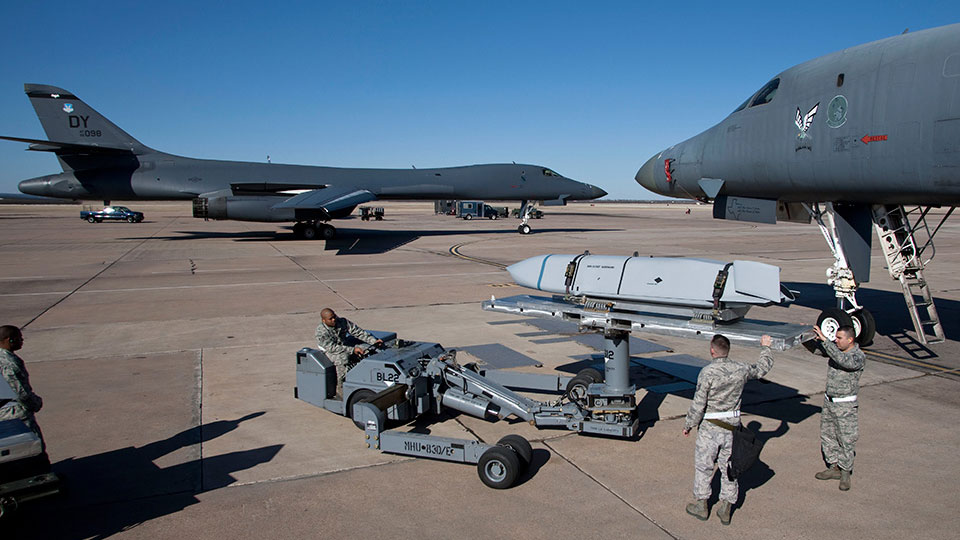
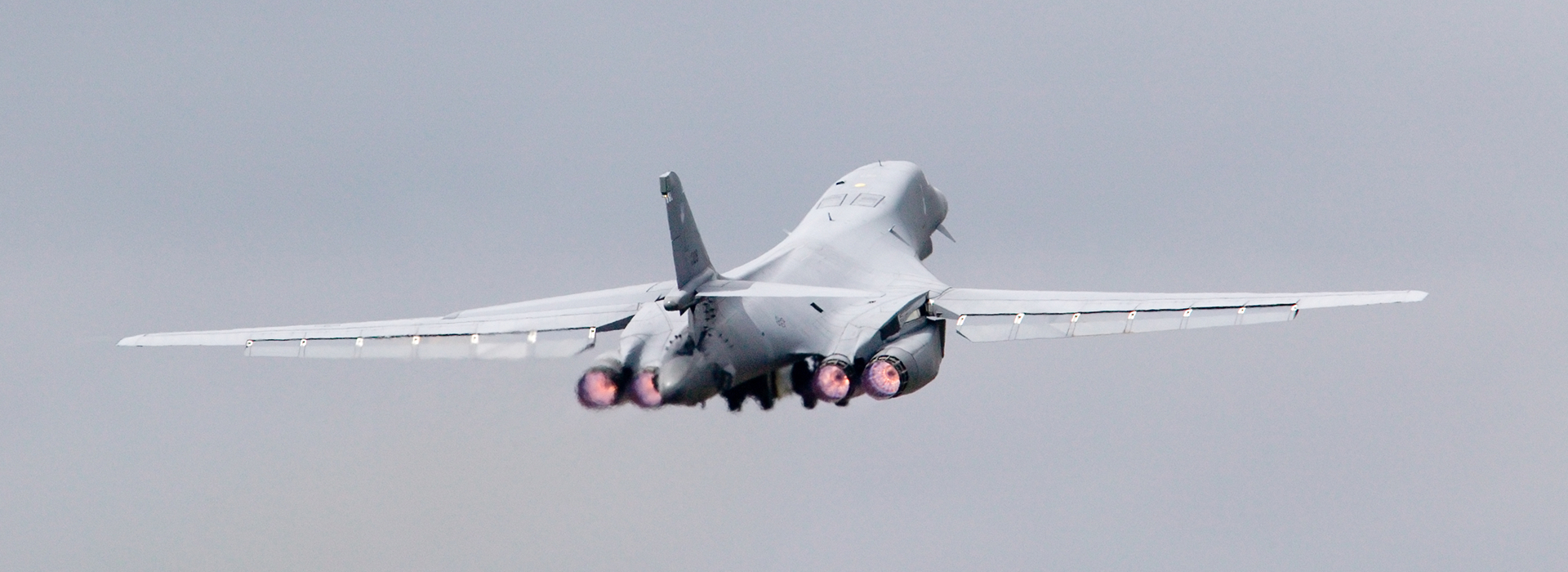
The B-1B Lancer, nicknamed the Bone, is a long-range, multi-mission supersonic conventional bomber that has served the United States Air Force since 1985. Transitioned to an exclusively conventional role in the mid-1990s, the B-1B continues to deliver high-volume precision strike effects and is being sustained to operate at demanding tempos through 2040 and beyond. Boeing partners with the Air Force to maintain fleet readiness through modernization and sustainment programs that keep the aircraft mission capable and operationally relevant.
Long-range power, proven precision
Capabilities and Features
Performance
Supersonic range and speed with global reach when refueled.
Fastest USAF bomber
The B-1B remains the fastest bomber in the United States Air Force inventory, built for rapid long-range response.
Unlimited global range
With aerial refueling, the B-1B can project power anywhere worldwide to support sustained operations.
Heavy-lift capability
Designed to carry very large loads, the aircraft supports demanding payload and mission profiles.
Payload
High-capacity loadouts for strategic and tactical strike missions.
Cruise missile and ordnance capacity
Holds up to 24 cruise missiles and is optimized for large volumes of precision munitions.
Mass payload delivery
Capable of carrying up to 75,000 pounds (34,019 kilograms) of mixed ordnance and mission equipment to deliver decisive effects.
Modernized for Sustainment
Digital upgrades and open systems sustain relevance well into the future.
All-digital cockpit
Modern digital displays and integrated avionics enhance situational awareness and mission effectiveness.
Integrated battle station
Upgrades connect the B-1B to global communications and mission networks, enabling agile command and control.
Future ready to 2040 and beyond
Ongoing sustainment and modernization efforts position the B-1B for continued service at demanding operational tempos.
Combat proven
Decades of operational use demonstrate adaptability.
Extensive combat record
More than 12,000 sorties flown since 2001 across multiple theaters including Syria, Libya, Afghanistan and Iraq.
High-impact employment
Historically, the B-1 delivered a disproportionate share of ordnance relative to sortie counts, underscoring its strike effectiveness.
Specifications
Function | Long-range, multi-role, heavy bomber |
Power plant | Four General Electric F101-GE-102 turbofan engines with afterburner |
Thrust | 30,000-plus pounds |
Wingspan | 137 feet (41.8 meters) extended forward, 79 feet (24.1 meters) swept aft |
Length | 146 feet (44.5 meters) |
| Height
| 34 feet (10.4 meters) |
Weight | Approximately 190,000 pounds (86,183 kilograms) |
| Max Takeoff Weight | 477,000 pounds (216,364 kilograms) |
Fuel Capacity | 265,274 pounds (120,326 kilograms) |
Payload | 75,000 pounds internal (34,019 kilograms), 50,000 pounds (22,679 kilograms) |
Speed | 900-plus mph (Mach 1.2 at sea level) |
Range | Intercontinental |
Ceiling | More than 30,000 feet (9,144 meters) |
Crew | Four (aircraft commander, co-pilot, and two weapon systems officers) |
Milestones

Program Highlights