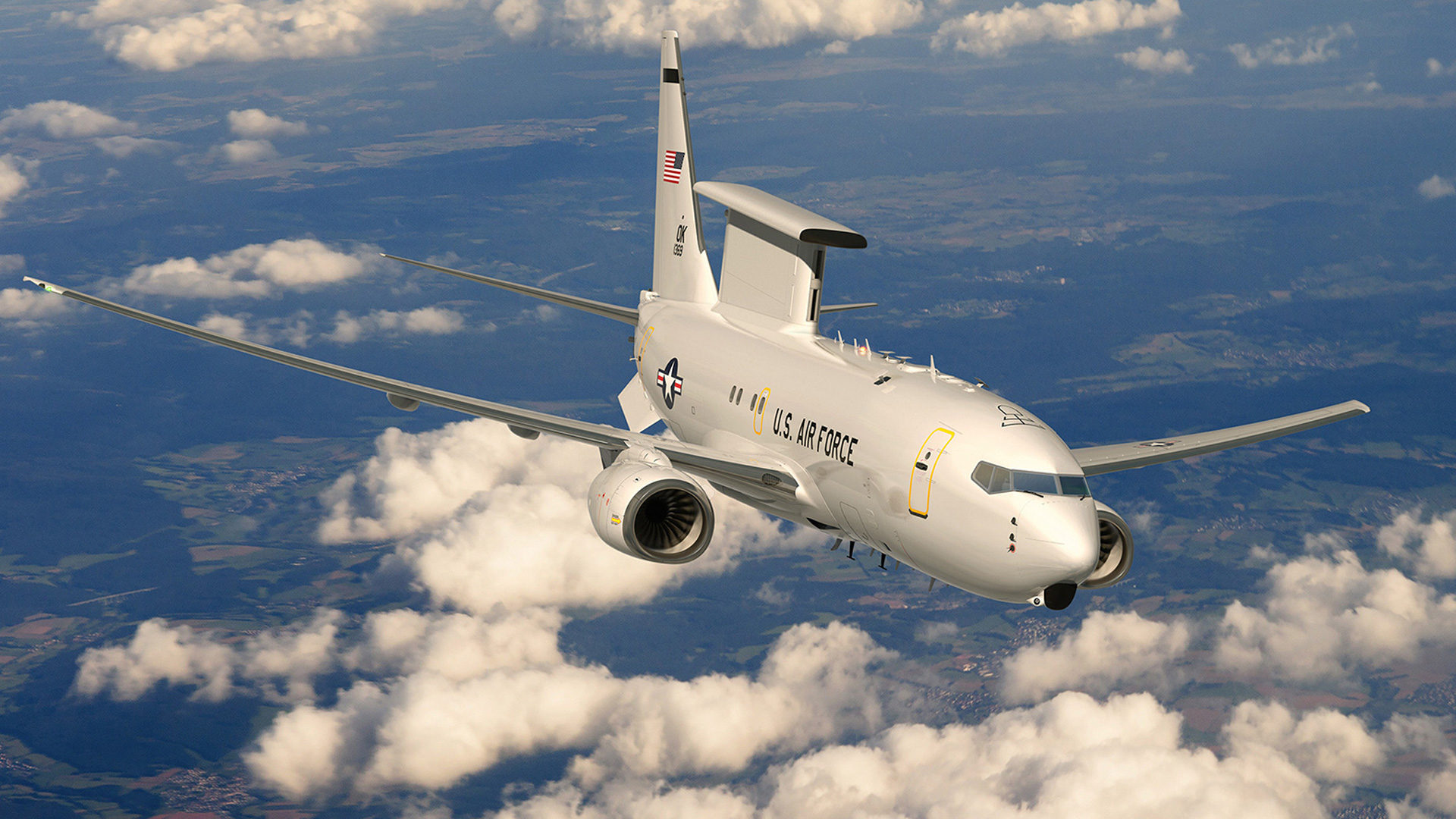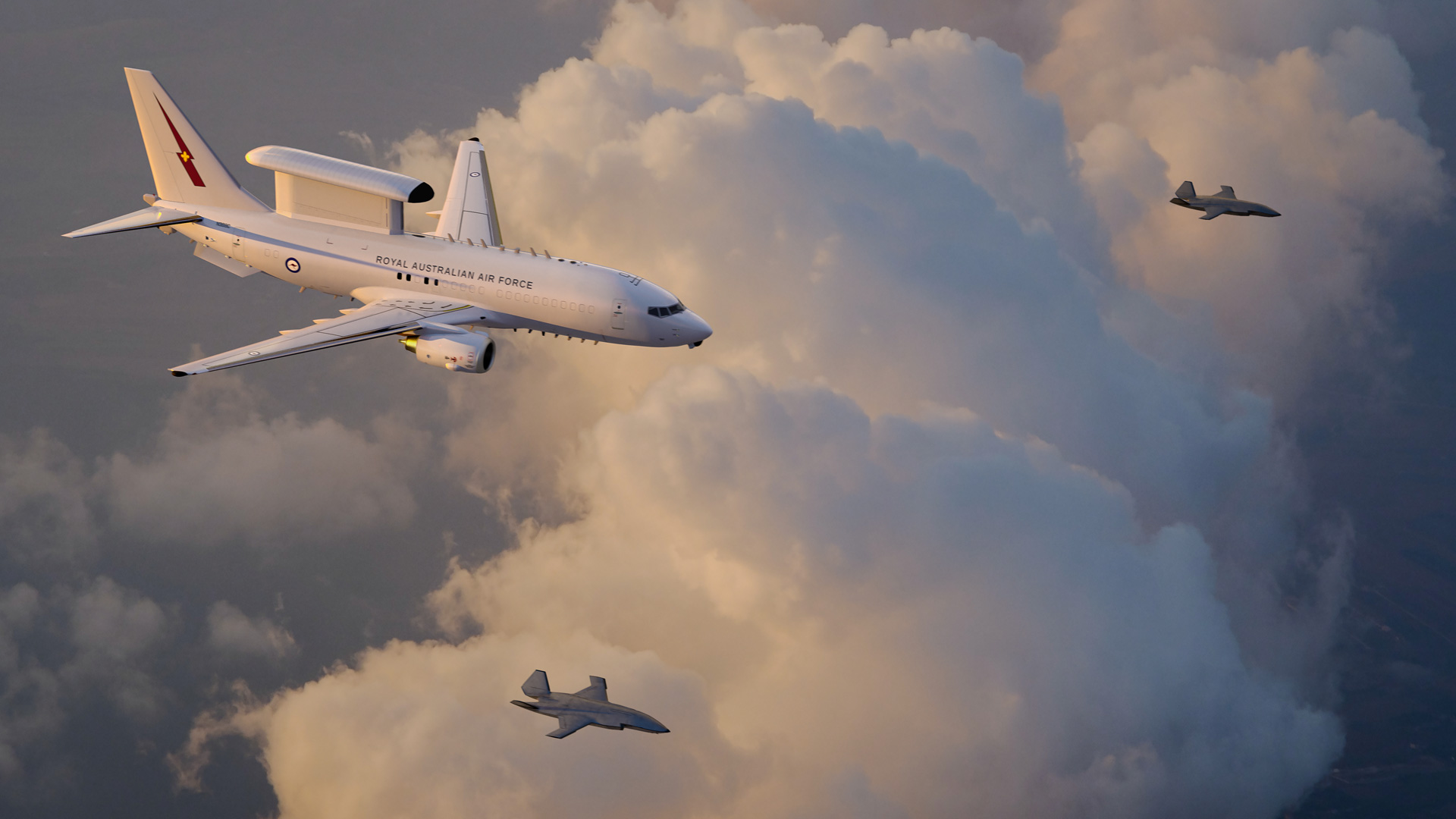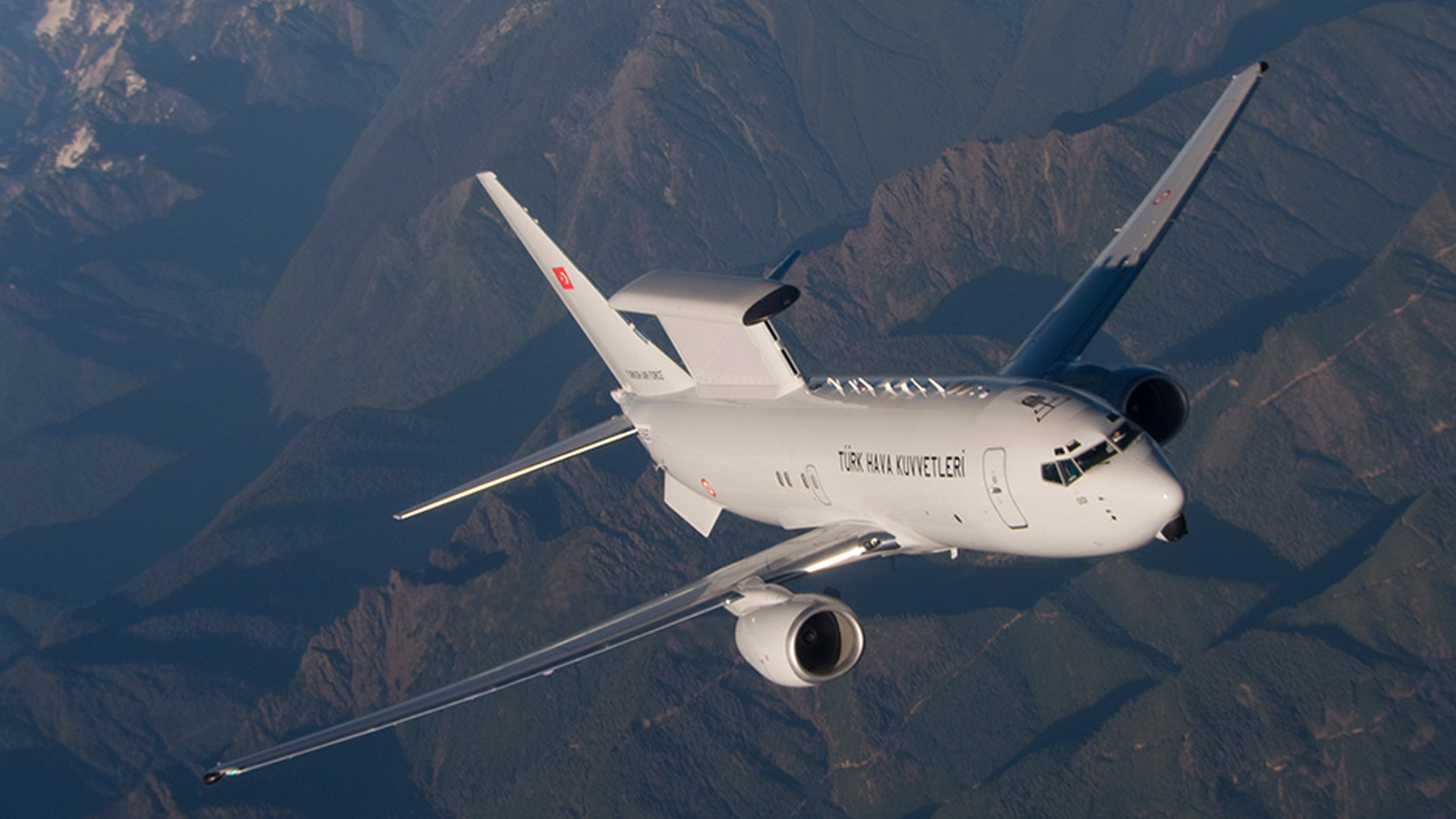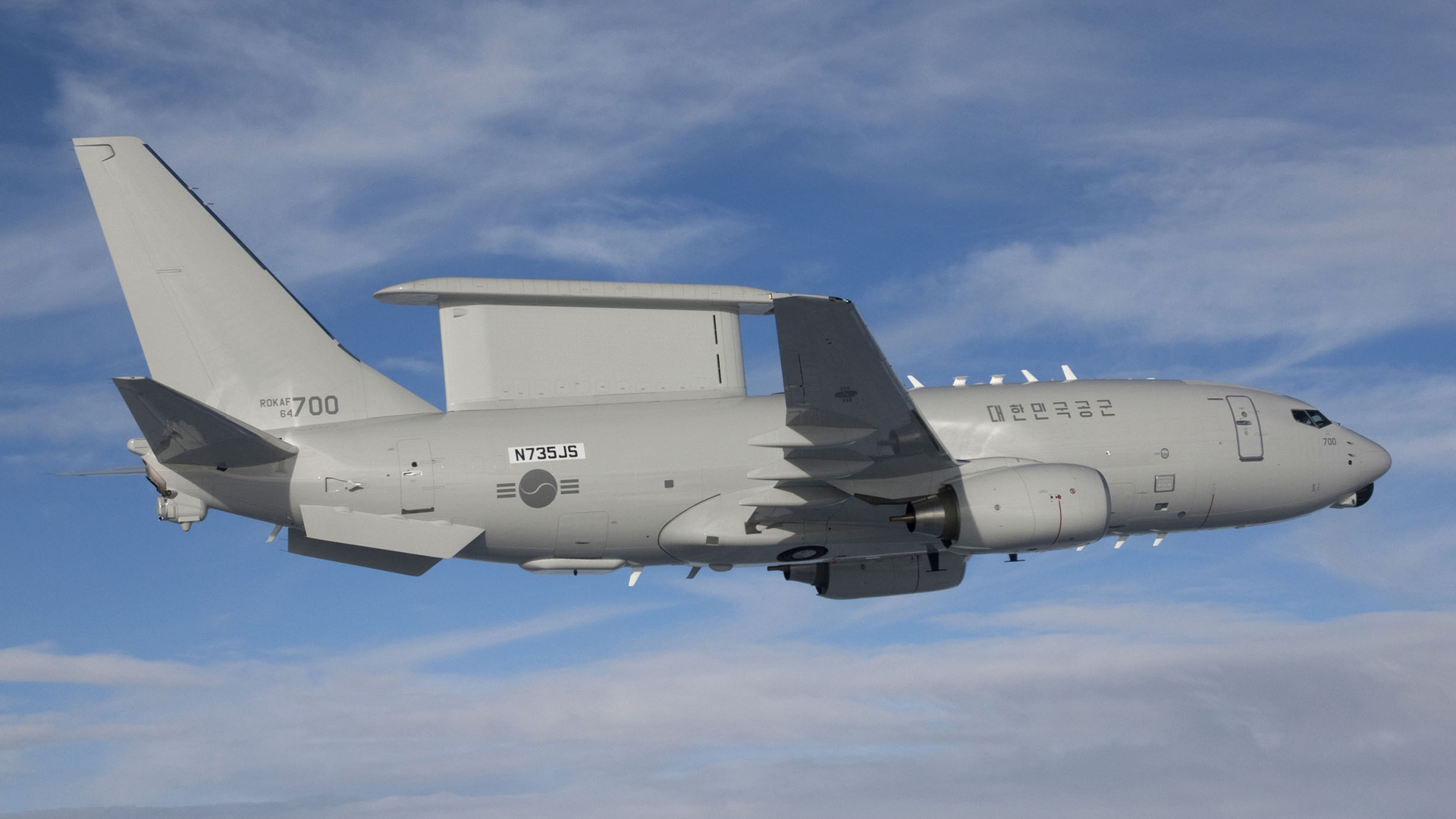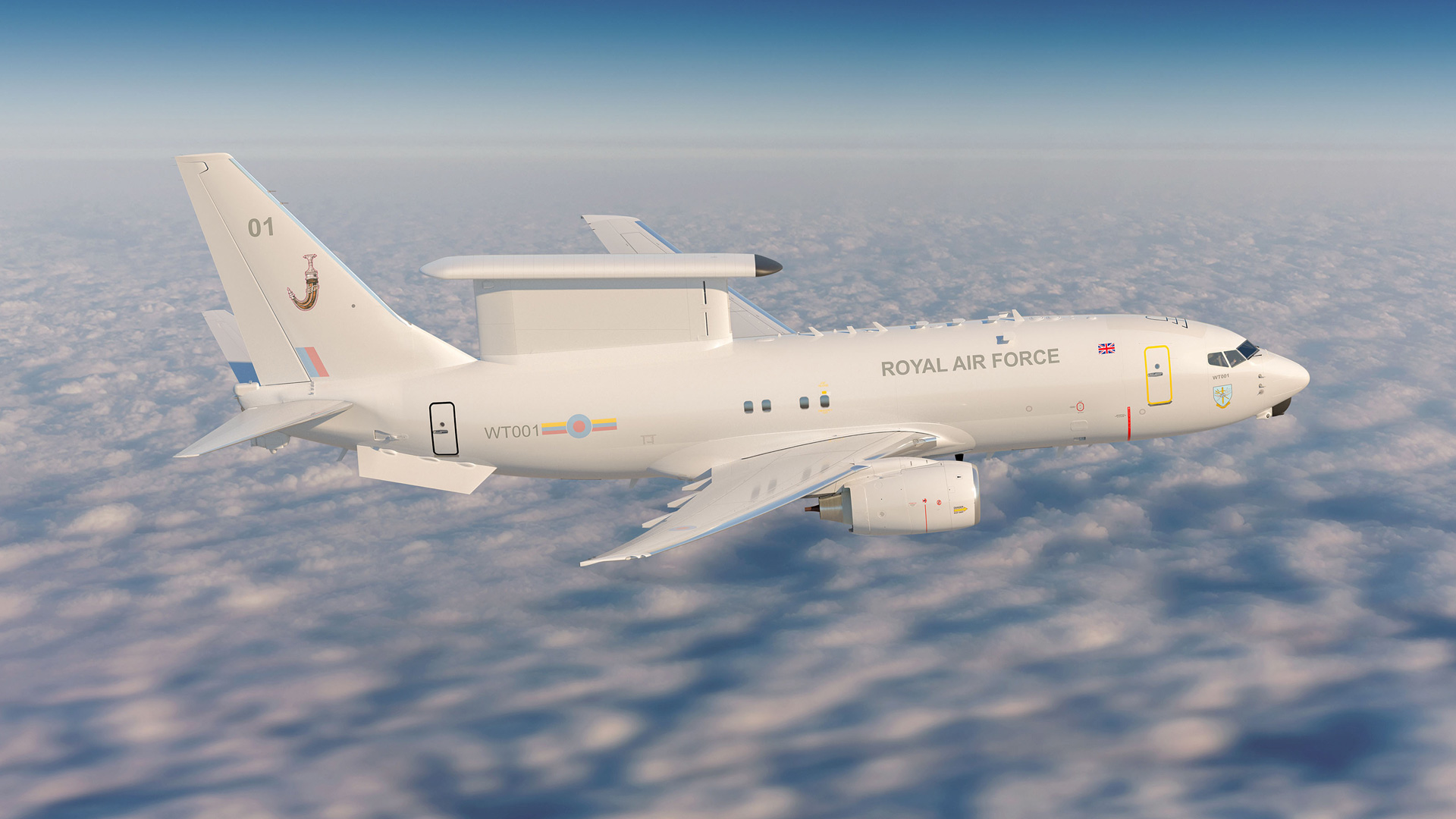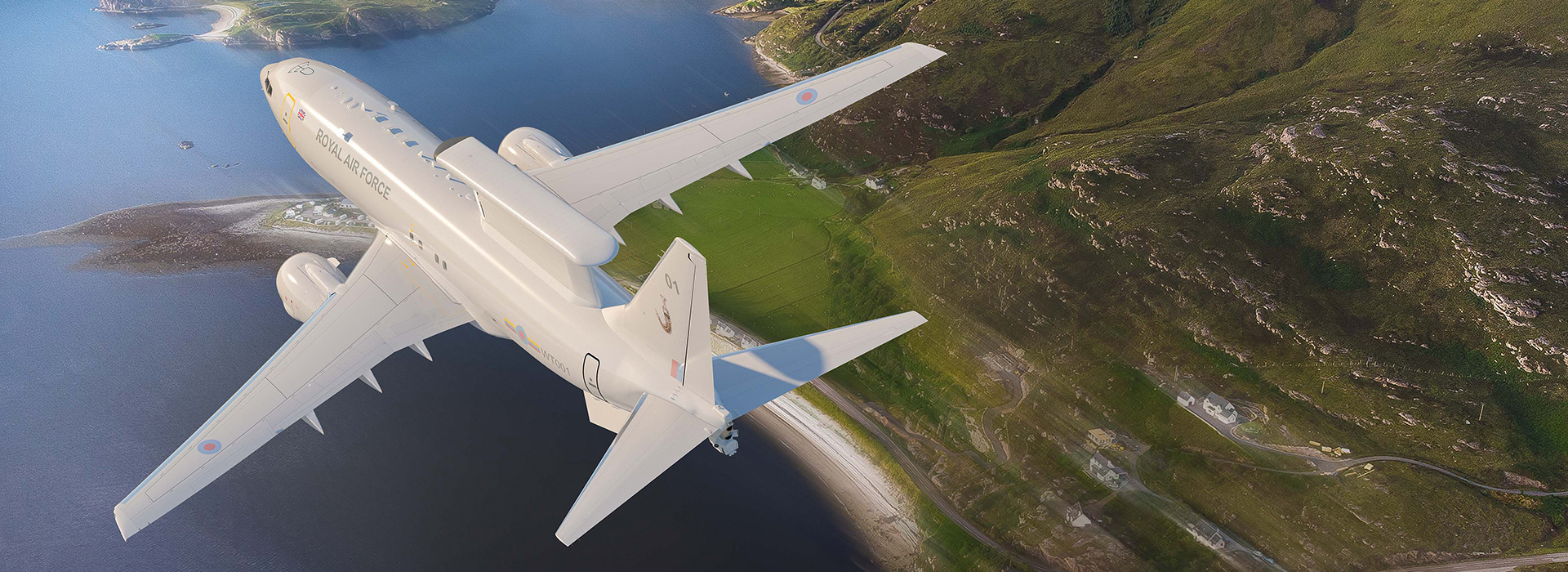
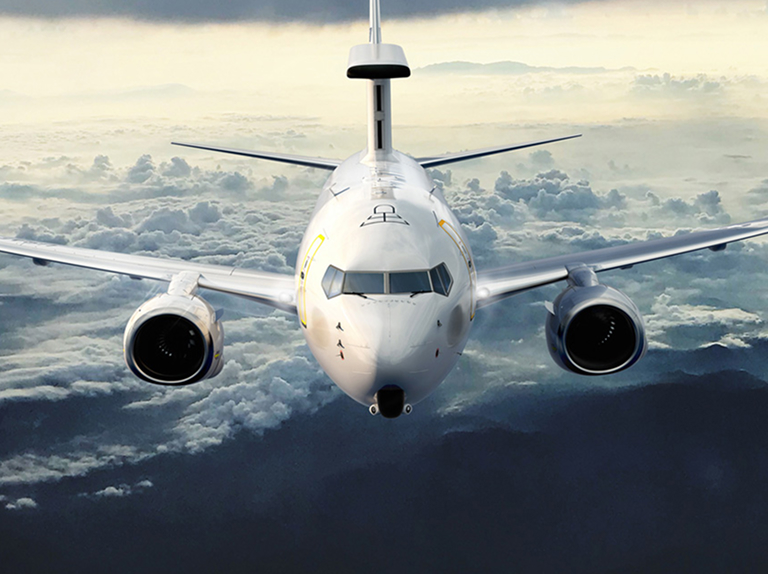
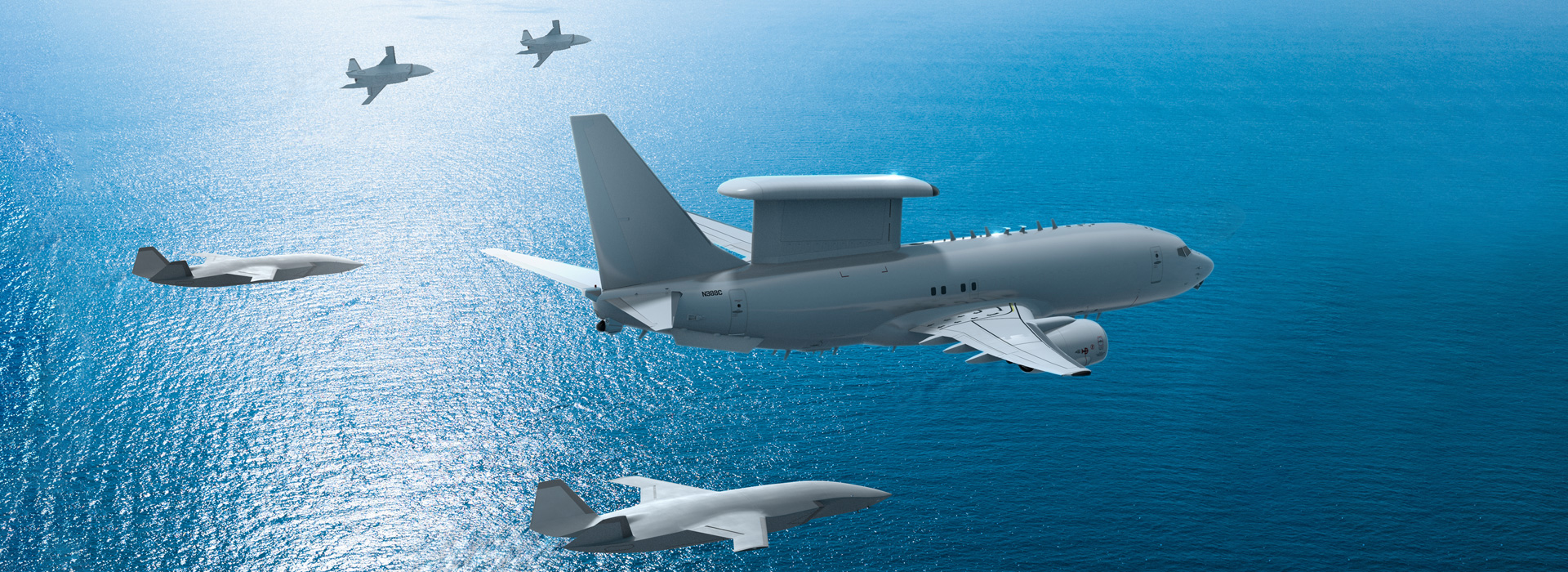
The Boeing E-7 Airborne Early Warning & Control (AEW&C) is a combat-proven force multiplier that provides unparalleled abilities to scan the skies; communicate with surface, ground and air assets; and enable integration across the joint force.
The battle management solution for threats of the future
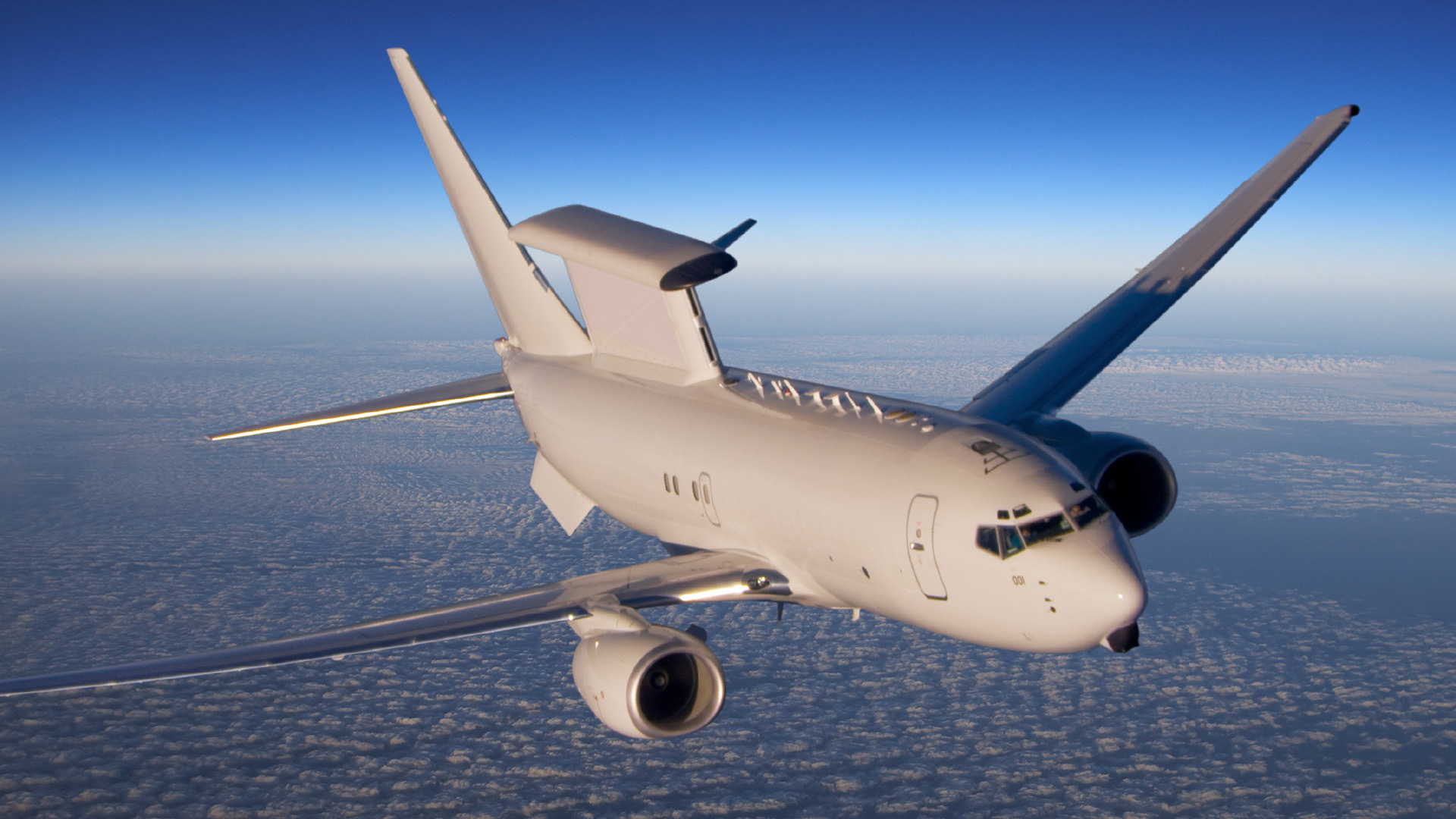
Capabilities and Features
Tactical
Maintaining air superiority.
Surveillance
The multirole electronically scanned array (MESA) radar, provided by Northrop Grumman, is fully compliant with international standards and provides the ability to conduct air-to-air and air-to-ground surveillance. Detection and geolocation of emitters within the required frequency range allow surveillance, target identification and threat warning.
Integrated communications
Sophisticated communication systems facilitate real-time data sharing with air, space and ground forces, enhancing collaborative decision-making. Integrate seamlessly with various platforms, including fighter jets, unmanned aerial vehicles and ground command centers, ensuring that all units operate with a unified understanding of the battlefield.
Sensor systems
Long-range detection and identification of objects in air, at sea and on land that contain an integrated sensor system. That allows the aircraft to simultaneously monitor multiple targets, making it an invaluable asset for both defensive and offensive operations.
Mission computing
A single interface between multiple subsystems and the operator provides mission processing and display for the airborne mission segment.
Operational
Platform commonality for mission readiness and joint force enabling.
Readiness and support
As a derivative of the in-production Next-Generation 737, the E-7 has access to a well-established global supply chain that enables higher operational availability rates with 280-plus global service centers and repair facilities providing 24/7/365 support.
Range
More than 1.5 million square-mile coverage (4 million square-kilometer) coverage in a standard mission and over 10-hour mission duration, longer with aerial refueling.
Twenty-one total crew
The aircrew accomplishes the mission. The E-7A offers 10 battle manager workstations, twice as many as any competing platform and 21 total aircrew members.
Air-to-air refueling
Air-to-air refueling capability allows for extended on-station time, range and mission support.
Rapid deployment
Designed for rapid deployment, the E-7 can operate in diverse environments, from high-intensity conflict zones to humanitarian missions.
Interoperability
Integrate seamlessly with allied forces and various platforms, including fighter jets, unmanned aerial vehicles, and ground command centers, ensuring a unified response to emerging threats.
Evolutionary
Staying ahead of global threats.
Open-systems architecture
Boeing successfully married the open mission systems (OMS)-compliant battle management command and control (BMC2) system to an advanced, wideband active electronically scanned array. The E-7A’s BMC2 and all-domain data integration, including from space, enable a greater chance of joint force mission success.
Flexible
Customers have flexibility to add or upgrade future capabilities, select vendors and determine an implementation schedule — aligning with the Department of Defense for flexible, net-centric warfare.
Proven
As the primary platform in a virtual demo, the E-7 shared data and common operating pictures between multidomain systems — from sensor to sensor, to platform, to shooter.
Life cycle value
With thousands of 737s operating worldwide, supported by a robust commercial supply chain and maintenance network — including 30 global repair facilities and 250 global service centers — E-7 operators benefit from significantly reduced maintenance and logistics costs.
Specifications
| Airframe | 737-700 |
| Identification Friend or Foe (IFF) System Range | 300 nautical miles (555.6 kilometers) |
| Maximum Ceiling | 41,000 feet (12,496.8 meters) |
| Range | 3,500 nautical miles (6,482 kilometers) unrefueled |
| Aircrew | 2 pilots, 21 total |
| Mission Crew Consoles | 10 |
Customers