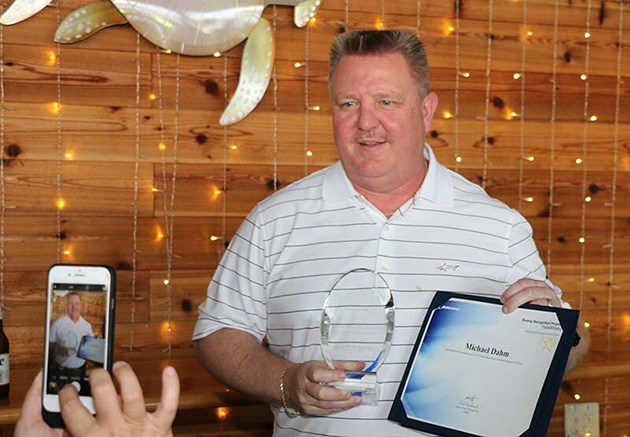
Mike Dahm can’t remember a time when he wasn’t involved with testing electronics, and specifically flight hardware, to ensure astronauts have a smooth and safe ride to the International Space Station.
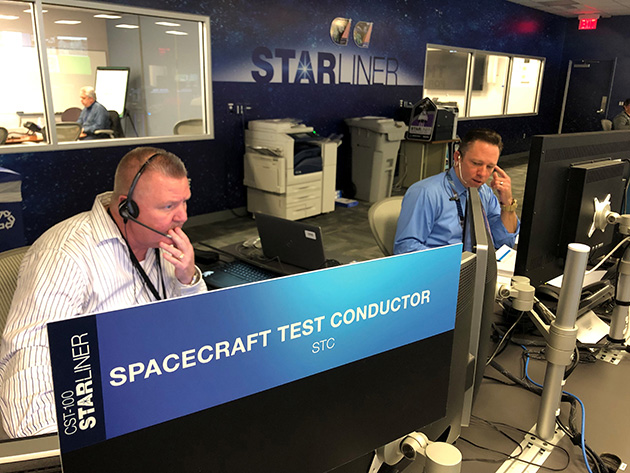
As lead test conductor and lead test engineer for Boeing’s CST-100 Starliner, Dahm compares his role to that of a train conductor orchestrating various tests on the health of a vehicle — in his case, a spacecraft.
He had similar roles during the space shuttle era as lead systems engineer for the International Space Station, responsible for integrated systems testing of critical flight hardware and associated ground support equipment.
But his true affinity for testing and troubleshooting started at about 12 years old when he’d fix broken radios collected from neighbors growing up in northeastern Pennsylvania. He later advanced to fixing his mom’s oven and other appliances.
A part-time high school job in the electrical machine shop at a plastics extrusions company making garbage and turkey cooking bags sealed his interest in the electrical engineering field.
“I was always good in math and science and was always in the top of my class in those subjects in high school, and I enjoyed tinkering with electrical components,” said Dahm, who has a bachelor’s degree in electrical engineering from Pennsylvania State University.
Dahm has been involved with the Starliner program since the early days in 2010, including developing specification documents for the support equipment that interfaces with the vehicle for pre-launch ground testing. This involves ground power units, ground communication systems, and checkout and control systems.
Teammates have become used to hearing his voice on the overhead public address system at Boeing’s Commercial Crew and Cargo Processing Facility at Kennedy Space Center in Florida during various testing and his signature sign off – “That is all.”
He’s primarily involved with various testing on the spacecraft, including the crew module acceptance test that checks all the avionics and electrical power systems (EPS) on the crew module. Similar to a circuit breaker in a house, the Starliner’s EPS powers everything from flight management and system management computers to the guidance and navigation control systems, to name a few.
Other tests include checking how the ground systems communicate with the spacecraft during ascent when it lifts off from the launch pad, on-orbit and landing.
A five-day acceptance test is also conducted after the crew module is mated with the service module to ensure everything is integrated properly.
“I enjoy making sure the avionics systems are functioning properly to support a successful launch,” Dahm said. “As test conductor, you have to know the vehicle and systems and how everything reacts. It’s a team event. I enjoy working with other people and the spacecraft's subsystems. By leading and orchestrating the testing events, I get to interact with everyone equally.”
During launch and landing, Dahm is on console in the Boeing Mission Control Center in Florida as the flight’s test conductor. Also prior to launch, he and his teammates help to ensure the spacecraft is interfacing properly with the Atlas V rocket. He also helps orchestrate the powering up of the spacecraft to ensure the vehicle is working properly with the ground systems about 26 hours prior to launch.