Inside the archives: ‘Skating by’ at work

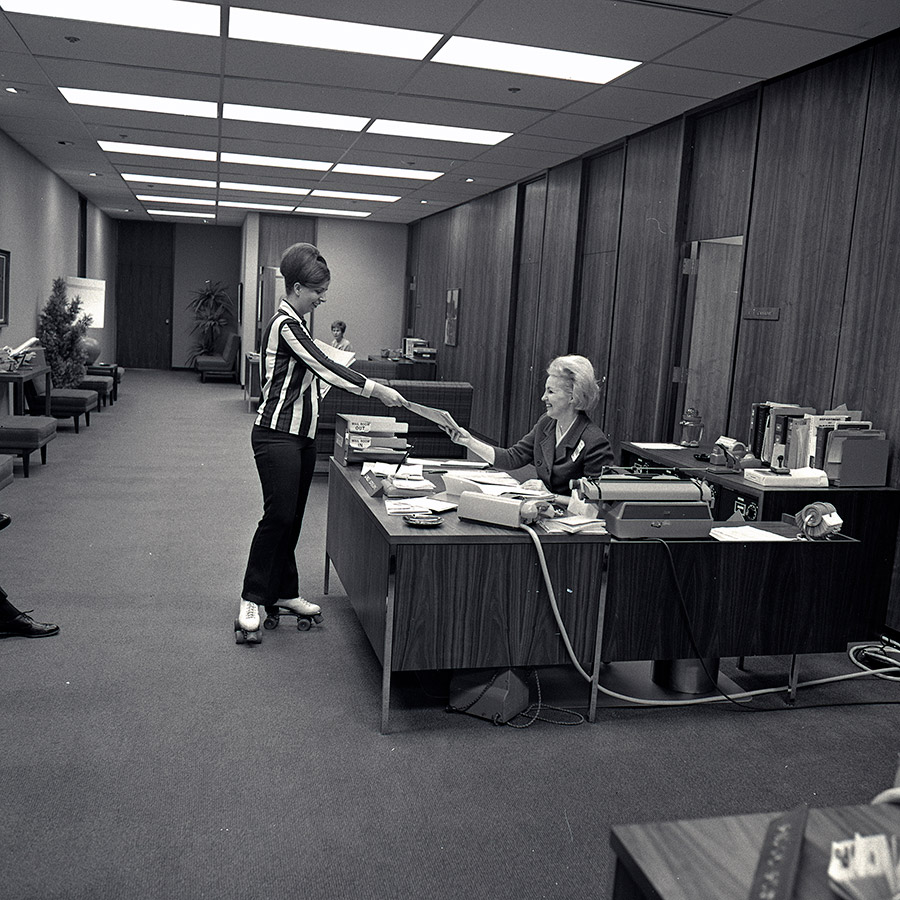
Before email, interoffice memos were often delivered by a teammate on roller skates.

December 06, 2023 in History

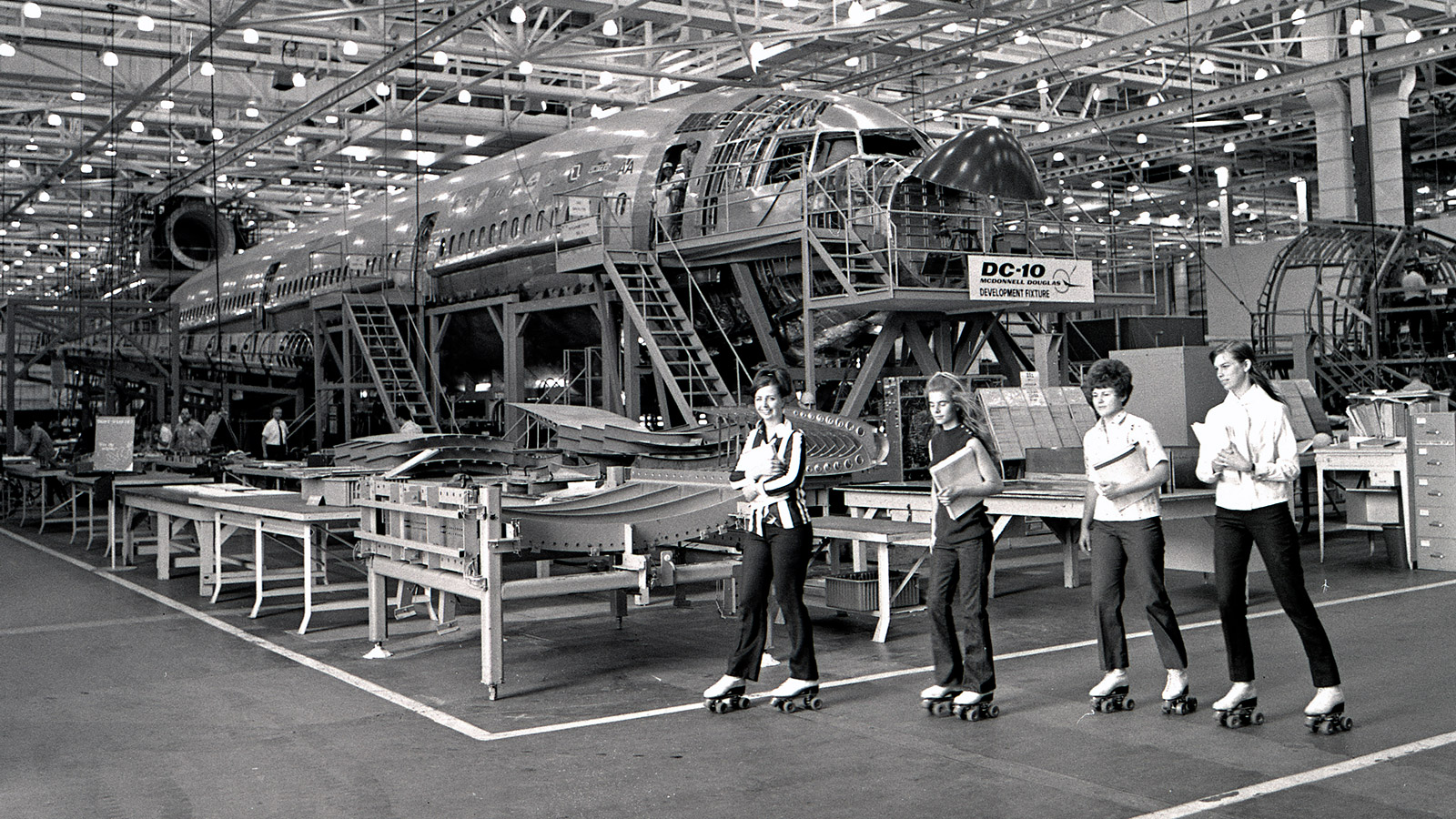
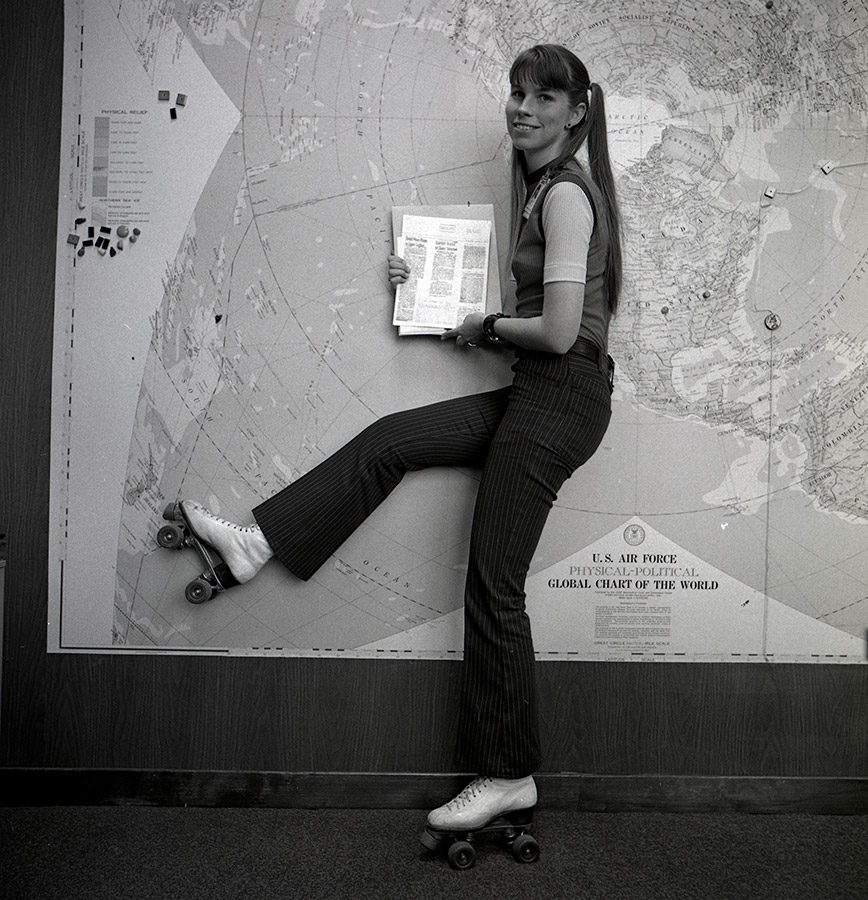
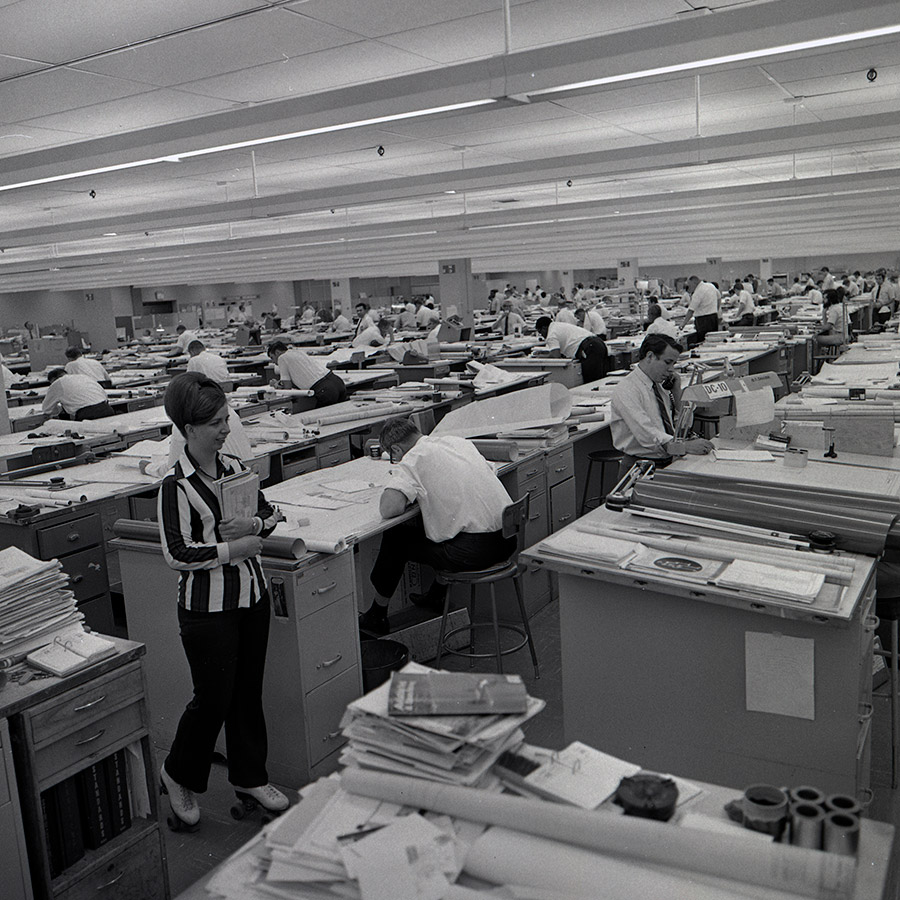
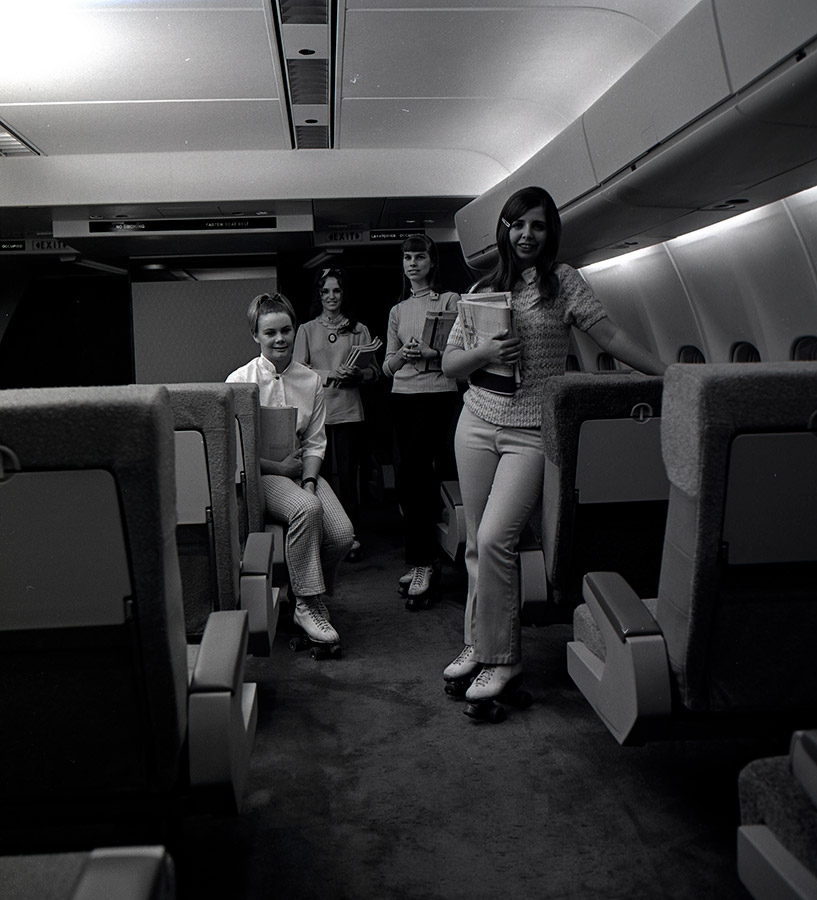
Black and white photo of women roller skating through aircraft plant. Women roller skate across the plant near a DC-10 circa 1970. All photos courtesy of the Boeing Archives.

Roller skating is often seen as a fashionable “fad” that comes and goes. The four-wheeled footwear saw a huge resurgence in the 1980s and again in the 2020s. But during World War II, this mode of transportation was more practical than it was trendy. Roller skates played a key role in expediting messages and enhancing productivity at the Douglas Aircraft Co. plants in California.


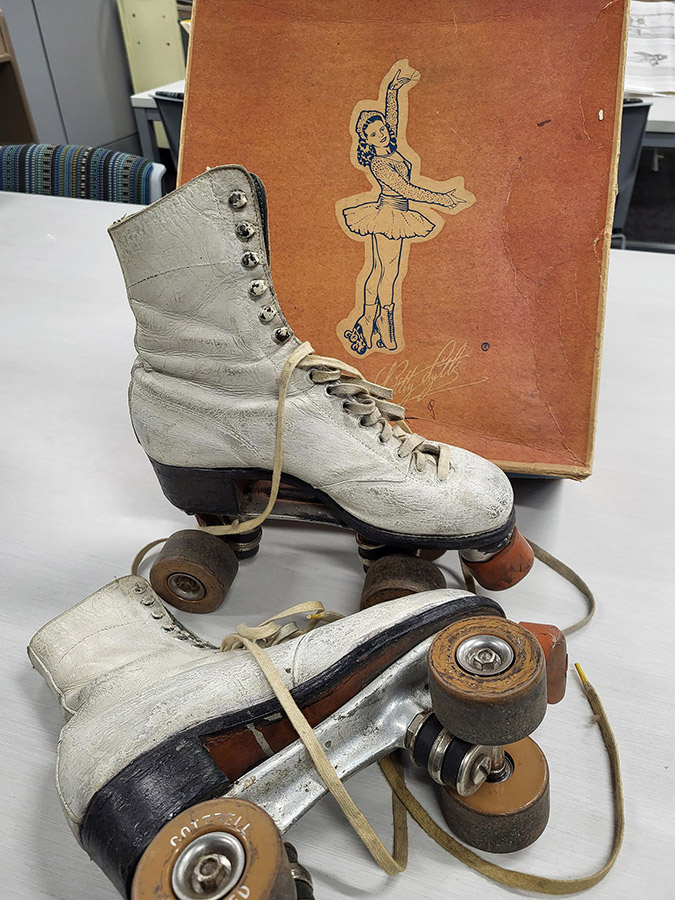
Color photo of white vintage roller skates sitting on table. The Boeing Archives has two pairs of Betty Lytle roller skates from Douglas Aircraft Co. The pair shown here is a woman’s size 5 ½ and was constructed by the Hyde Athletic Shoe Co.

Roller skates were nothing new by the time they found their way to Douglas in the 1940s. The concept of ice skates with wheels instead of blades is officially credited to Belgian clock maker and inventor John Joseph Merlin in 1760. Since then, the evolution of the roller skate has revolutionized history with its undeniable influence on pop culture throughout the last two centuries. However, roller skating wasn’t just the company trying to stick with the times.


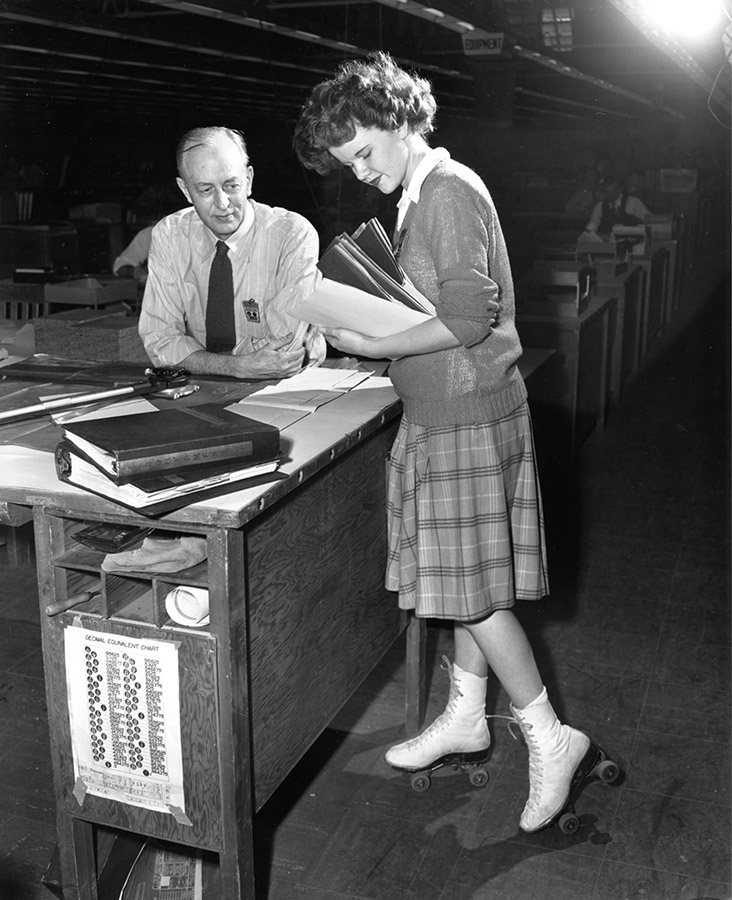
Black and white photo of woman on roller skates delivering mail. A skater delivers blueprints at a Douglas facility circa 1940.

As one of the largest manufacturers of military aircraft in the United States, Douglas would go on to produce roughly 30,000 planes from 1942 to 1945. In a company of about 160,000 people, roller skating became an effective way to deliver inter-departmental messages.

While it was a role that women filled, it wasn’t the only job that women held. Roller skating messengers coincided with the larger trend of employing women during the push to increase war-time production. The most familiar of these roles is of course “Rosie the Riveter” – a persona collectively adopted by the millions of women across the industry who worked on the factory floor. The iconic “Rosie” splashed the pages of newspapers and magazines to promote female empowerment of working away from home. But women also held positions in engineering and even served as test pilots.


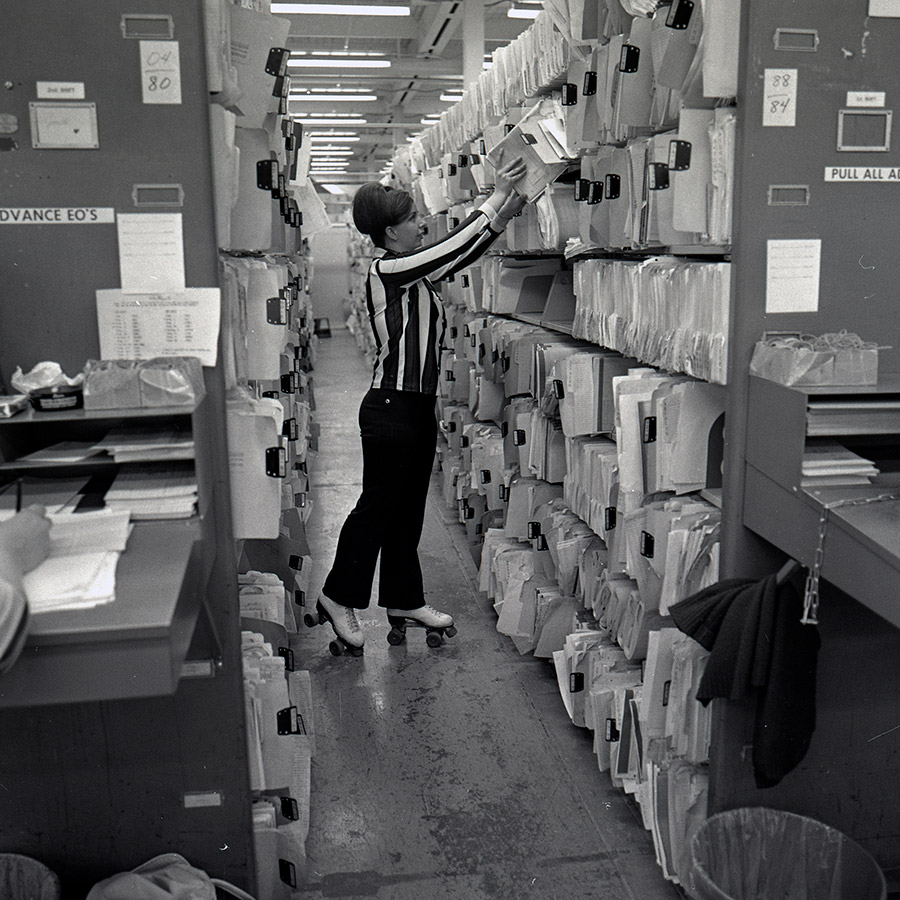
Black and white photo of woman in striped shirt putting files on shelf. A message courier pulls files for delivery circa 1970.

Outside of the office, roller skating was a popular sport for both women and men with the sport gaining a boom in popularity around 1937. After the United States entered World War II, the government encouraged the activity as a way for Americans to keep up their physical fitness and improve morale. During the “Golden Age” of roller skating, which spanned 1930s, 40s and 50s, approximately 5,000 roller rinks popped up around the country as civilians and military personnel skated to relieve stress. By the time the war ended, the sport was more popular than ever. Douglas continued to employee roller skating messengers until the 1970s.

The roller skates at the Boeing Archives help tell the story of a cultural movement in the United States that found its way into one of the biggest airplane manufacturers of the 20th century. They also help tell the story of the people who worked there and shed a light onto a small aspect of life during one of the most monumental events in history.

By Anna Italiano