
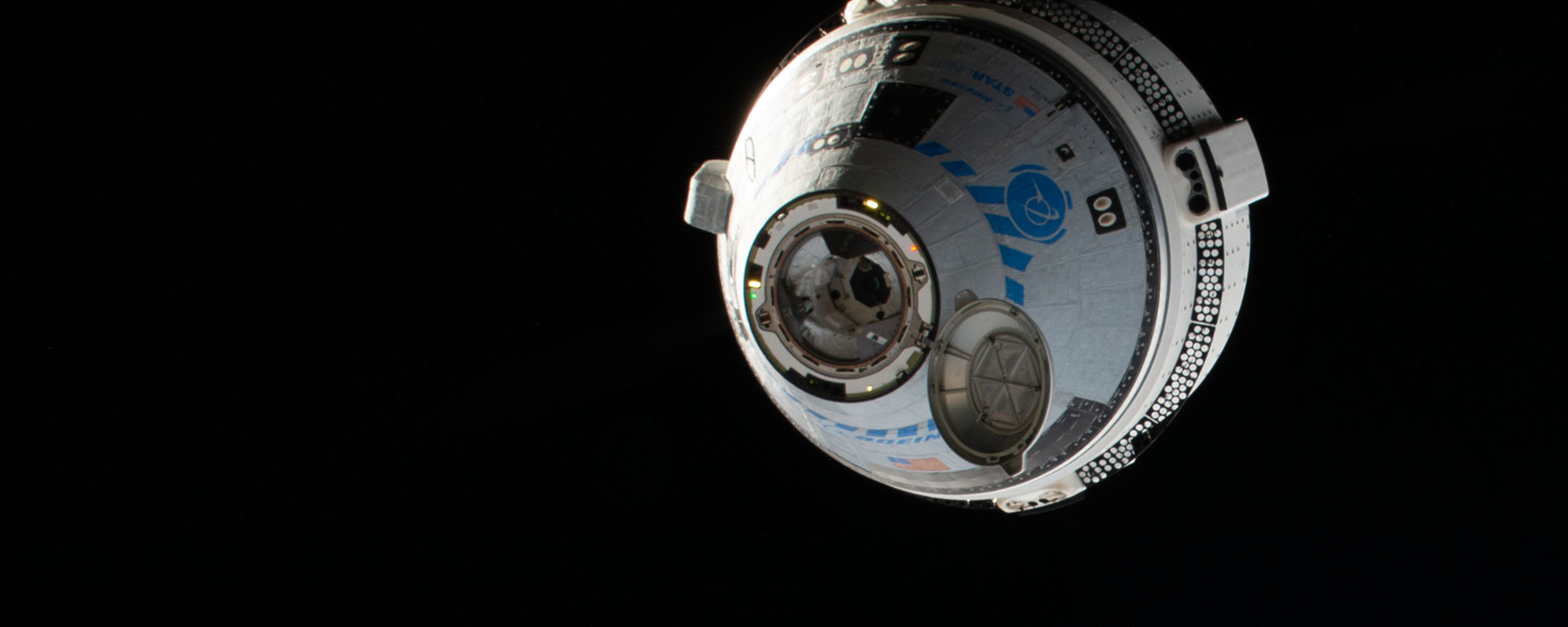
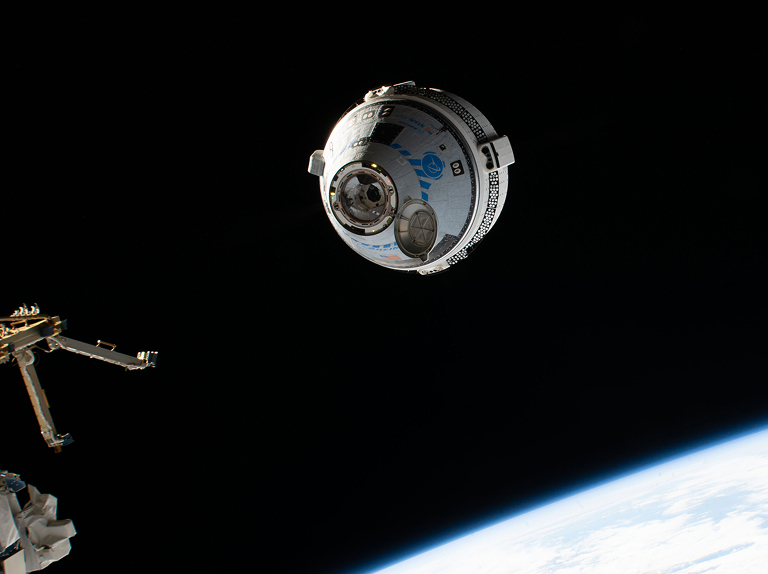
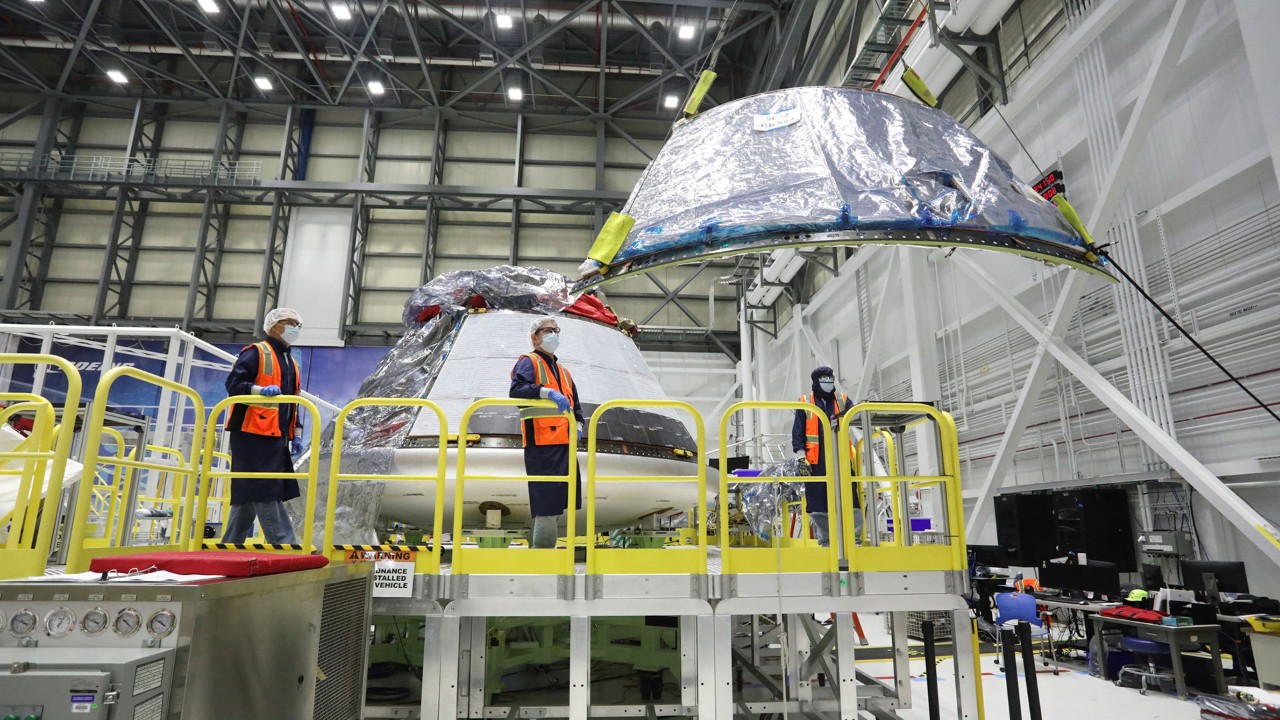
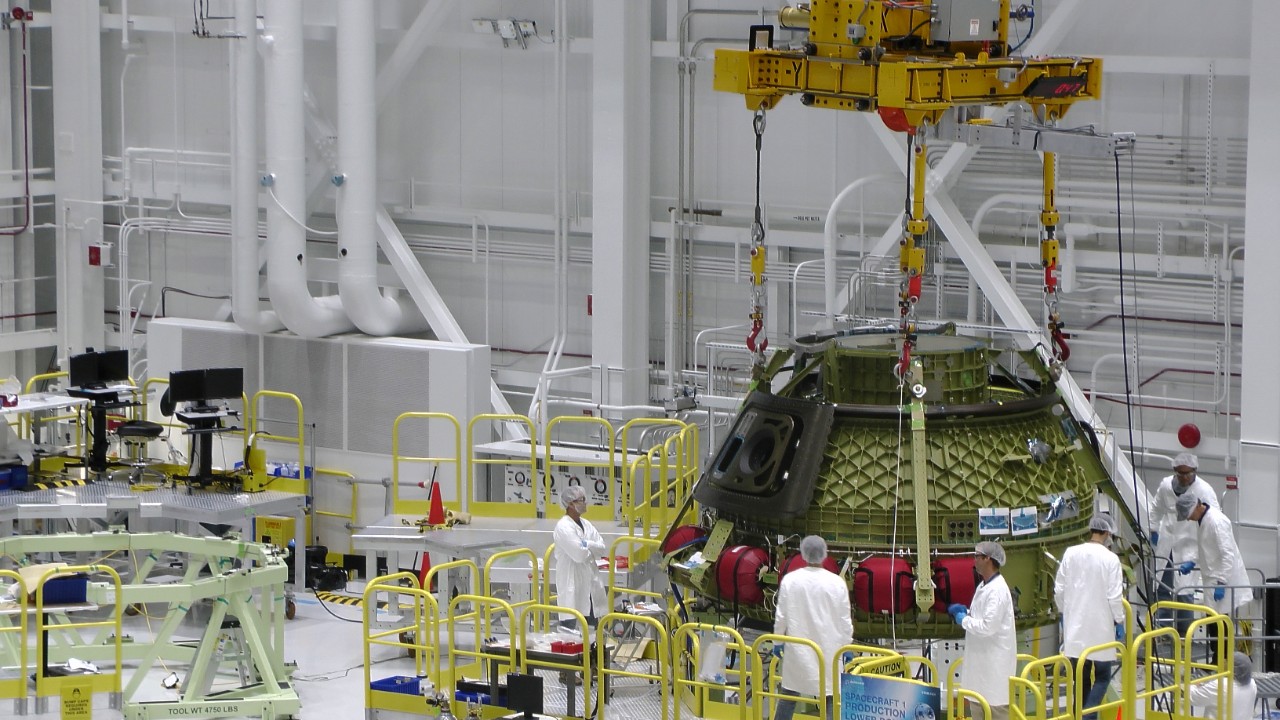
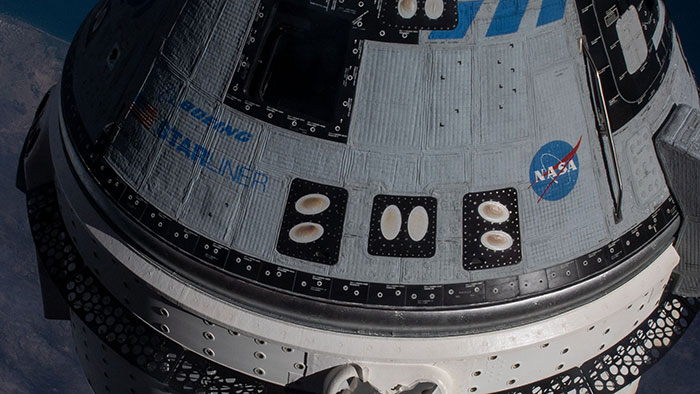
Boeing’s Crew Space Transportation (CST)-100 Starliner spacecraft is being developed in collaboration with NASA’s Commercial Crew Program. The Starliner was designed to accommodate seven passengers, or a mix of crew and cargo, for missions to low Earth orbit. For NASA service missions to the International Space Station, it will carry up to four NASA-sponsored crew members and time-critical scientific research. The Starliner has an innovative, weldless structure and is reusable up to 10 times.
A 21st-century space capsule
Capabilities and Features
Cutting-Edge Technology
Reusability
As a reusable orbital crew capsule, Starliner’s crew modules can fly up to 10 missions.
Advanced tracking system
Starliner’s innovative navigation and docking system called the Vision-based, Electro-optical Sensor Tracking Assembly, or VESTA, acts as the “eyes” of the spacecraft on orbit, determining the location and orientation of the vehicle relative to the stars around it.
Spacesuit
Starliner’s Boeing Blue spacesuit is about 20% lighter than previous ascent and entry suits and still able to keep crews safe if any emergency situations develop in the cabin.
Autonomous flight
As a 21st-century, fully self-flying spacecraft, Starliner will seek out the International Space Station, dock with it, undock and then safely land, all without human intervention.
Innovative Infrastructure
Solid ground landing
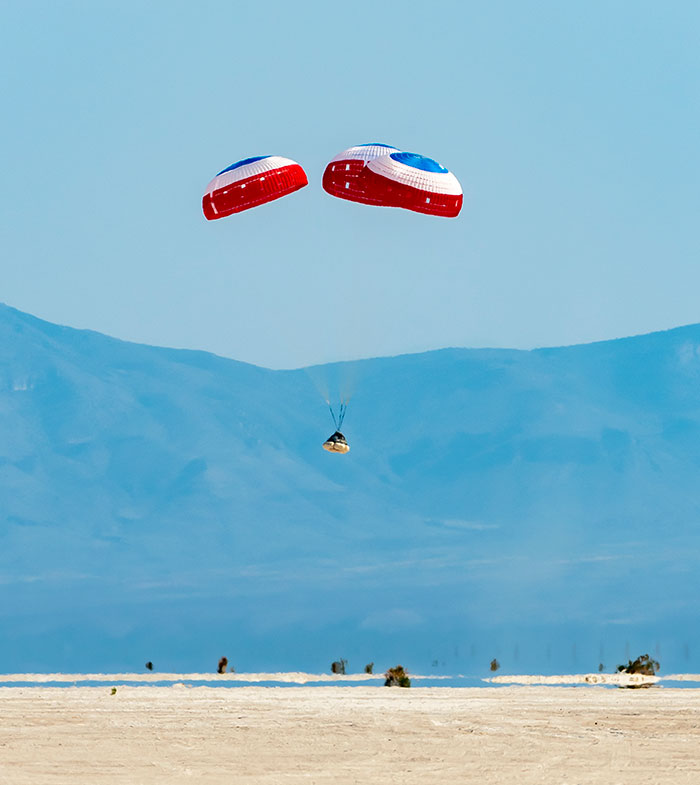
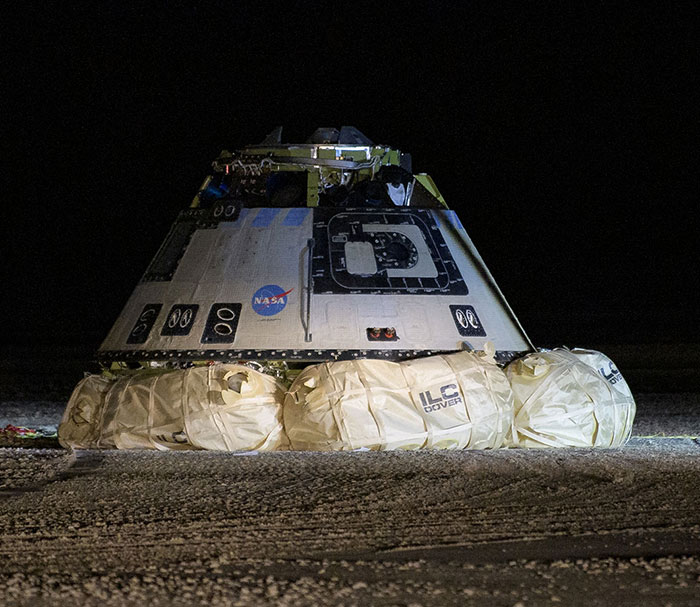
Launching from U.S. soil. Landing on U.S. soil. Starliner is the first orbital capsule capable of landing on solid ground, rather than an ocean splashdown.
Solar power
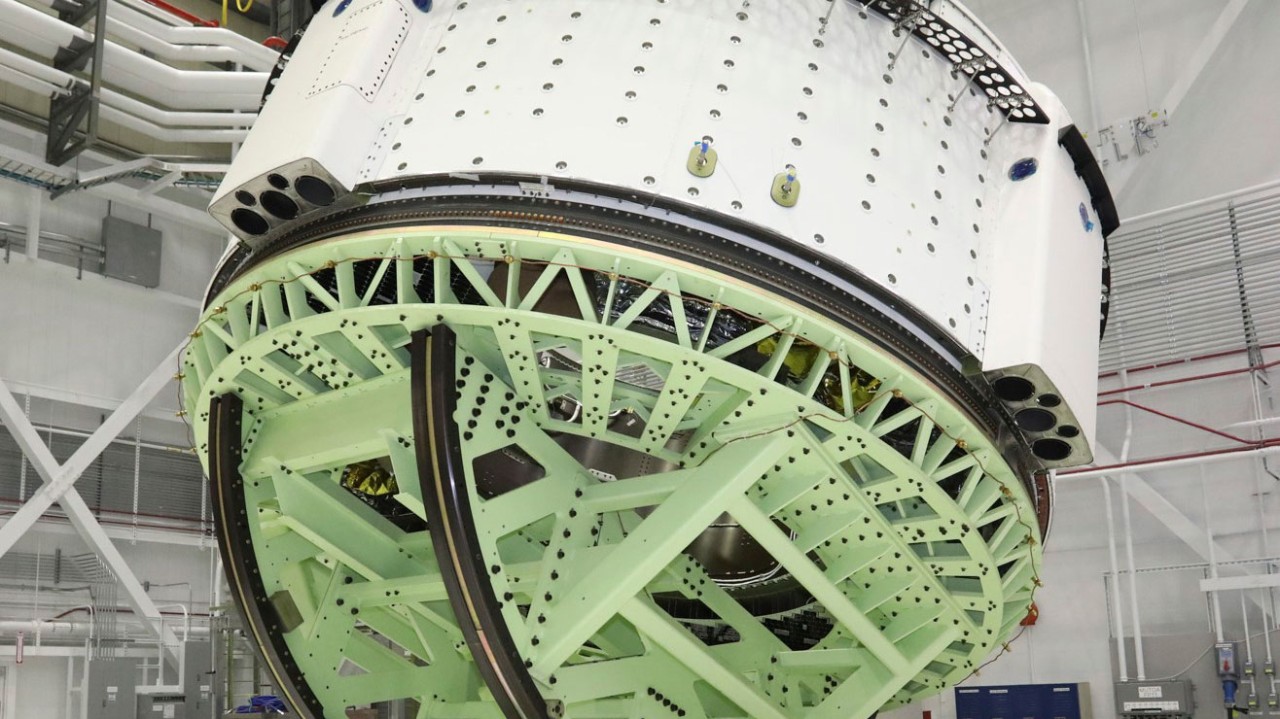
Starliner uses solar energy during flight and return, powered by solar cells on the service module’s bottom. Made by Spectrolab Inc., these cells convert sunlight into over 2,900 watts of electricity for the spacecraft.
Protective heat shield
During the landing reentry phase, at 400,000 feet (121,920 meters), Starliner encounters temperatures of 3,000 F (1,649 C) from plasma caused by air friction. Its heat shield, made from Boeing’s advanced ablator, protects the spacecraft, keeping the interior around 70 F (21 C).
Mission Support
Virtual training
Astronauts training on Starliner can use a portable virtual reality simulator to prepare for missions from anywhere worldwide while staying connected to Mission Control and teammates.
Cargo accommodations
Starliner’s crew module provides electrical power to cargo, which means it can carry up to four powered payloads or three payloads and an ISS laptop, in addition to unpowered experiments.
Missions
Starliner-1
Upcoming Launch: December 2026 or January 2027 timeframe
Crew Flight Test (CFT)
Launch: June 5, 2024
Landing: Sept. 7, 2024
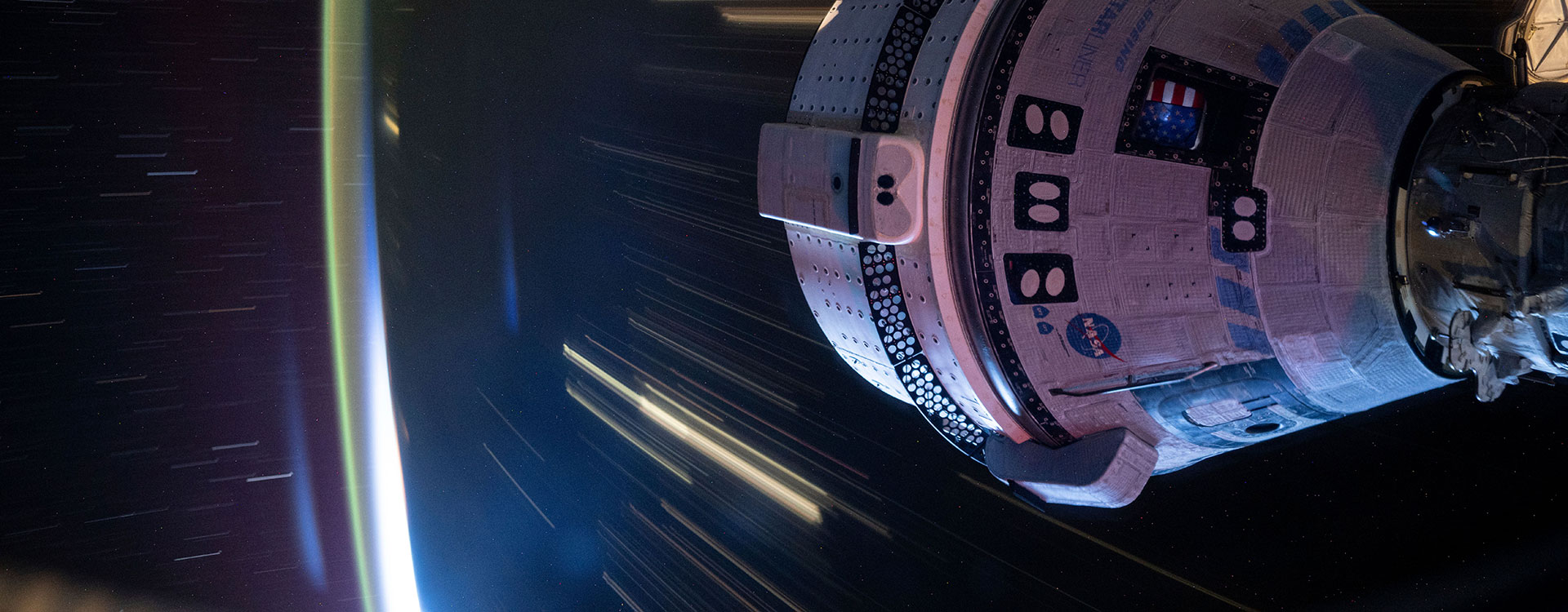
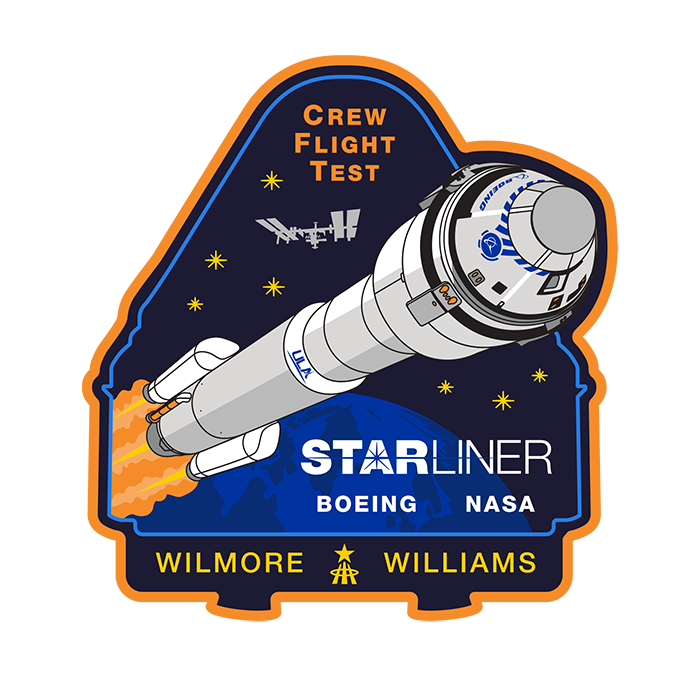
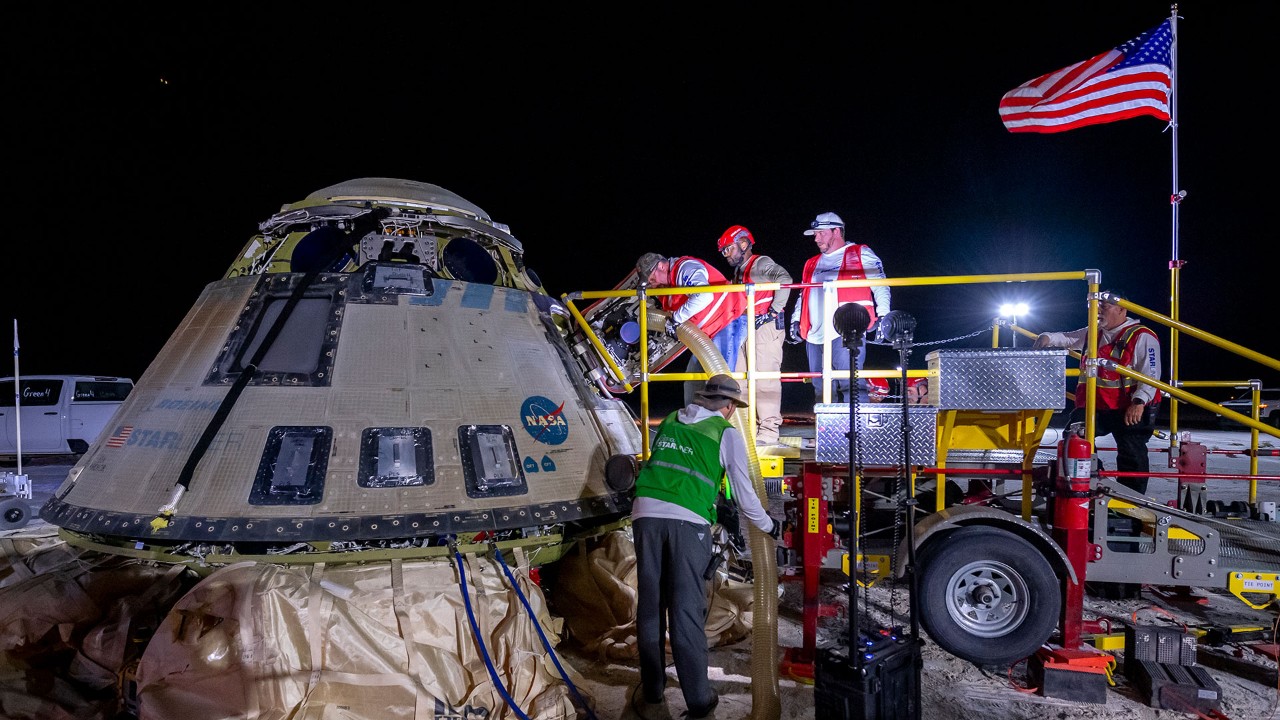
The Starliner’s Crew Flight Test (CFT) successfully launched, docked and transported NASA astronauts Butch Wilmore and Suni Williams to the International Space Station. The crew manually piloted the spacecraft, demonstrating its unique capabilities. The spacecraft successfully docked to the ISS on June 6, 2024. During Starliner’s 93 days in space, teams collected additional data to support process improvements. “Calypso” became the first reused American-made orbital spacecraft to land on land, touching down on Sept. 7, 2024, in White Sands, New Mexico.
Mission Facts
The crew
Barry “Butch” Wilmore
NASA astronaut/Starliner CFT commander
Sunita “Suni” Williams
NASA astronaut/Starliner CFT pilot
Cargo
760 pounds (345 kilograms)
Landing site
White Sands Space Harbor in New Mexico
Mission Milestones
April 16, 2024
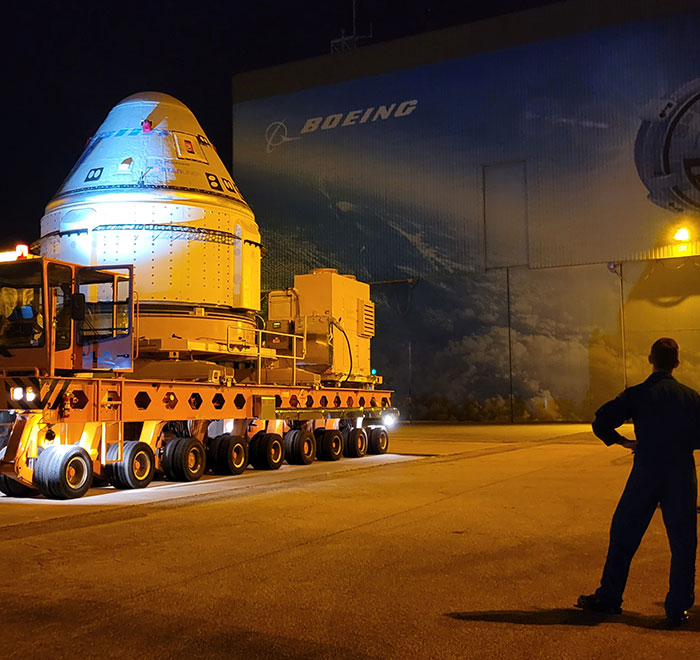
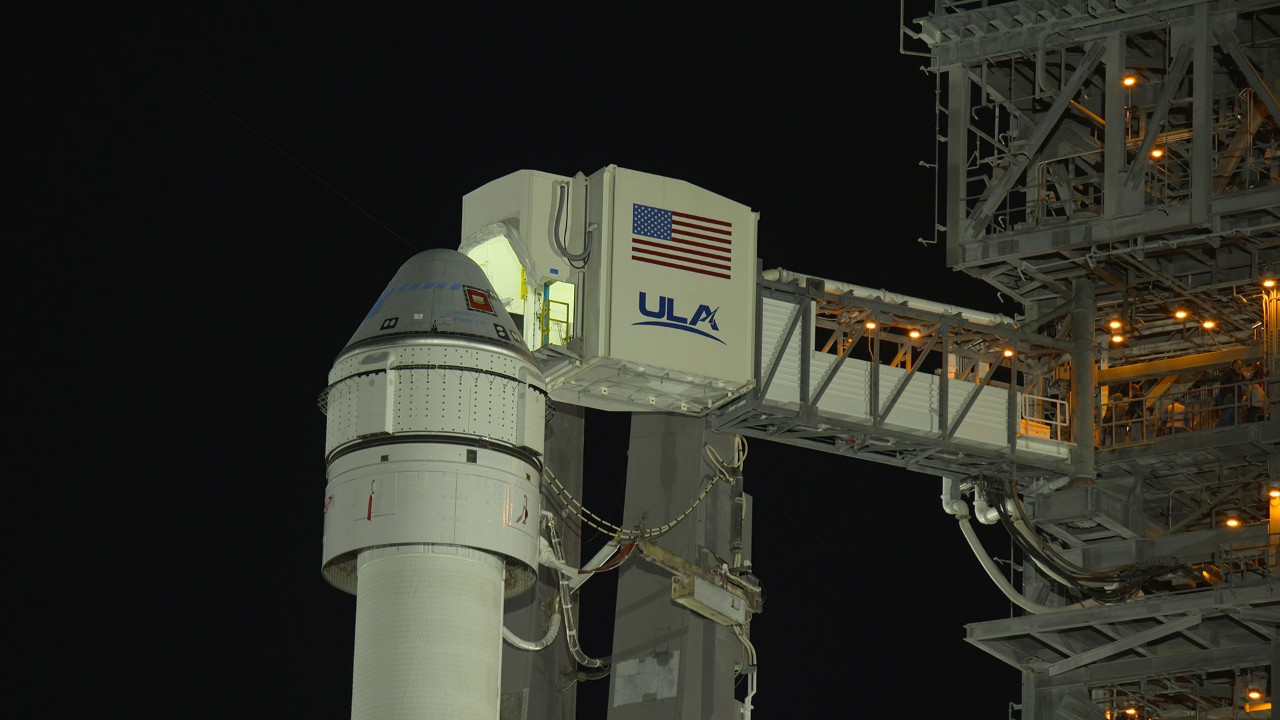
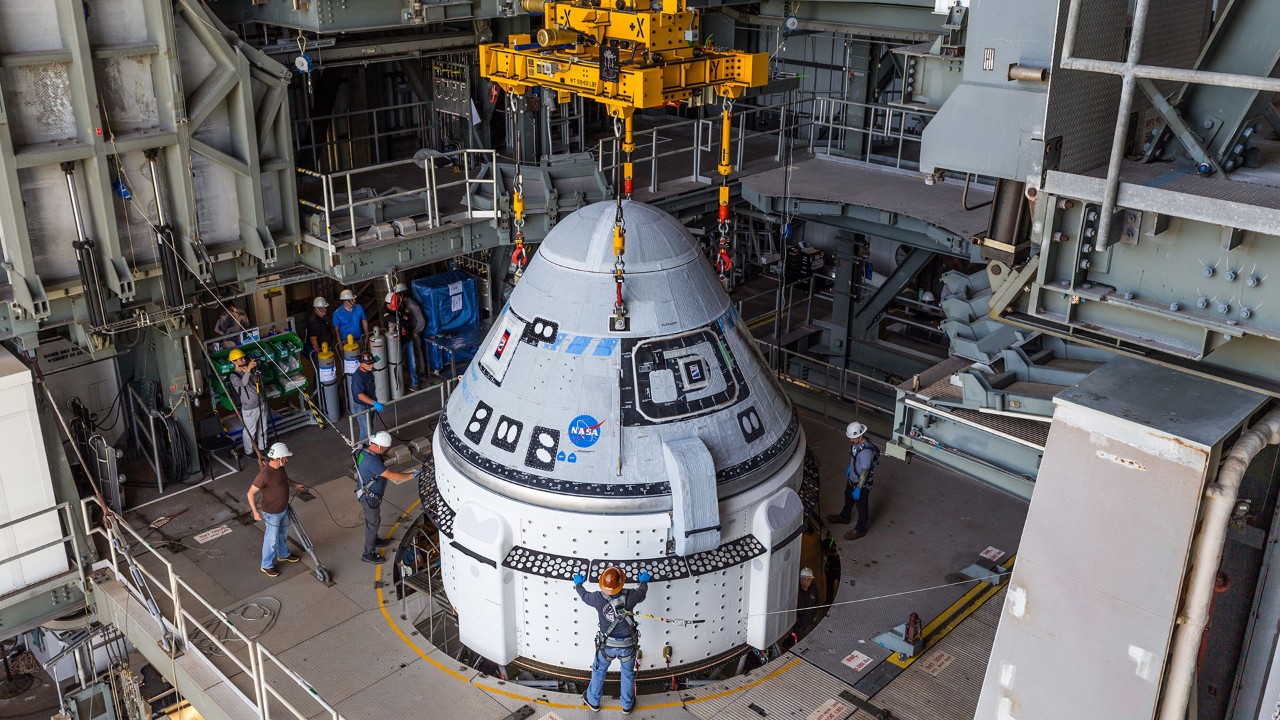
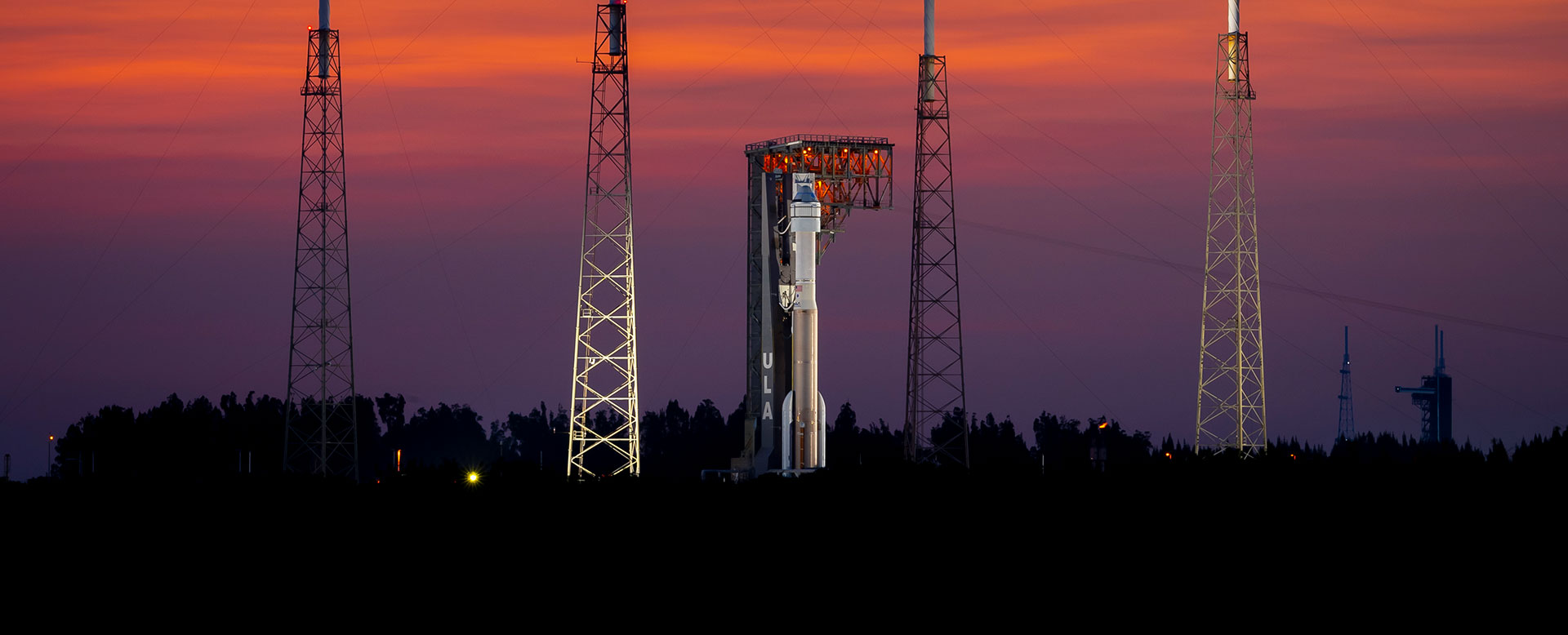
The first Starliner to fly astronauts, named Calypso, rolled out of its factory with its crew and teammates standing by to wish the spacecraft farewell. In preparation for its return to space, Calypso was transported to United Launch Alliance’s Vertical Integration Facility at Cape Canaveral Space Force Station and stacked atop its ride, the Atlas V rocket. The Crew Flight Test astronauts later practiced prelaunch procedures there, inside Starliner, ahead of liftoff.
June 5, 2024
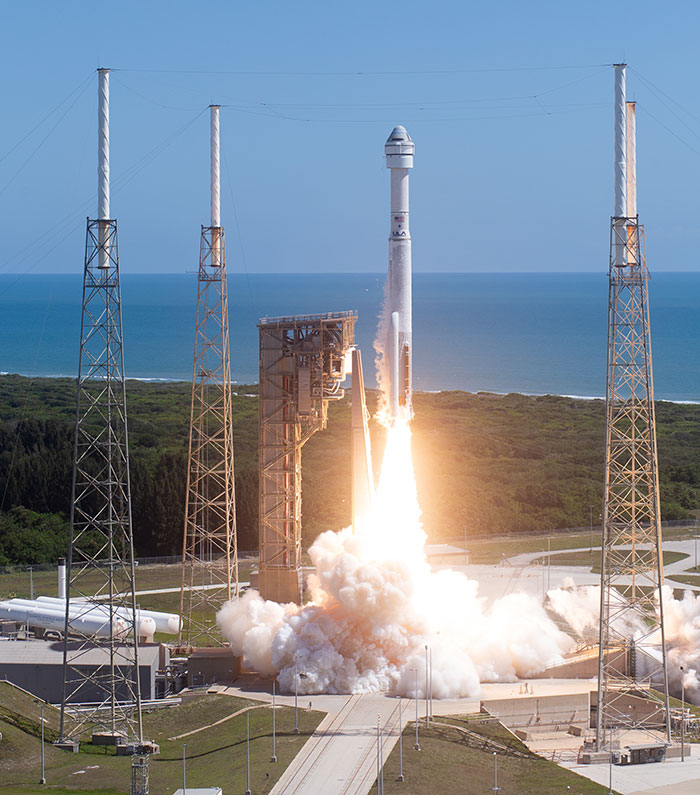
Starliner launched at 10:52 a.m. Eastern time on an Atlas V rocket with NASA astronauts Commander Butch Wilmore and Pilot Suni Williams on board. In addition to the crew, Starliner carried about 760 pounds (345 kilograms) of cargo up, including a new urine processor to replace one with a faulty pump on the ISS.
June 6, 2024
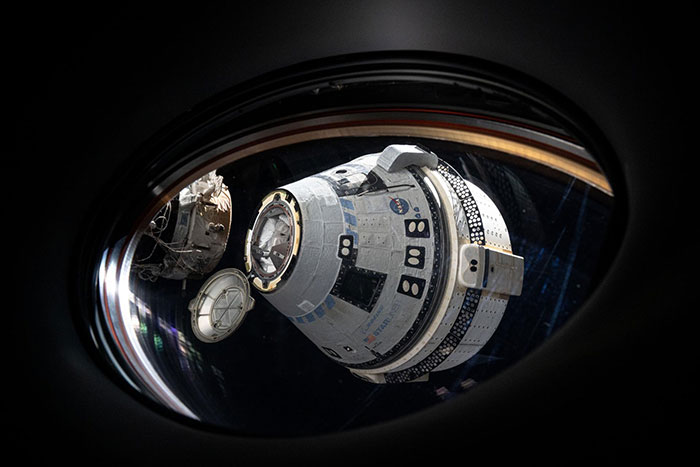
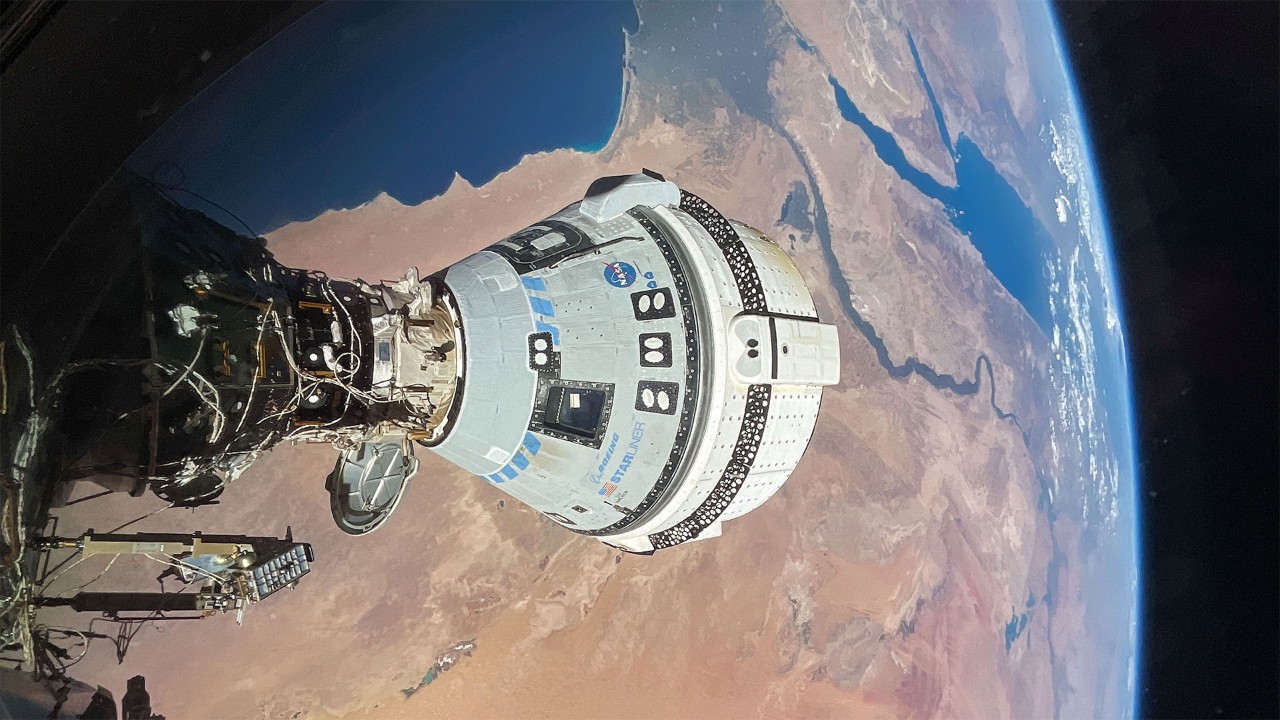
Wilmore and Williams made history when Starliner docked to the forward port of the Harmony module at 1:34 p.m. Eastern time, becoming the first Starliner crew to be ferried to the ISS. The precisely choreographed flight plan to the orbiting lab included a combination of manual steering by the crew and autonomous maneuvers by Starliner.
Sept. 7, 2024
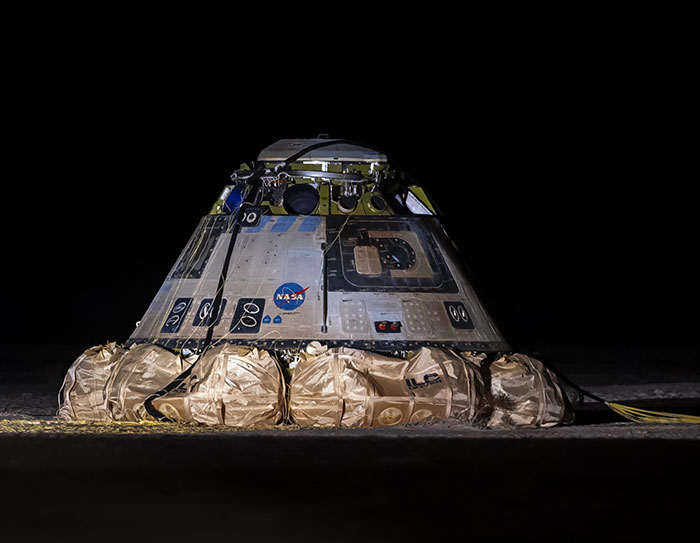
Starliner returned to Earth at 12:01 a.m. Eastern time, making a bull’s-eye touchdown at White Sands Space Harbor in New Mexico. With this arrival, Calypso became the first reused American orbital capsule to land on land.
Orbital Flight Test-2 (OFT-2)
Launch: May 19, 2022
Landing: May 25, 2022
Starliner’s second Orbital Flight Test (OFT-2) launched on May 19, 2022, from Cape Canaveral atop an Atlas V rocket. After successful orbital insertion, the uncrewed spacecraft tested propulsion and navigation systems while en route to the International Space Station (ISS). Starliner performed automated rendezvous maneuvers, including fly-around and near-field tests, before docking with the ISS on May 21, 2022. NASA and ESA astronauts assisted with docking and were the first to enter Starliner in space. The spacecraft remained docked for about four days, during which cargo operations and tests were conducted. Starliner then undocked on May 25 and landed successfully at White Sands Space Harbor, completing the uncrewed mission.
Mission Facts
Cargo
800 pounds (363 kilograms)
The flight
Fully autonomous flight with commands from Mission Control in Houston. Anthropometric test device (ATD) “Rosie the Rocketeer” on board.
Mission Milestones
May 4, 2022
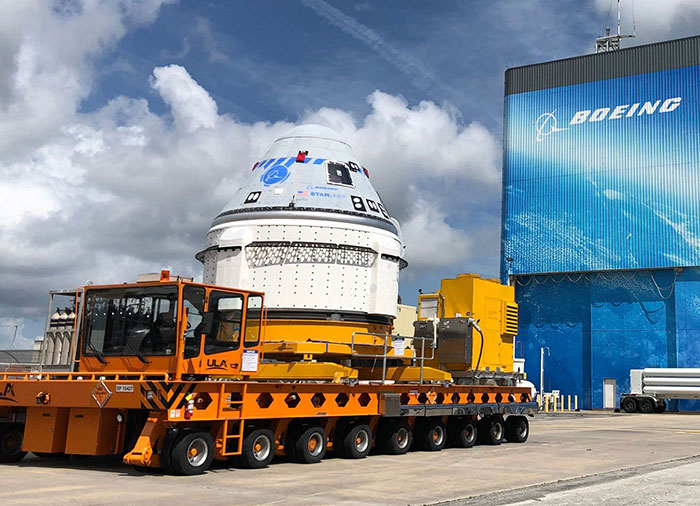
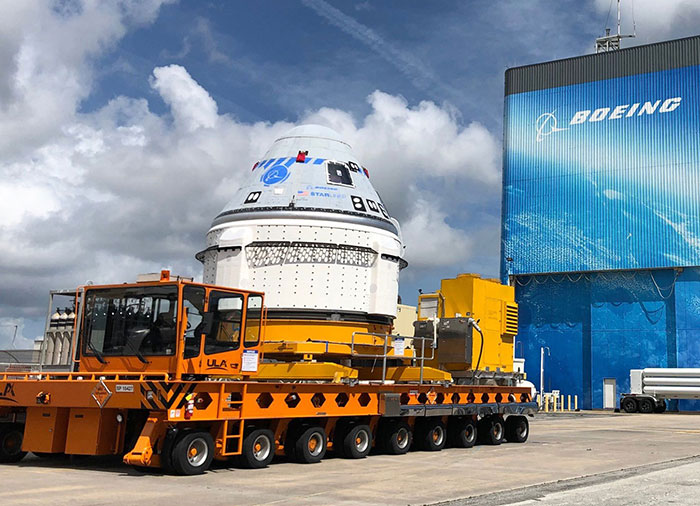
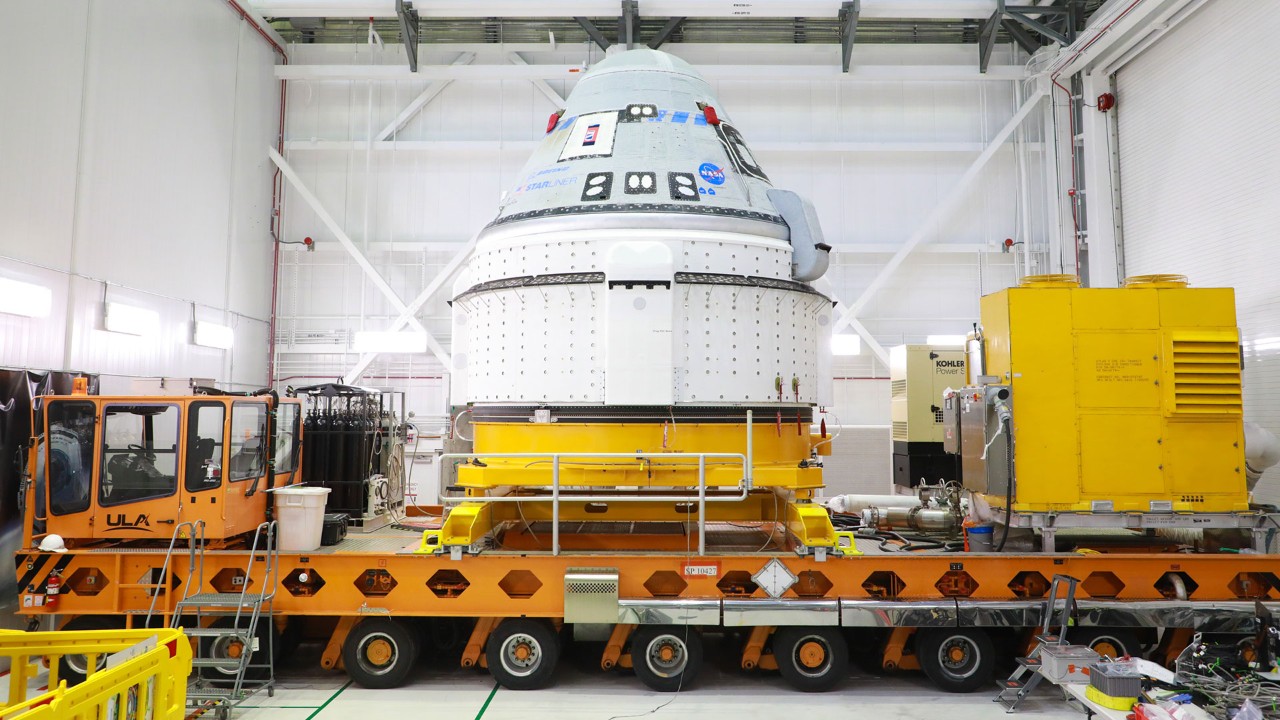
Sitting on a transport vehicle with a top speed of 10 mph (16 kph), Starliner rolled out of Boeing’s Commercial Crew and Cargo Processing Facility at NASA’s Kennedy Space Center in Florida. A carefully orchestrated trek took it to United Launch Alliance’s Vertical Integration Facility at Cape Canaveral Space Force Station. After about an hourlong journey, Starliner was hoisted and mated to the ULA Atlas V rocket that would soon launch the uncrewed spacecraft to orbit on Orbital Flight Test-2.
May 19, 2022
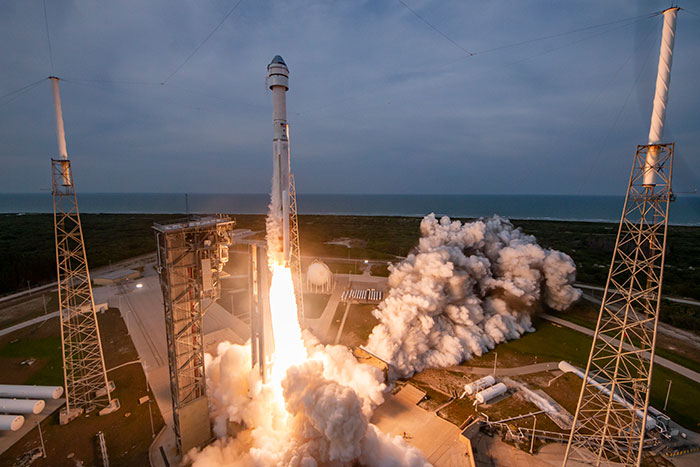
Starliner launched at 6:54 p.m. Eastern time atop its United Launch Alliance Atlas V rocket. The Atlas V’s RD-180 main engine and two solid rocket boosters generated more than 1.5 million pounds (680,389 kilograms) of thrust to lift the rocket away from the pad and across the sky.
May 20, 2022
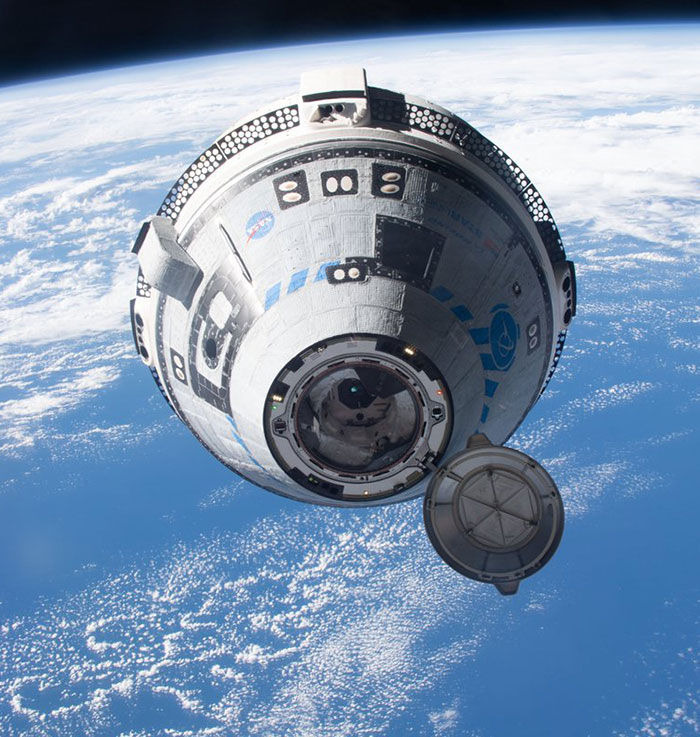
Tallyho! Starliner docked to the International Space Station for the first time at 8:28 p.m. Eastern time as the two vehicles orbited 250 miles (402 kilometers) above Earth. Demonstrating Starliner’s ability to rendezvous and connect with the orbiting laboratory on its own was a top objective of Orbital Flight Test-2. Leading the way was Starliner’s Vision-based, Electro-optical Sensor Tracking Assembly. VESTA acts as the spacecraft’s eyes, determining its location relative to the stars.
May 25, 2022
Starliner landed at White Sands Space Harbor in New Mexico at 6:49 p.m. Eastern time. The spacecraft touched down in a safe, stable position after completing all of its undocking, deorbit, reentry and landing maneuvers. It orbited Earth 94 times, covered a distance of more than 2.4 million miles (3.9 million kilometers), and achieved all its test objectives for OFT-2, paving the way for crewed flights.
Orbital Flight Test (OFT-1)
Launch: Dec. 20, 2019
Landing: Dec. 22, 2019
Starliner’s first mission to orbit, Orbital Flight Test (OFT-1), launched on Dec. 20, 2019, from Cape Canaveral atop a United Launch Alliance Atlas V rocket. An internal timer anomaly caused the spacecraft to miss its orbital insertion burn, but mission controllers placed it in a stable lower orbit. NASA and Boeing decided to skip docking with the ISS and focused on an early return while completing other objectives. Despite the shortened mission, Starliner performed well during launch, orbit, reentry and landing, validating key subsystems. Boeing and NASA conducted thorough postflight reviews and improvements, sharing lessons learned to enhance human spaceflight safety. Boeing also committed to flying another uncrewed mission at no cost to taxpayers to further demonstrate Starliner’s quality and reusability.
Mission Facts
Orbit
Orbited the Earth 33 times and covered a total distance of 854,367 miles (1.4 million kilometers).
Mission Milestones
Nov. 21, 2019
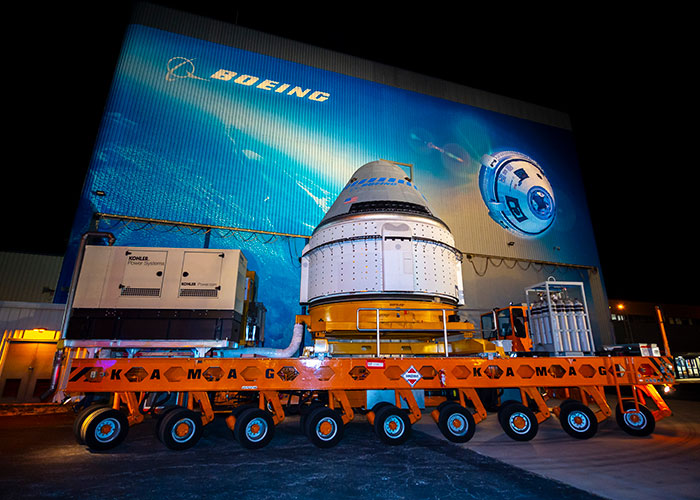
In the middle of the night and surrounded by employees, Starliner rolled out of Boeing’s Commercial Crew and Cargo Processing Facility to begin mating operations. It was lifted atop United Launch Alliance’s Atlas V rocket at Cape Canaveral Air Force Station’s Space Launch Complex 41 ahead of the first uncrewed Orbital Flight Test.
Dec. 20, 2019
At 6:36 a.m. Eastern time, Starliner launched on its first flight. The United Launch Alliance Atlas V rocket performed correctly, placing Starliner in the intended suborbital trajectory for the uncrewed Orbital Flight Test.
Dec. 20, 2019
After separation from the Atlas V rocket, Starliner experienced a problem. The spacecraft’s internal mission timer was set incorrectly, causing Starliner to miss its orbital insertion burn. Quick intervention from mission controllers placed Starliner in a lower, but stable, orbit. The NASA and Boeing teams decided not to dock to the International Space Station. Instead, they focused on landing early while completing as many mission objectives as they could.
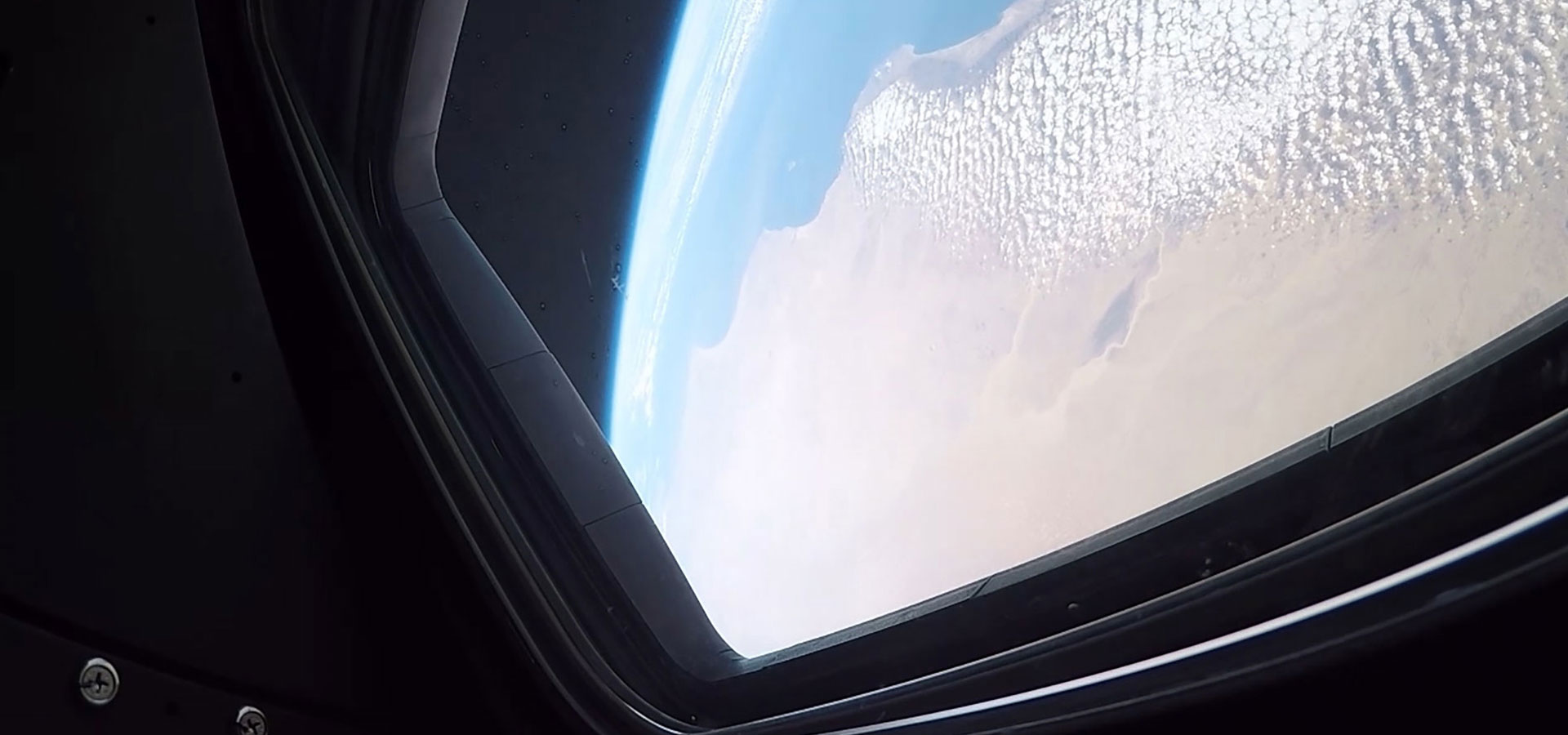
Dec. 22, 2019
At 7:58 a.m. Eastern time, Starliner landed on target at White Sands Space Harbor in New Mexico, making history as the first American orbital crew capsule to land on land. Starliner orbited the Earth 33 times and covered a distance of more than 850,000 miles (1.4 million kilometers). Even though the mission was shorter than planned, the Starliner team completed many objectives and learned important information about the vehicle’s performance during launch, orbital flight, reentry and landing.
Program Highlights
With Starliner, nothing comes before crew safety. Our vehicle features a mix of innovative technologies, some flight-proven and heritage from other Boeing programs, and some completely new for Starliner. We built in triple redundancies across critical systems, and we pushed what’s possible for safe and efficient commercial human spaceflight.
Specifications
| Height | 16.5 feet (5 meters) (Crew Module + Service Module) |
|---|---|
| Weight | 14,690 pounds (6,663 kilograms) |
| Service Module Propulsion | 28 RCS thrusters, 85 pound-force each 20 Orbital Maneuvering and Attitude Control (OMAC) thrusters, 1,500 pound-force each |
| Diameter | 15 feet (4.6 meters) |
|---|---|
| Crew Module Propulsion | 12 Reaction Control System (RCS) thrusters, 100 pound-force each |
Customer
NASA is Boeing’s anchor customer for CST-100 Starliner. Starliner is a full-service system. The Starliner program delivers all essential elements required to transport crew and cargo to and from low Earth orbit destinations. This includes crew training and mission planning; spacecraft and launch vehicle assembly, integration and testing; as well as crew and cargo recovery operations. The program’s ongoing goal is to provide safe, reliable and sustainable access to space, starting with missions to the International Space Station (ISS), with NASA as the flagship customer. Boeing continues to support NASA’s human spaceflight objectives through the Starliner program, ensuring readiness for current and future missions.
News
Background
Boeing is designing and building the future of space exploration. With experience gained from supporting every major U.S. endeavor to space, Boeing is focused on the future and proud to be part of all of NASA’s human space exploration efforts. Boeing is developing the CST-100 Starliner spacecraft to ensure NASA and the United States have redundant crew launch capabilities, enabling critical research on the International Space Station (ISS) laboratory and test bed.
Boeing’s rich history in space includes its role as a key contractor for the Apollo program, contributing to the Saturn V launch vehicle that enabled humans to land on the moon. Boeing has also been instrumental in the development and operation of the Space Shuttle program, providing the external fuel tanks and other critical components.
Building on this legacy, Boeing continues to advance space technology through the Starliner program, which offers a full-service system encompassing crew training, mission planning, spacecraft and launch vehicle assembly, integration, testing, and crew and cargo recovery. This comprehensive approach ensures safe, reliable and sustainable access to low Earth orbit, supporting NASA’s missions to the ISS and future exploration goals.