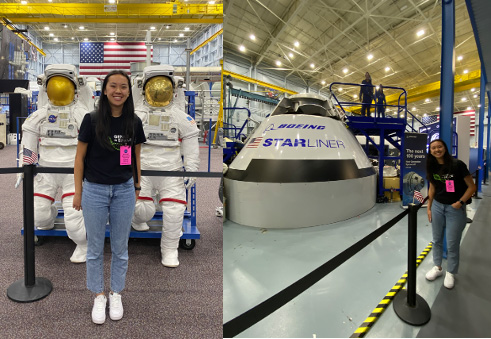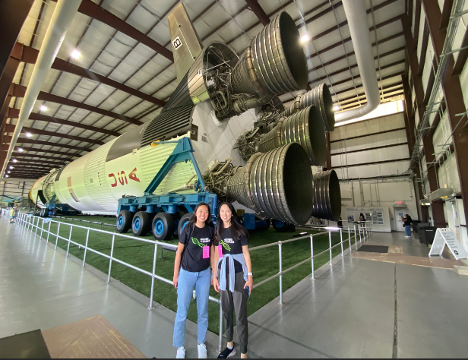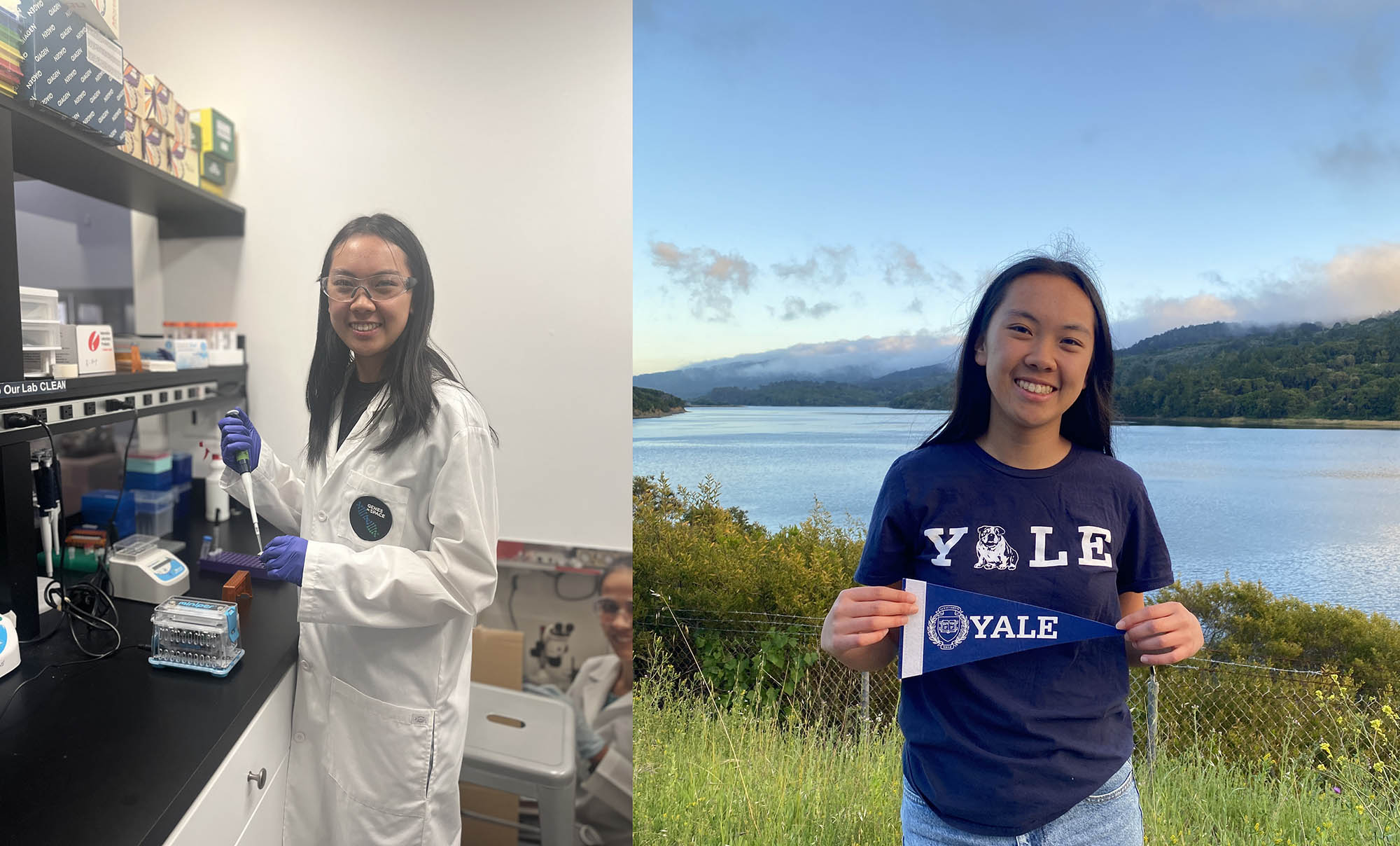
Isabel Jiang’s path to practicing medicine runs through an Ivy League school — but also through the International Space Station (ISS).
That’s because an experiment Jiang created is scheduled for launch in August, the same month she starts her freshman year at Yale.
In winning the 2023 Genes in Space Challenge, co-founded and supported by Boeing, Jiang:
- Developed an experiment that astronauts will conduct on orbit
- Opened the possibility of a scientific breakthrough related to space exploration and human health
- Deepened her desire to become a physician-scientist
- Discovered something she wants all students to know
That something is this: “There are so many more career paths out there than you realize,” Jiang said. “Keep your options open. You never know where your interests might lead you.”
Her journey: Scientist, athlete, medical researcher
Long interested in science and active in tennis and running, Jiang realized another passion through the Genes in Space program.
“I learned that research is supercool,” said Jiang, who aspires to work as a physician-scientist. “It’s a lot of hard work, but it’s fun and exciting.”
She will need to complete her bachelor’s degree in molecular, cellular and development biology, then go to medical school. But due to her Genes in Space experiment, she might help improve and accelerate medical diagnoses long before she can write a prescription.
What her space experiment will accomplish
Broadly speaking, Jiang’s experiment addresses rapid diagnostics, used by astronauts in space and doctors on Earth to detect organisms, such as viruses, in humans.
She is looking to validate that a newer, faster and easier type of rapid diagnostics — known as nucleic acid sequence-based amplification — can be used in space.
“That would open the door for many more ways to keep our astronauts safer in space, particularly as space travel becomes more frequent and accessible,” Jiang said.
More specifically, through the astronaut-assisted experiment, she plans to study RNA, which plays an important role in the body’s functions.
“RNA has many applications scientists are starting to uncover,” Jiang said. “Amplifying and detecting RNA in space can help us observe genetic changes and create new rapid diagnostics.”