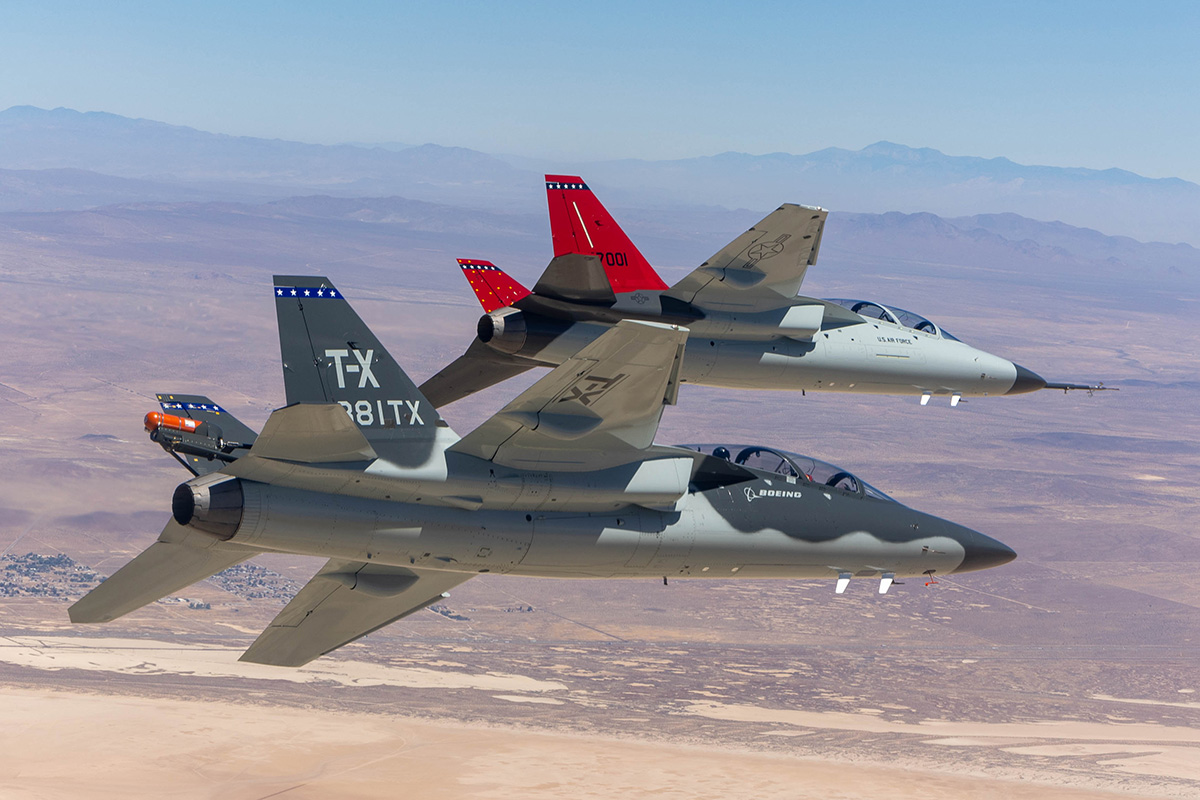
Designed for future fighter and bomber pilots, the T-7 is the pathfinder for fifth- and sixth-generation training systems. With the flexibility to evolve as technology and tactics change, this affordable Advanced Pilot Training System (APTS) is digitally designed, built and tested to meet modern and next-generation training needs.
Here are seven key features that demonstrate how the T-7 advances pilot training.
1: Next-level training
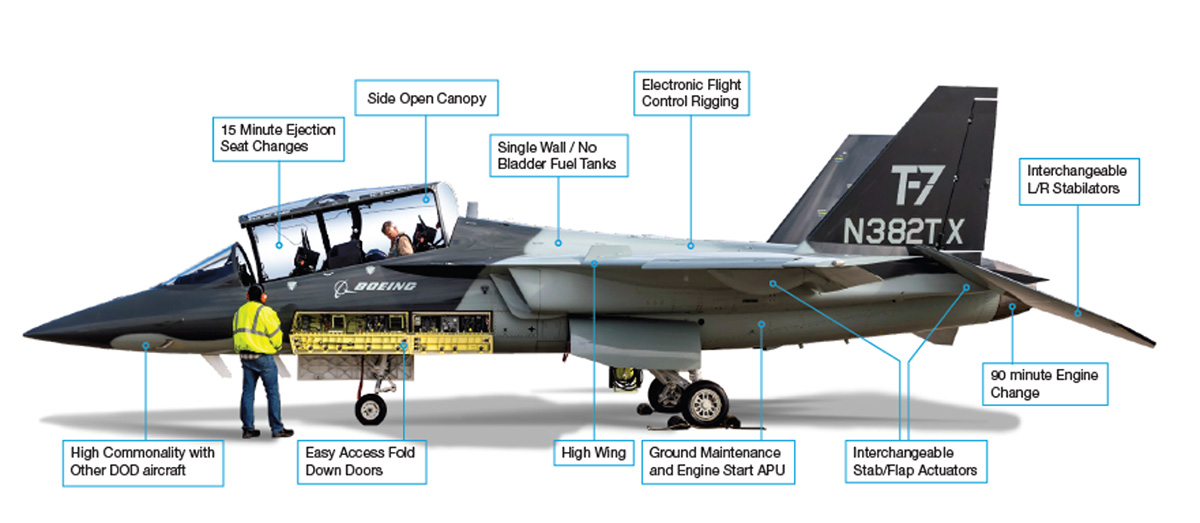
The T-7 APTS is designed to produce top-quality pilots through the use of a safe, digitally designed training system. With its fighterlike design, the T-7 emulates flight characteristics of operational combat aircraft. The aircraft’s high sustained angle of attack, turn rate, turn radius and G-force introduce students to the dynamic combat environment at an early phase.
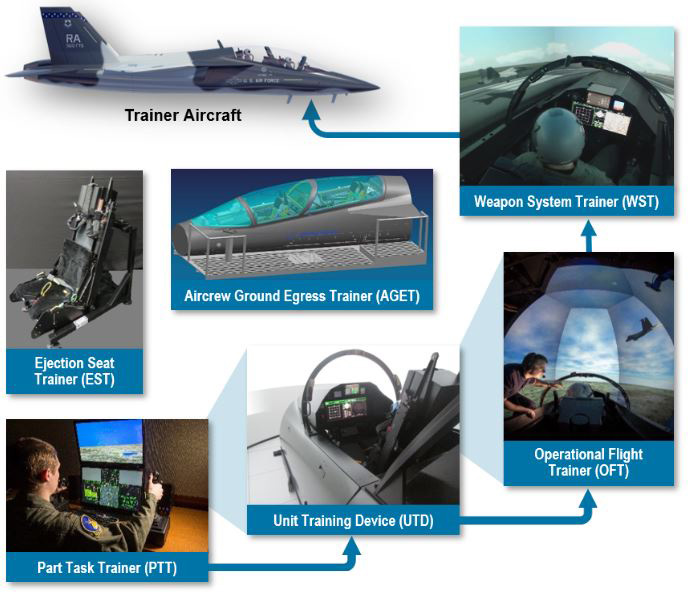
Leveraging a family of systems, including a Ground Based Training System (GBTS) with 8K visuals, pilots will receive a reinforced training experience to prepare for time in flight. Along with improving tactical readiness, the T-7 provides a safe training platform. Stadium seating enables instructors to see landings and observe air combat maneuvers to the cockpit’s egress system, providing an extra degree of safety not seen in other trainers.
2: Embedded Training and Integrated Live, Virtual and Constructive
The T-7 is the first aircraft architected from the beginning with Embedded Training (ET) and Integrated Live, Virtual and Constructive (I-LVC) capability. ET provides simulated weapons and sensors to a high degree of fidelity, removing the operational and sustainment pitfalls of actual radar or ordnance while simultaneously exposing the student to real-world systems used in operational aircraft.
I-LVC provides the ability to blend live aircraft, ground-based simulators and computer-generated entities to create highly realistic training scenarios. By combining the aircraft with the GBTS, I-LVC can simulate a variety of missions used in today’s tactical environment. Past-generation I-LVC has been reliant on connectivity to a grounded system to generate entities. The T-7 I-LVC not only supports this type of tethered connectivity but also advances it to the untethered environment. Live aircraft can generate constructive entities from the cockpit, pushing them to other live aircraft, which gives instructors the ability to generate improvised threats while on mission.