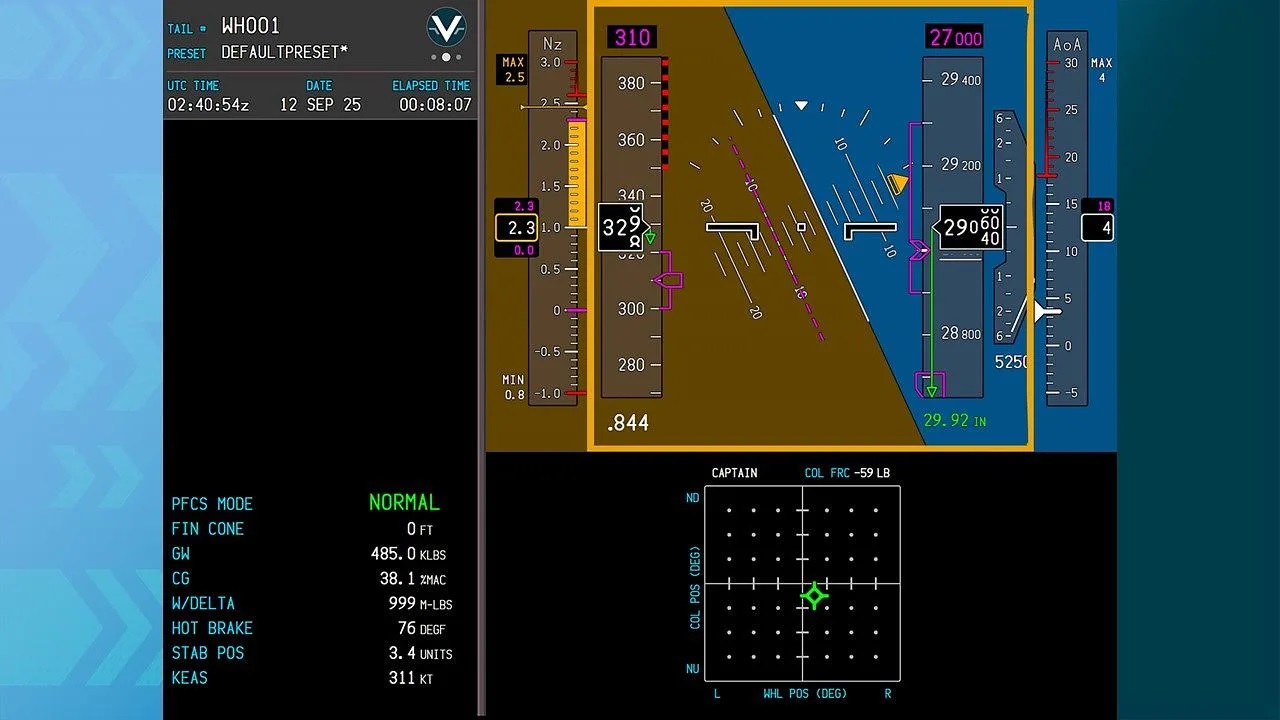
To evaluate the new display features, Caps and Henderson had to perform steep turns, roller-coaster-like 0.5-1.5G oscillations, and approach to stall — a sampling of maneuvers all test programs are likely to encounter.
- “I felt like the airplane was safely enclosed in a box with boundaries. I love it,” Henderson said. “VERA is a game changer.”
The journey
The VERA tool took experts from Boeing Test & Evaluation, Boeing Germany and BCA Product Development nearly three years to complete.
Testing alone took nearly two years in simulators that provide the first level of operational testing of new systems and other flight deck equipment.
More than a dozen Boeing pilots went through human factors evaluations to determine if they were more efficient with VERA. There was improvement in every category measured — including pilot situational awareness, comprehension of the airplane’s current situation, and the pilot’s projection of the future status of the airplane.
By the numbers
Before VERA, the first-time success rate for conducting flight-test maneuvers was consistently at about 70%, meaning 30% of tests had to be repeated — straining budgets and schedules.
Boeing Defense, Space & Security demonstrated the benefits of a similar flight-test aid, which included a set of automated limiting functions. They achieved a 98% success rate. The first version of VERA will increase the BCA success rate to 85% and is expected to achieve closer to the 98% level with future enhancements.
- “We knew Commercial Airplanes could do the same and, in fact, could significantly expand on their concept,” said Roger Friedman, BCA Product Development engineer and Associate Technical Fellow.
How it works
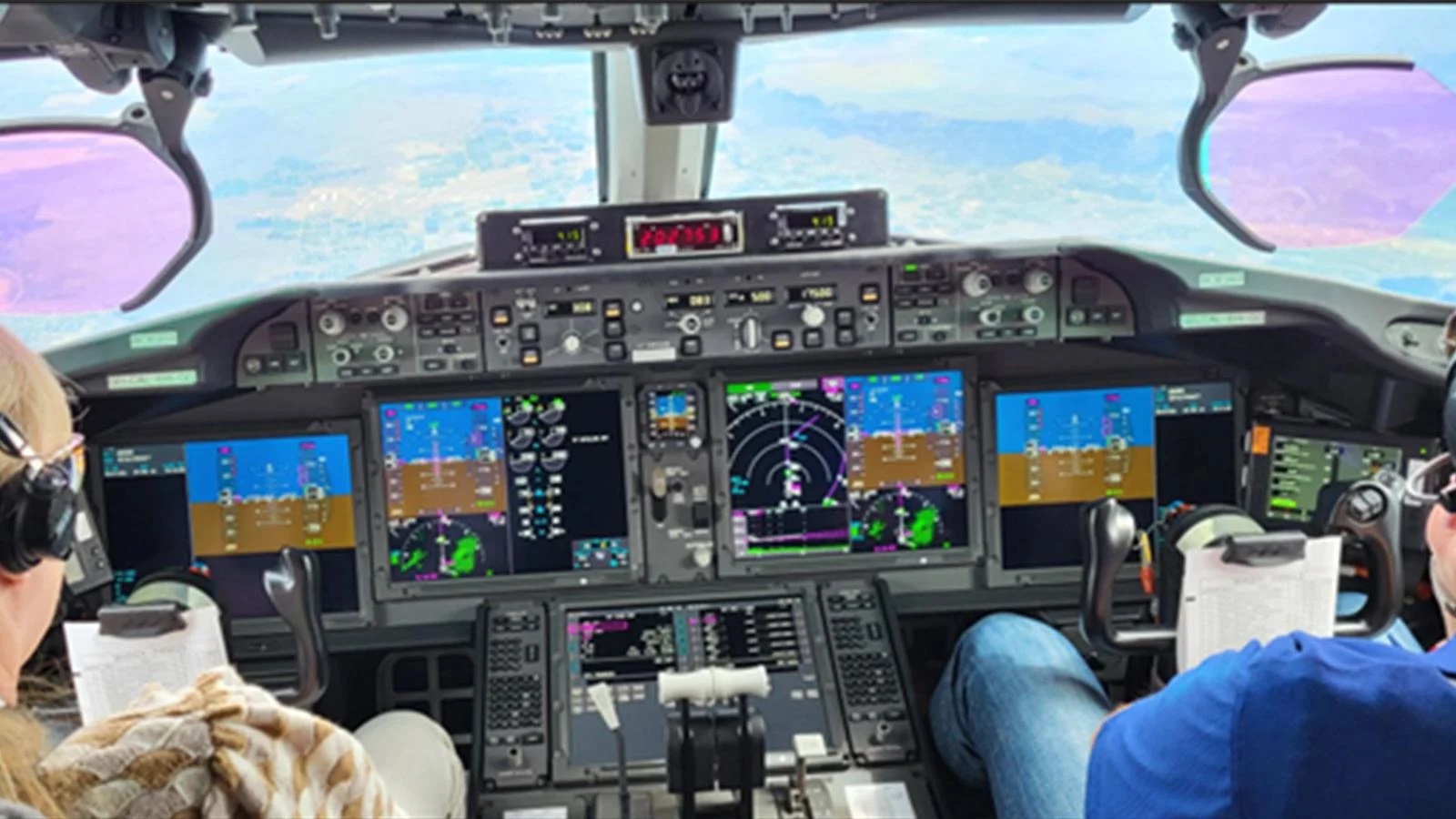
VERA has a dedicated computer receiving data from the onboard flight-test data system and projecting the appropriate imagery to one of the airplane’s existing outboard flight deck displays, where it replaces the primary flight display.
The imagery is generated using custom software developed by Boeing Frankfurt, called RAPTOR-FD. Initially created to support rapid prototyping for flight deck displays, the Frankfurt team pivoted to support this new flight-test implementation. The result, according to project leaders, is an efficient capability that allows unprecedented customization for flight test use.
Imagery provided by VERA meets Boeing’s flight deck philosophy by providing better situational awareness and tailored feedback cues to the pilots in a familiar context. Flight-test pilots now have immediate feedback for the quality of precise flight-test data they are collecting.
Making it real
Now, pilots can activate VERA with the twist of a rotary switch. When selected, the existing primary flight display in front of the pilot is moved to the adjacent inboard screen, and VERA is displayed directly in front of the pilot. Tailored VERA features are available to help the pilot fly unique and complicated flight-test maneuvers.
“This is a safer way to flight test,” Friedman said. “We obtain the data we need more efficiently, which saves time and, consequently, money.”
Three of the 777-9 flight-test airplanes are equipped with VERA, and the 737-10 in flight test will be equipped within the year. VERA is also part of the baseline flight-test configuration for the future 777-8F test fleet.
When flight testing on these airplanes is complete, the process of removing VERA and the associated installations is done within the normal refurbishment process. VERA does not modify the airplane’s flight deck display software code or system and returns to standard configuration without extraordinary planning or effort.