Engineers use photo-driven AI to simplify part validation

December 17, 2025 in Technology

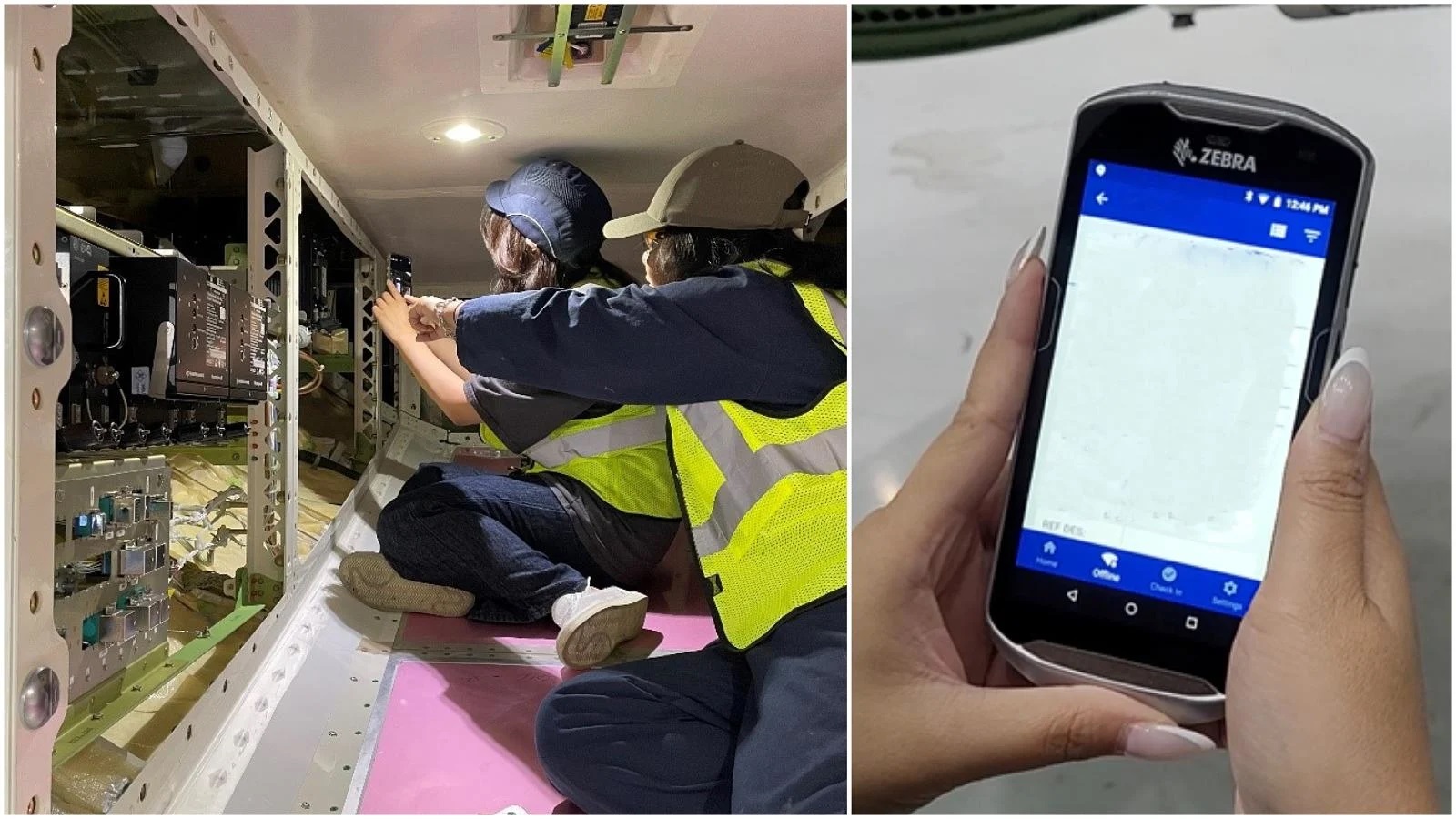
Above: Boeing Korea teammates test the new OCR tool on the factory floor. (Photo © Boeing)


A simple snapshot now delivers a meaningful improvement on BCA factory floors. A new AI tool can quickly validate part numbers so inspectors can more easily confirm the correct components are installed on the airplane.

  • To avoid typo‑prone manual entry of long serial numbers, inspectors now photograph part information with a handheld device; the AI extracts and logs the data into the Aircraft Readiness Log (ARL) automatically.
  • Optical Character Recognition (OCR) technology embedded in the tool reads the text, validates it against a part information dictionary, and then populates the part serial number into the ARL automatically. 

Why it matters: Boeing engineers developed the solution to streamline quality inspectors’ work and improve accuracy, supporting the company’s Safety & Quality Plan. The effort was led by Engineering teams from the Boeing Korea Engineering & Technology Center (BKETC) and Boeing Artificial Intelligence, who partnered with U.S. teammates to design the tool.

  • “Quality inspectors identified the challenges in their current process and guided our design,” said Wanbin Song, Boeing AI team lead at BKETC. “Their insights guided us through the development journey and helped minimize disruption to existing workflows.”
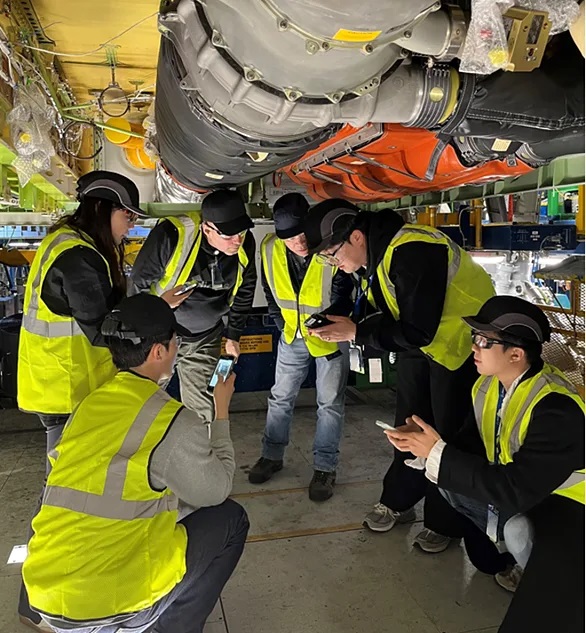
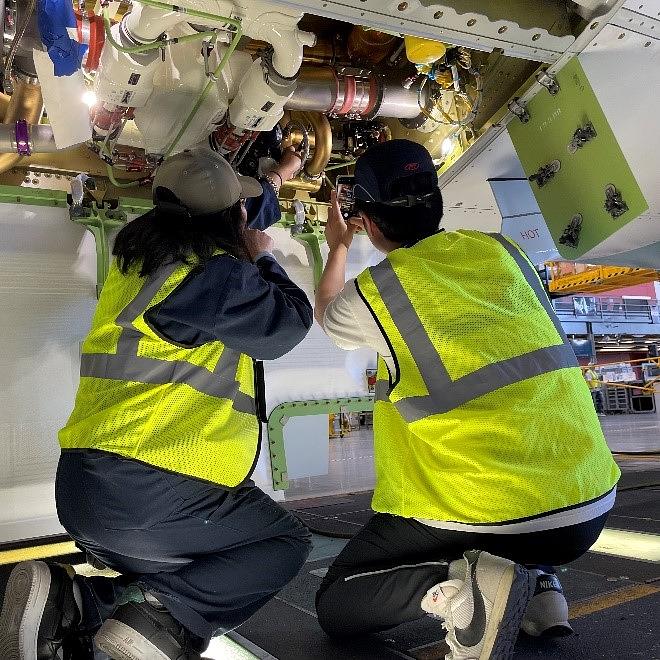
Above: Boeing Korea teammates traveled to Renton to test an AI-powered tool designed to automate the capture and validation of part tags. (Photo © Boeing)


Values in action: “With rapid field deployment in mind, ARL, Boeing AI, (Information Digital Technology & Security), and BKETC worked closely together,” says Jay Oh, Boeing AI senior manager at BKETC. “By taking charge of their areas, the teams delivered a prototype ready for on-site testing in just eight months — showcasing their dedication to field innovation.”

The AI-powered tool is designed to:

  • Reduce manual effort: Eliminate typing and tedious data entry so inspectors can focus on more critical tasks.
  • Improve data quality: Capture serial numbers correctly at the point of entry, increasing first-pass accuracy.  
  • Save time and cost: Less rework can help keep production on schedule. 

By the numbers: 

  • BKETC captured more than 2,250 part images during a visit to Renton and manually labeled nearly 38,100 text boxes to train the initial model.
  • The tool supports inspection of more than 1,400 parts.
  • Previously, more than 70% of 737 part serials were entered manually. The team was able to improve inspection time by more than 17 hours per airplane and enhance data quality.

Built with inspectors, for inspectors: “The engineers spent weeks on the factory floor, meeting with Quality inspectors daily, running workshops and iterating on the tool to minimize disruption to long‑standing processes,” said Hector Silva, vice president, Regulatory Compliance and Core Quality. “The team focused on listening to users, making incremental changes inspectors could adopt quickly, and integrating OCR into legacy workflows to reduce the number of devices inspectors must carry.” 


What’s next: The tool launched on production lines in Renton and Everett in January 2024. Teams are now planning to implement the device at Boeing South Carolina. 

  • Additionally, the team is evaluating other uses of OCR to streamline documentation, strengthen quality controls and improve production system integration.

Go Deeper: The team behind the new AI tool was honored as a 2024 Safety & Quality Award winner, receiving the Improvement Solutions Award.