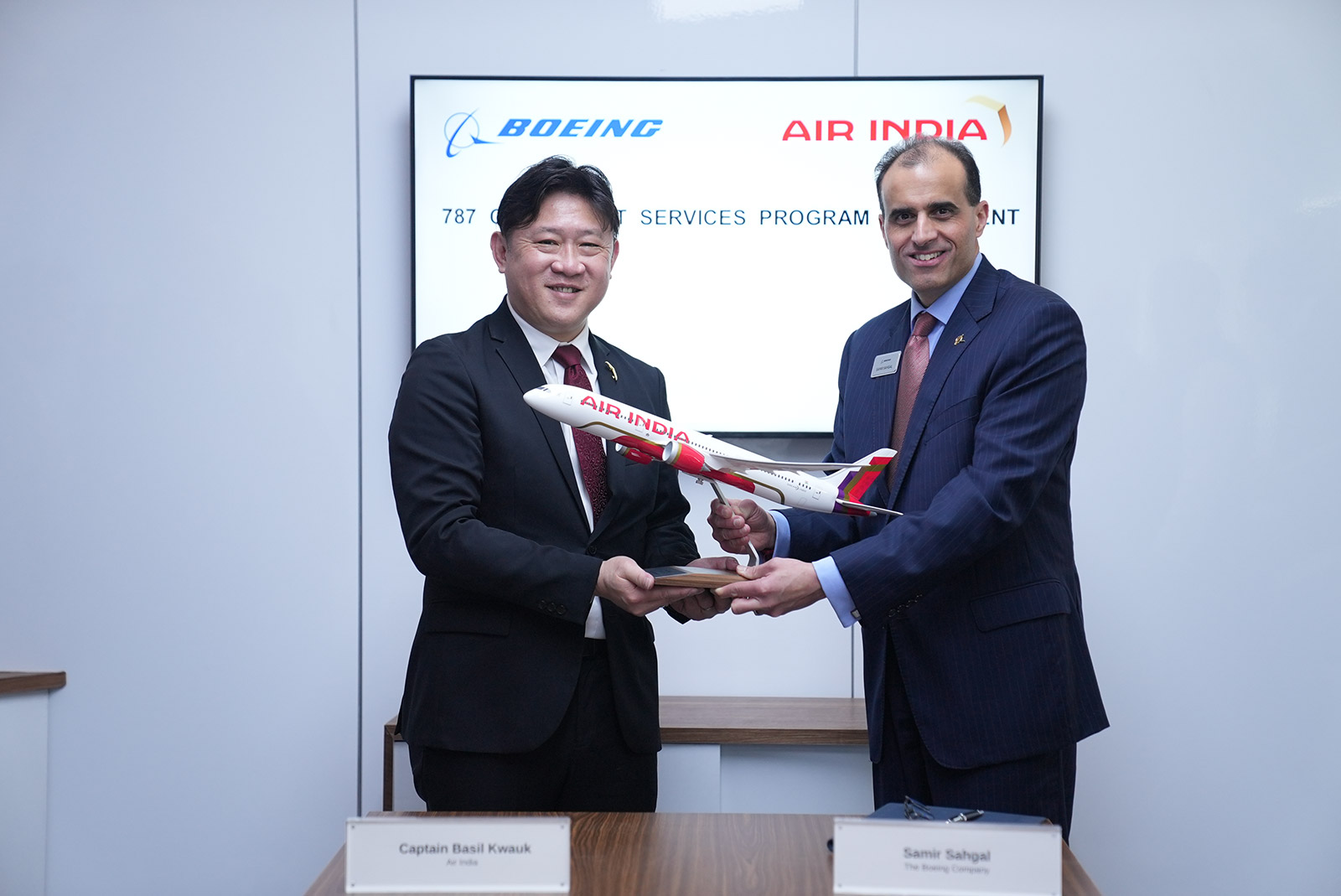
Driving the news: Under the agreement, announced recently at Wings India 2026, Air India will continue to benefit from Boeing-managed rotable pools, expedited exchange kits, turnkey logistics, and aircraft-on-ground response and repair management through Boeing’s global network of certified repair stations. CSP takes a fleet-focused approach to component support, designed to optimize availability and scalability.
How they did it: CSP delivers end-to-end component management tailored to Air India’s operational needs. Boeing Global Services will provide data-driven parts management, customized service-level agreements and worldwide logistics backed by its certified repair network.
“Our collaboration with Air India reinforces Boeing’s role as a trusted life cycle partner, delivering global standard support that enhances reliability and efficiency.” — Salil Gupte, President, Boeing India and South Asia
What they’re saying:
- “The 787 Component Services Program is one of Boeing Global Services’ core solutions, designed to optimize component availability and provide operators with scalable, reliable component support,” said William Ampofo, senior vice president, Parts & Distribution and Supply Chain, Boeing Global Services.
- “Our collaboration with Air India reinforces Boeing’s role as a trusted life cycle partner, delivering global standard support that enhances reliability and efficiency. This agreement not only strengthens Air India’s fleet readiness but also contributes to the growth of India’s aviation sector with world-class services,” said Salil Gupte, president, Boeing India and South Asia.
The big picture: CSP delivers predictable maintenance costs and improves uptime for operators of the 787. The deal supports Air India’s fleet modernization and expansion, including recent inductions of 787-9 line-fit airplanes and planned 2026 deliveries and retrofit work on legacy 787-8s. For Boeing, long-term support agreements strengthen customer relationships and promote local maintenance, repair and overhaul and supply chain development in partner countries.
By Paula Horton