
“I have come to the conclusion that we must have someone on the ground [in Washington, D.C.] at all times to keep in touch with what is going on.”
William Boeing, company founder and president, 1917
William Boeing formed Pacific Aero Products Co. on July 15, 1916, one month to the day after the company’s first aircraft, the B & W, made its first flight. In the spring of 1917, he renamed the company Boeing Airplane Co. and at the same time started to see great potential for aircraft use in mail delivery and with the military. Anticipating that the U.S. government would become one of Boeing’s prime customers, he decided to set up shop in Washington, D.C., that same year.
Boeing’s early operations in Washington, D.C., were driven by pioneering individuals who connected with industry peers, procured essential materials and navigated government requirements. This dedicated team played a pivotal role in selling military aircraft, securing vital airmail contracts and shaping the future of aviation.
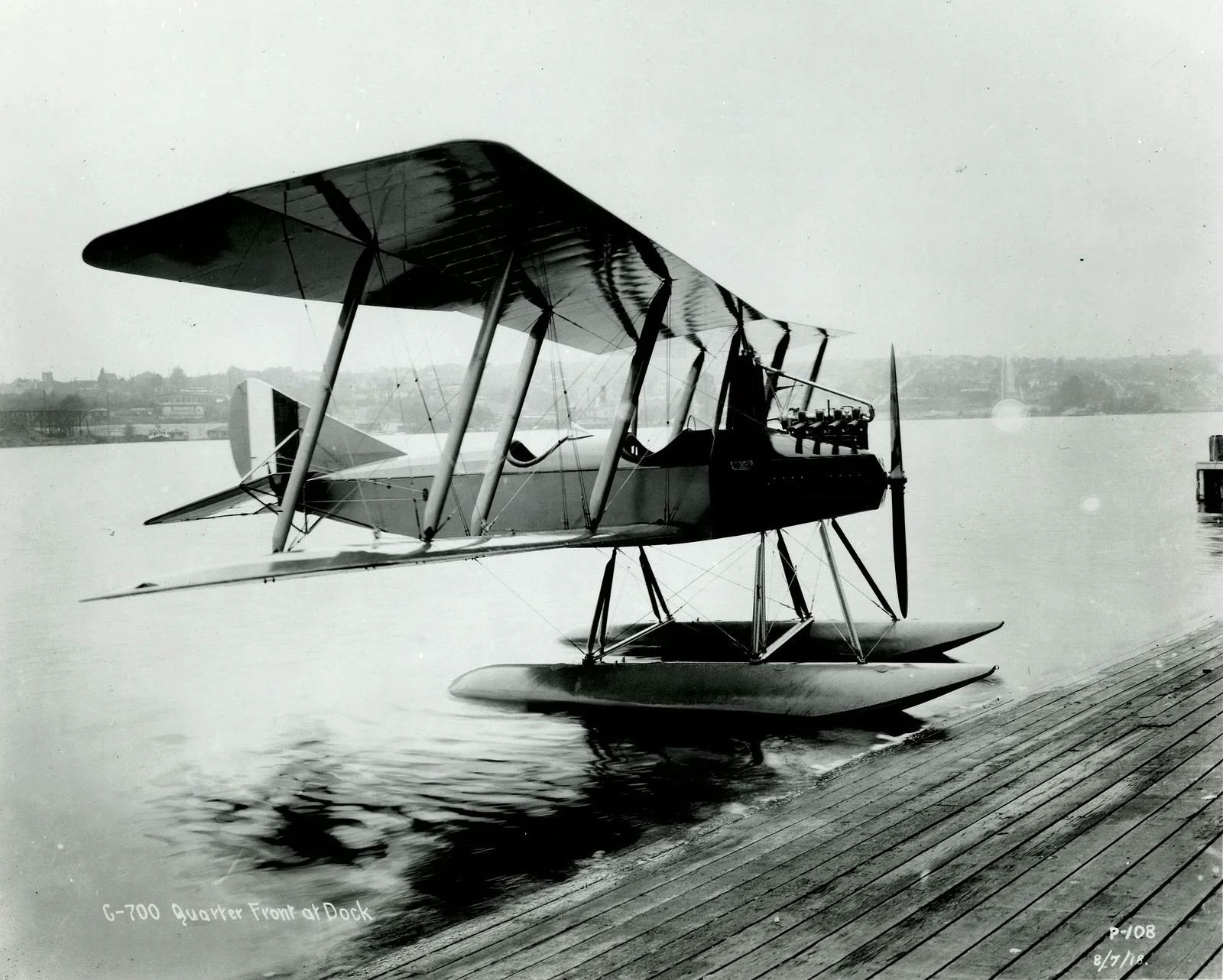 James Foley, Boeing’s first employee in Washington, D.C., played a key role in securing the company’s first government contract: a U.S. Navy order for 50 Model C trainers. (Photo courtesy of Boeing Archives)
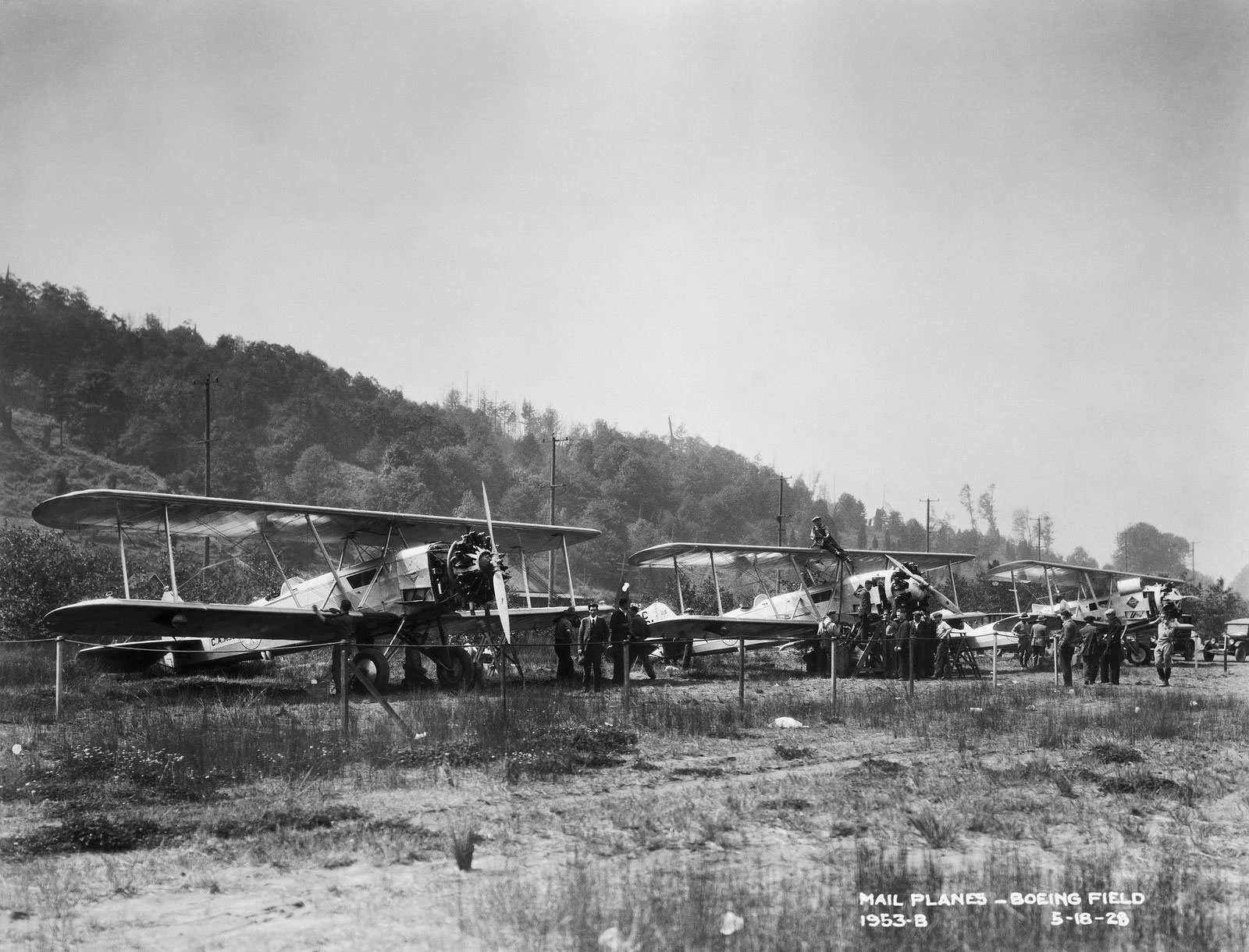 George Tidmarsh, one of Boeing’s early Washington, D.C., representatives, negotiated two contracts that secured the company’s future: the 1923 contract to build the Boeing PW-9 pursuit fighter and the 1927 contract to carry the mail between San Francisco and Chicago, which called for the manufacture of 25 Model 40As. Pictured are Model 40As at Boeing Field in Seattle. (Photo courtesy of Boeing Archives)
James Murray, who led the Washington, D.C., office from 1928 to 1961, witnessed remarkable advancements in aviation technology. His goals encompassed maintaining relationships with government officials, providing vital information to government customers, promoting international sales, monitoring legislation and engaging with media.
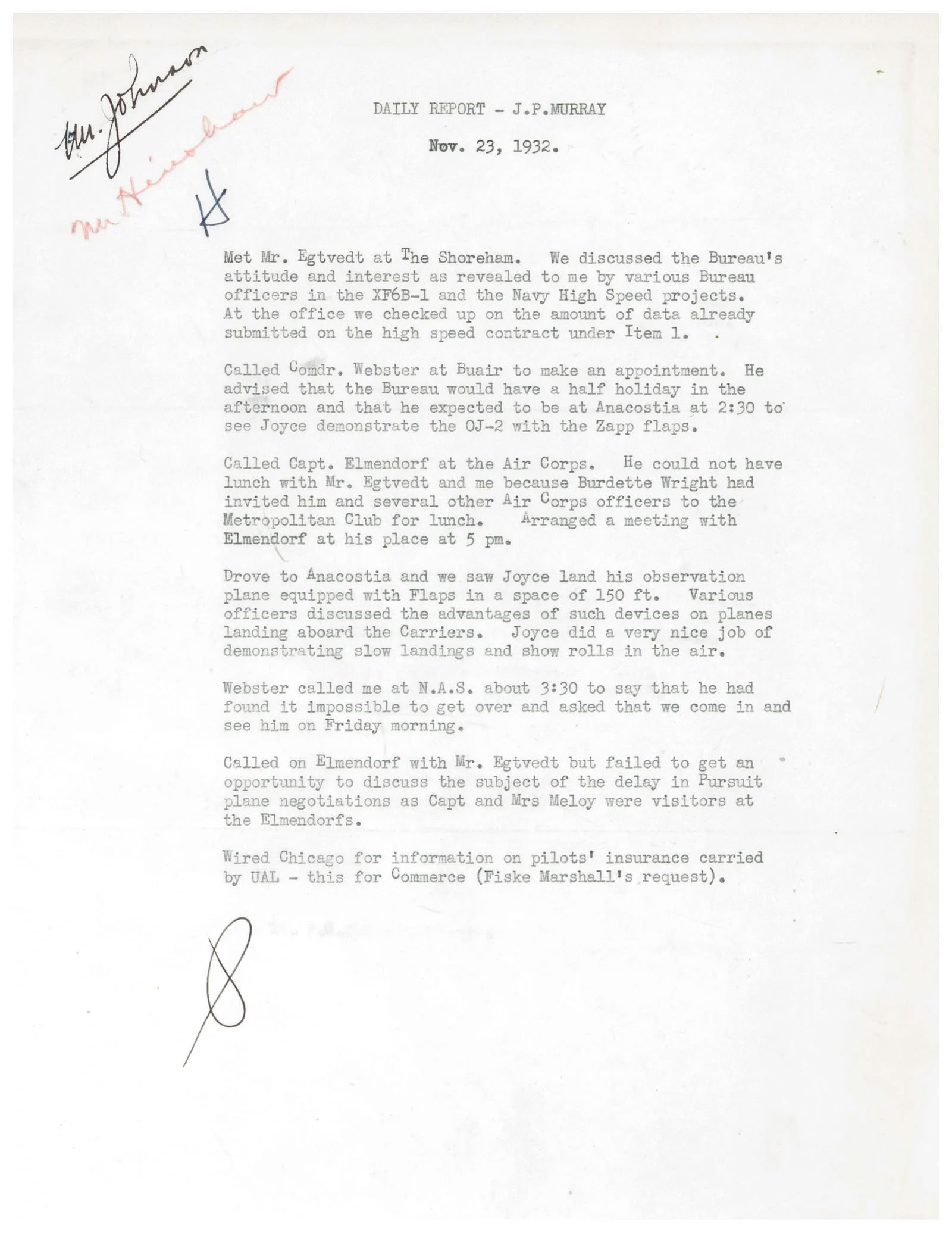 Daily Report from James Murray about operations in Washington D.C., 1932.
During World War II, Murray played a key role in negotiating contracts for defense aircraft, ensuring the nation’s security. In peacetime, he championed the emerging industry of commercial air travel, contributing to Boeing’s postwar survival.
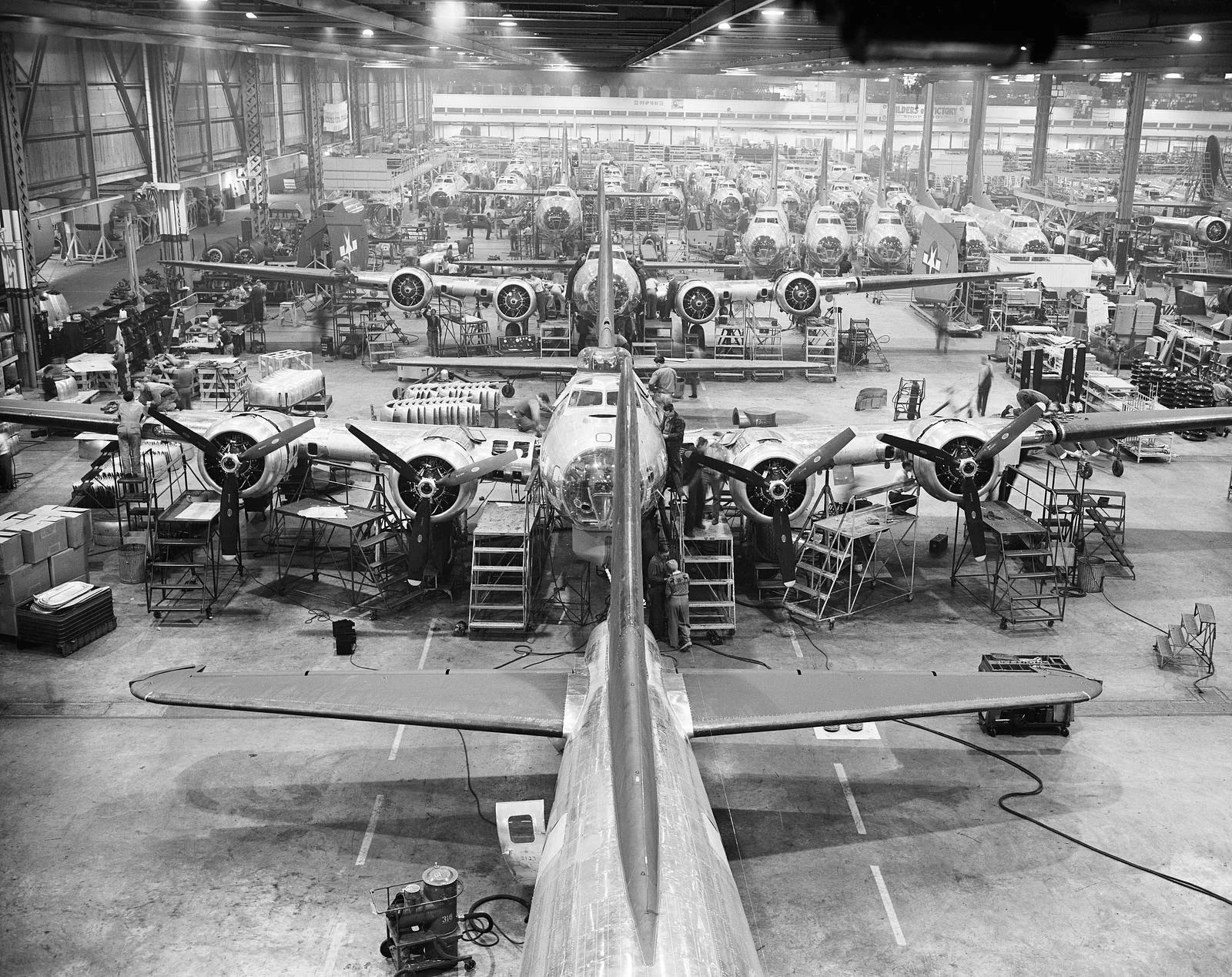 The B-17 Flying Fortress contract benefited from Murray’s negotiations. It played a vital role in the Allied victory in World War II. (Photo courtesy of Boeing Archives)
As Boeing grew, so did the Washington, D.C., office, with a dedicated team specialized in federal systems and regulations. They kept customers informed about government developments impacting the company’s business while ensuring it fulfilled military and federal needs with excellence.
This team played a role in all of Boeing’s interests, promoting the development and sale of commercial airplanes and securing government contracts for defense and space ventures.
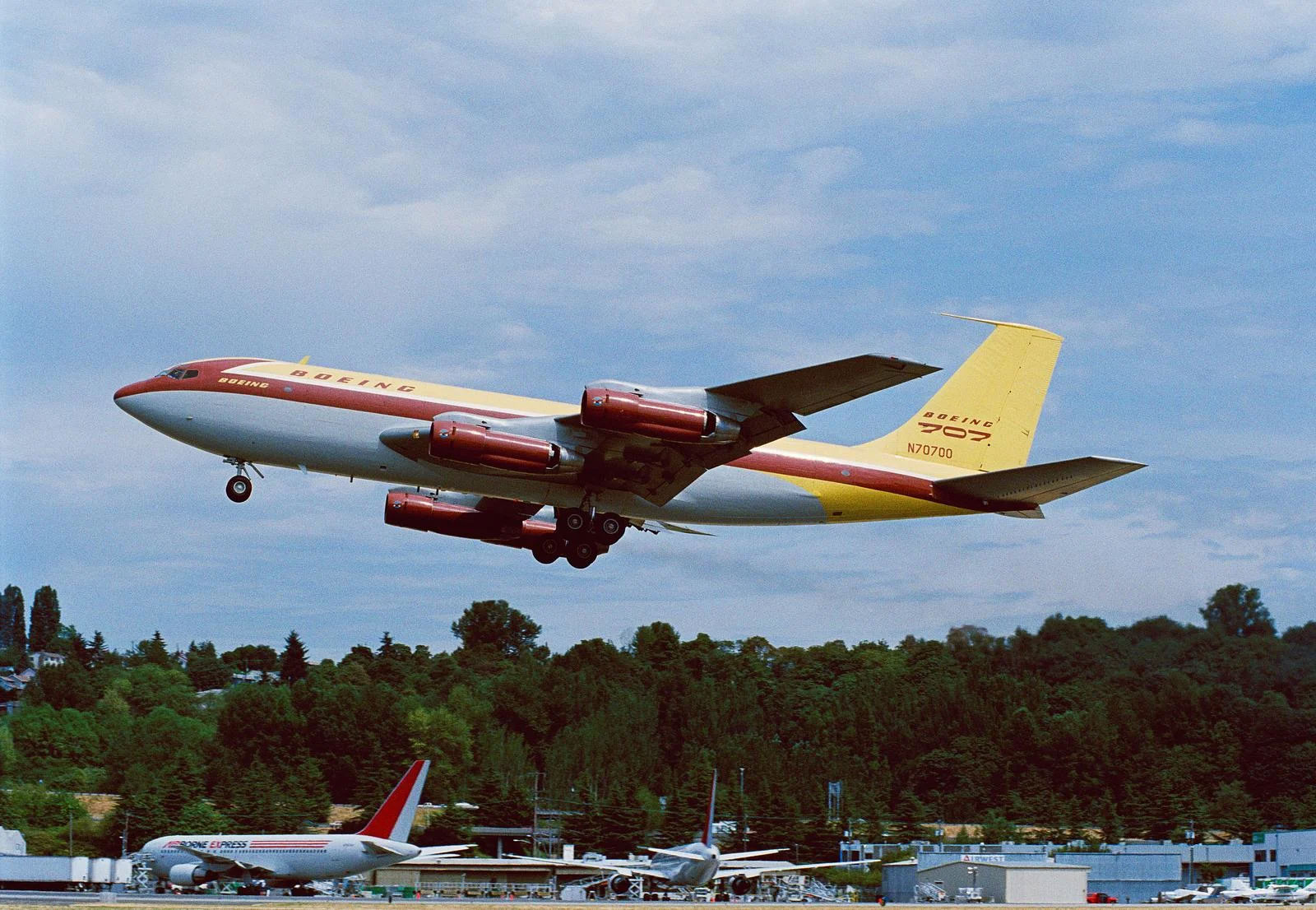 Washington, D.C., staff obtained permission to develop both military and commercial versions of the groundbreaking Model 367-80, or “Dash 80,” prototype, securing the future of the famed 7-series of commercial airplanes. (Photo courtesy of Boeing Archives)
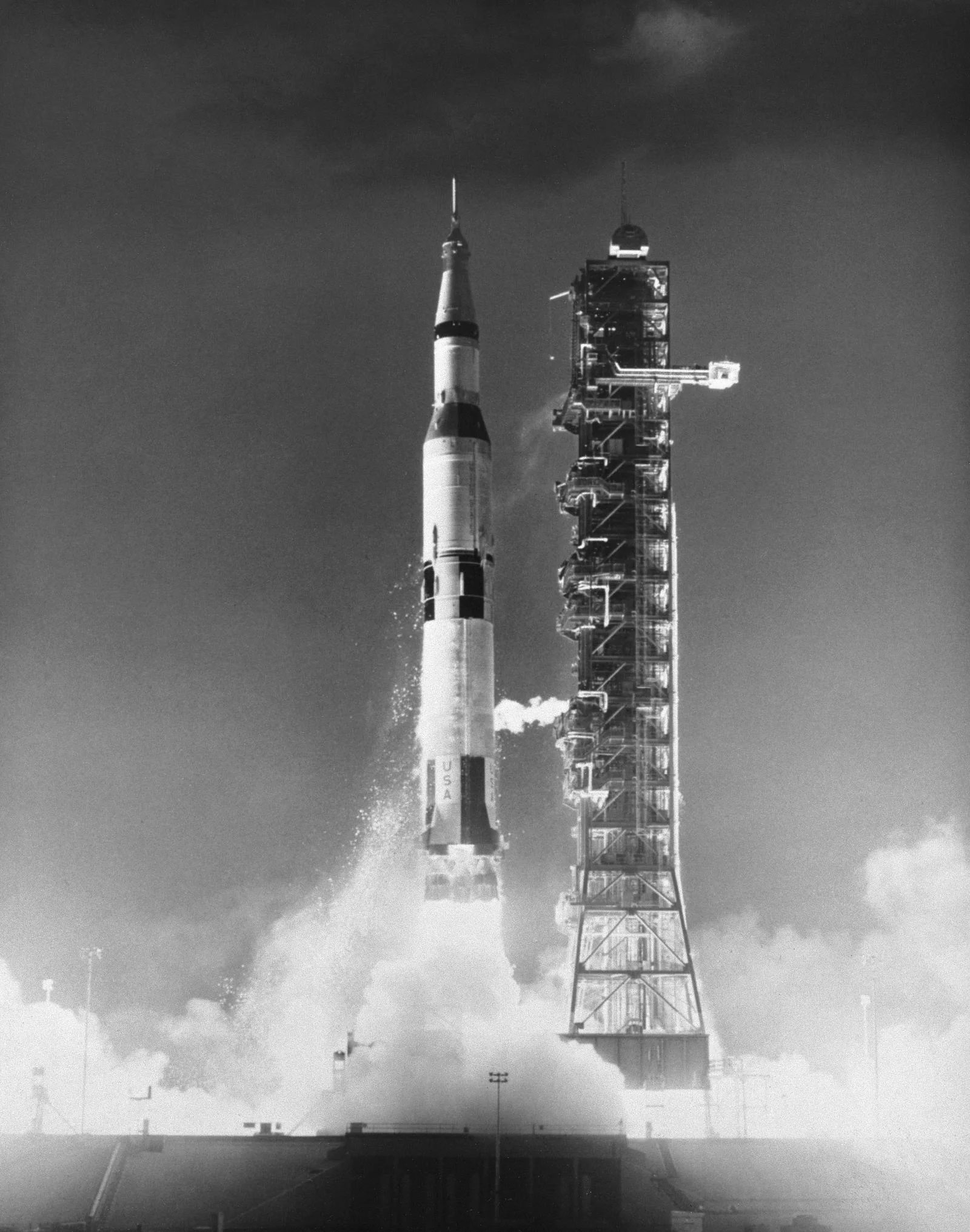 After NASA selected Boeing to develop the first-stage booster for the Saturn V rocket, the company’s new Aerospace Division sent a crew to Washington, D.C., to coordinate its activities with government officials. (Photo courtesy of Boeing Archives)
“This office is the single best example of a microcosm of The Boeing Company, in which every element of the company is represented,” said Boris Mishel, Boeing vice president and director of the Washington, D.C., office in 1989.
In 2014, Boeing opened the Long Bridge facility in Arlington, Virginia. Boeing Defense, Space & Security headquarters moved to Arlington in 2016, returning to St. Louis in 2026. The Washington, D.C., area remains a key part of Boeing’s business. In 2022, Long Bridge became the global headquarters, offering proximity to customers and stakeholders and providing access to world-class engineering and technical talent. A Veterans Wall was installed in 2025, honoring the military service of Boeing employees.
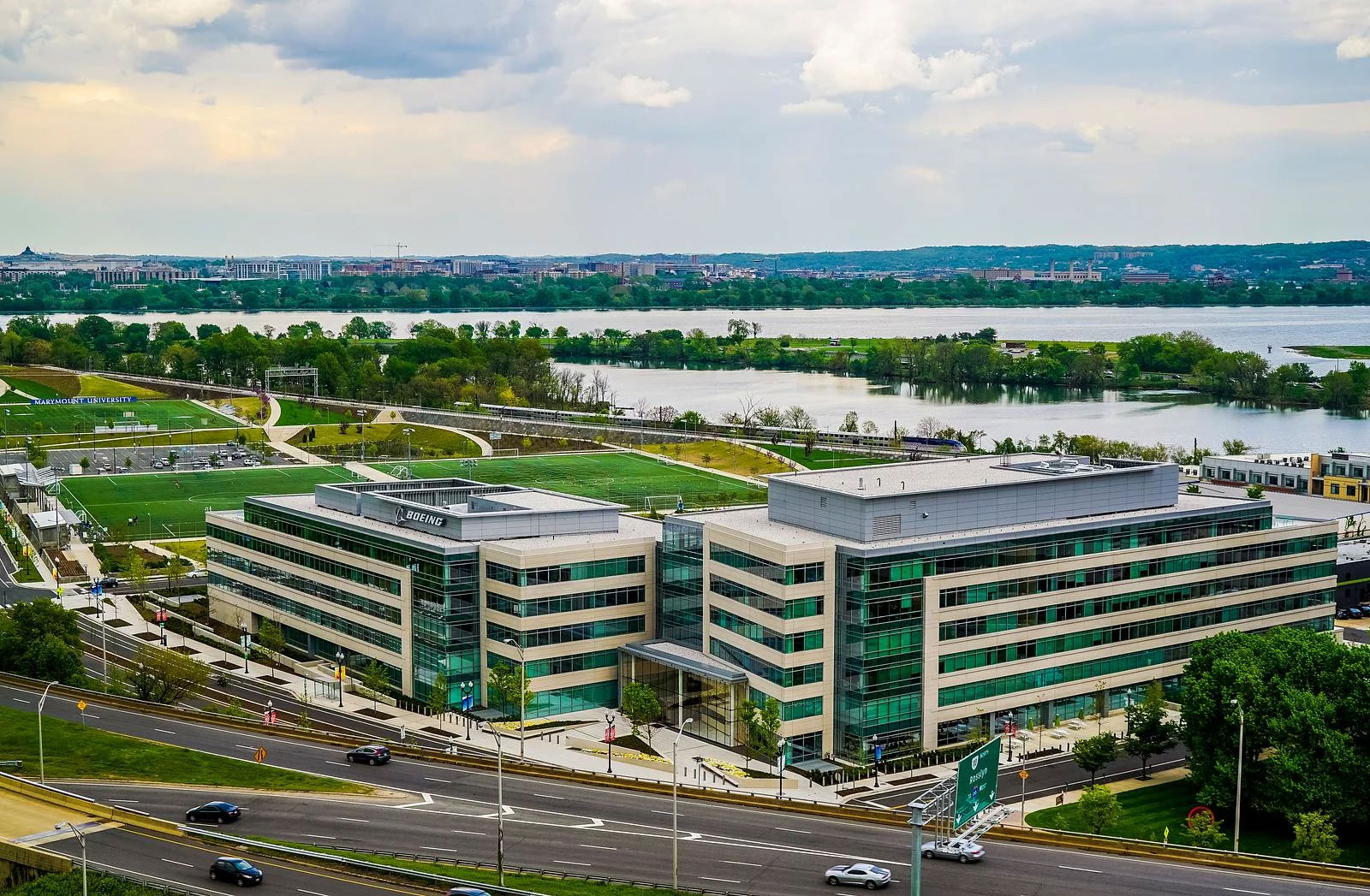 Boeing Long Bridge (Photo courtesy of Boeing Archives)
In celebration of the 250th anniversary of the signing of the Declaration of Independence, Boeing is supporting the National Archives’ Freedom Plane National Tour. The Freedom Plane will depart from Washington, D.C., in March, and its final stop will be Seattle in July, linking the two Washingtons once again.