
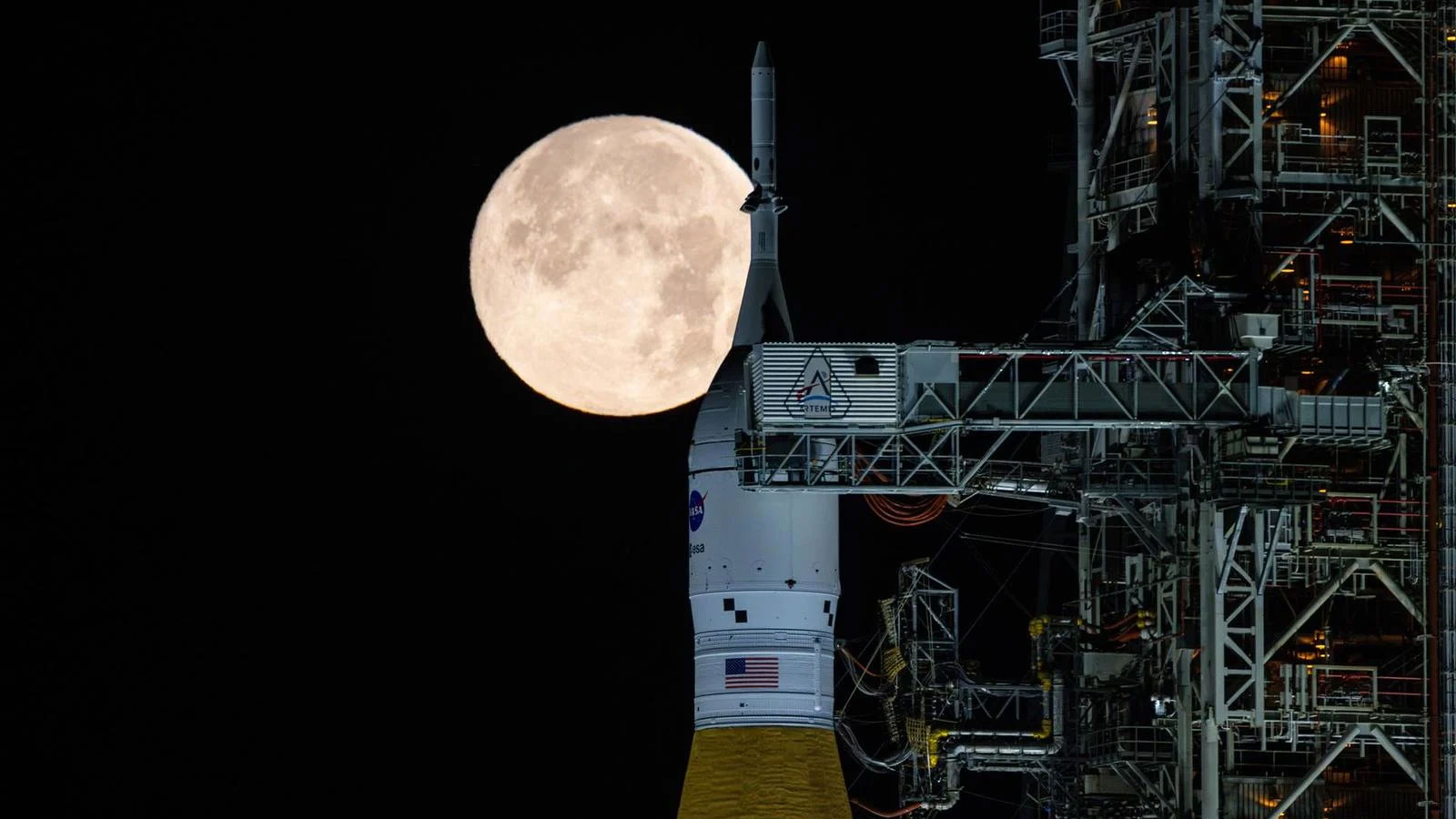
Boeing and NASA successfully completed the wet dress rehearsal (WDR) for Artemis II at Kennedy Space Center’s Launch Pad 39B, concluding Thursday evening as planned at T‑29 seconds in the countdown. The test exercised propellant loading, stabilization and drain procedures during a simulated countdown.
Why it matters: This test proves the systems, procedures and teams can work together under realistic conditions, supporting astronaut safety and program schedule. The completion of WDR is a major step toward final reviews and launch date decisions. NASA is targeting a launch window in March.
The mission: Artemis II, the first crewed flight of NASA’s Space Launch System (SLS) rocket and Orion spacecraft, will send four astronauts on a 10-day mission around the moon and back to validate life support systems, verify safety for deep space travel, and break distance records by orbiting the far side of the moon.
Key highlights of Thursday’s test:
- The WDR checks how the rocket, spacecraft and ground systems work together for crewed missions.
- Teams loaded hundreds of thousands of gallons of liquid hydrogen and oxygen into the SLS stages.
- Multiple countdown sequences were run to verify communications and operations.
- The first terminal‑count sequence — the final 10 minutes of the countdown — began with launch teams pausing at T‑1:30 minutes and again at T‑33 seconds. They then recycled the clock to T‑10 minutes for a second planned terminal run, and the rehearsal ended at T‑29 seconds.
- Controllers practiced emergency procedures and monitored system performance, addressing issues in real time.
What’s next:
- Engineers will review telemetry and test data to finalize launch criteria.