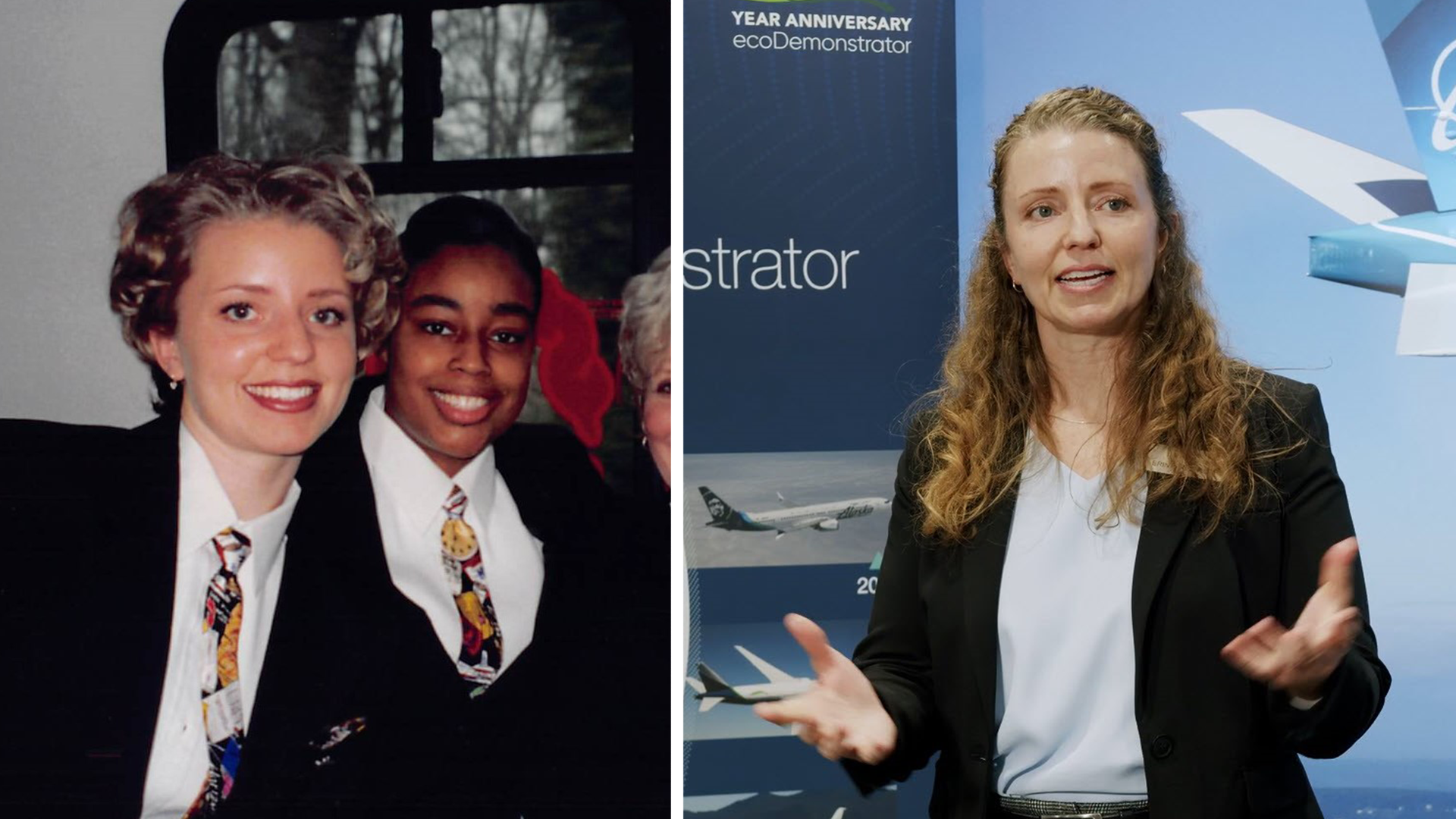
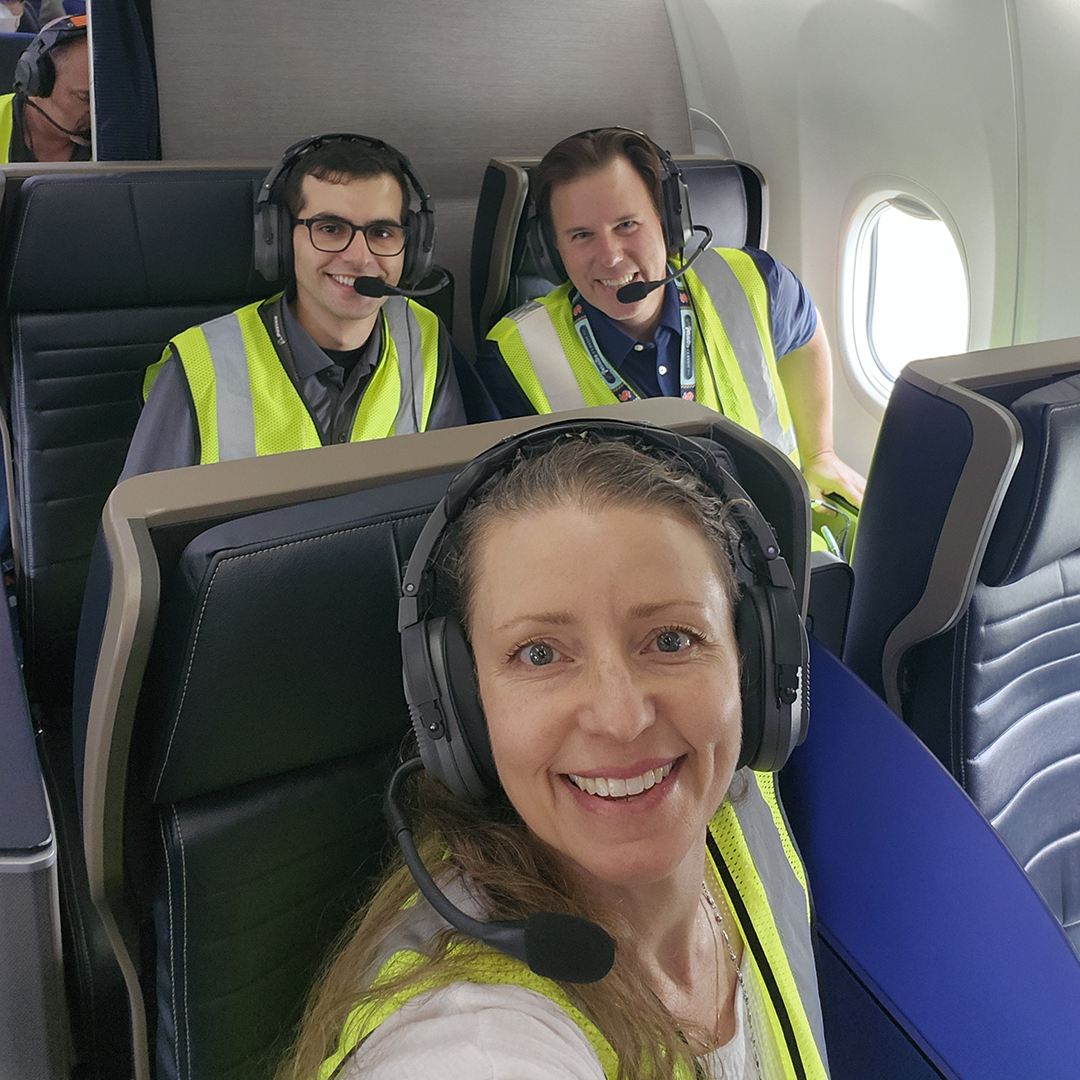
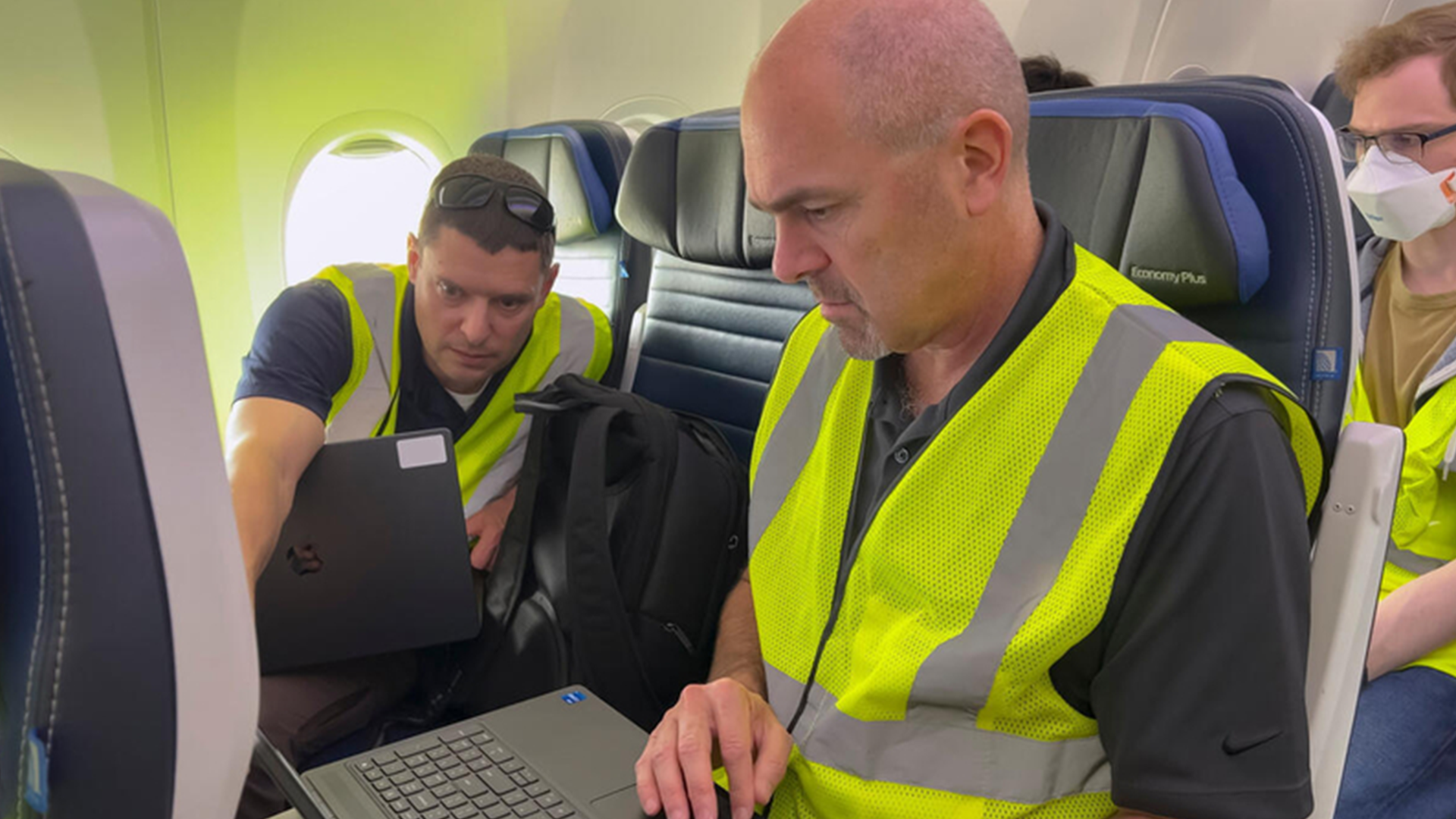
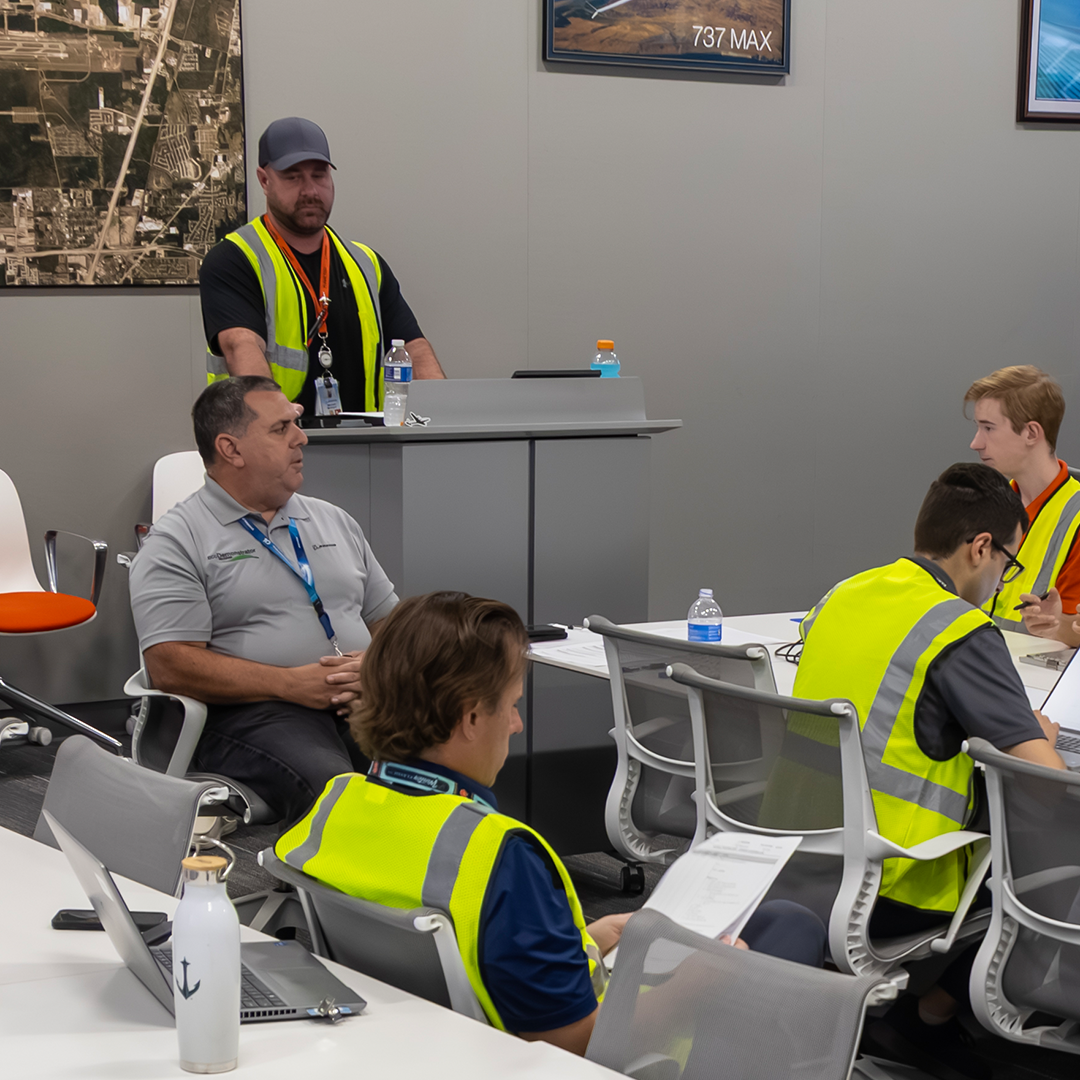
Ford, Slim and Greenleaf worked across Boeing’s engineering and flight test teams to ensure Boeing had engineering and parts ready for the flight test while also working closely with the test partner, United Airlines, to help prepare the test airplane and flight crew. Like Greenleaf, Ford and Slim point to an early interest in science and airplanes that led them to work at Boeing.
“My dad was a commercial airline pilot, and I was always kind of a math nerd when I was a kid,” Ford said. “When I was 10 years old, I could identify all the airplanes in my dad’s fleet, just by engine and tail configuration. Fast-forward to picking a college major and employer, aerospace and Boeing were a natural fit.”
“Airplanes are very complicated and challenging machines to work with,” Slim said. “Aerodynamics and fluid dynamics were particularly attractive to me. Now, I get to help figure out how to get a technology out of a lab and into a flight test environment, collect the data to get back to the engineers to support our future products.”
Engineering & Technology Innovation Technical Fellow Greg Saccone led this project from its beginning 12 years ago through the technical validation in these flight tests. His father was in the Air Force, so Saccone also grew up around airplanes and was always interested in electronics. Years later, as principal investigator for testing the advanced avionics, Saccone collaborated with industry partners and government agencies around the world to develop the system architecture and data standards that have culminated in this international flight test.
“To take something from initial concept into the standardization process and to see it actually flying is pretty complicated,” Saccone said. “It is really rewarding.”