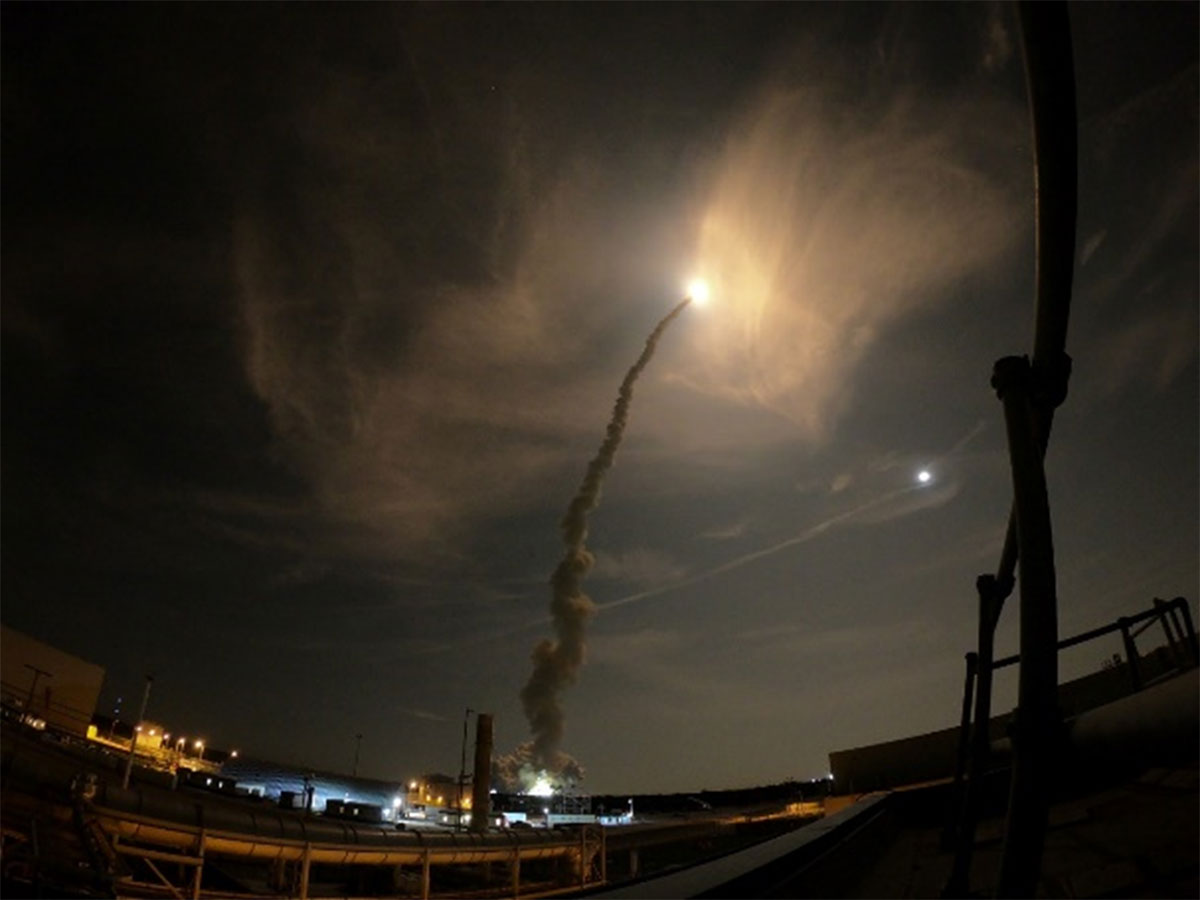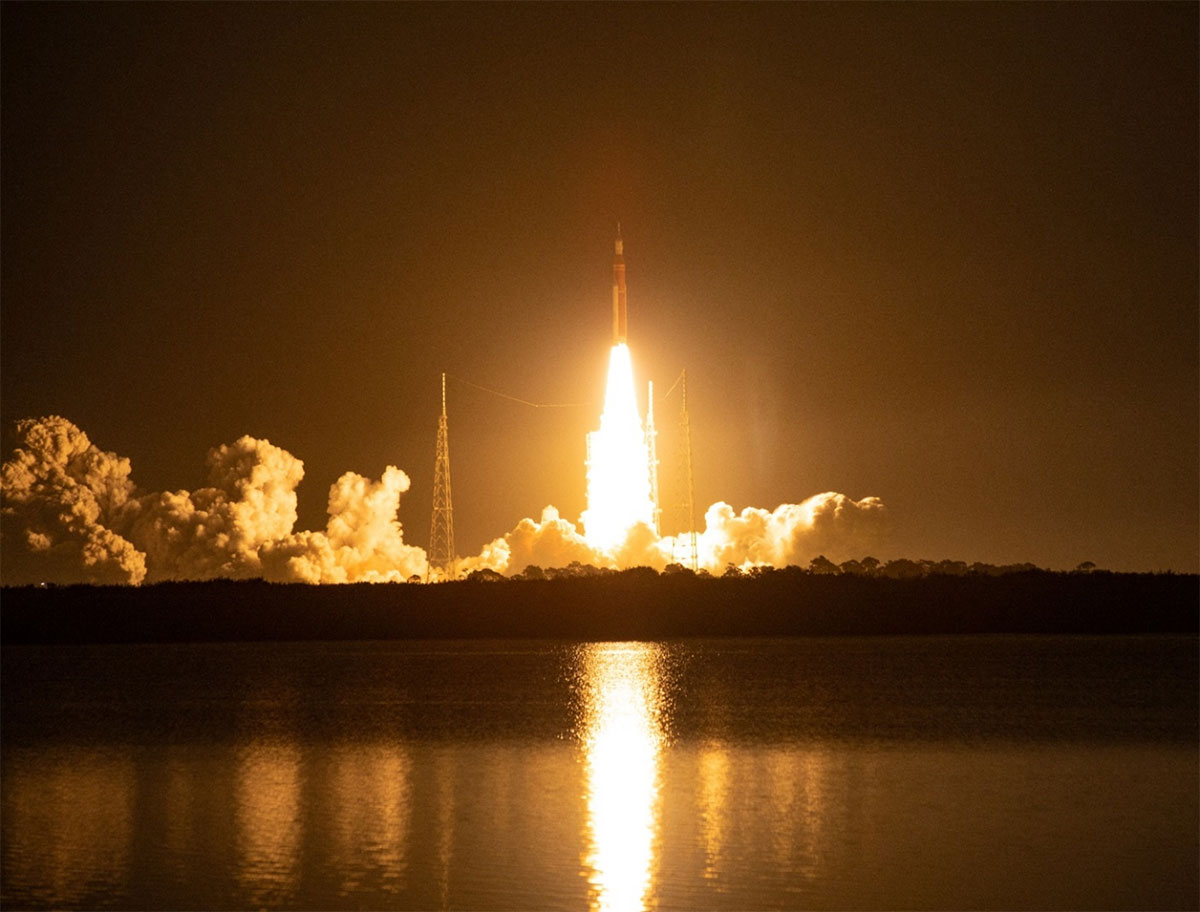
As early as April 1, NASA’s Space Launch System rocket will lift off for the Artemis II mission, carrying four astronauts on a 10-day flight around the moon — the first crewed lunar mission since Apollo. Millions are expected to watch as Boeing-built hardware plays a central role in the launch.
Why it matters: Boeing is helping NASA send astronauts on a journey around the moon for the first time in 54 years to enable greater exploration of the lunar surface.
- Production is well underway for the Boeing-built core stages for future Artemis missions.
The first 8 1/2 minutes after liftoff are critical for the core stage, which engineers monitor from the Boeing Mission Control Center at Kennedy Space Center.
Jay Grow, associate chief engineer, Launch Operations, recalled being in the room for Artemis I in November 2022: “After a lot of troubleshooting and long nights, we finally made it to the Engine Start command. We hadn’t been that deep into the count before. To see the glow of the engines, then the boosters — it was unbelievable.” He and other Boeing engineers are preparing to watch the second flight — this time with crew on board.
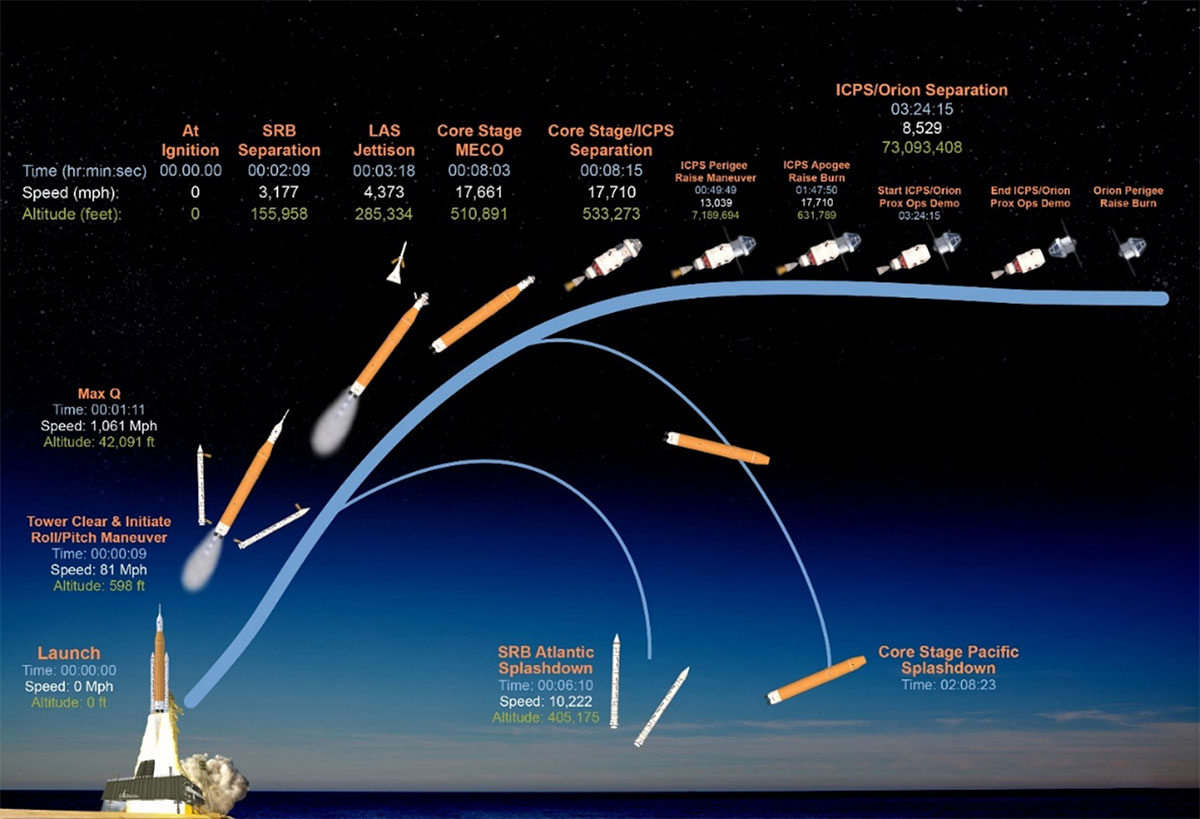
Here’s the journey of the core stage — from liftoff to separation — why engineers call its performance “eyewatering” and what they monitor behind the scenes during launch:
T-0 | Liftoff
- Before leaving Earth, the rocket stands 32 stories tall and weighs nearly 6 million pounds (2,604 metric tons).
- The rocket will accelerate to over 17,000 mph (27,358 kph) before the upper stage takes over to propel the Orion spacecraft around the moon.
- At liftoff, the whole stack produces 8.8 million pounds (39,144 kilonewtons) of thrust.
00:00:09* | Rollover maneuver
- After clearing the tower, the rocket performs a roll maneuver to line up with its flight path.
- The core stage provides about 2.2 million pounds (9786 kilonewtons) of thrust during the vehicle’s climb to about 70 miles (112.654 kilometers) above Earth. It can withstand this force due to Boeing’s special friction-stir welding technique that makes its fuel tanks tougher.
00:01:11 | Max-Q
- At this point the rocket faces the greatest atmospheric force – also known as maximum dynamic pressure, or Max-Q.
- The vehicle reduces acceleration to protect its structure, then as the atmospheric pressure decreases, it throttles up to 109%.
00:02:09 | Solid rocket booster separation
- The side boosters finish burning and drop away.
- The rocket keeps climbing toward orbit.
00:03:13 | Fairing panels jettison
- The panels that protect Orion are released to reduce weight and let the solar arrays unfold.
00:03:18 | Launch abort system jettison
- The launch abort system is no longer needed and is dropped.
00:08:03 | Core stage main engine cutoff
- The core stage engines shut down after they burn their fuel.
00:08:15 | Core stage separation
- The core stage separates and the upper stage moves Orion toward the moon, propelled by the interim cryogenic propulsion stage. The core stage’s job is done.
* All times listed are estimates.
What’s next: The tanking, launch countdown, liftoff and mission progress can be followed live on NASA TV, starting on April 1 at 7:45 a.m. Eastern time. Join in on the conversation by following Boeing’s X account @BoeingSpace.