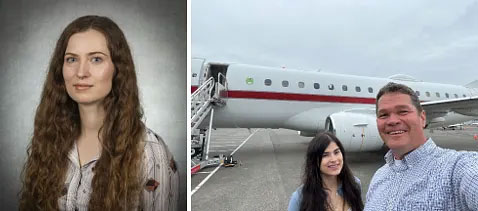
In Bristol, United Kingdom, sustainability modeling engineer Steph Williams is developing the baseline aircraft requirements for a prototype water vapor sensor – a sensor that can provide valuable data to predict weather conditions that lead to contrail formation and persistence. Williams will partner with her regional Honeywell counterparts who are developing the technology.
“We need to mature water vapor sensors to not only improve weather prediction but to also help avoid aviation’s negative impacts, as accurate water vapor measurements are needed to enable forecasting and mitigation of persistent contrails through optimized flight routes,” Williams said.
What’s happening: A three-year project called MIST (Mitigation of Contrail Impact via Novel Sensing Technologies) brings Boeing, Honeywell and the University of Reading together for this research, for which the Aerospace Technology Institute in the UK just awarded funding.
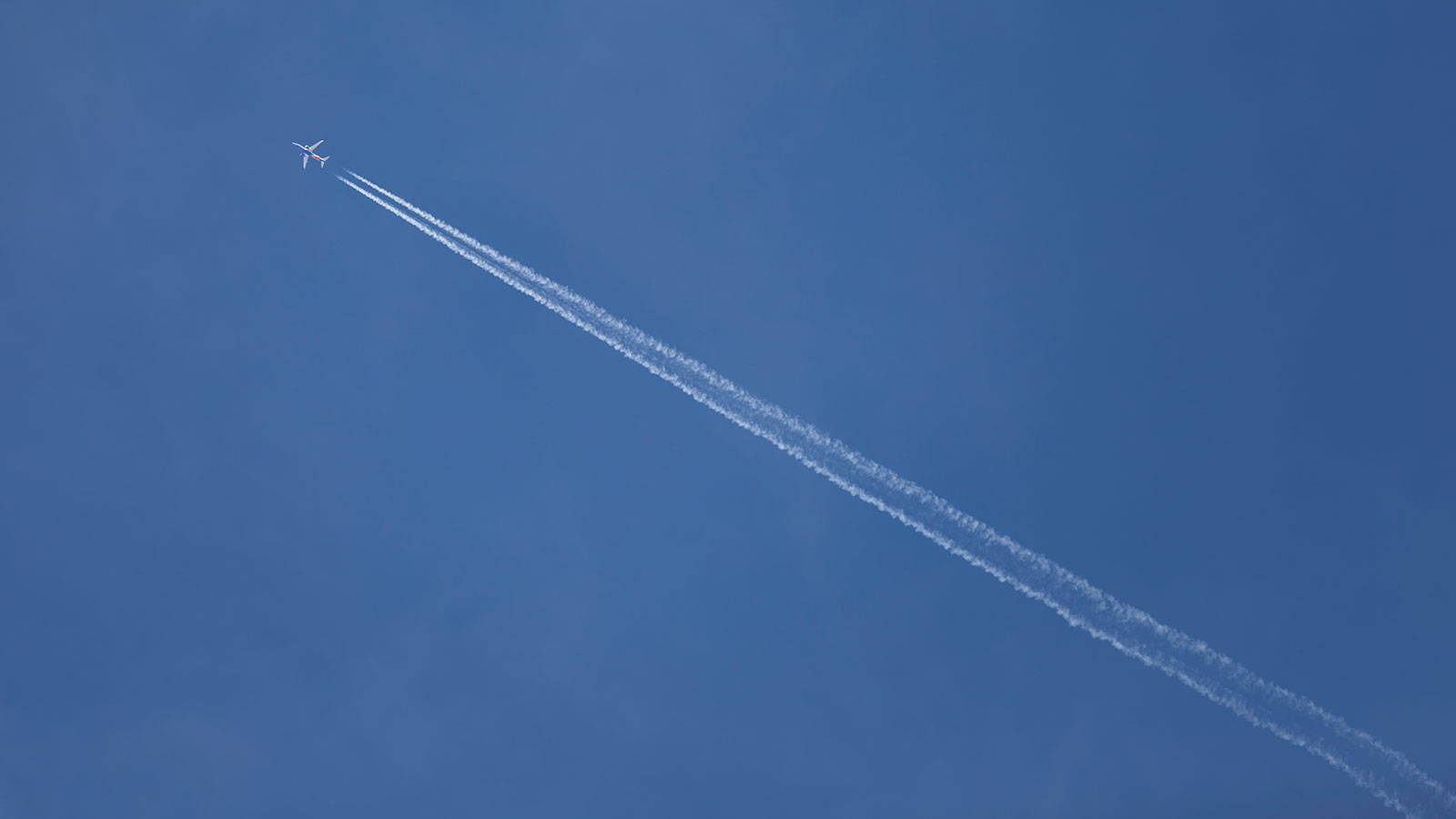
Catch up quick: Contrails are clouds made up of ice particles that form when water in the air condenses on aerosols from an aircraft engine exhaust, as well as from other sources, and freezes when exposed to cold temperatures at high altitudes.
- While some contrails dissipate quickly, those that persist may contribute to either a warming or cooling climate impact, depending on ambient conditions and the timing of formation.
Why it matters: Boeing and Honeywell believe that this technology can address airline customers’ need for real-time meteorological observations.
- “Our aircraft already serve as meteorological platforms to provide data on winds, temperature, icing and turbulence in support of our customers and industry global operations,” said Dr. Tia Benson Tolle, Boeing Commercial Airplanes Product Development Sustainability director. “We are excited to work with these partners on a new water vapor sensor capability, as humidity observations are essential to improve weather and contrail forecasting.”
- “There is a clear need across the aviation ecosystem for more accurate, high-frequency atmospheric data collected in flight,” said Anthony Florian, president, Honeywell Aerospace Europe, Middle East, Africa & India. “By advancing aircraft-based sensing technologies, this project aims to help close critical data gaps that affect contrail forecasting, weather modeling and climate analysis.”
Zoom in: Across the ocean in Seattle, Boeing Technical Fellow Tim Rahmes and emissions engineer Diana Ochoa-Mendoza will help advise the UK team on sensor performance requirements and identify viable approaches that could lead to integration of the technology into commercial aircraft.
- “We’ll assist in evaluating the UK team’s concepts, drawing from our experience in testing similar sensors with our Puget Sound lab and flight test teams,” Rahmes said. It’s important that the new sensors not only meet the difficult challenge of reliable, accurate water vapor measurements in the upper troposphere but also be suitable for retrofit and forward fit, long maintenance cycles, ease of installation, and so on.”