Persistence turns spacecraft sketch into thruster patent

By inventing a split-thruster strategy, an astrodynamics duo finds a new way to help keep satellites on orbit.

March 09, 2026 in Space, Innovation

At a whiteboard inside the Mission Control Center in El Segundo, California, Boeing astrodynamics engineers Jeff Noel and Drew Giacobe sketched the beginnings of a new way to raise O3b mPOWER satellites from their postlaunch orbit to their final operational orbit.

For electric-propulsion missions, that orbit-raising period is where power, propellant and time converge. The satellite must maneuver using solar energy and careful battery management to reach its final orbit without sacrificing on-orbit life.

“We started the project from scratch,” Noel said of that day in 2017, emphasizing a new way of completing the transfer since the standard method wasn’t going to work. The project required a method that used propellant more efficiently and completed the transfer more quickly.

The duo had worked together since 1997, but that sketch marked the beginning of a focused collaboration. Today, their split-thruster invention has been used to maneuver all 10 of the O3b mPOWER satellites launched to date to their final operational orbit. Three more satellites will also use the split-thruster strategy.
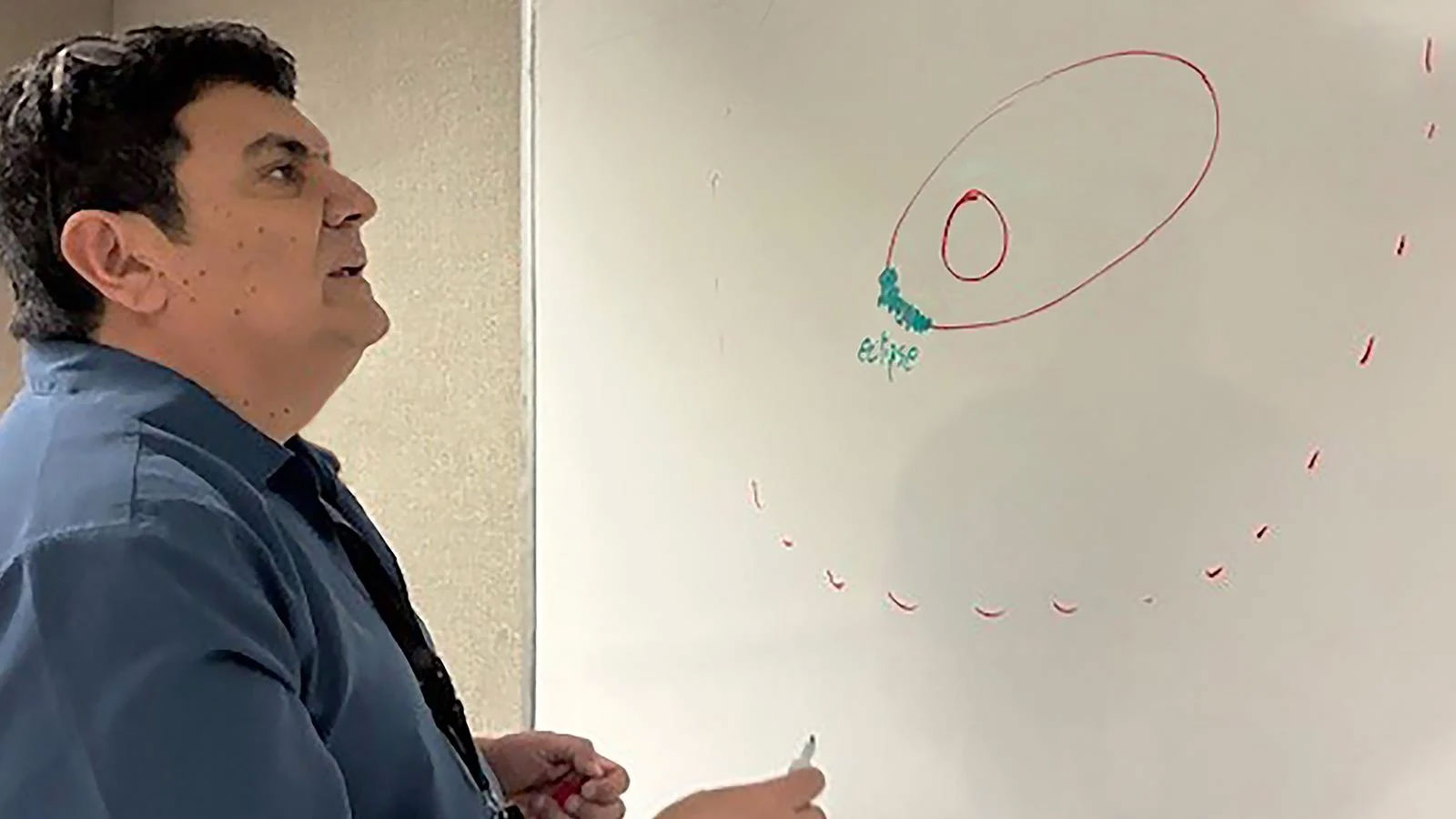
STARTING POINT: Jeff Noel sketches a satellite orbit to determine when and where the split thrusters should be used. STARTING POINT: Jeff Noel sketches a satellite orbit to determine when and where the split thrusters should be used. (Photo © Boeing)
Challenge the assumptions

Early on, there were challenges. The determined engineers had to find a way to transition a satellite through its orbit-raising phase while respecting a stringent propellant budget, with limited electrical power from solar panels. 

“In engineering meetings, the phrase ‘broken propellant budget’ was a recurring theme,” Noel said. As they presented their developing concepts to engineering review boards, their ideas and suggestions failed to satisfy traditional constraints and didn’t fit the usual playbook.

“Even after proposing different solutions, the answer at the time was no,” Noel said. 

Over the years, they continued to counter the academic assumption that thrusters must run at the same level all the time during a low-thrust transfer. 

They asked practical questions: “What is the orbit period? How much sunlight do I have?” 

Keep it simple

The breakthrough came when they realized the solution didn’t require new hardware, but improved mileage. By changing the timing of thruster maneuvers and rebalancing the power draw across the orbit, they could better use periods of sunlight to recharge batteries, thus avoiding a power drain during eclipse.

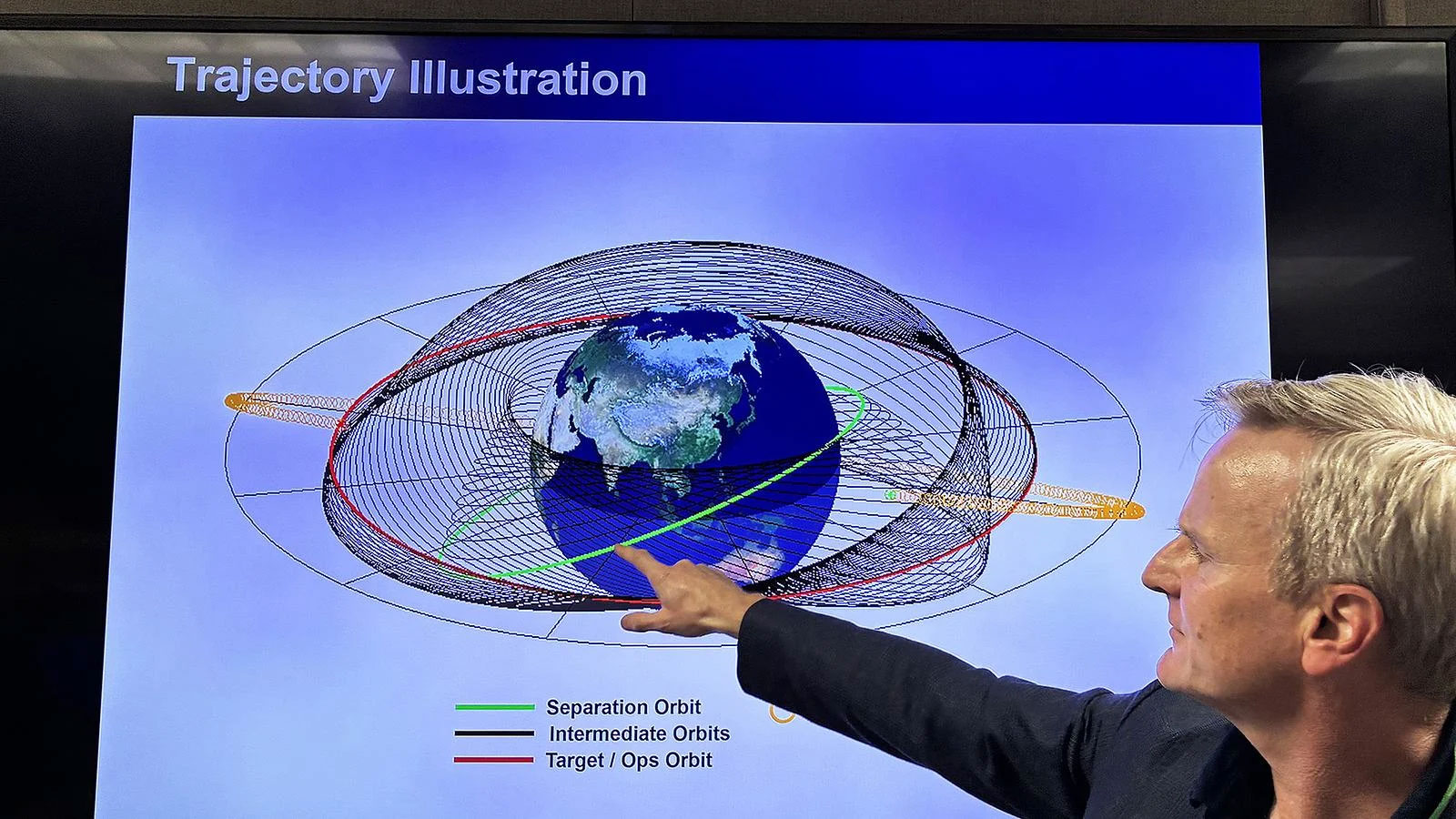
ORBIT OPTIONS: Drew Giacobe explains the phases of a satellite’s postlaunch orbit-raising transfer to its final operational orbit. ORBIT OPTIONS: Drew Giacobe explains the phases of a satellite’s postlaunch orbit-raising transfer to its final operational orbit. (Photo © Boeing)

Their method – termed split-thruster execution utilizing power‑balanced transfer orbits – uses two variable thrusters intentionally out of phase. Instead of firing both thrusters together at a constant level, one thruster operates on its highest gas‑mileage setting for most of the orbit, while the other fires only as power and timing require. 

To explain the energy efficiency idea simply, Giacobe said, “If you have power, turn the thrusters on, and if you don’t, then turn one off. That really is the core of the invention.” 

Increased efficiency translated to better outcomes for the team. “If we’d stuck with the original thrust level, we would’ve limited the solutions,” Noel said. He compared the initial approach to “driving from Los Angeles to Sacramento with poor gas mileage,” a practical analogy that drove their team to seek better efficiency.

Giacobe implemented the strategy in the operational software, elevating their sketches from the whiteboard to real orbit scenarios. 

Their solution: Input power equals output power as orbit timing changes, using only solar-generated energy and carefully monitoring battery state. 

The result: Significant savings. “This invention is able to shave off more than 10% of the required propellant,” Noel said. 

Beyond immediate savings, the invention opened a design space between all‑on and all‑off thrust strategies. 

“Letting go of that academic assumption made it possible to produce better efficiency and better velocity,” Giacobe said. 

Keep thinking

Reflecting on their motivation, Noel said, “We would’ve never invented this if it wasn’t necessary. Necessity is the mother of invention.”

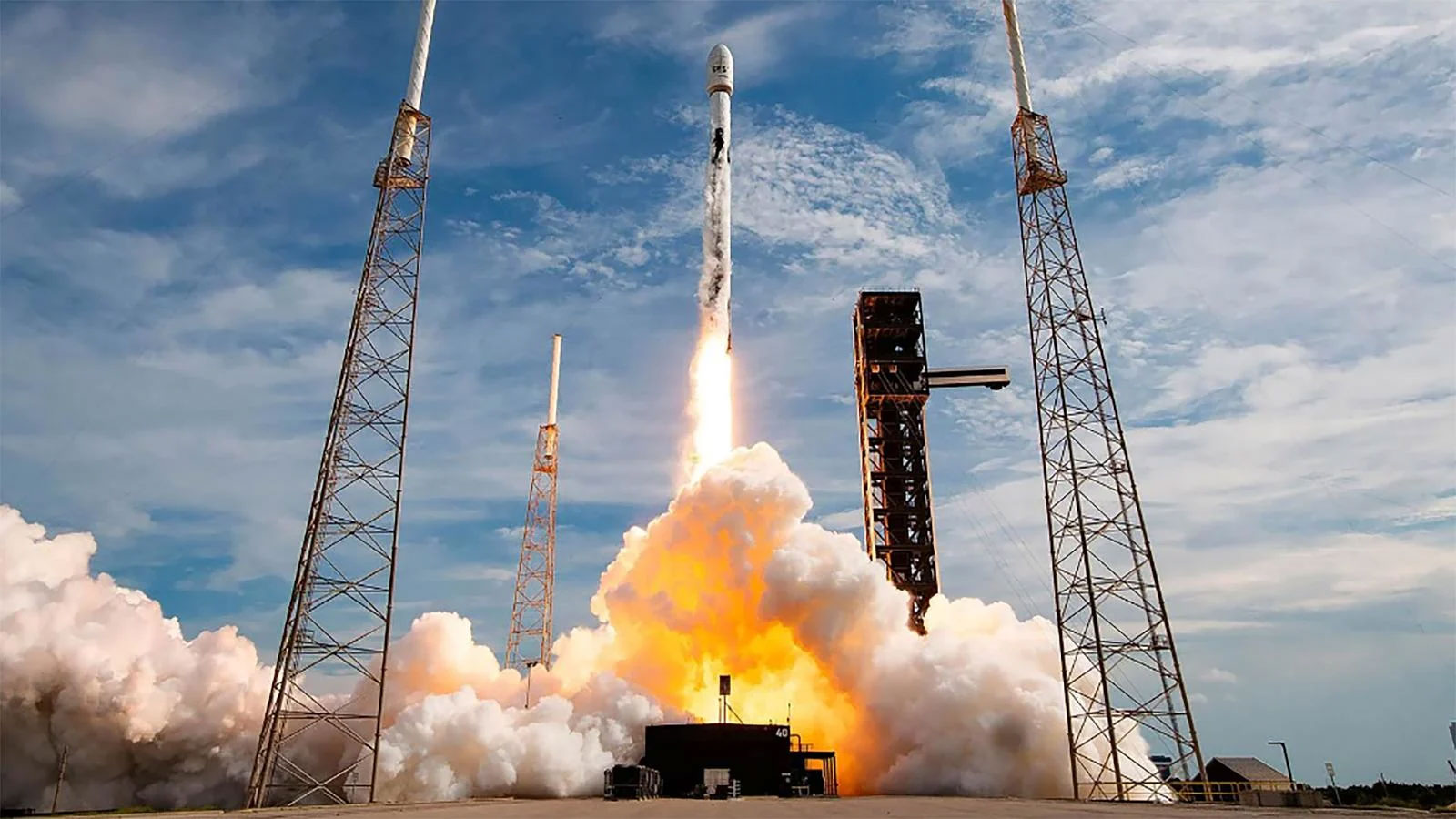
THE RESULT: An O3b mPOWER satellite launches into orbit to begin the new split-thruster transfer to its final station. THE RESULT: An O3b mPOWER satellite launches into orbit to begin the new split-thruster transfer to its final station. (Photo © SpaceX)

The split-thruster technique began supporting the continuous movement of O3b mPOWER satellites in 2022 and has proven adaptable to other thruster types and missions. Benefits of split-thruster execution include shorter transfer durations, longer stationkeeping life, reduced propellant loads, and lower financial costs.

“When a design doesn’t close on requirements, something has to happen,” Noel said. “This invention helped bring our design into compliance.”

When facing an engineering challenge, Giacobe advises innovators to simply “keep thinking.” 

“Don’t ever let go of the nagging voice in the back of your head,” he said.

Proof that persistence pays off, Giacobe and Noel have been awarded a patent for their invention by the European Patent Office and the U.S. Patent and Trademark Office. 

They dared to challenge the assumptions, and now their impossible idea is driving satellites to orbit.


Mallory Beard, Boeing Writer