Shaking it up: Boeing conducts 777-9 vibration testing

The unique human factors testing, in a simulator and lab, confirmed pilots can fly safely in the event of sustained vibration.

March 03, 2026 in Commercial

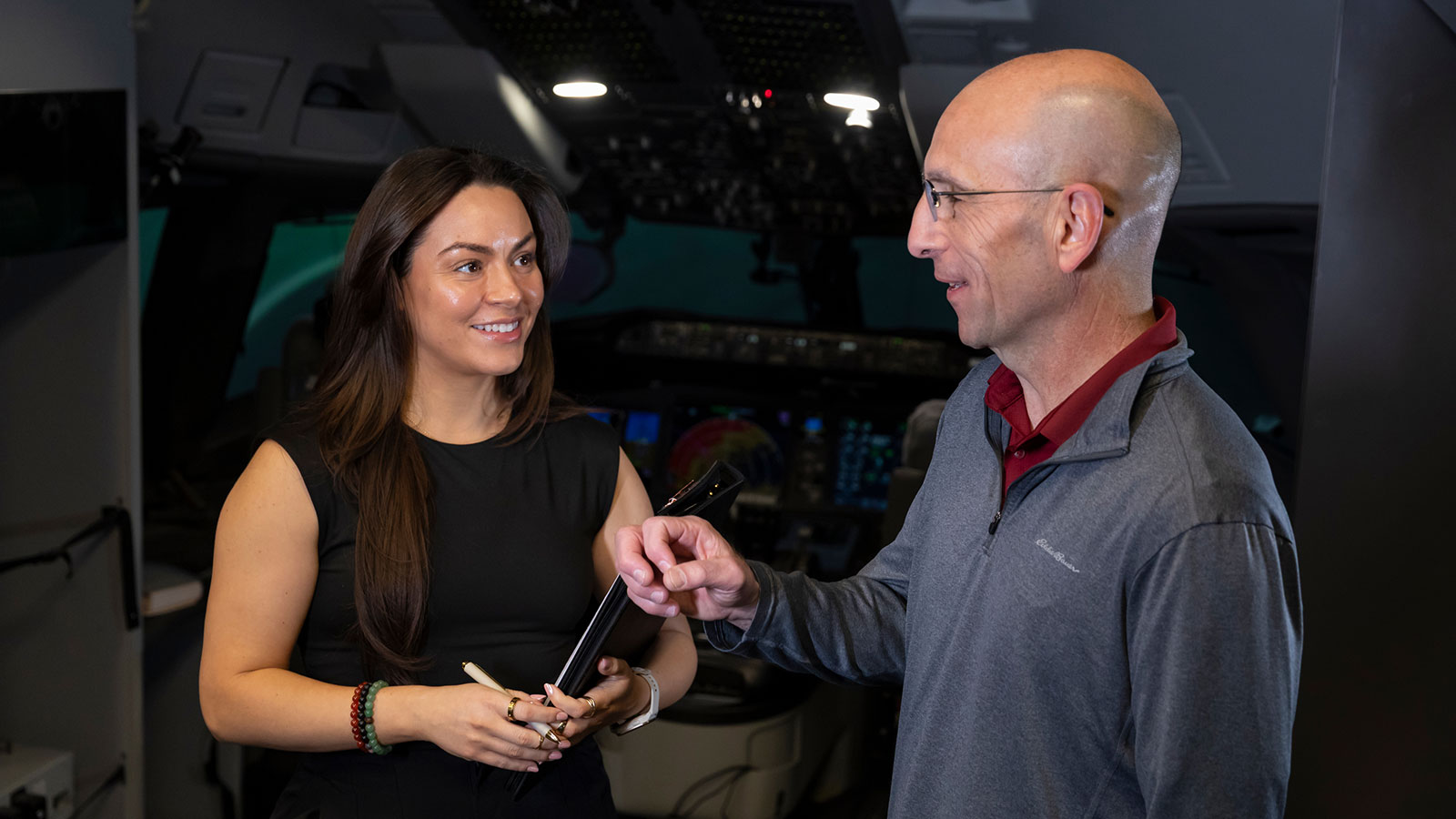
Two Boeing employees discuss simulator testing. In the 777-9 engineering cab in Seattle, Camila Proffitt and Capt. Greg Bigalk plan simulator testing. (Paul Gordon photo)

Pilots from Boeing and the U.S. Federal Aviation Administration completed a specialized human factors evaluation with the 777-9: demonstrating that flight crews could complete checklist procedures and read flight deck displays during significant vibration.

  • The scenario simulated an engine blade breaking loose, which can cause damage, imbalance and vibration. Engines and airplanes are designed for the rare condition, as required by regulators.

Why it matters: This study was the first of its kind at Boeing since certification of the 777 in 1995.

  • Relying on existing data that was used to demonstrate compliance for past programs would be in alignment with industry standards and regulatory guidance.
  • With today’s increased focus on confirming human factors findings, Boeing developed a new methodology to validate the original data, show compliance to regulations for the 777-9, and support follow-on analyses.

“Completing these evaluations took years of planning and highlights our team’s technical strength,” said Trevor Brown, Flight Deck Ergo & Physical Human Factors functional leader. “Future programs will benefit from the groundwork we laid, the data we collected and the methodology we used to demonstrate compliance.”
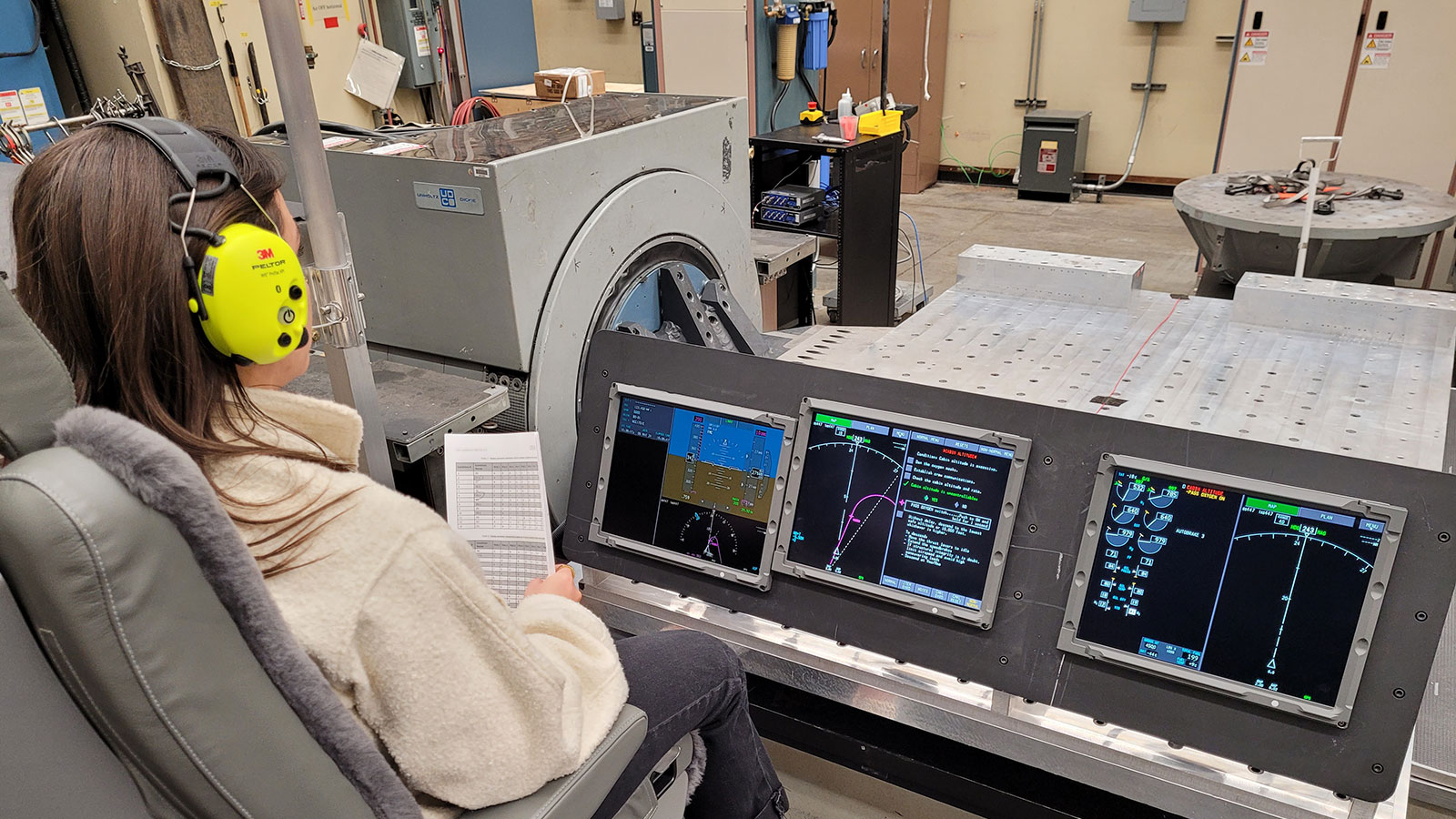
An employee views data displayed on screens. Camila Proffitt prepares for a shaker table test at the vibration lab in Seattle. (Joel Richman photo)

How they did it: The evaluation consisted of two demonstrations.

First, Boeing and FAA pilots completed flight scenarios in the company’s full-flight simulator at the Miami Training Campus, where they faced a surprise fan blade-out event.

  • “We simulated realistic vibration characteristics to demonstrate pilots could read and accomplish all of the checklist procedures and manage the airplane safely throughout the full flight scenario,” said Camila Proffitt, lead human factors engineer.

Later, the team mounted a 777-9 forward instrument panel on a vibration testing device, known as a shaker table, in Boeing’s vibration lab in Seattle. The displays were then subjected to lateral or vertical shaking while pilots read various parameters with different colors, font sizes, backgrounds and contrasts.

  • “We presented crews with challenging scenarios, including nighttime, and simulated worst-case vibration conditions that would occur in different phases of flight,” said Capt. Greg Bigalk, senior engineering test pilot, who helped lead the effort and has flown 45 aircraft types over his 37-year career.
  • “We evaluated whether flight crews could identify the correct engine experiencing the event and validate altitude, airspeed, heading, navigation waypoints and engine parameters,” he continued. “Pilots also read portions of a checklist, all of which validated our design.”
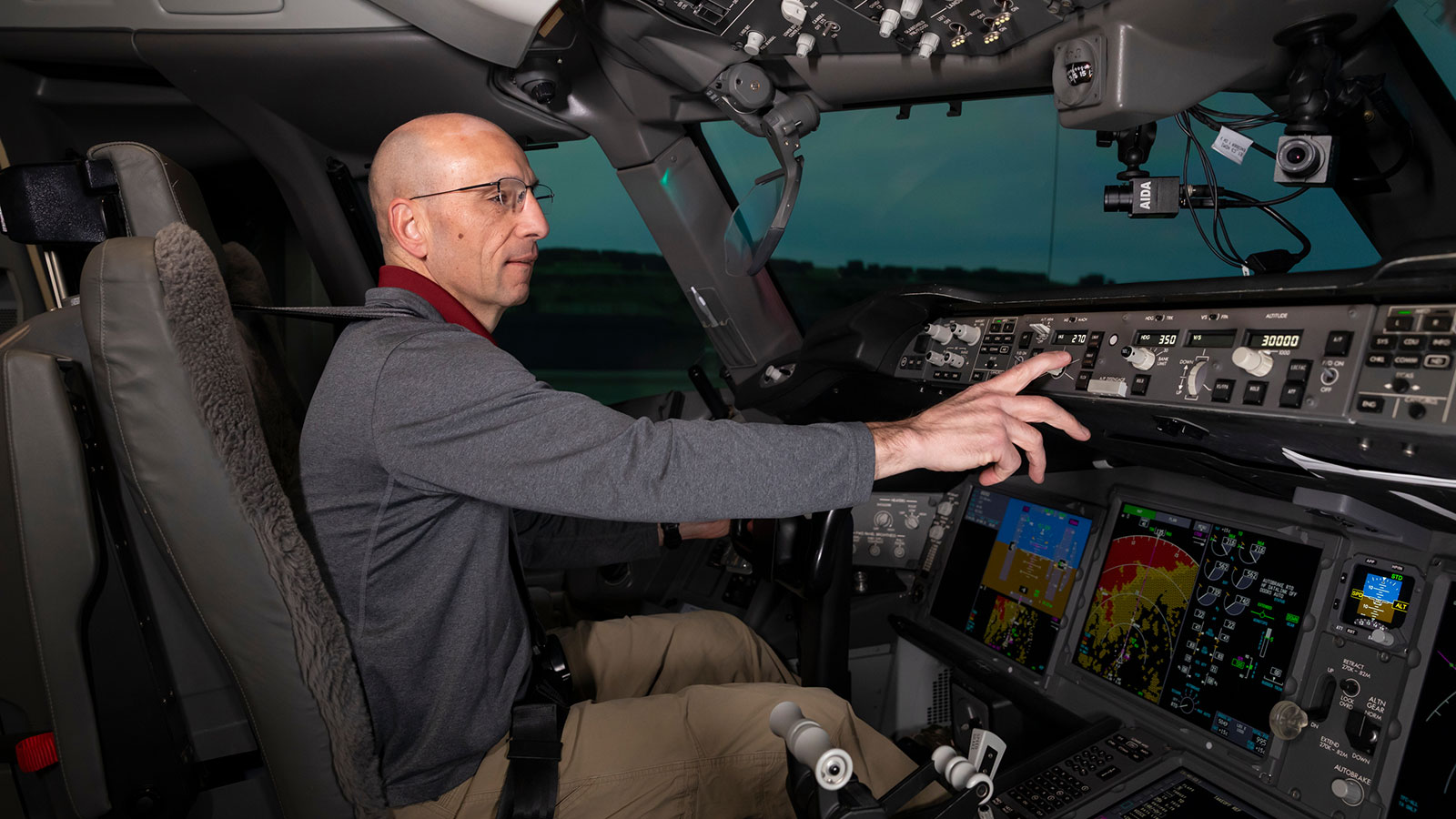
A Boeing pilot is seated in an engineering simulator. Capt. Greg Bigalk develops operational scenarios in the 777-9 engineering cab. (Paul Gordon photo)

What’s next: Data from this testing is evaluated by the regulator to support certification.

Human factors focus: Boeing has integrated human factors considerations in its designs for more than 60 years and continues to invest in this capability, according to company leaders. Today, nearly 400 human factors engineers share their expertise across the company.

The bottom line: “I’m proud of the engagement across our entire team, including flight deck, propulsion, the simulator and laboratory teams, and our pilots,” said Bigalk. “We came together to accomplish something important and technically challenging.”

By the numbers:

  • 5,100+ – Data points gathered during this testing
  • 370 – Approximate number of conditions assessed
  • 54 – Unique flight deck display conditions developed
  • 11 – Days of testing conducted; number of pilots who participated