The 737 MAX certification testing you don’t see

While test pilots fly the new 737-10, engineers are conducting exhaustive safety assessments. Just guess the potential pages involved.

March 10, 2026 in Commercial

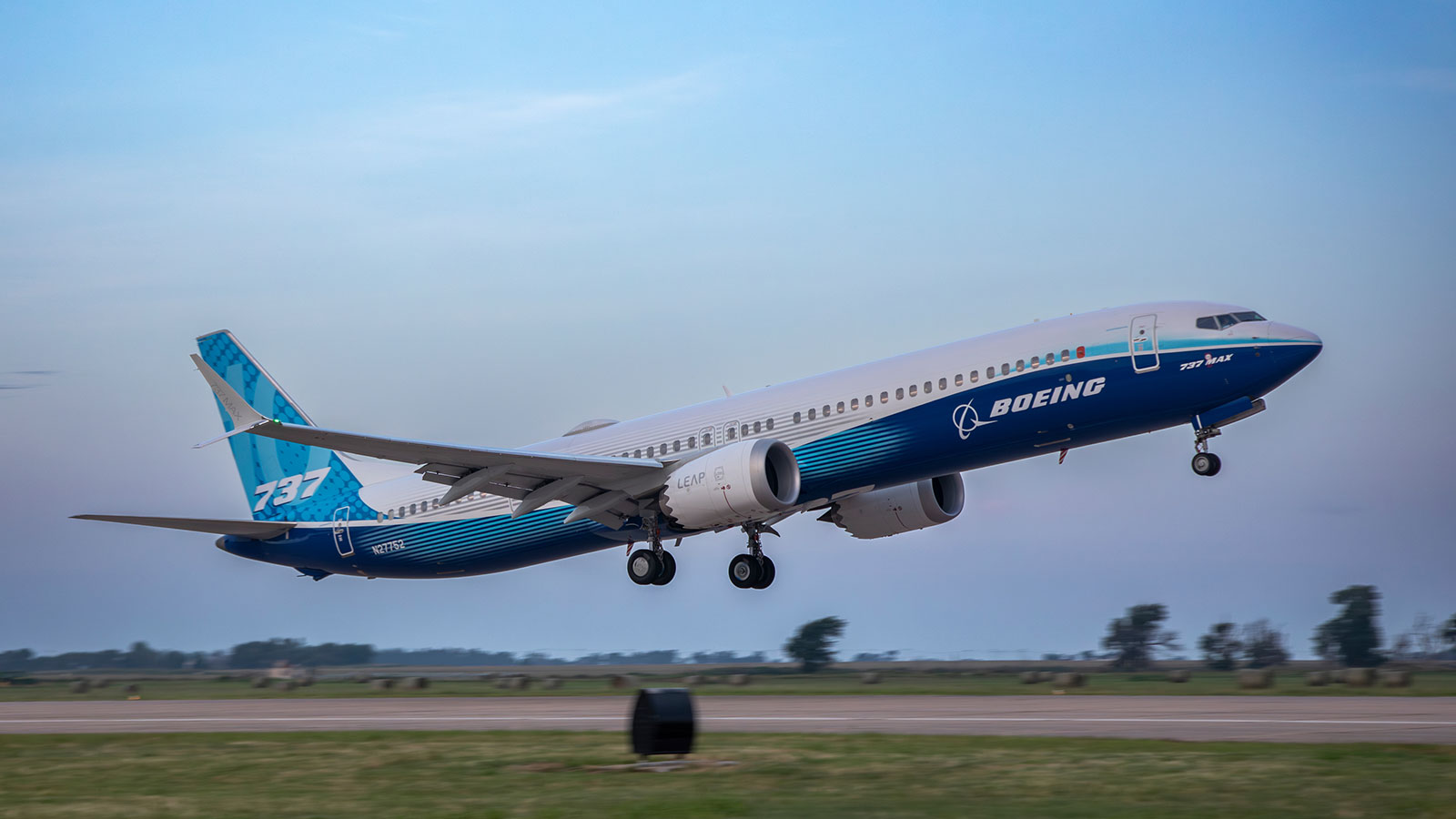
BA 737-10 airplane taxies on a runway. Flight testing is only part of the work that goes into gaining certification of a new airplane. (Ryan Coe photo © Boeing)

As Boeing test pilots create highlight reels flying the 737-10 through normal and extreme conditions, a group of engineers in Puget Sound is conducting testing that is just as critical to certifying the airplane.

Engineers like Nathan Bement are completing tens of thousands of hours of analysis to prove that the systems onboard the newest and largest 737 model are safe and function as intended. 

These “System Safety Assessments” or SSAs are required to certify a commercial airplane. They often happen in parallel with flight testing and have to document all the ways that a system might fail and prove that the backup system would hold up in those scenarios. 

This means accounting for everyday risks and extremely rare hazards, even those that have never been seen in the 60-year plus history of the 737 family. 

‘One in a billion’

“If it's theoretically possible, it's something we have to explore,” said Bement, who works on the Air Data and Inertial Reference System that provides the airplane’s position and speed. 

Bement and his colleagues evaluate events that are so remote that they have the probability of happening once in a billion flight hours. For context: All 737s combined have only flown about 482 million hours.

“Even if we are not aware of something ever happening in service, we are analyzing the system to ensure it accounts for that and other failure scenarios,” said Bement.

As many as 15,000-pages each

The engineers conduct qualitative and quantitative analysis, including extensive modeling and calculations. They then record the data in documents that span hundreds and thousands of pages. “I’ve seen one SSA document that was 15,000 pages long,” said Michael Akali, a senior manager in the group. 

If Boeing is to achieve its goal of certifying the 737-10 later this year, the team has to submit a total of 31 completed SSAs, including the systems controlling the hydraulics and engines to the ones managing the flight controls and brakes.  
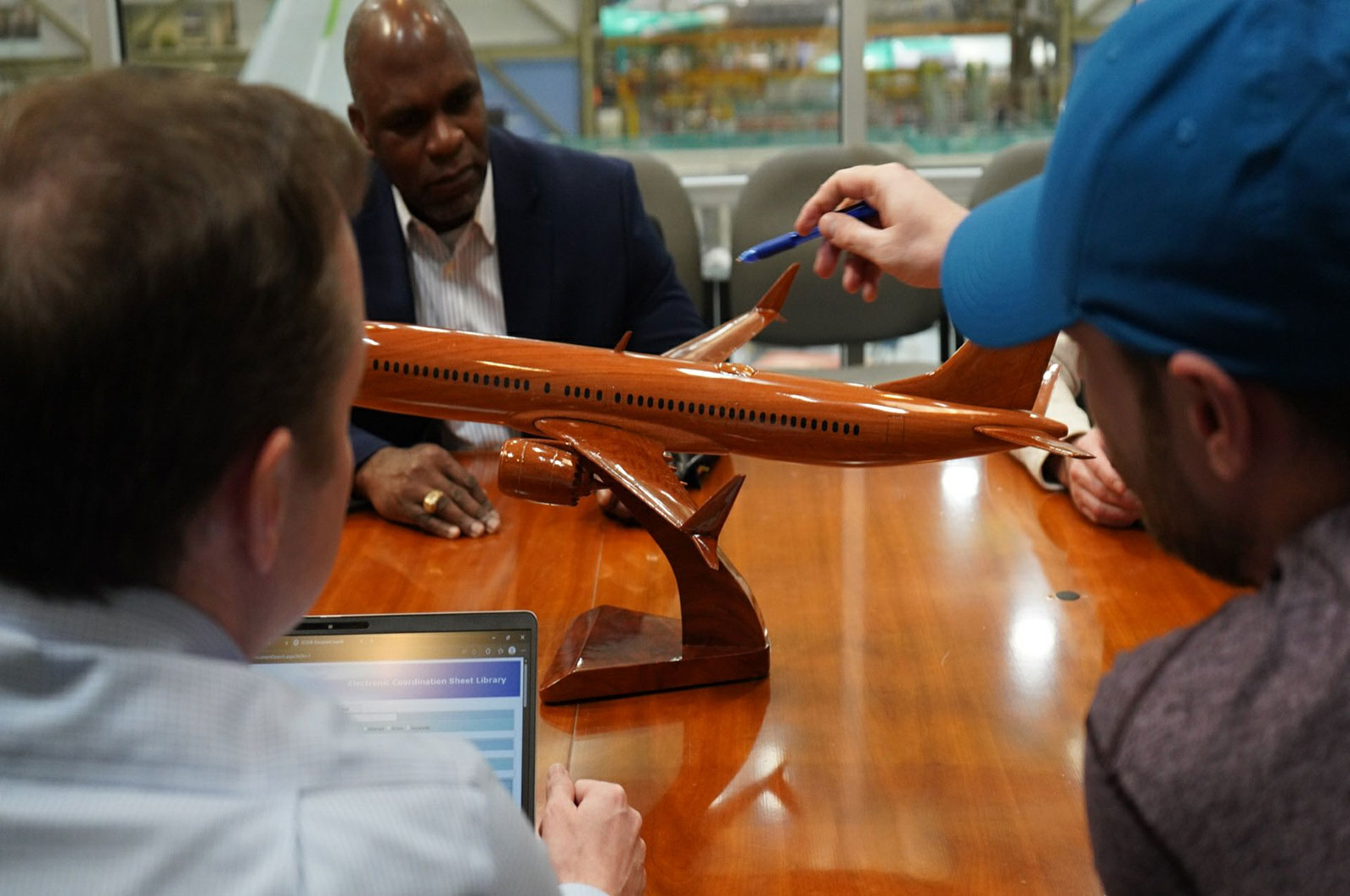
Four engineers sit around a table pointing at a wooden 737 model Engineers Levi Luttrell (bottom right, pointing), Michael Akali (top left), Nathan Bement and Jonathan Morrow use a wooden 737 model to discuss the fuselage. (Maddie Crisalli photo © Boeing)
Multiple layers of analysis

The engineers examine every link in the system and the potential first, second and third order effects of a failure. They ask questions from the ground up, including:

  • Is every component in the system reliable? What is the probability a component sends wrong information?
  • What if the wires connecting the components fail?
  • If one system fails, could it lead to failure in other systems?
  • If a system fails, how will the pilots react? What will they do with erroneous data?

"And you’re not only looking at one system by itself, you’re looking at all the other systems it interacts with so the assessments have to be very integrated,” said Akali.

The potential scenarios further multiply because systems play distinct roles or can respond differently during certain phases of flight. The engineering team has to account for all of the permutations.

Significant updates

Hanging over the certification work are the two 737 MAX accidents in 2018 and 2019. The team remembers the immense consequences that come with an airplane system failure. They also deal with a changed certification environment with new requirements and interpretations.

As part of the agreement to return the 737 MAX to commercial service in 2021, Boeing committed to reviewing and significantly updating the SSAs for key systems on the 737-10, including systems that remain the same as in earlier models.

One of those systems is the Stall Management Yaw Damper (SMYD), which performs the stall warning function alerting pilots of an impending stall condition.

“It is a brand new, from-scratch system safety analysis and comprehensive evaluation using Boeing’s latest safety processes,” said Levi Luttrell, the lead engineer for stall management. 

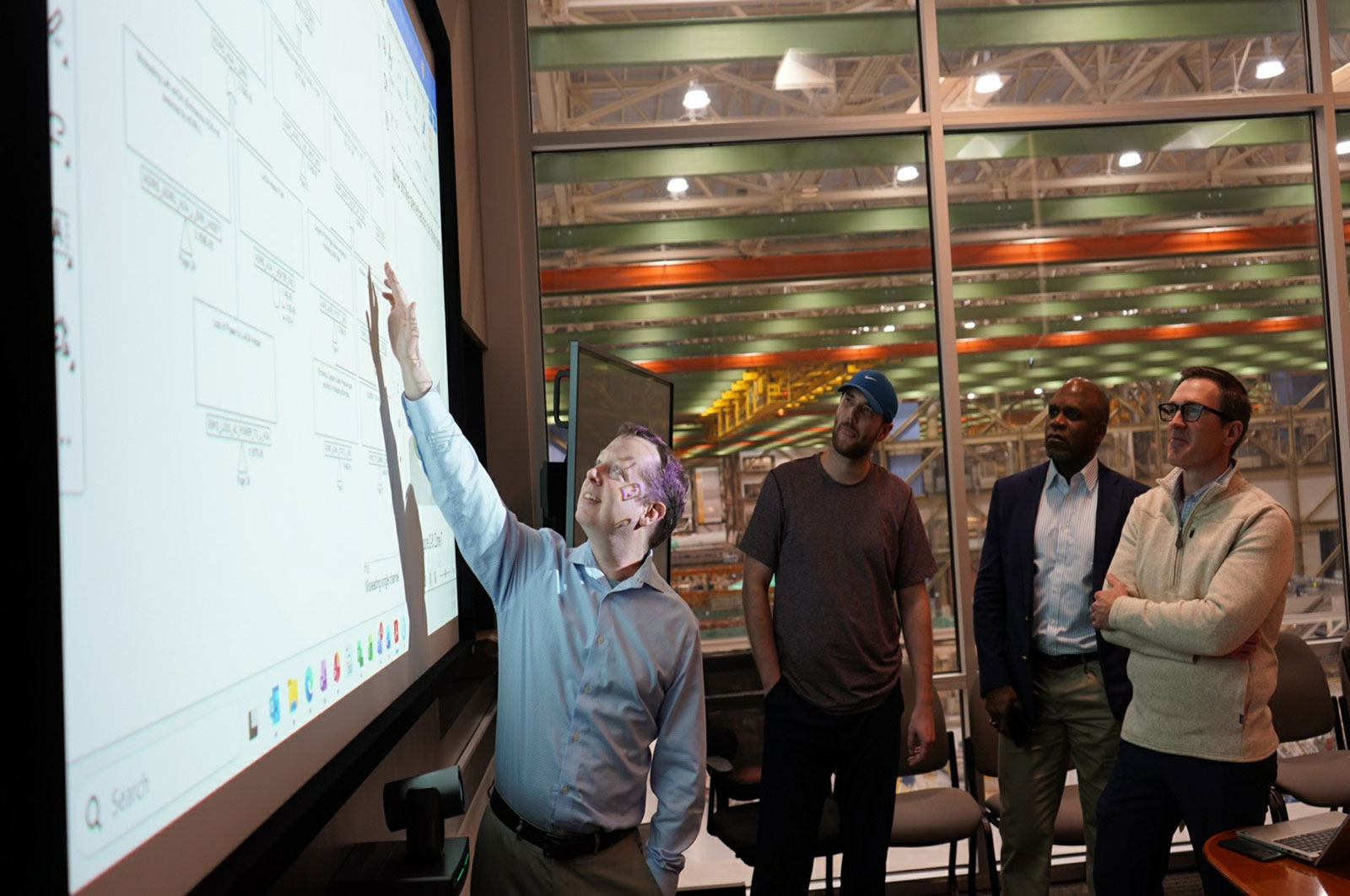
An engineer points at a presentation on a wall inside a factory Jonathan Morrow (bottom left) leads a team discussion as (from center left) Levi Luttrell, Michael Akali, and Nathan Bement look on at the factory in Everett, Washington. (Maddie Crisalli photo © Boeing)
‘We can see the light’

The 737-10 team says while there is still a lot of work in the months ahead, many of the key SSAs are maturing and getting closer to final approval.

“We have been through a lot and there is a kind of joy to be able to see the light at the end of the tunnel,” said Akali, the senior manager. “This is what we do, working together, knowing that what we're doing is for the betterment of people out there.”

“It’s been a huge challenge, but it’s incredible to see the passion and commitment to figuring it out and getting it right, from our leadership down to every engineer,” said Luttrell. “For me, to be able to be part of the team through the completion of this is just awesome.”