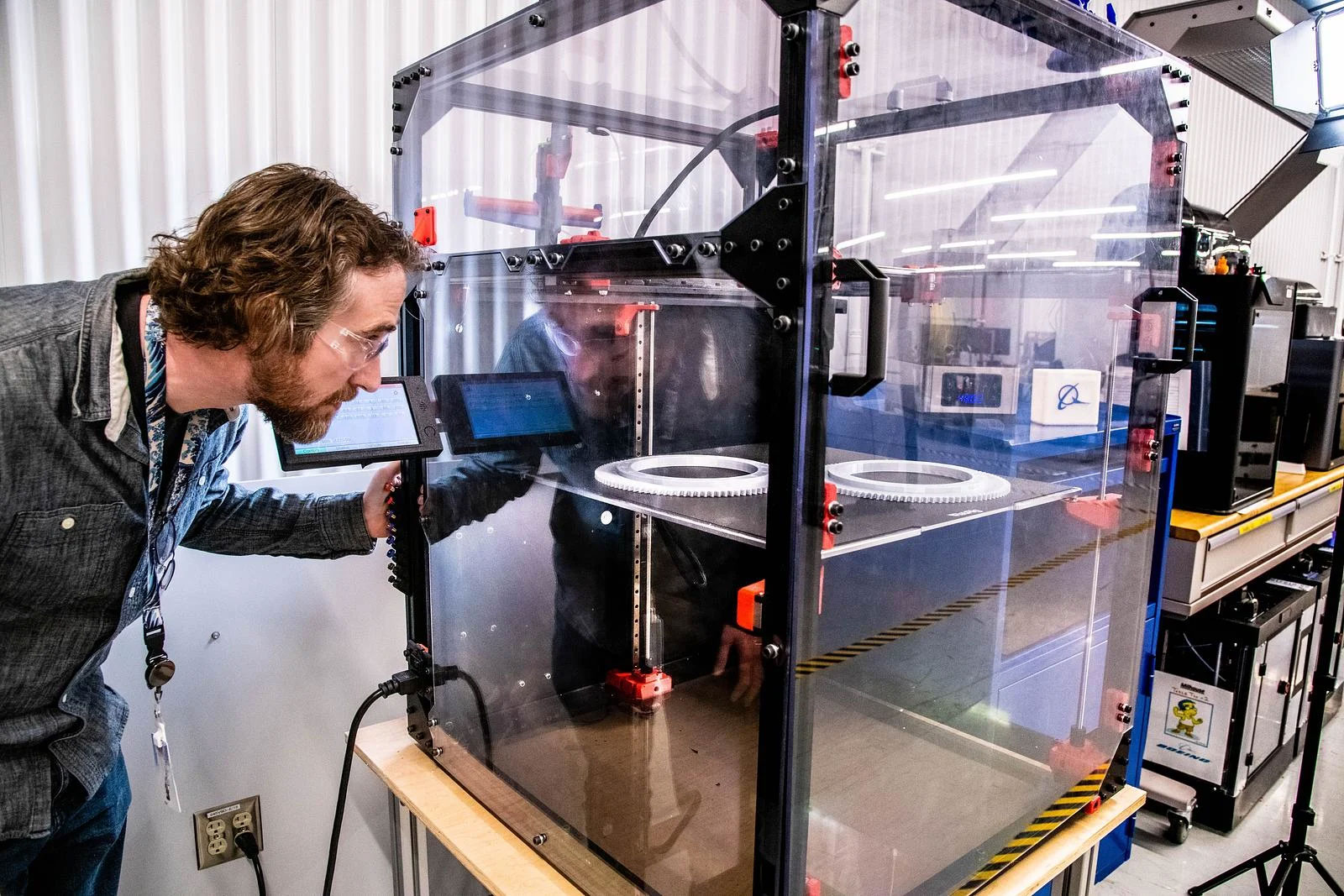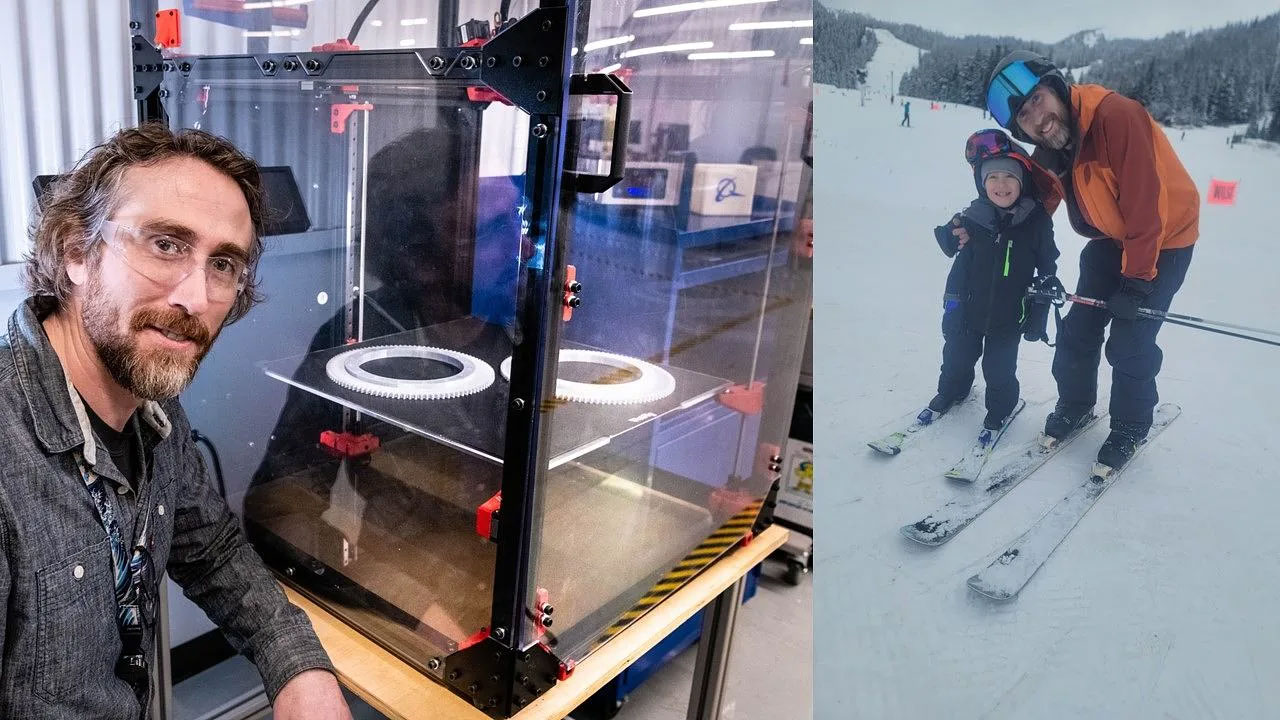
Matt Huff’s path back to Boeing is one of renewed trust and inspiration. After leaving the company for an engineering role in the commercial space industry, he found himself drawn back to the Boeing team. Huff is what people call a “boomerang” employee — someone who leaves a company and later returns with new skills and perspectives.
From C-17 crew to Boeing engineer: Huff’s ties to Boeing run deep. He started his career in the U.S. Air Force as an enlisted aircrew member aboard a Boeing airplane, the C-17.
- “Even now, when I see pictures of the C-17 around the company, I wonder, did I fly on that plane?” Huff said. “I always try to check the tail numbers. It brings me back.”
After leaving the Air Force, Huff earned a mechanical engineering degree. He moved from technician roles and stepped into an engineering role at Boeing, where he worked for roughly six years before leaving the company in 2024 for a company that he felt was better aligned with his career goals. As an engineer who likes to grow new skills, he was looking for a role where engineers and technicians were trusted to push projects forward — and Boeing no longer felt like that place.
The case for returning: Huff kept in touch with colleagues and watched Boeing from the outside. The steady reports that things were improving convinced him the change was real.
- “One of the big things was the way employees are respected by the company,” Huff said. “It’s the atmosphere, hearing how people feel more empowered to speak up.”
His employee orientation reinforced that impression. Boeing’s updated values were presented in plain language and linked to everyday work, making it easier for employees to see how expectations and behaviors were shifting. “The new values were written in a way people can connect with — they matched how people here actually work,” Huff said.
Culture in action: Huff is currently helping on several Boeing Additive Manufacturing (BAM) projects that illustrate ownership and a people focus. Engineers in BAM routinely move between projects, tackle difficult technical challenges and take pride in delivering solutions that support programs across Boeing. Huff’s work spans satellites, space systems and airplane components, giving him a chance to apply skills in many different contexts.
- “Boeing not only ‘does cool things,’ it does a wide variety of cool things,” Huff said. And that variety comes with responsibility. Teams step in when needed, own outcomes, learn from setbacks and continuously improve — a sense of ownership that helped draw Huff back to Boeing.