3 California companies that helped shape Boeing

As the Freedom Plane Tour stops in Los Angeles, a look back at three Golden State heritage companies whose innovations influenced commercial flight, military aviation and space exploration.

April 21, 2026 in Space, History, Defense, Commercial, Satellites

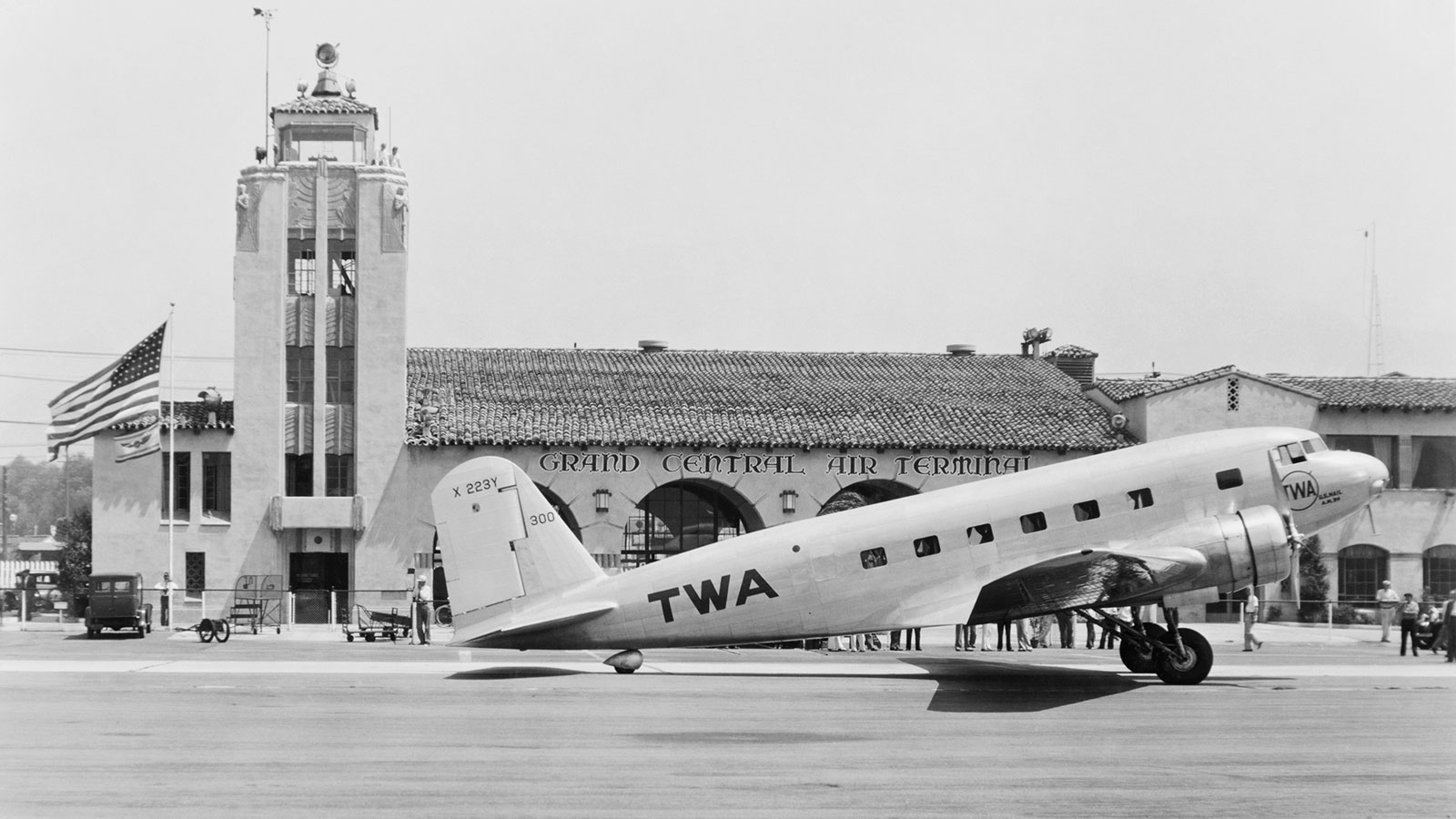
Black and white photo of a DC-1, a two-engine propellor monoplane, on the ground in front of Grand Central Air Terminal in Glendale, CA. The DC-1, first of the famous DC (Douglas Commercial) transport aircraft series, at Grand Central Air Terminal in Glendale, California. All photos courtesy of the Boeing Archives unless otherwise noted.

As the nation marks the 250th anniversary of the Declaration of Independence, Boeing Backs America by honoring the state of California’s contributions to American aviation. California has long symbolized opportunity and pioneering innovation, traits that are evident in the founding American documents being carried across the country by the Freedom Plane, which recently arrived in Los Angeles.

Aviation pioneers were among many who chased the American Dream in the Golden State, where the southern Californian climate offered year-round flying weather. Boeing traces its California roots to three of its heritage companies: Douglas Aircraft Co., North American Aviation and Hughes Aircraft Co. These heritage companies created technologies and programs that influenced commercial air travel, wartime production, satellite communications and human spaceflight — work that still underpins Boeing’s capabilities today.
Douglas Aircraft Co. (founded in Santa Monica, CA)

“Scientist and mechanic alike have a heritage and tradition with which there is no compromise. Together they work; together they plan ahead and look ahead.”
– Donald Douglas

In 1921, Donald Douglas founded Douglas Aircraft Co. From the biplanes that made the first around-the-world flight to rockets that launched satellites and astronauts, Douglas soon became synonymous with American aviation. The famous “DC” series of commercial aircraft brought about the golden age of aviation in the 1930s, ultimately carrying 90% of all airline passengers in the United States. Douglas helped build planes for the war effort during World War II, supported humanitarian aid through its lasting series of cargo aircraft that continues today with the C-17 Globemaster III, and played a key role in the development of rocket technology. In the Jet Age, Douglas challenged Boeing’s jets with the DC-8 and DC-9 and quickly followed the 747 with the twin aisle DC-10 tri-jet. Douglas merged with McDonnell Aircraft Corp. in 1967 to form McDonnell Douglas, which merged with Boeing in 1997.

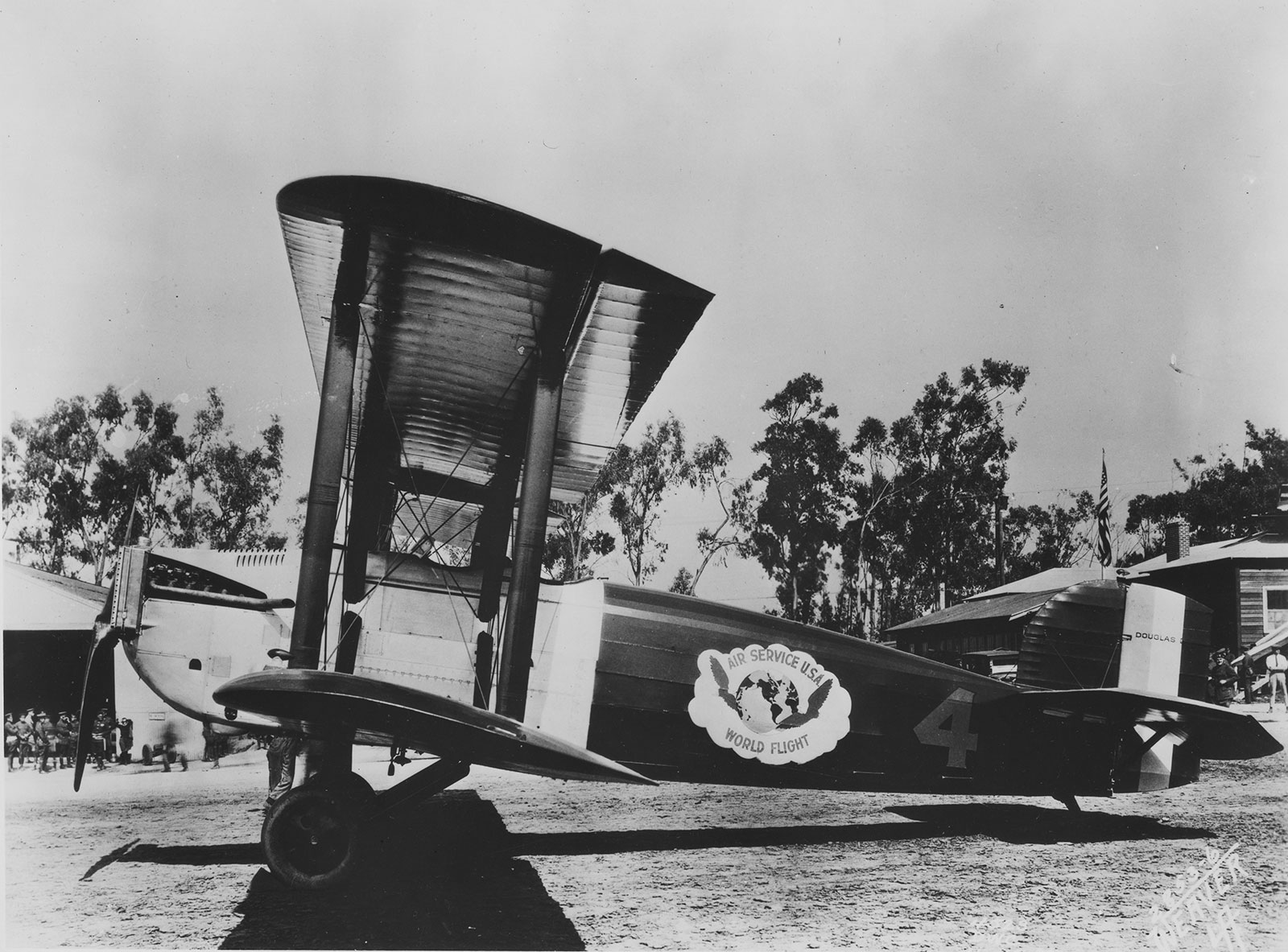
Black and white photo of a Douglas World Cruiser, a biplane, on the ground. In 1924, Douglas achieved the greatest aviation accomplishment of the time. Douglas won the U.S. Army Air Service contract for an aircraft to attempt the first around-the-world flight using modified DT-2s called Douglas World Cruisers (DWC). After six months, 28 countries, 27,553 miles and 371 hours of flight time, the unprecedented feat was successful. An image of three DWCs flying around the globe became the Douglas logo, which evolved into the symbol used on the Boeing logo today.
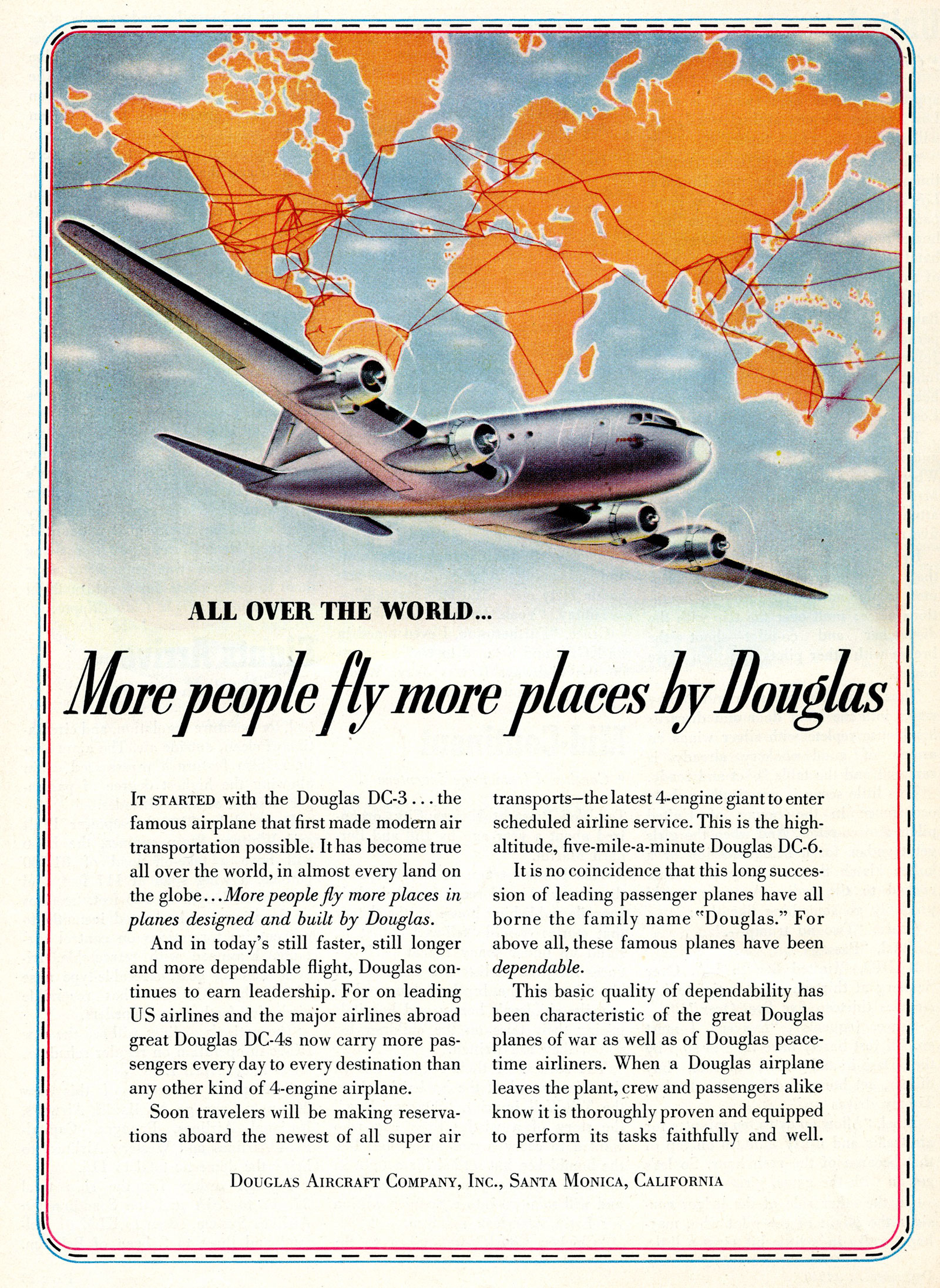
Color scan of an advertisement with a DC-6, a four-engine propellor plane, flying with a map of the world in the background showing many routes flown by Douglas planes. The advertisement reads "All over the world... More people fly more places by Douglas. It started with the Douglas DC-3 … the famous airplane that first made modern air transportation possible. It has become true all over the world, in almost every land on the globe… More people fly more places in planes designed and built by Douglas. And in today's still faster, still longer and more dependable flight, Douglas continues to earn leadership. For on leading US airlines and the major airlines abroad great Douglas DC-4s now carry more passengers every day to every destination than any other kind of 4-engine airplane. Soon travelers will be making reservations aboard the newest of all super air transports - the latest 4-engine giant to enter scheduled airline service. This is the high-altitude, five-mile-a-minute Douglas DC-6. It is no coincidence that this long succession of leading passenger planes have all borne the family name "Douglas." For above all, these famous planes have been dependable. This basic quality of dependability has been characteristic of the great Douglas planes of war as well as of Douglas peacetime airliners. When a Douglas airplane leaves the plant, crew and passengers alike know it is thoroughly proven and equipped to perform its tasks faithfully and well. DOUGLAS AIRCRAFT COMPANY, INC., SANTA MONICA, CALIFORNIA" Throughout the 20th century, Douglas produced a series of airplanes designed to cater to the needs of airlines and their passengers. The DC series began in 1933 with the innovative DC-1, a single prototype that set a new coast-to-coast record of 13 hours 4 minutes. The production DC-2 laid the groundwork for the famous DC-3, the first airplane that made money solely by carrying passengers. The DC-3 also made mass air travel more convenient, cutting coast-to-coast travel time almost in half and dominating the commercial market in the United States. Military variants of the DC-3 and DC-4 played a key role during World War II and launched many of the world’s airlines post-war. Douglas continued to revolutionize air travel with the DC-5, DC-6 and DC-7.
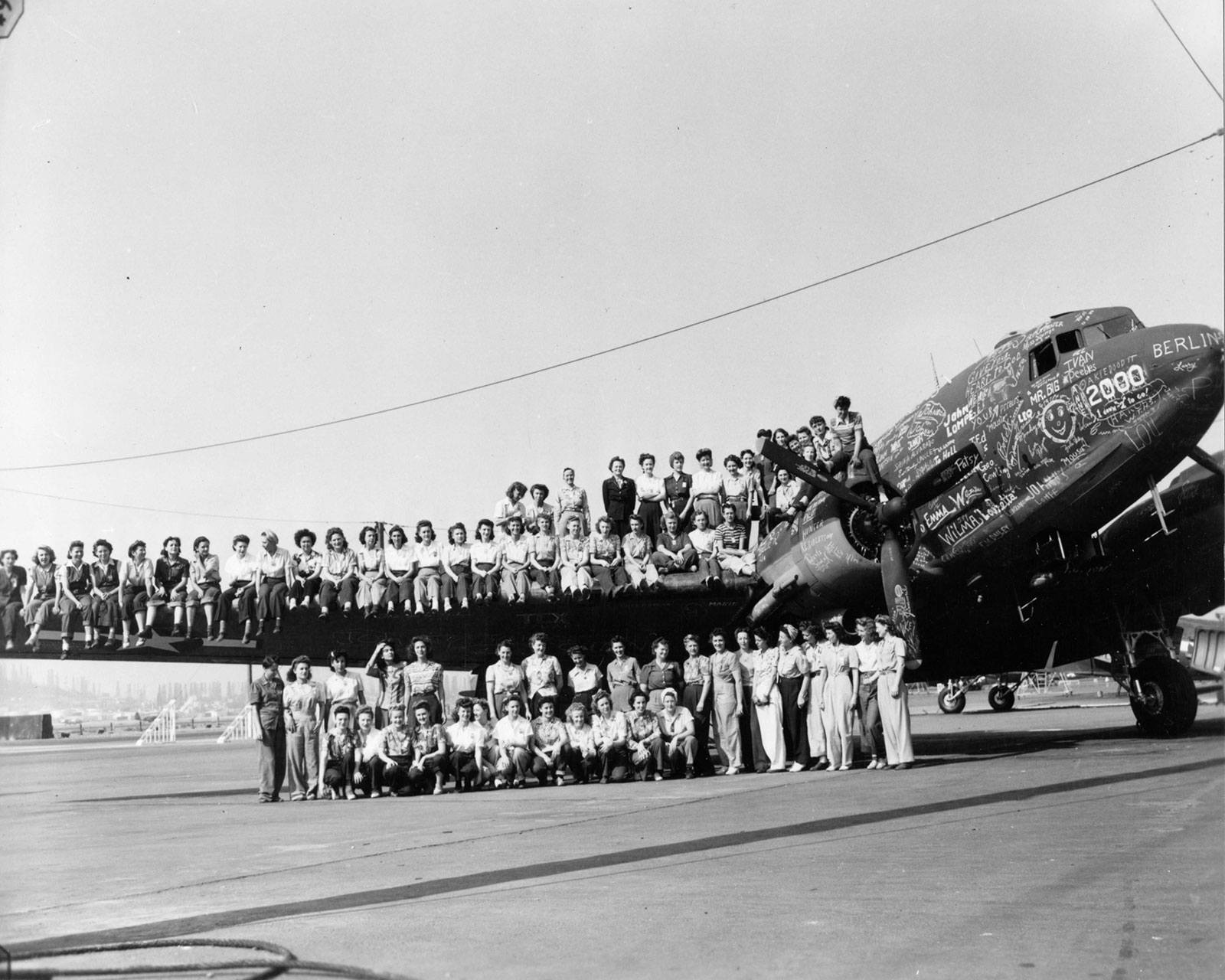
Black and white photo of a C-47, a two-engine propellor plane, covered in signatures of the workers who built it. Sitting on the wing and standing in front of the plane are many female mechanics who helped build it. Hand-built before the war, airplanes during World War II were now being assembled on a mass-production scale. Thousands of workers – including the iconic “Rosie the Riveters” – built tens of thousands of aircraft in Douglas factories. Early in the war, the allied air forces selected a modified version of the DC-3 as their standard transport aircraft. The U.S. Army Air Forces designated it the C-47, the Navy version was the R4D. Pictured are Douglas Rosies with the 2,000th C-47. More than 10,000 were built throughout World War II.
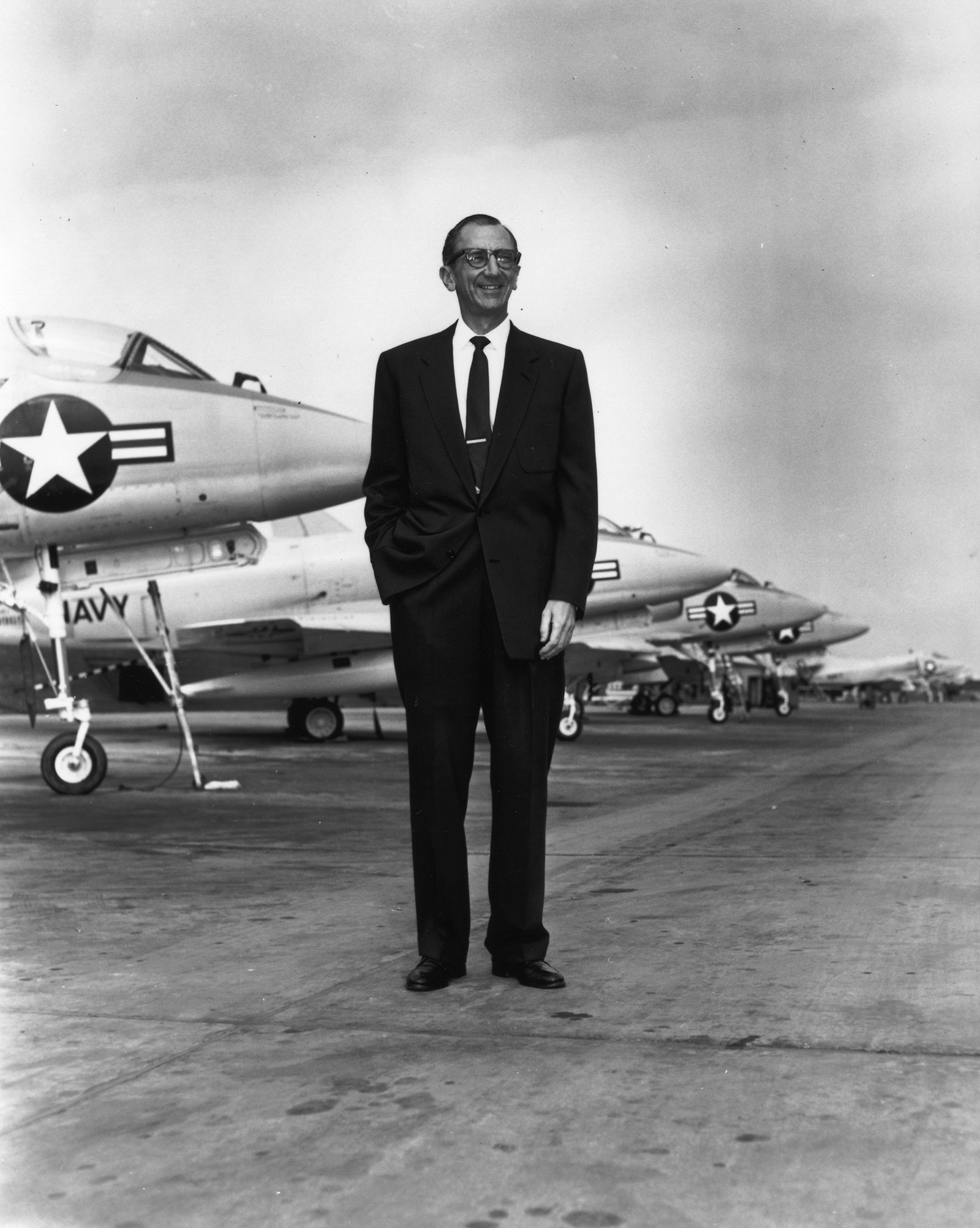
Black and white photo of Ed Heinemann, dressed in a black suit, in front of a row of A-4 Skyhawk jets. Douglas chief designer Ed Heinemann was one of the most prolific airplane designers in history, credited with 20 successful designs of combat aircraft including the SBD Dauntless, A-20 Havoc, A-1 Skyraider and F4D Skyray. One of Heinemann’s greatest designs was the innovative, lightweight A-4 Skyhawk, a carrier attack jet that first flew on June 22, 1954. Nicknamed “Heinemann’s Hotrod,” the Skyhawk served with the U.S. Navy and U.S. Marine Corps through the Vietnam War and the Gulf War. The Skyhawk was also used as a trainer and served with the Blue Angels flight demonstration team. During its 25-year production run, nearly 3,000 were built for 10 nations.
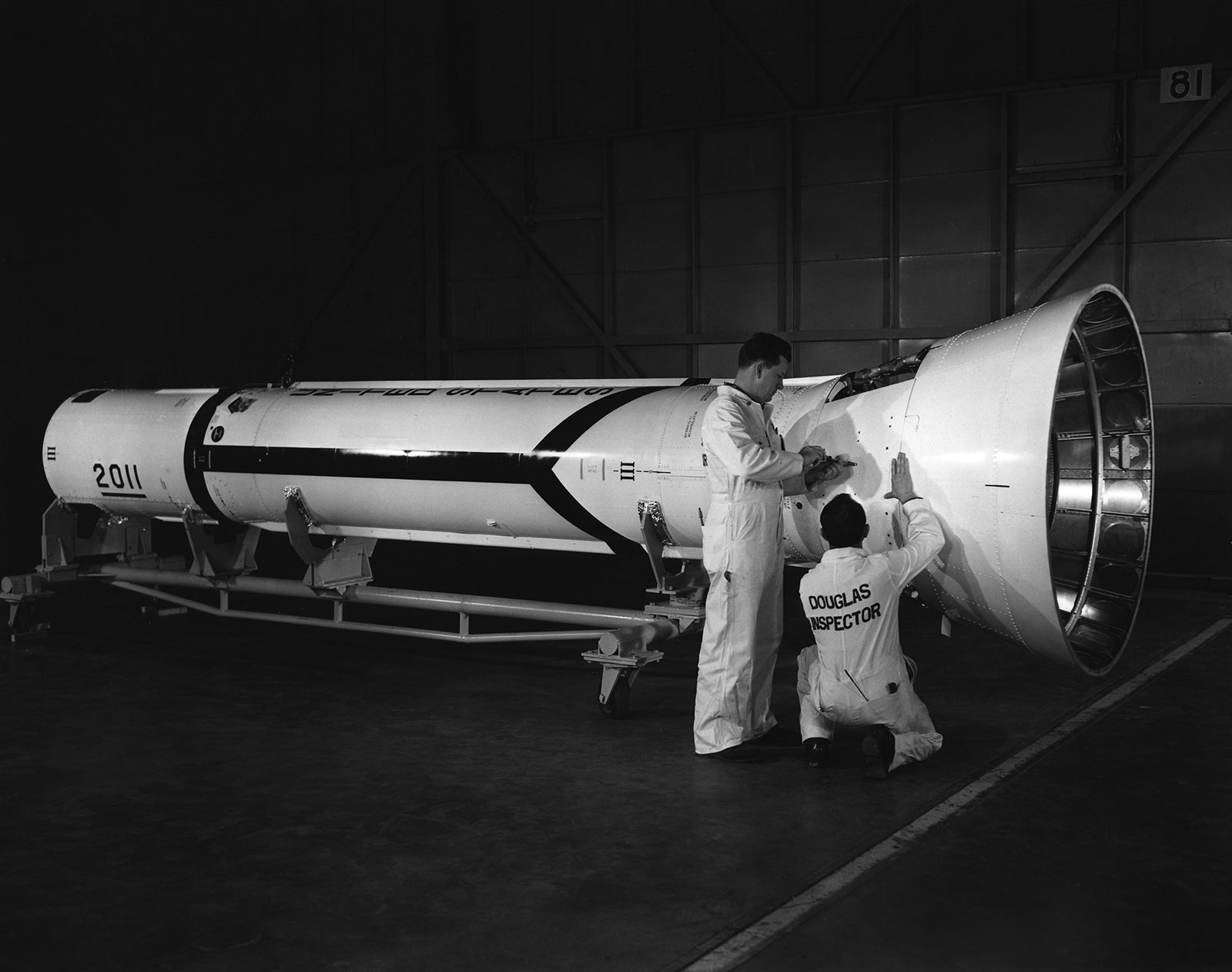
Black and white photo of two Douglas Inspectors looking at a horizontally-laying piece of a Delta rocket The Delta rocket’s legacy can be traced back to the Thor intermediate-range ballistic missile (IRBM), a three-stage rocket developed by Douglas in the 1950s. The first successful Delta launch took place Aug. 12, 1960, carrying NASA’s first communications satellite, Echo 1. Over 60-plus years, the Delta rocket evolved into the world’s premier launch vehicle launching scientific probes, planetary rover vehicles and satellites.
North American Aviation (headquartered in Los Angeles, CA)

“I have no ambition to head the largest plant in the industry, but I do want to head the busiest.”

– Dutch Kindelberger

Founded as a holding company in 1928, North American Aviation (NAA) was reorganized as part of the 1934 Air Mail Act. The company’s new head, James “Dutch” Kindelberger, relocated manufacturing operations to Los Angeles, California to take advantage of year-round flying weather. Throughout its history NAA broke technological barriers, producing fighters, bombers, military trainers, rocket engines and rocket-powered aircraft, ultimately becoming a prime contractor for NASA. In 1967, NAA merged with Rockwell Standard, creating North American Rockwell (later renamed Rockwell International.) Boeing purchased the aerospace and defense segment of Rockwell International in December 1996.

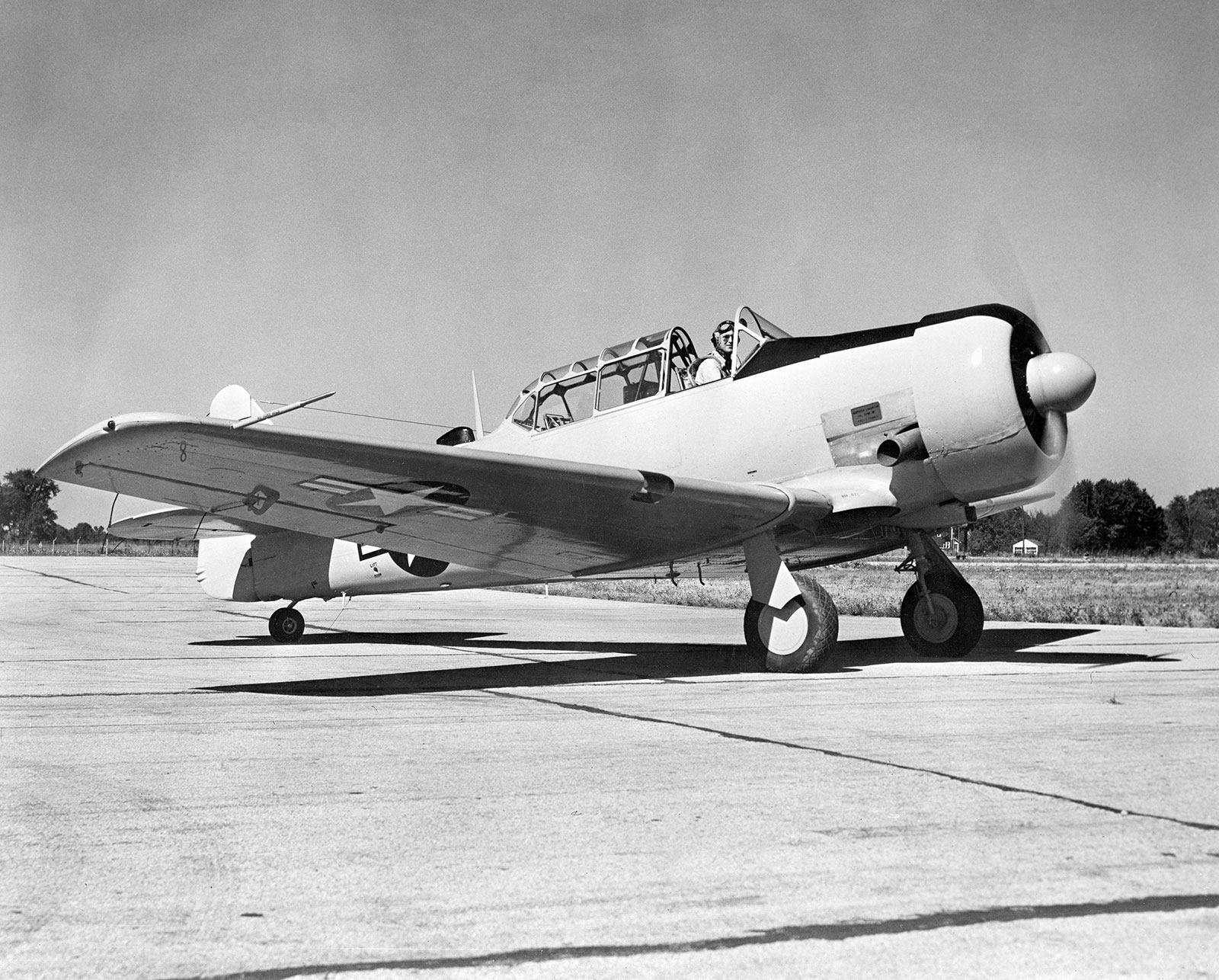
Black and white photo of a T-6 Texan, a single engine propellor plane, on the ground with propellor in motion The T-6 Texan first flew in September 1938 and became a successful, highly versatile advanced military trainer during World War II. The AT-6 (advanced trainer) was designed as a transition trainer between basic trainers and first-line tactical aircraft. Pilots flew the Texan to learn the basic maneuvers and key aerobatics that prepared them for advanced training in the aircraft they would fly during the war. More than 15,000 Texans of multiple configurations and versions were produced. Pictured is a T-6G.
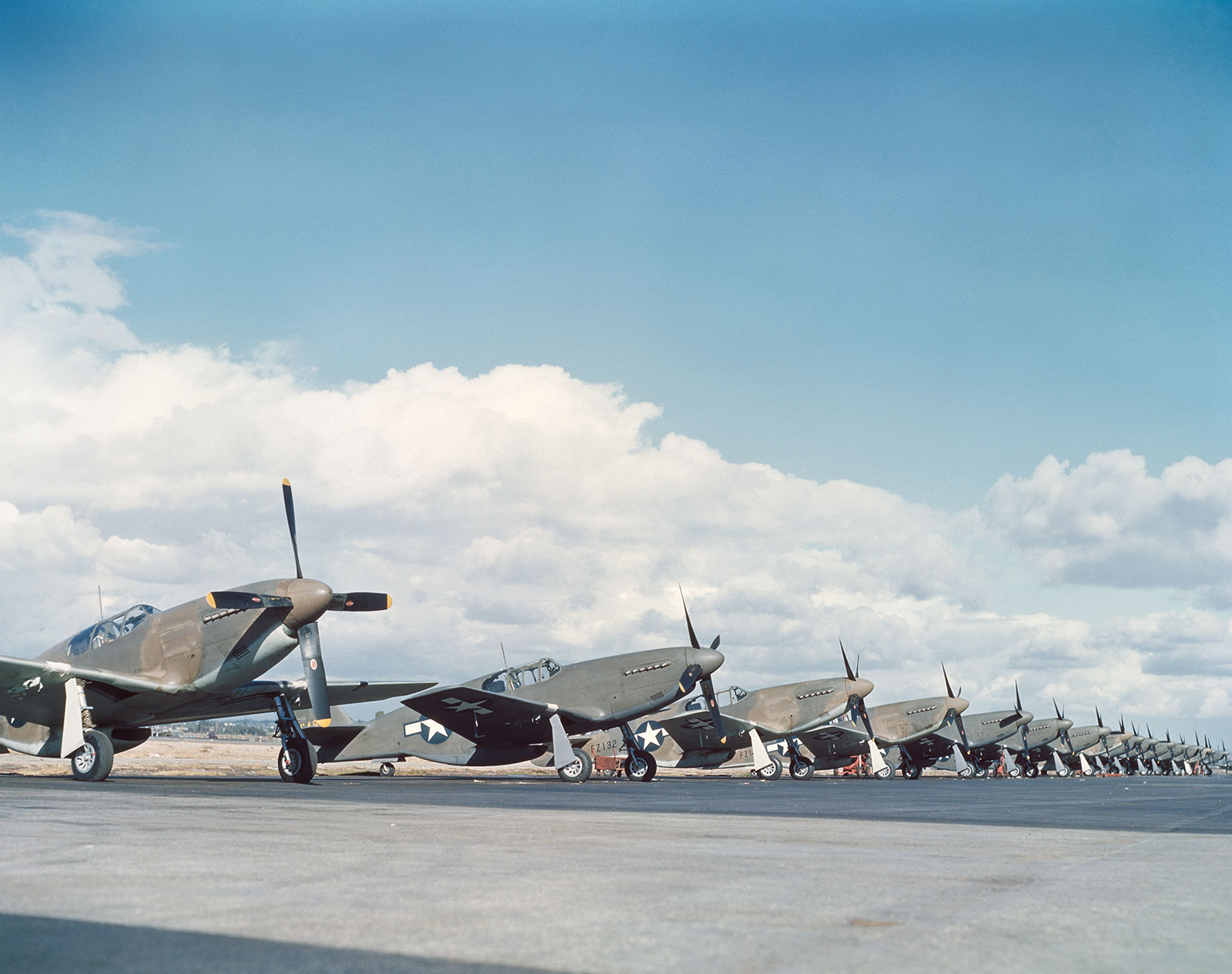
Color photo of dozens of P-51B Mustangs lined up on the tarmac against a blue sky In response to a production request from Great Britain for P-40 Warhawk fighters, the team at NAA said they could design a better fighter. The resulting prototype first flew on Oct. 26, 1940. The P-51 Mustang incorporated many innovations including the first use of the laminar flow wing. Later, the Mustang’s excellent aerodynamics were combined with the powerful Rolls-Royce Merlin engine, creating a fighter that was one of the best of the war. In the 1940s, the NAA factory in Los Angeles was one of the most efficient in the world and set a single-type production record, delivering 571 P-51s in just one month.
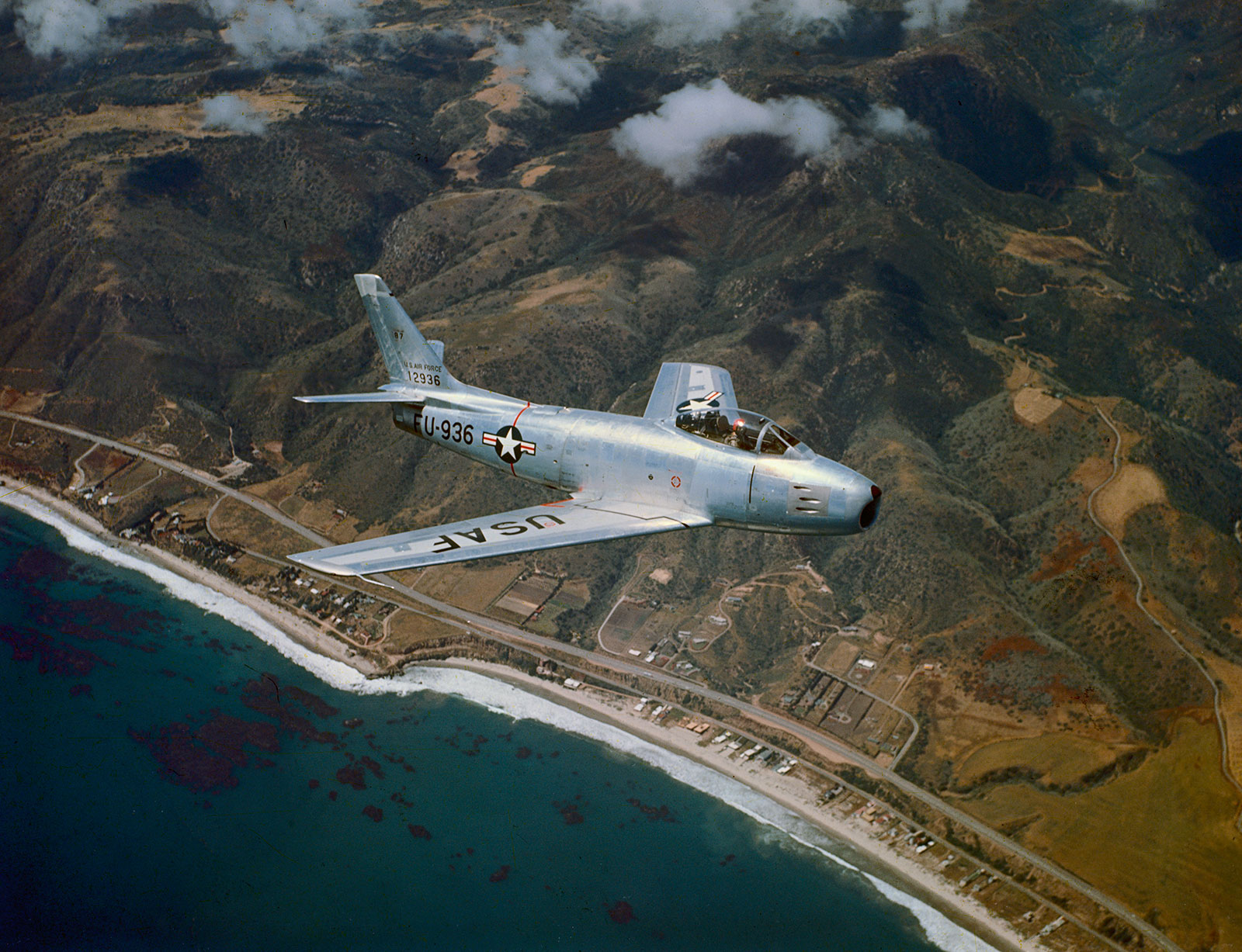
Color photo of a F-86 Sabre, a single jet engine fighter, in flight over a shoreline In May 1945, NAA incorporated swept wing technology into its newest design for the Air Force, the XP-86 Sabre. The prototype first flew on Oct. 1, 1947. The F-86 Sabre was the first U.S. swept wing jet and was capable of near transonic speed, setting several world speed records throughout the 1940s and 1950s. With 8683 built, the Sabre was the most produced fighter jet in the free world.
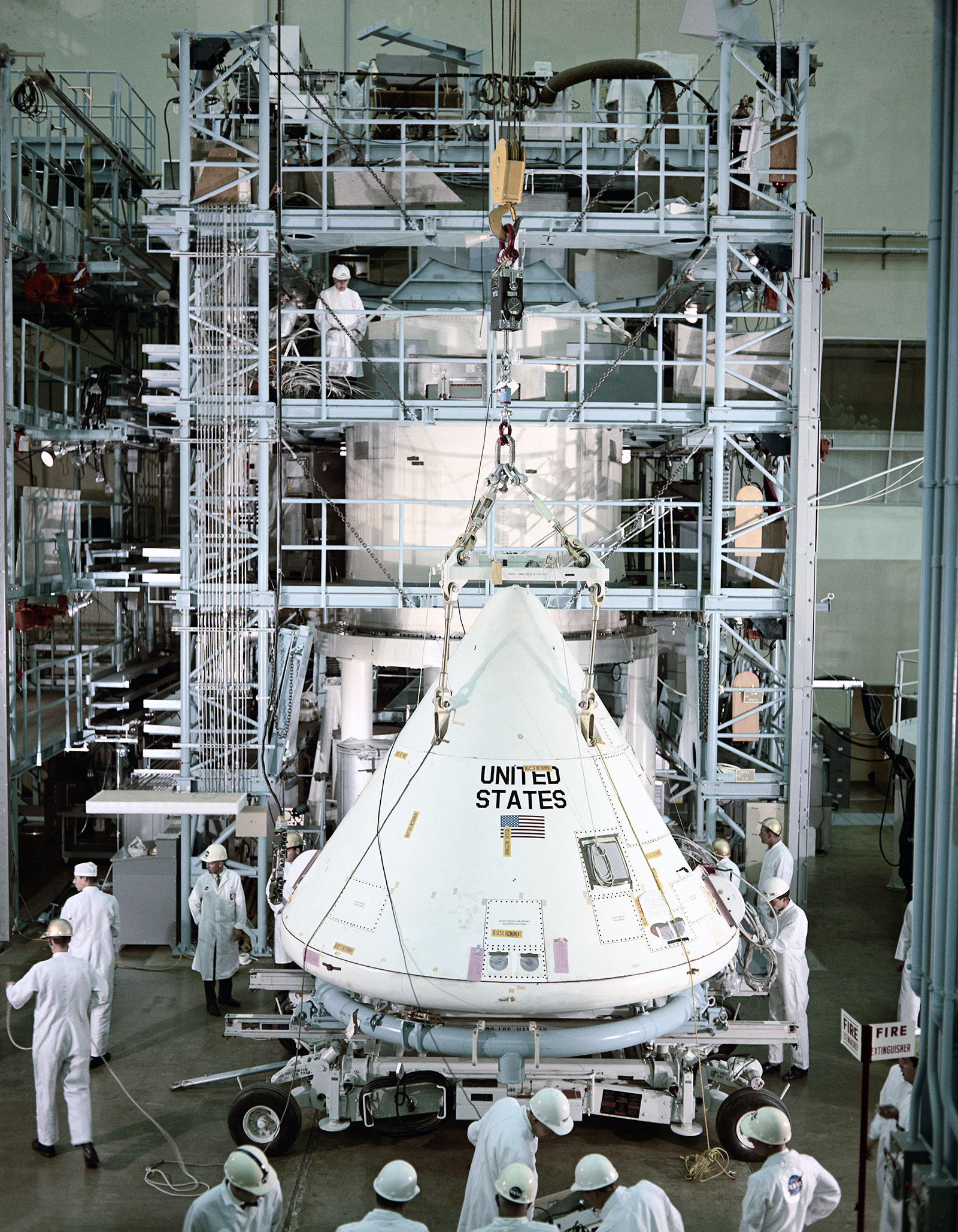
Color photo of the Apollo Command Module, painted white, in the factory with many workers around it In 1961, the company’s Autonetics division began developing entry monitor systems and ground support equipment for the Apollo spacecraft. The Apollo command and service modules were built at the plant in Downey, California. NAA also built the second stage of the 363-foot (111-meter) Saturn V moon rocket. North American's Rocketdyne Division (now owned by Pratt & Whitney), designed and built all the engines for the Saturn V.
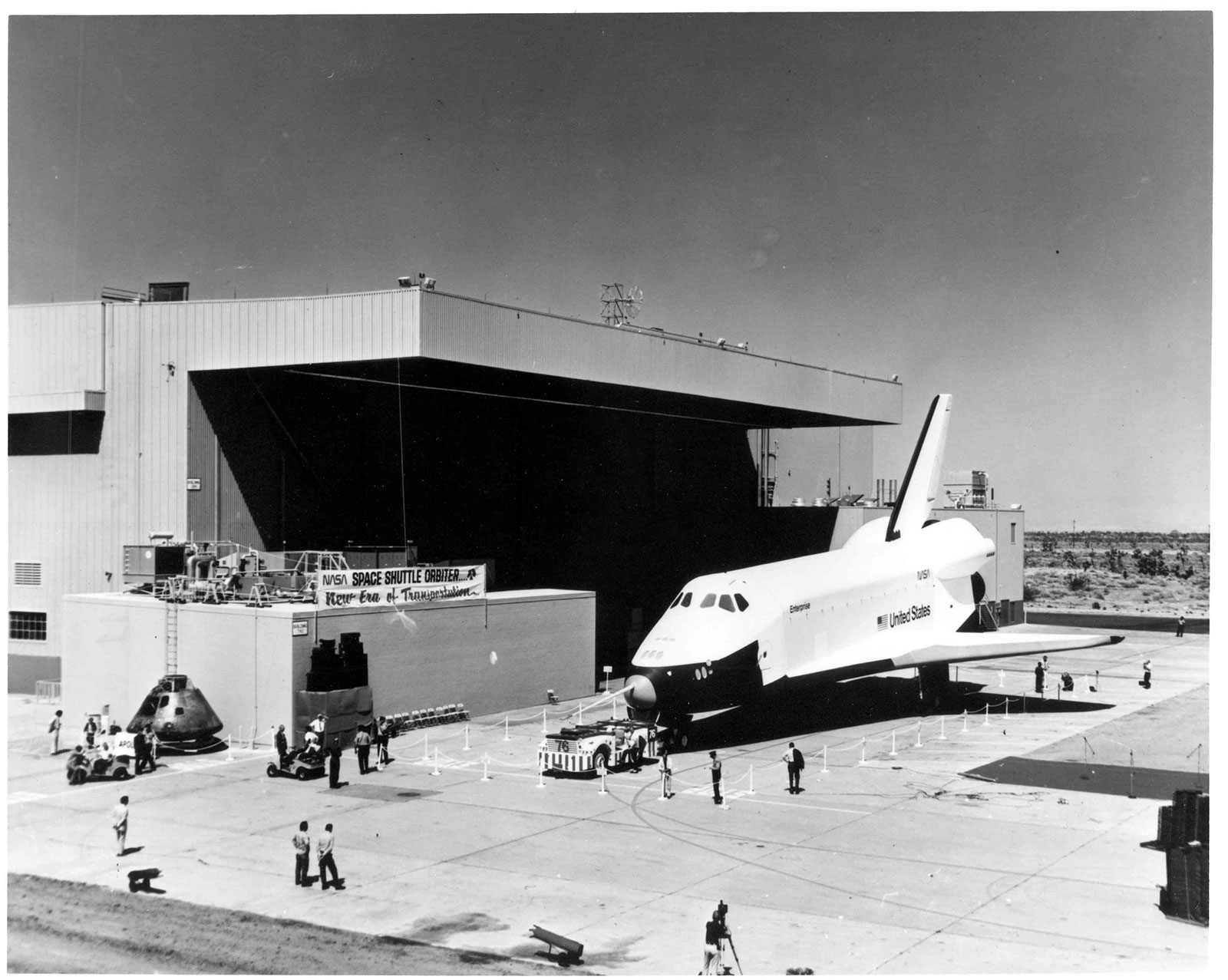
Black and white photo of the Space Shuttle Orbiter sitting in front of a factory building. Nearby on the ground are several people and an Apollo Command Module. A large banner reads "NASA Space Shuttle Orbiter... New Era of Transportation..." On July 26, 1972, North American Rockwell won a $2.6 billion contract to build the Space Shuttle Orbiter, designated OV-101 (orbiter vehicle 101). The Orbiter—the world’s first reusable spacecraft—supported humanity’s most challenging engineering project, the International Space Station (ISS). It launched, recovered and repaired satellites and hosted more than 2,000 scientific experiments. The first test shuttle, the Enterprise, rolled out Sept. 17, 1976. Five shuttles flew in orbit: Columbia, Challenger, Discovery, Atlantis, and Endeavor. During 30 years of service, 355 people from 16 countries flew 852 times aboard the shuttles.
Hughes Aircraft Co. (founded in Burbank, CA)

“I want to be remembered for only one thing — my contribution to aviation.”

– Howard Hughes

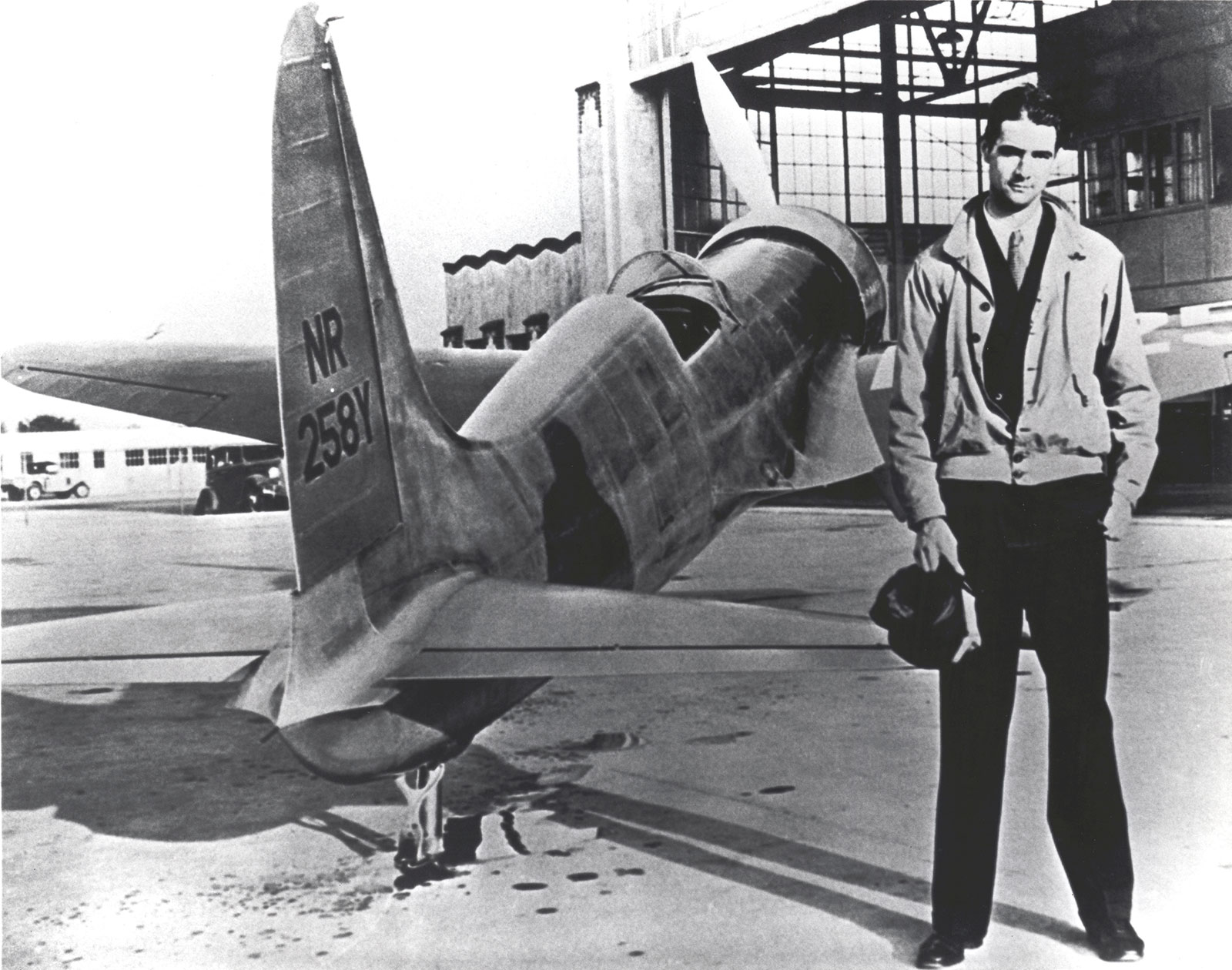
Businessman and movie producer Howard Hughes formed Hughes Aircraft Co. as a division of Hughes Tool Co. in 1932. The company eventually moved to Glendale, CA where Hughes built his first aircraft, the H-1 Racer. Hughes’ passion laid the groundwork for countless innovations in aerospace. In 1961, Hughes formed the Hughes Space and Communications Co. as part of Hughes Aircraft. The new company set up operations in El Segundo, California, and was acquired by Boeing in 2000. By 1976, the Hughes Tool Co. Aircraft Division was re-formed as Hughes Helicopters, which was acquired by McDonnell Douglas in 1984.

Black and white photo of Howard Hughes, wearing a flight jacket and holding his flight cap, next to the H-1 Racer. Hughes is standing by the tail of the aircraft. Hughes started his aircraft company with the goal of building a record-breaking aircraft. The resulting H-1 Racer had innovative features such as retractable landing gear, a radial piston engine and flushed rivets to keep the aircraft surface smooth. On Sept. 13, 1935, Hughes set a world landplane speed record of 352 mph (566 kph) on a course in Santa Ana, California. The H-1 was the last non-military aircraft to set a world speed record and is now in the collection of the National Air and Space Museum.
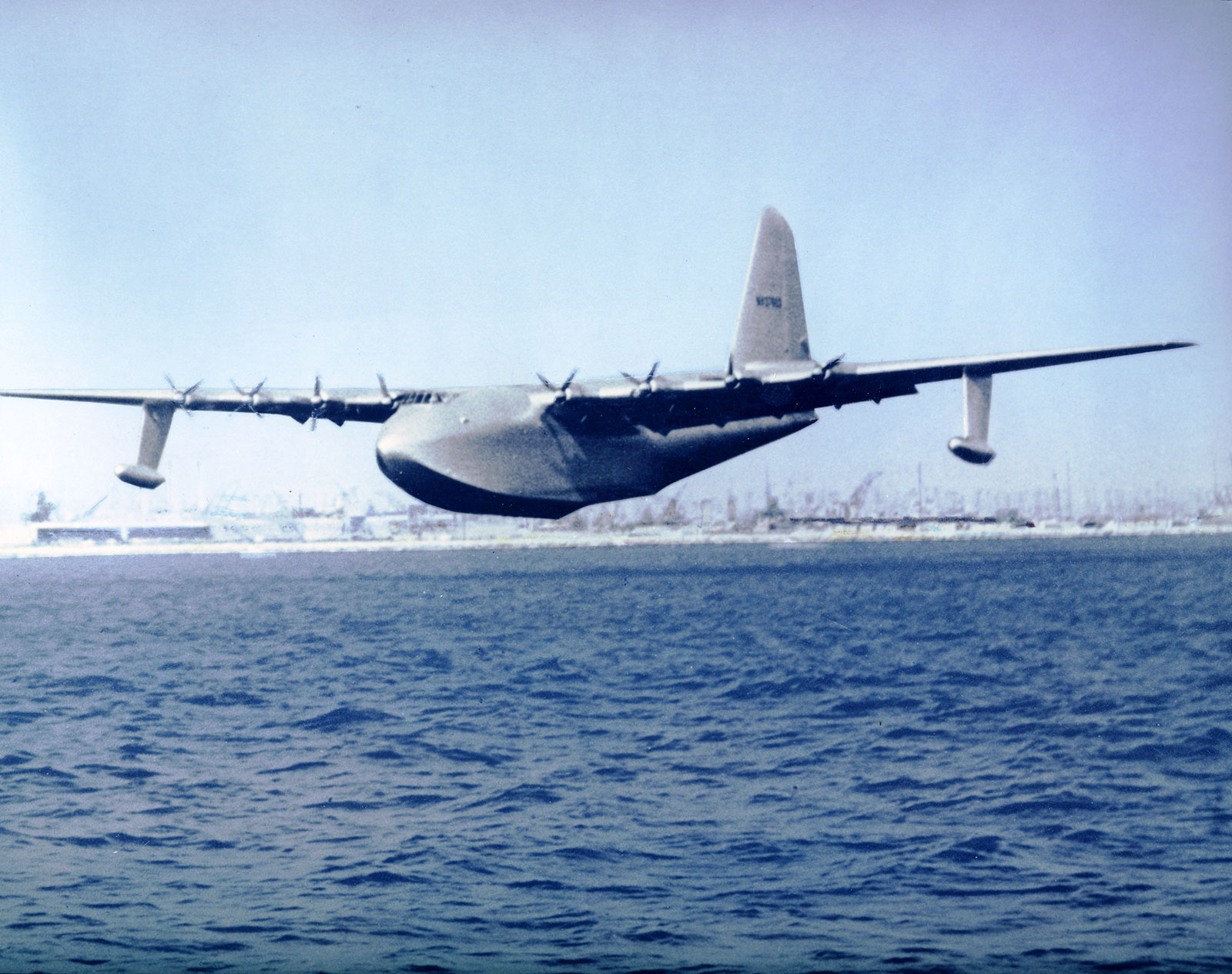
Color photo of the Spruce Goose flying low over the sea. The H-4 Hercules was built in response to a 1942 U.S. government request for a large cargo and troop carrier that wouldn’t be susceptible to Axis submarines or use critical wartime materials. Although it was built almost entirely of birch, the plane was nicknamed the “Spruce Goose,” and remains the largest wooden airplane built to date. On Nov. 2, 1947, Howard Hughes and a team of engineers took the H-4 out for taxi tests at Long Beach Harbor. The airplane lifted off the water and flew approximately 1 mile (1.6 kilometers) about 70 feet (21 meters) above the surface at a speed of 80 mph (128 kph).
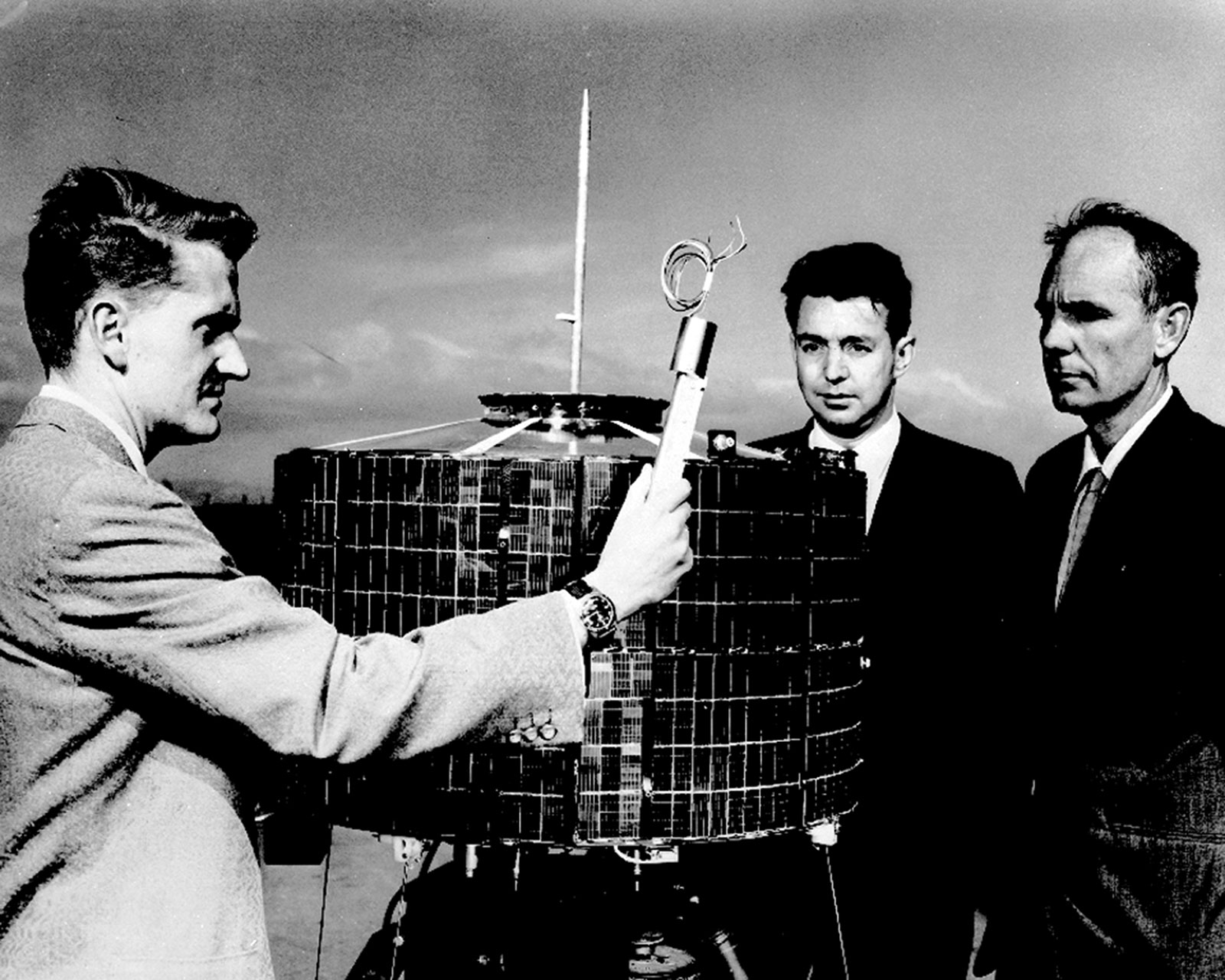
Black and white photo of Don Williams, Harold Rosen, and Thomas Hudspeth standing around the Syncom satellite. Williams holds a piece of equipment in his right hand. Hughes engineers Don Williams, Harold Rosen, and Thomas Hudspeth designed the electronics, propulsion and power system for Syncom – the world's first communications satellite. Syncom 2 launched on July 26, 1963, performing the first successful test of television transmission through a geosynchronous satellite and facilitating the first live two-way satellite telephone call between heads of state (President John F. Kennedy and Nigerian Prime Minister Abubaker Balewa). Syncom 3 launched from Cape Canaveral on Aug. 19, 1964, and was placed into geosynchronous orbit over the equator. It successfully transmitted live coverage of the 1964 Summer Olympics in Tokyo to the United States and Europe.
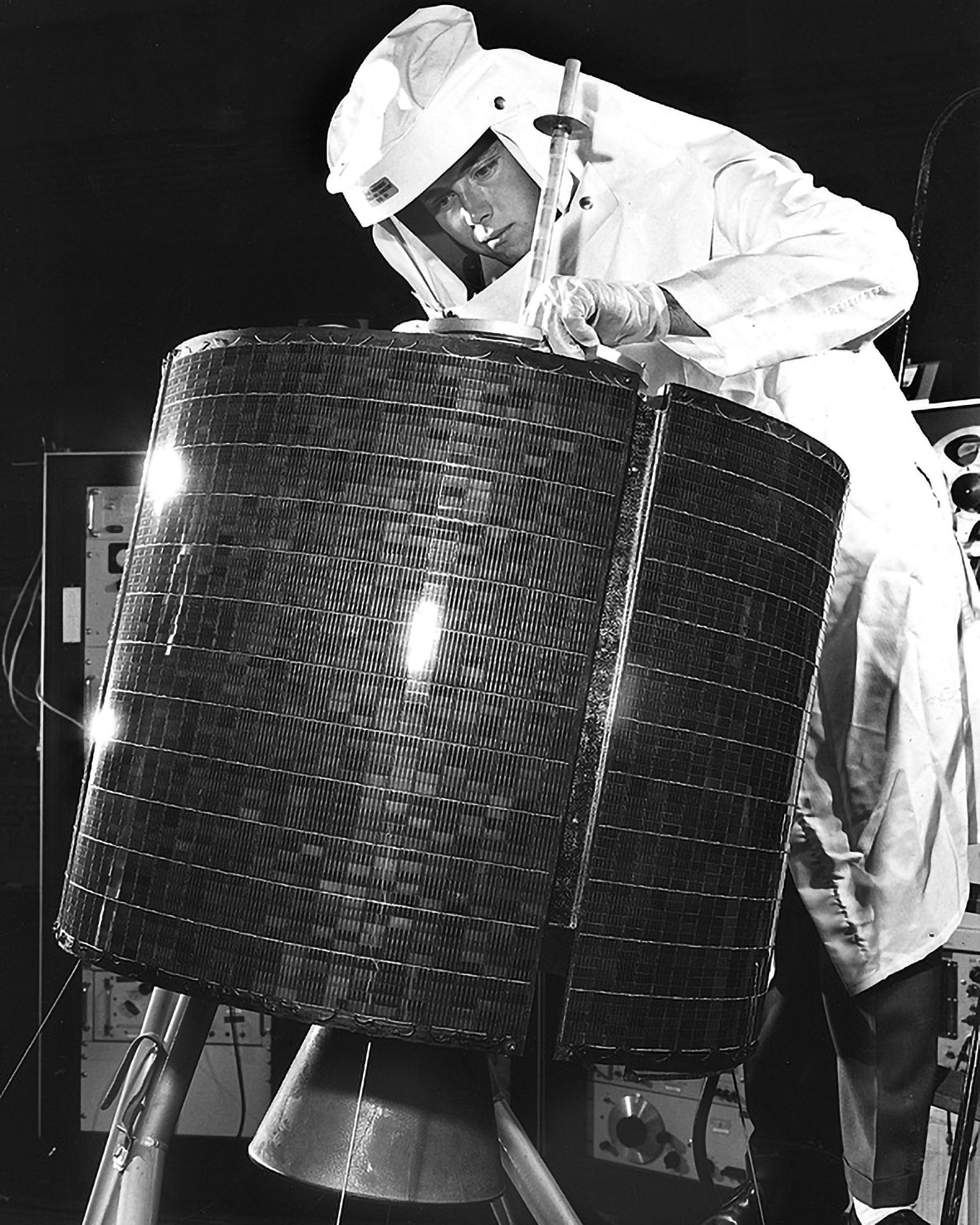
Black and white photo of a worker in protective gear examining the Early Bird satellite Early Bird, the world's first commercial communications satellite, was built for the Communications Satellite Corporation (COMSAT) by the Space and Communications Group of Hughes Aircraft Company. As the forerunner of a synchronous satellite system that would furnish communications to all the populated areas of the world, Early Bird, with capability of 240 circuits or one TV channel, successfully demonstrated the concept of synchronous satellites for commercial communications. Launched in 1965, it exceeded its 18-month design life by two and a half years and was recalled into service for the historic Apollo 11 mission in 1969.
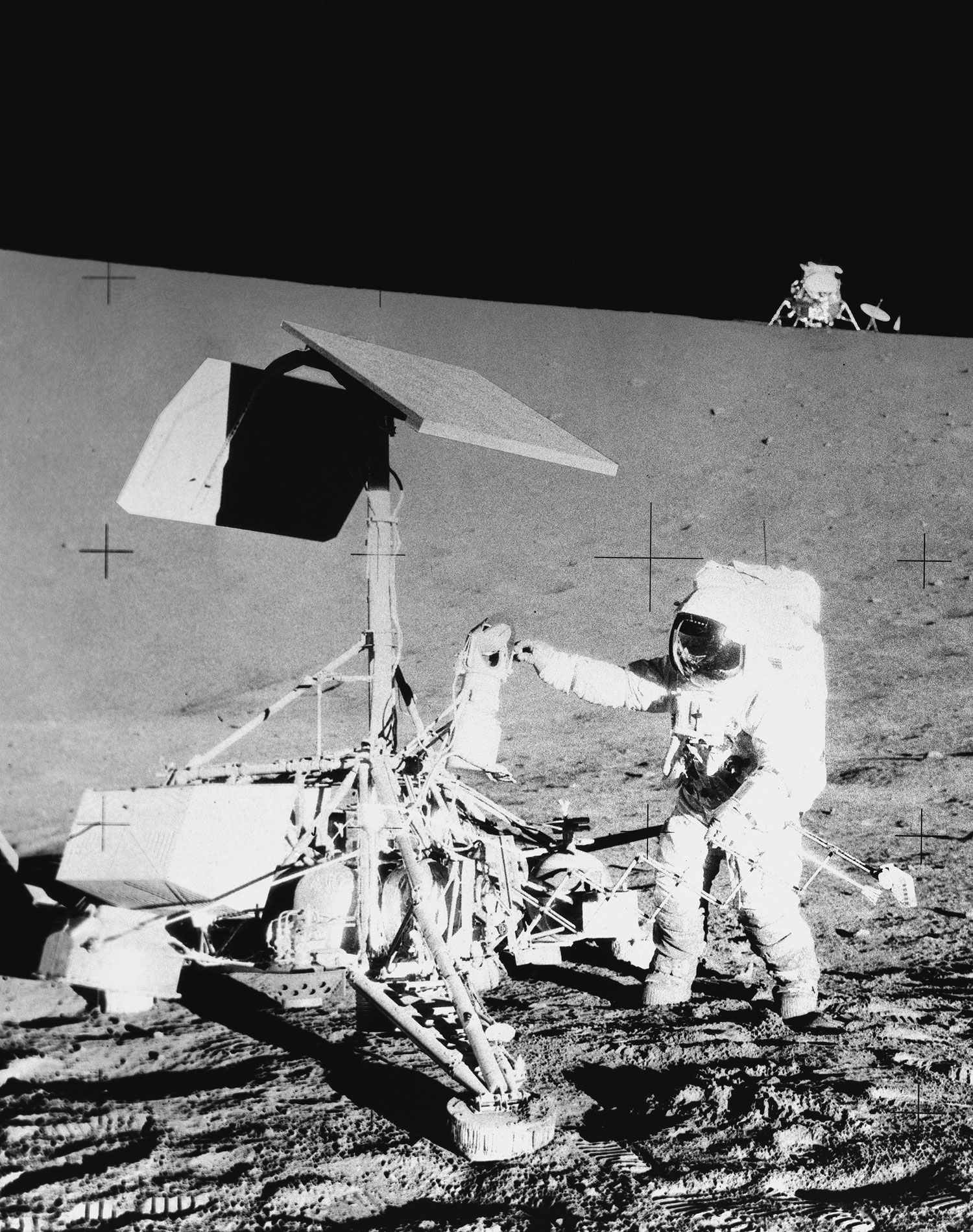
Black and white photo of Surveyor III on the surface of the moon. Astronaut Charles "Pete" Conrad stands next to Surveyor and in the background up on a ridge is the Lunar Lander. Hughes Space and Communications also took a leading role in exploring the solar system, starting in 1966 when Surveyor 1 made the first fully controlled soft landing on the moon. The Surveyor program paved the way for U.S. astronauts landing on the moon three years later. In 1978, Pioneer Venus performed the first extensive radar mapping of the cloud-enshrouded planet, and in the 1990s Hughes’ Galileo probe became the first spacecraft to penetrate Jupiter’s atmosphere. (Pictured: Astronaut Charles “Pete” Conrad visiting Surveyor III during the Apollo 12 mission in November 1969, NASA photo)