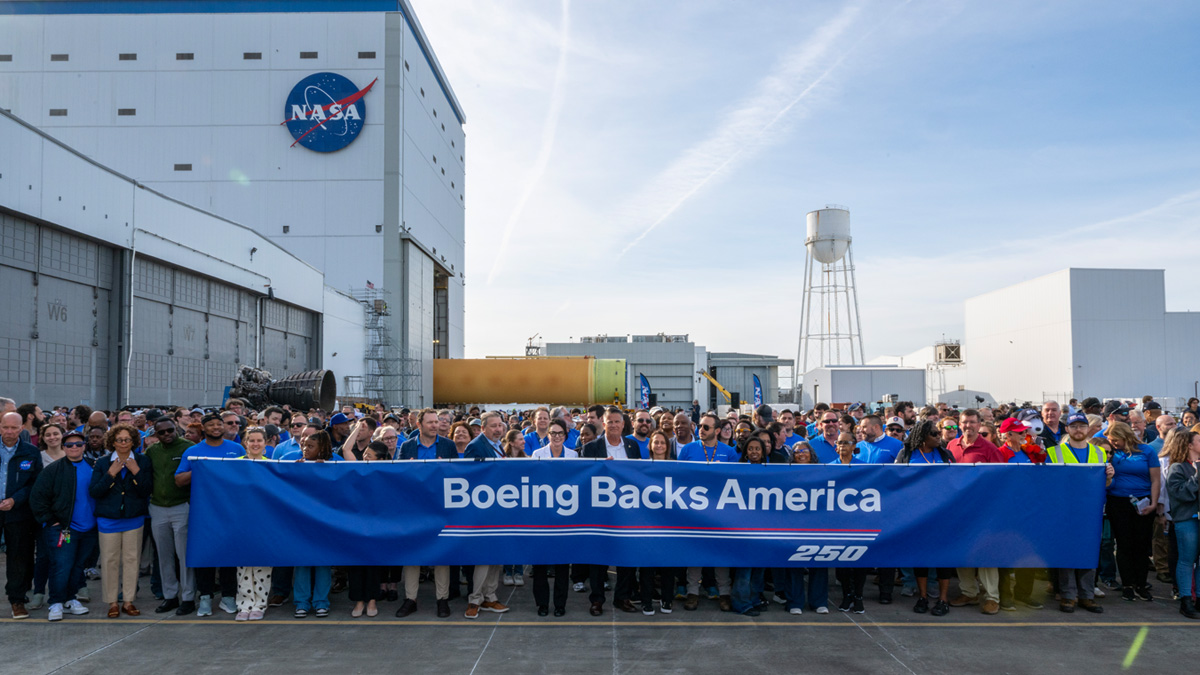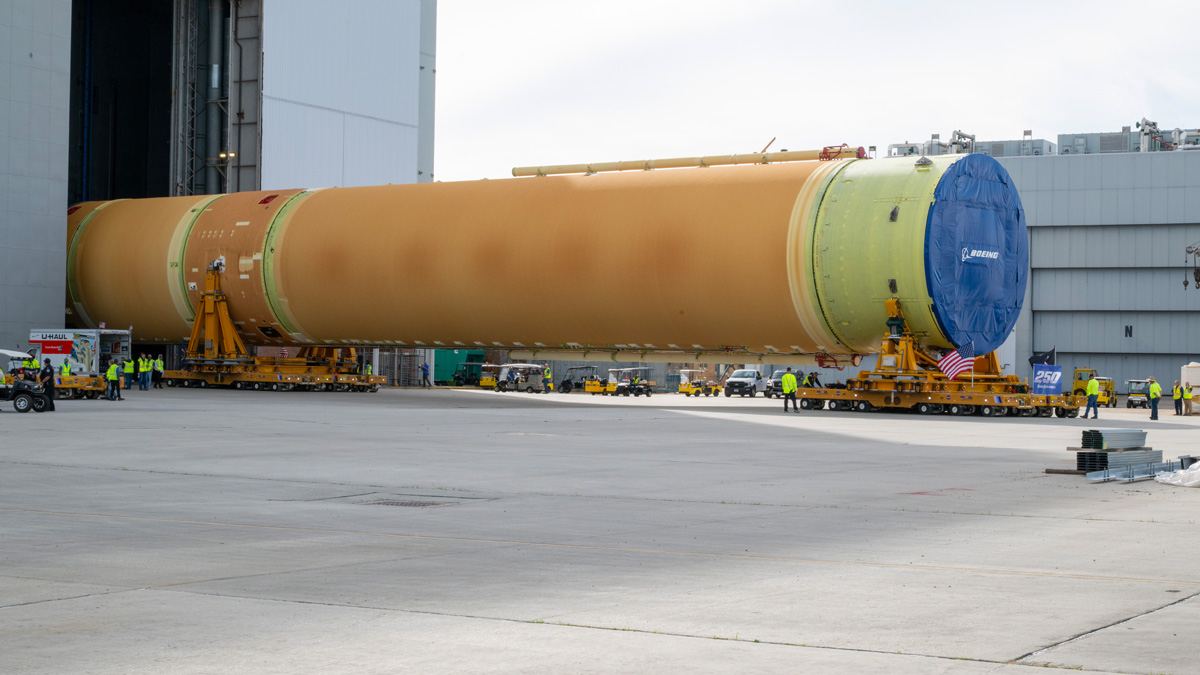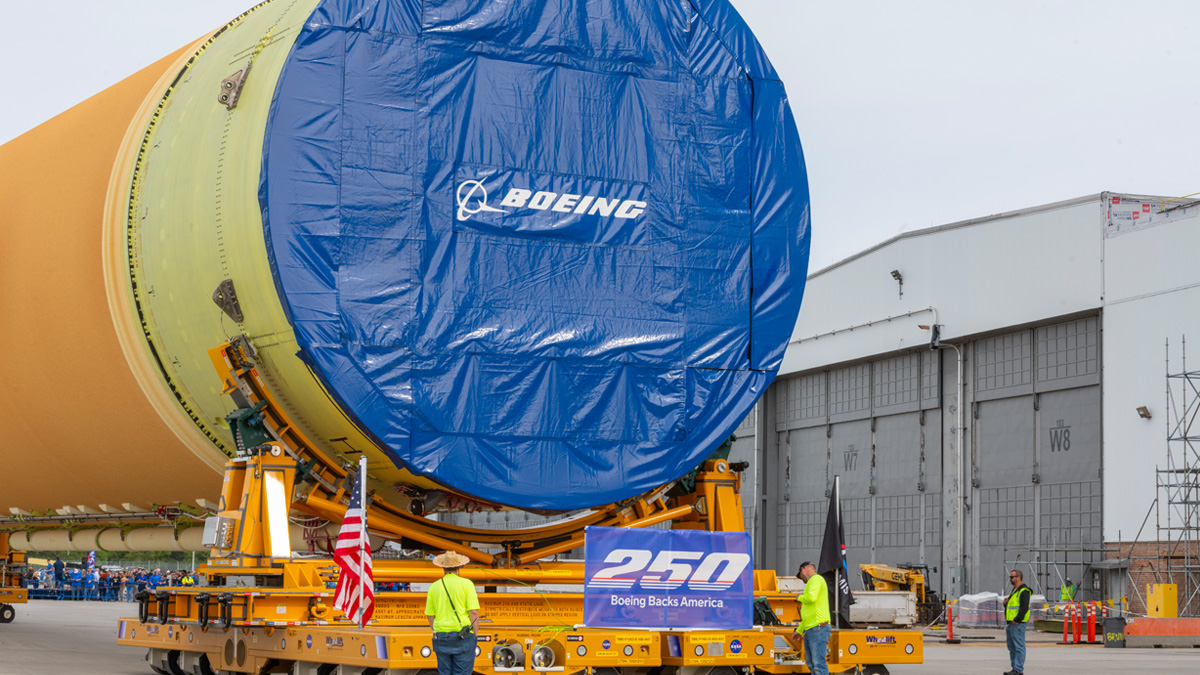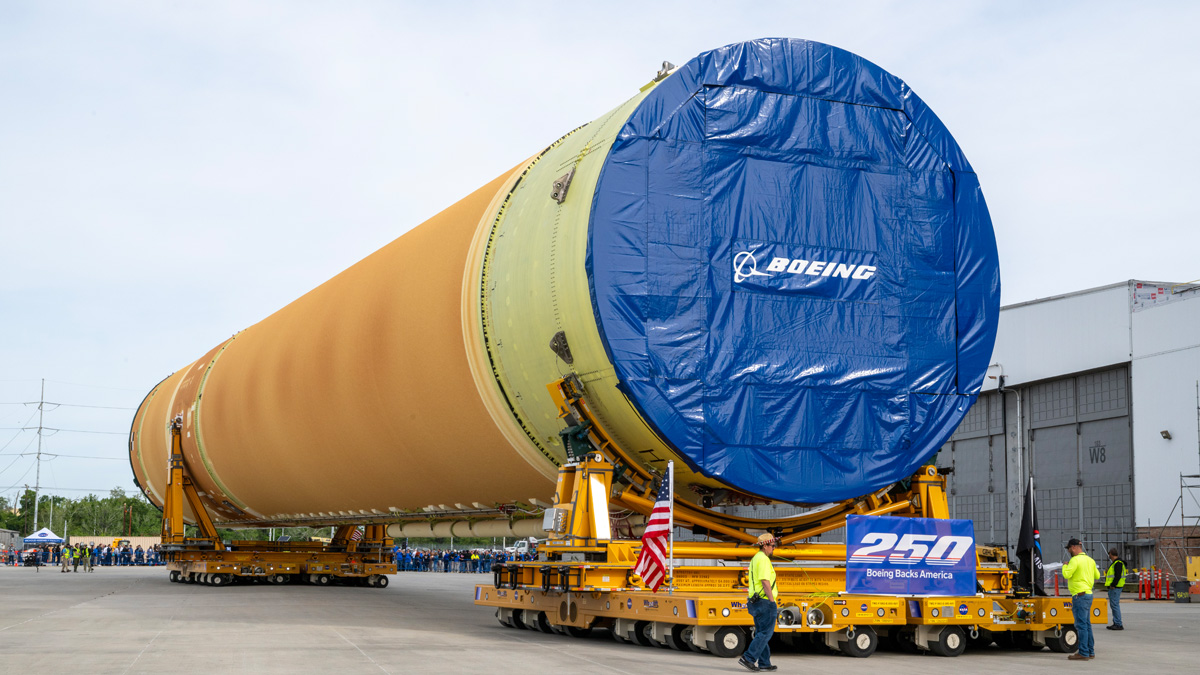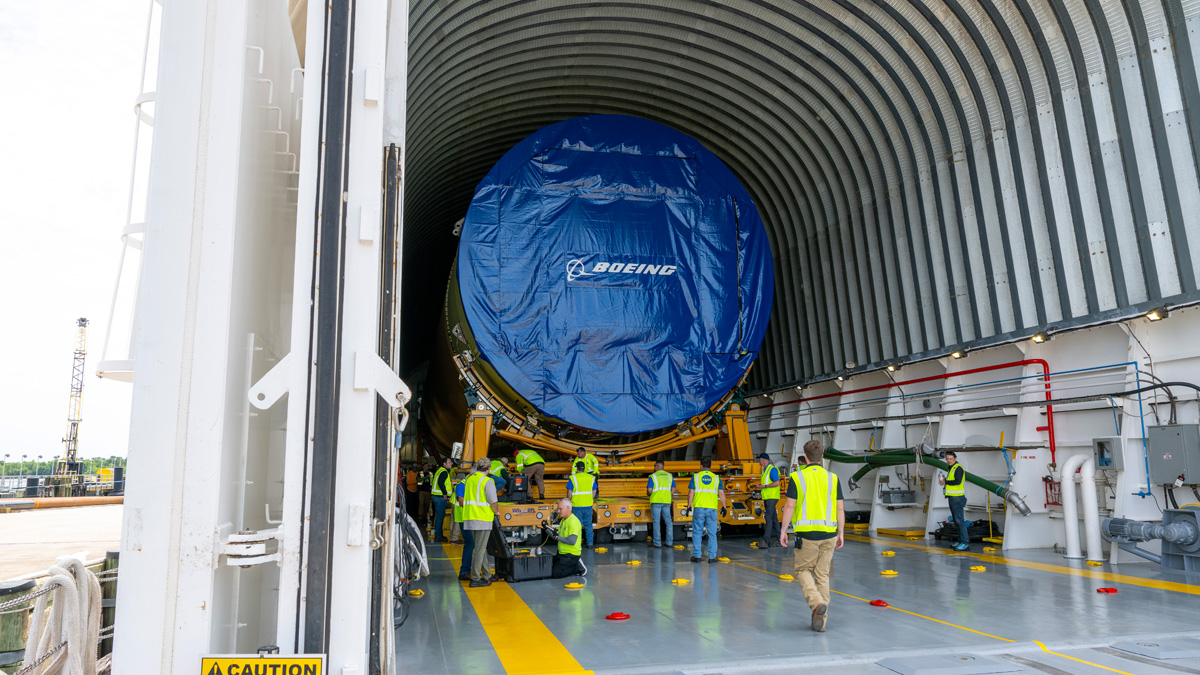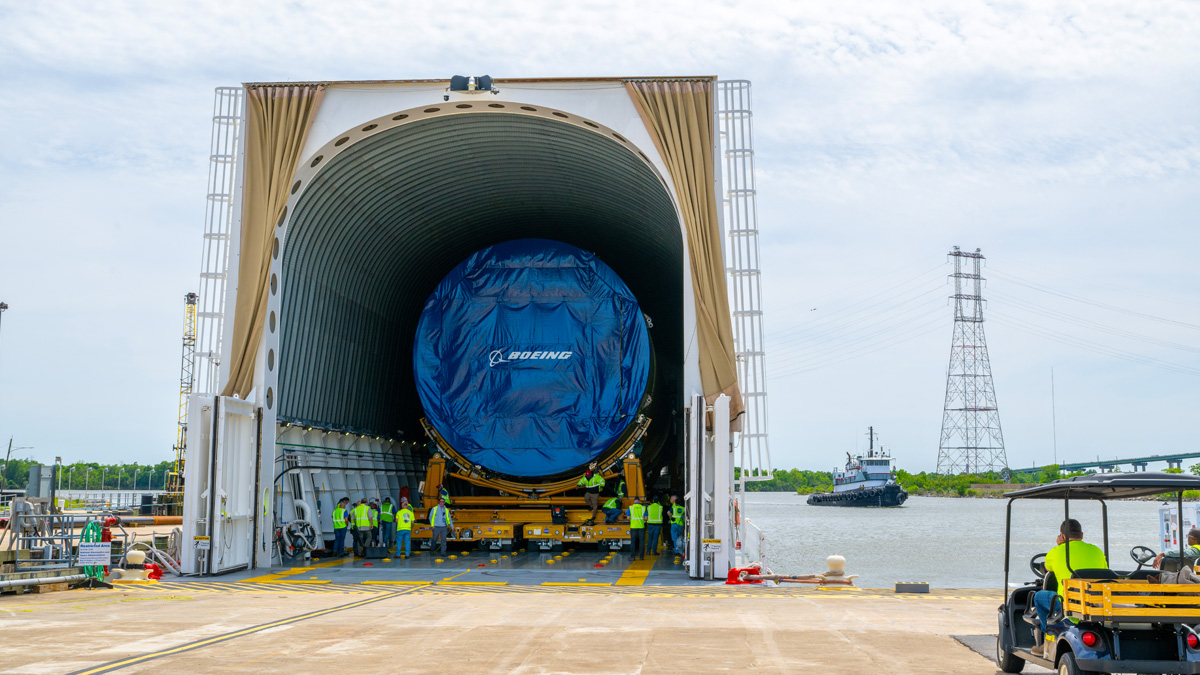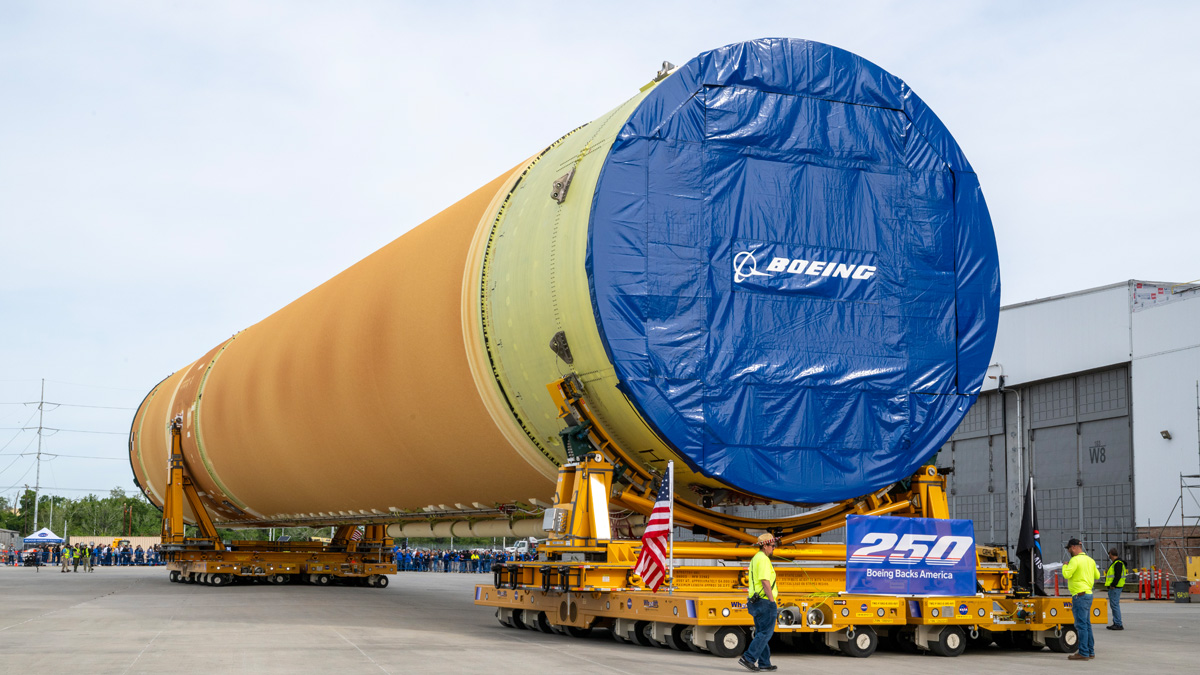
Boeing successfully rolled out what’s called the “top four-fifths” of the core stage for the Artemis III moon rocket from the Michoud Assembly Facility in New Orleans.
- The top four-fifths of the core stage consists of the forward skirt, intertank, liquid oxygen tank and liquid hydrogen tank, all joined together but missing the engine section.
Why it matters: This is the first time the Boeing program for NASA’s Space Launch System (SLS) has shipped a core stage without its engine section, a change aimed at accelerating production for future Artemis missions.
- The Artemis III mission, estimated for 2027, will test docking capabilities between Orion and commercial spacecraft needed to land astronauts on the moon.
“Moving the top four-fifths shows how our production process improvements drive faster, more coordinated execution,” said Mike Cacheiro, vice president and program manager for the SLS program at Boeing. “This milestone reflects countless hours of teamwork and a shared mission to push human exploration forward.”
That coordinated effort enabled the rollout to occur on schedule and demonstrates the Boeing team’s capability and momentum for future Artemis missions.
“It’s an honor to be part of this team who has worked tirelessly and hit every milestone needed to get to this point,” said Jordan Falgoust, SLS Integrated Product Team senior manager. “One year ago, we set this plan to roll out on April 20 and held to that commitment, and I think it shows how we are ready to step up and support NASA’s accelerated Artemis manifest.”