Boneyard ‘bird’ turned digital test bed takes B-52 into future

Engineers use retired aircraft as hands-on lab for 3D rapid prototyping, validating mods before taking work fleetwide.

April 14, 2026 in Defense

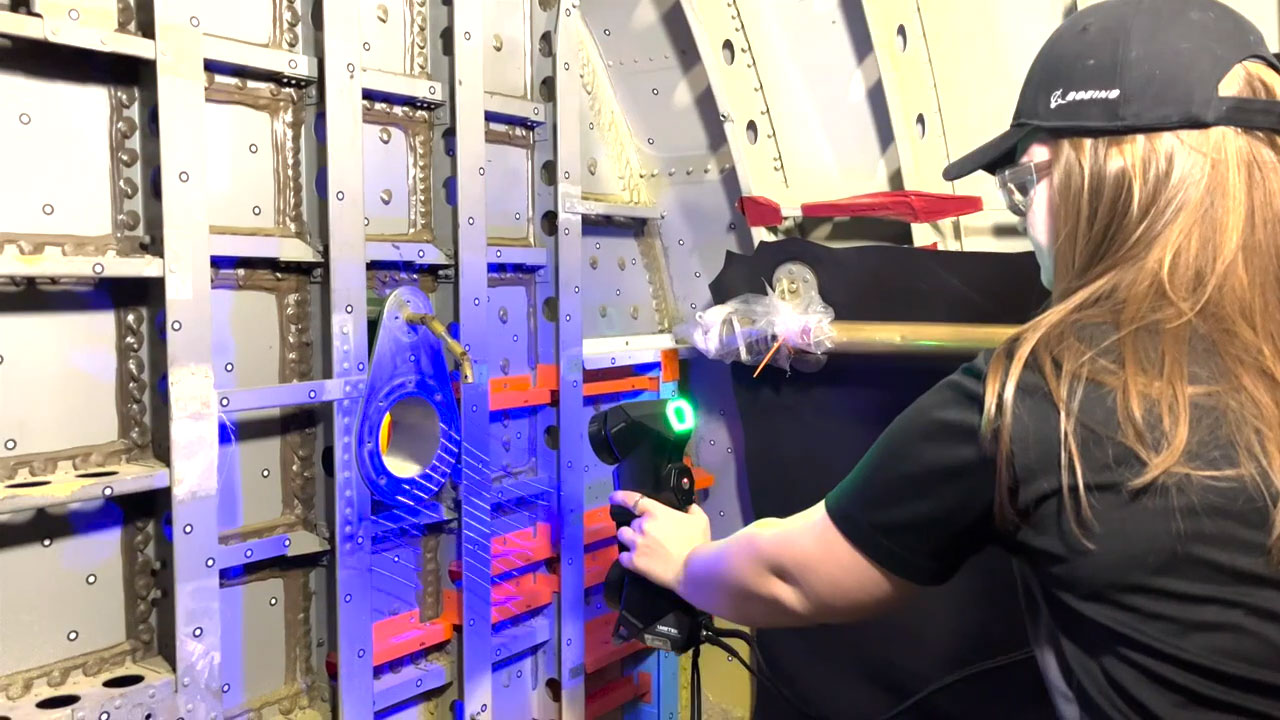
An engineer sweeps a handheld 3D scanner across the fuel bladder of a B-52 aircraft to evaluate 3D-printed parts. Boeing Oklahoma City’s Sarah Congdon, AVID lead systems engineer, scans the fuel bladder of Damage Inc. II to evaluate 3D-printed parts. (© Boeing photo)

Four years ago, a retired B-52 returned from the boneyard, an open-air military aircraft storage site in the Arizona desert. Since 2022, the aircraft, called “Damage Inc. II,” has been serving as a living test bed at the Boeing Oklahoma City B-52 High Bay Integration Lab for engineers. 

Why it matters: The lab allows engineers to run proof-of-concept installations (PCIs), fit-check new components, and validate design changes, ensuring modifications will fit and work on the fleet before crews begin real upgrades on active aircraft.
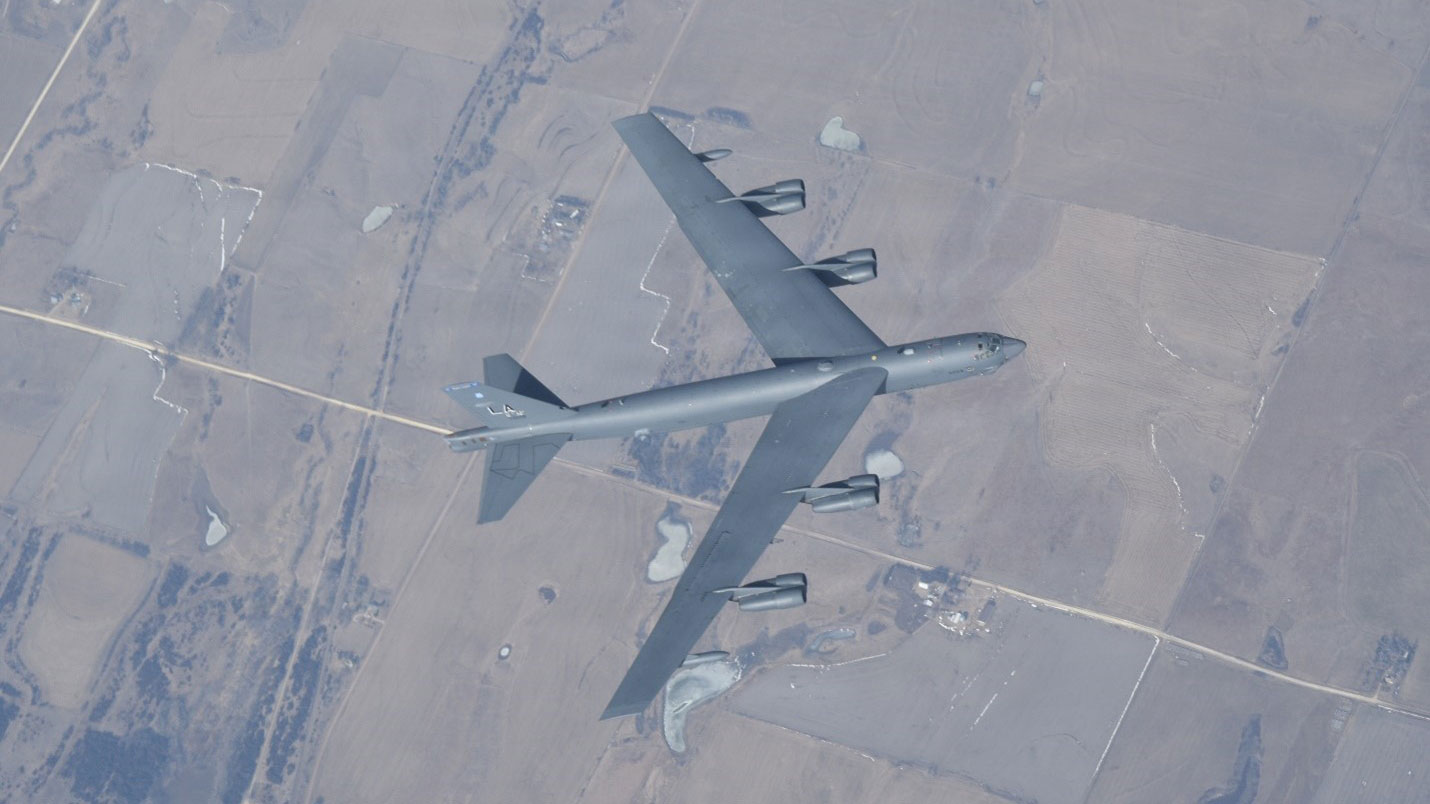
A B-52H Stratofortress in flight A U.S. Air Force B-52H Stratofortress assigned to the 5th Bomb Wing of Minot Air Force Base flies over Kansas, Feb 5, 2026. The jet was with multiple B-52Hs that received fuel via aerial refueling. (U.S. Air National Guard photo by 1st Lt. Daniel Ter Haar)

Driving the news: The Boeing Commercial Engine Replacement Program (CERP) team and the U.S. Air Force designed the test environment to address decades of modernization, modifications, depot repairs and flight-line patchwork that left many aircraft out of step with original blueprints. 

“The results speak for themselves,” said Jagbir Singh, Boeing B-52 CERP director. “Prior PCIs at the High Bay have already produced an estimated savings of over $1.3 million through reduced part and labor costs and by preventing rework. Beyond dollars, we’re building repeatable processes and data that will help now and in the future for these modifications.”

Boeing Oklahoma City’s Sarah Congdon, AVID lead systems engineer, scans the fuel bladder of Damage Inc. II to evaluate 3D-printed parts. (© Boeing photo)

How they did it: Using cutting‑edge technology, a team of technicians, subject-matter experts and engineers from San Antonio, St. Louis and Oklahoma City completed a focused PCI.

  • Engineers from the site’s Advanced Visualizations and Immersive Development & Reverse Engineering and Prototyping (AVID) lab digitally scanned the fuel cell area and placed 3D‑printed stiffeners inside the tank. The work enabled installation and fit checks for 3D-printed Line Replaceable Units mounted outside the tank.
  • The result was a seamless fusion of digital capture, rapid prototyping and hands‑on installation that accelerated validation while highlighting how advanced visualization and additive manufacturing are changing modification work.
  • “3D printing has become a go-to solution within Boeing because everyone sees the value and speed that rapid iteration can bring to the design table,” said Sarah Congdon, AVID lead systems engineer. “Proof-out designs and installation methods on the test bed using 3D-printed parts, 3D-scan the mod jets prior to installation, and you’ll know the lay of the battlefield before you’ve even started the march.”

The big picture: The purpose wasn’t to finalize the parts but to validate whether the new parts line up with the original design models. If the real measurements on a jet don’t match the as‑designed plans, the plans must be updated so that when the modification is done fleetwide, it installs correctly the first time.

  • Because every B‑52 can be a little different and may be missing digital records, years of “beat‑to‑fit” fixes and paint‑match repairs add up. By practicing the modification in a controlled environment, teams can find those differences early, refine the design, and avoid costly surprises during actual maintenance. These small, early checks protect time, money and aircraft availability.
  • “It is like having an open book test,” Congdon said. “We are finding all the answers we need now. That way, when we are ready to modify aircraft, we are not having to learn things as we go.”
  • Per Singh, “It turns guesswork into knowledge, protects mission readiness, and helps ensure that when the B‑52 fleet gets upgraded, it’s done right the first time.”