Heat is on: 777-9 performs critical test as brakes reach 2,500 degrees

Fully loaded and at high speed, Boeing’s new widebody airplane proves it can safely stop on runway after aborted takeoff.

April 01, 2026 in Commercial

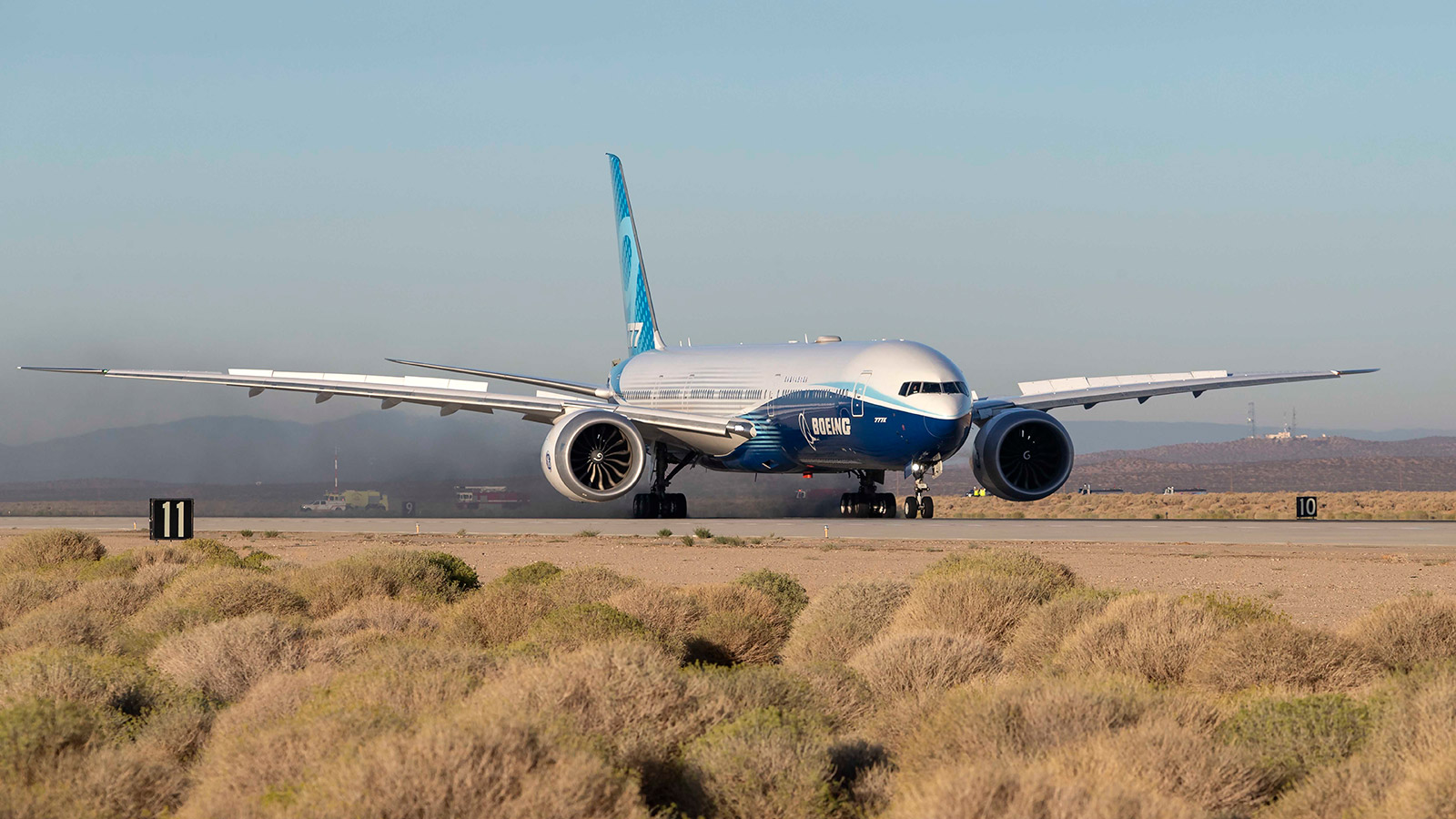
A 777-9 conducts maximum brake energy testing. The 777-9 team conducted maximum brake energy tests at Edwards Air Force Base. (Scott Dworkin photo)

The 777-9 team simulated one of the most challenging situations that the airplane could face during maximum brake energy testing at Edwards Air Force Base in California.

  • Following certification protocol, the team loaded the airplane to its highest takeoff weight, and pilots accelerated to approximately 190 knots before aborting the takeoff and applying full braking.
  • “Maximum brake energy is one of the most highly choreographed tests that we do,” said Madison Strauss, 777-9 test director.

Intense conditions: “We don’t use thrust reversers, so the brakes provide 100% of the stopping power of the airplane,” said Matt England, 777-9 flight test engineer. “We do the condition on brakes that are intentionally machined down to 100% worn so it’s a worst-case simulation.”

  • “It's just conditions that you'll never see in service,” added Brianna Hitchcock, 777-9 flight test engineer. “But regulations require it, and we test it.”

Withstanding the heat: The brakes being tested generated over a billion foot-pounds of torque to stop the airplane, causing them to glow with extreme heat — exceeding 2,500 degrees Fahrenheit (1,371 degrees Celsius).

  • “We’re optimizing the conditions to make sure we put the most energy we possibly can into those brakes,” said Capt. Heather Ross, 777-9 project pilot.

The wheels were so hot that the fuse plugs melted – as designed, safely releasing air from the tires.

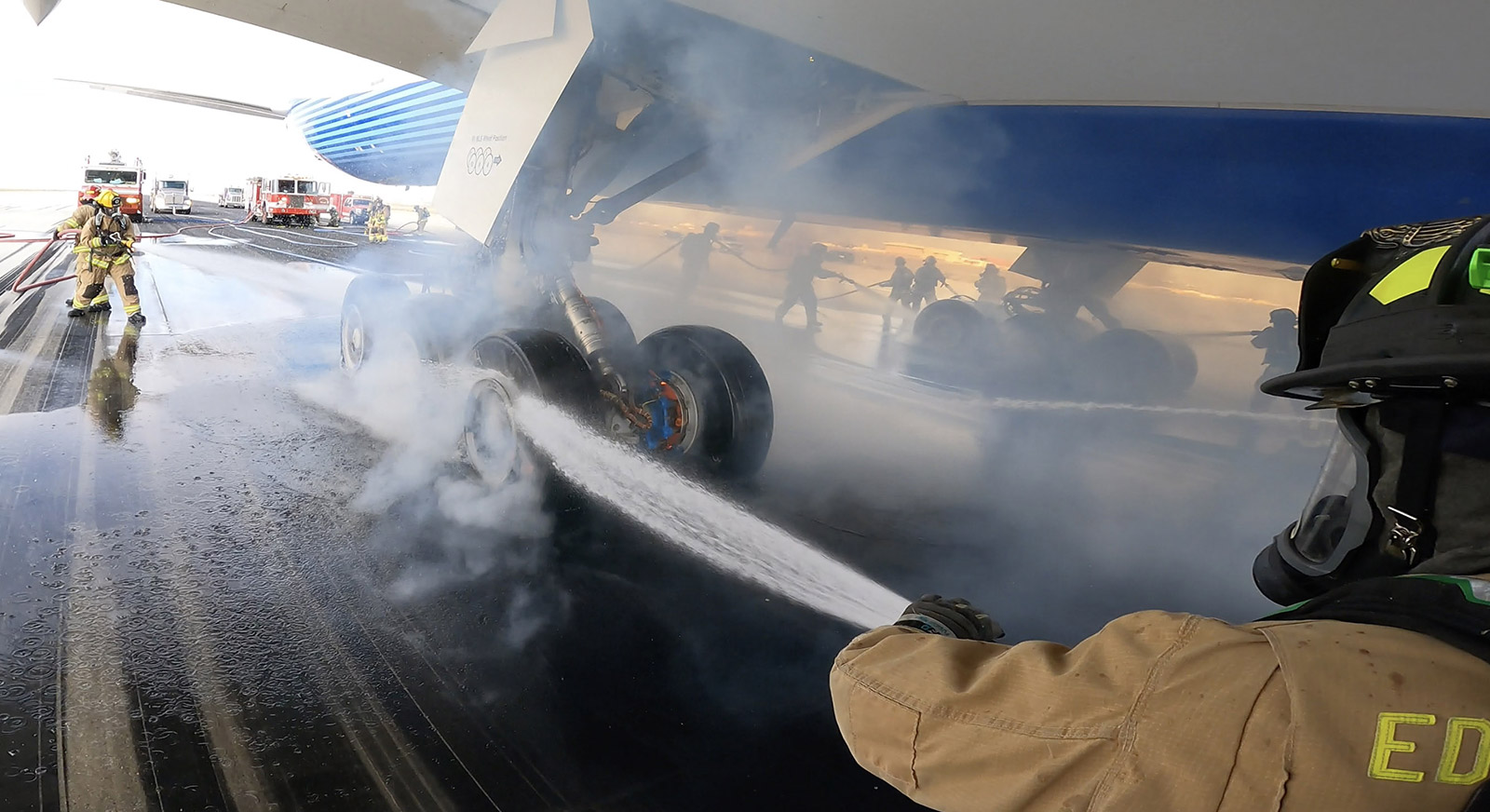
Crews spray water on the 777-9’s wheels and brakes. Crews responded to cool the brakes and wheels after a five-minute waiting period passed. (Paul Weatherman photo)

Prioritizing safety: As part of the test, emergency crews were on standby but waited five minutes before engaging with the airplane to simulate a realistic emergency response.

After the waiting period passed and the demonstration was complete, crews sprayed water on the wheels and brakes to cool them.

  • “The conditions were executed flawlessly,” said Ross. “I’m incredibly proud of the airplane and the team.”

Why it matters: The 777-9 is completing rigorous Boeing and U.S. Federal Aviation Administration certification testing to demonstrate the airplane’s safety, reliability and performance.

  • “We’ve had a lot of experience with this airplane – there really isn’t a system that we haven’t tested,” Ross said. “Everybody is working together to show we meet the requirements.”

The bottom line: “The team demonstrated impressive dedication and resolve to complete these critical tests,” said Terry Beezhold, 777-9 vice president and general manager. “A big thanks to them and everyone who is working hard get this airplane certified and delivered to our customers.”

By Jen Cram

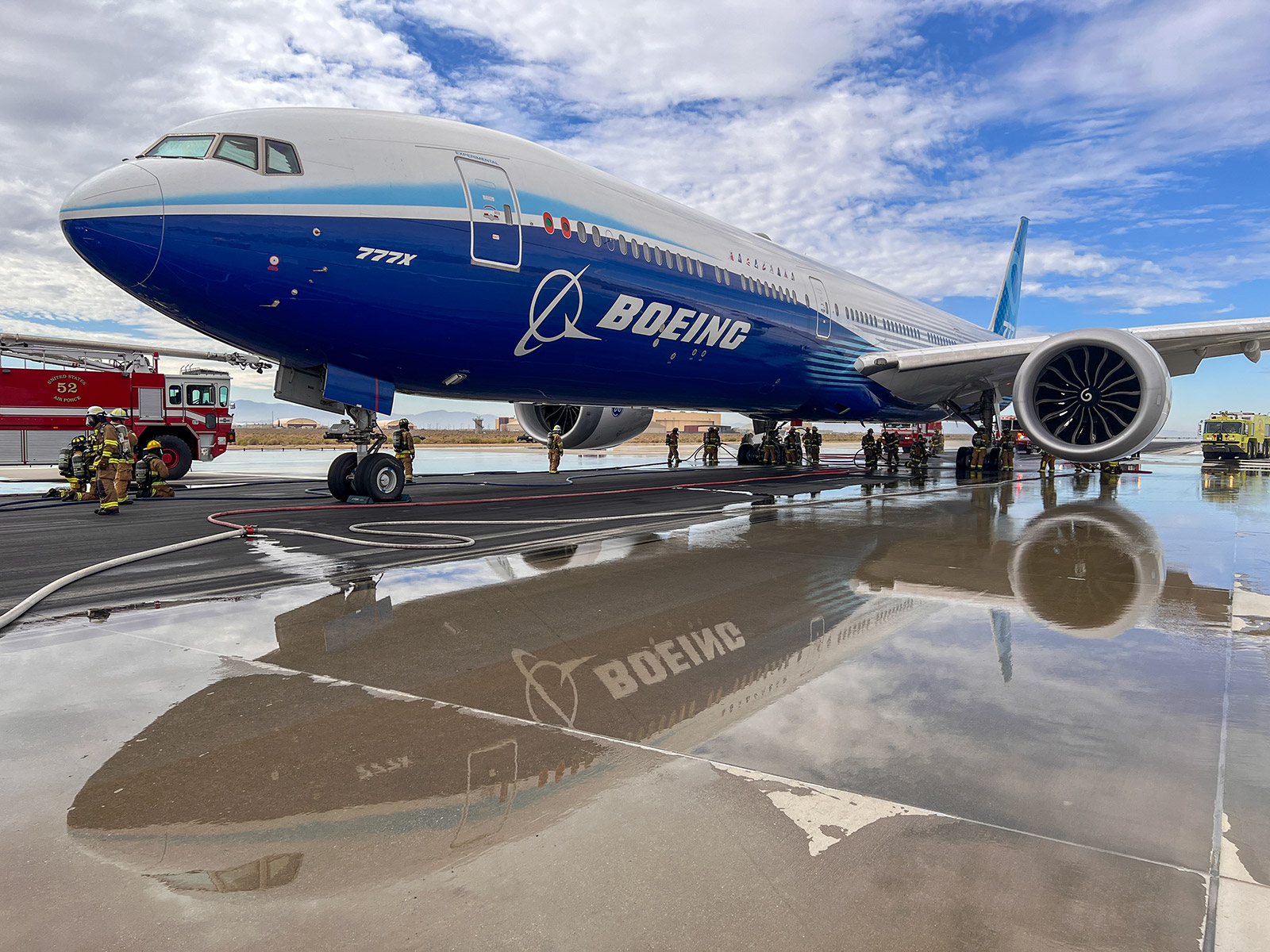
Teams from Boeing and Edwards Air Force Base are shown by the 777-9. The maximum brake energy tests required careful coordination with teams from Boeing and the 412th Test Wing at Edwards Air Force Base. (Paul Weatherman photo)