
The new Boeing 737-10 can do what no other 737 airplane before it has done: take off at nearly 200,000 pounds (more than 90,000 kilograms), allowing airlines to carry up to 230 passengers on flights across the globe.
To lift the additional capacity, the 737 MAX Development team lengthened the fuselage and the main landing gear. But taking off with more weight is one thing. Bringing it to a stop is another.
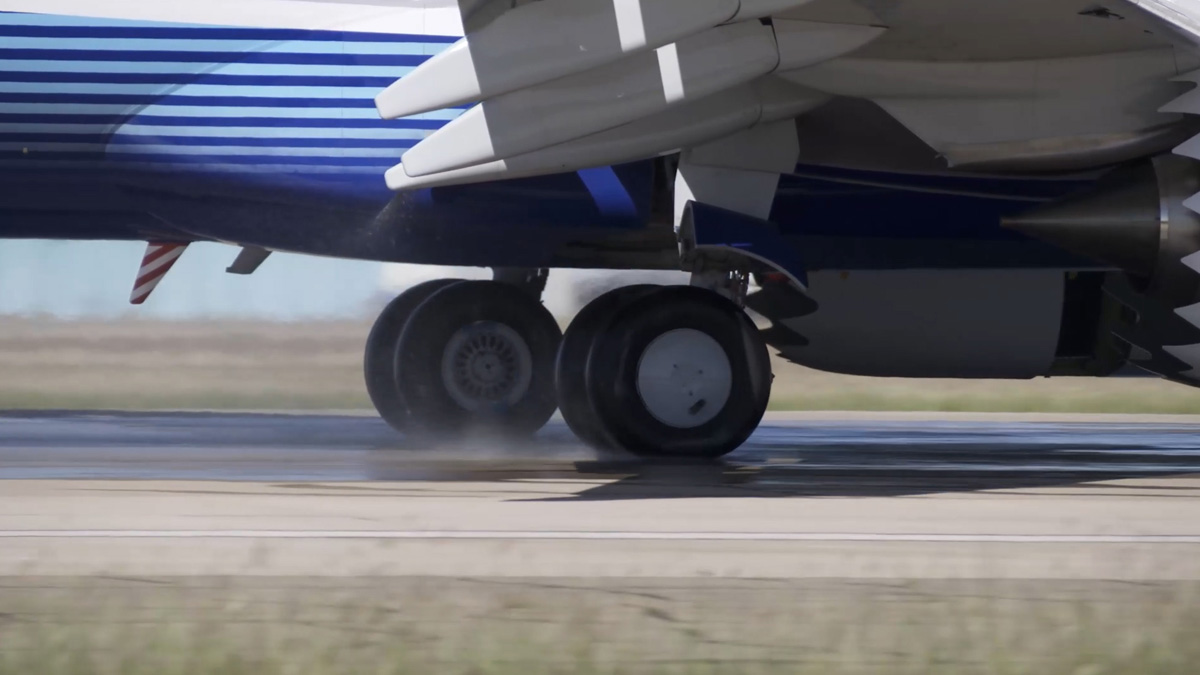 The 737-10’s enhanced brakes are applied during runway testing earlier this year. (Boeing Flight Operations Multimedia team photo)
Take two minutes and watch how engineers designed the 737-10’s high-performance brakes. (Wen Huber video)
Absorbing maximum energy
“When the airplane is taking off and it has to reject takeoff for whatever reason, all that kinetic energy is getting converted into thermal energy, or heat, in the brakes. And so, the four brakes on the 737 have to absorb all that kinetic energy,” said Evan Preston, a wheel, tire and brake engineer.
Preston is part of the engineering team that developed the “highest-performing brakes” ever on the 737 program, capable of bringing a fully loaded 737-10 to a safe stop on the runway if pilots have to abort a takeoff while going more than 200 mph.
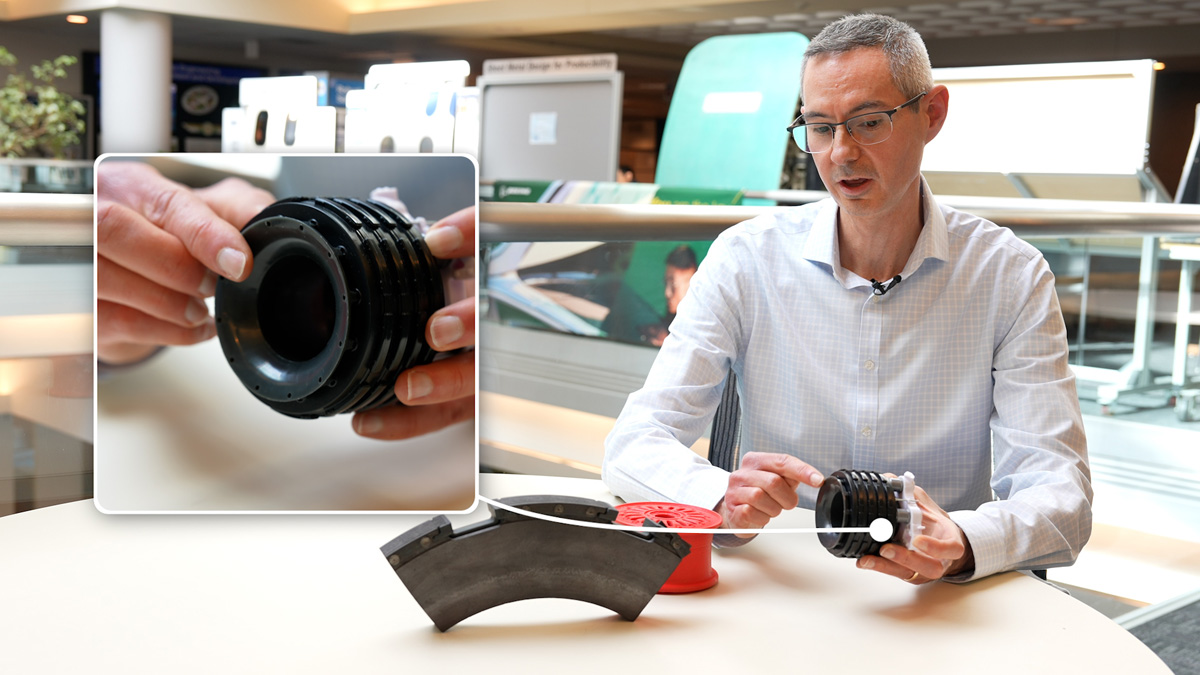 Evan Preston, a wheel, tire and brake engineer, shows off models of the 737-10’s enhanced brakes, which feature a fifth composite rotor for greater torque and braking force. (Vanessa Misciagna photo)
Beefing up the brakes
Preston and his colleagues began by expanding the hardware of the carbon brakes.
- They inserted a fifth composite rotor (a rotating disc that friction is applied to) and a longer torque tube (a structural component that holds brake components in place and handles the stress of braking). The additions give the hydraulic brake system more torque and braking force for better stopping performance.
- The additional rotor also increases the mass of the brake’s heat sink, which absorbs the airplane’s kinetic energy.
- They outfitted the wheels with additional heat shielding that limits heat transfer from the brakes to the tires.
“It’s all about kinetic energy, how much kinetic energy we can transfer from the airplane into thermal energy into the brakes,” Preston explained.
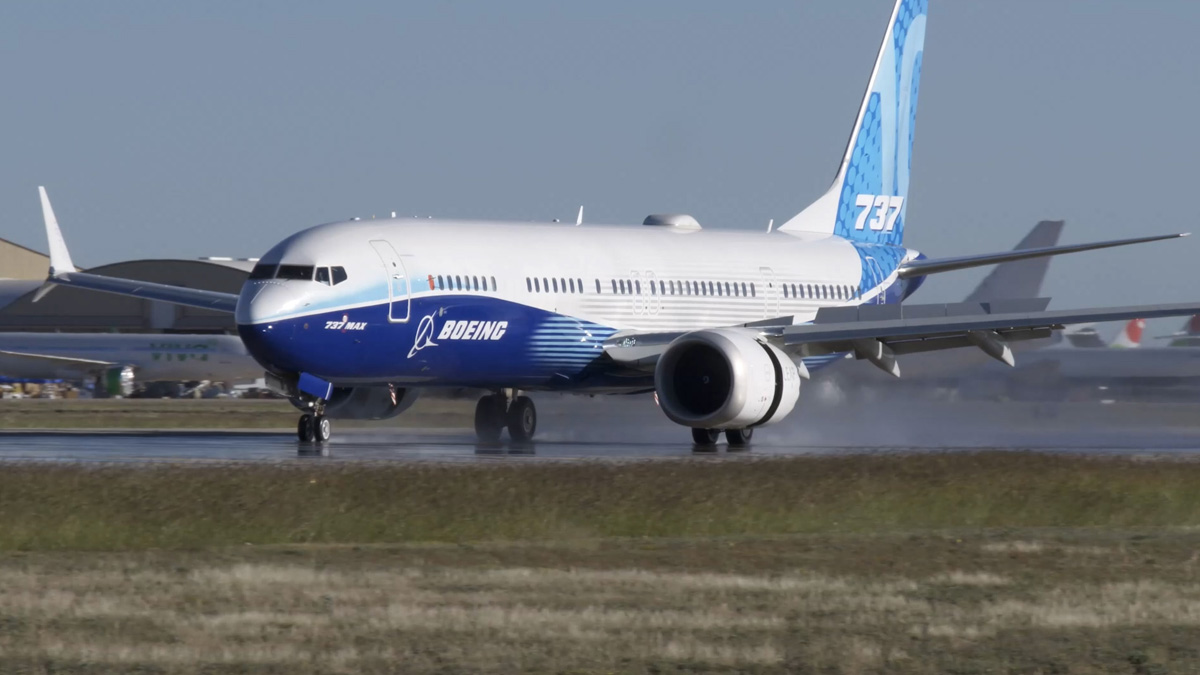 Pilots apply the 737-10’s enhanced brakes during runway testing earlier this year. (Boeing Flight Operations Multimedia team photo)
Optimizing the system
In addition to strengthening the structure, the development team worked to optimize the 737 MAX braking system and associated control software for the larger airplane and greater braking forces. Updates included:
- A new gear retract braking load alleviation function to monitor and control the deceleration of the wheels as the landing gear retracts after takeoff, to prevent excess loads on critical main landing gear structural components.
- The anti-skid control function, which helps prevent wheel lockup by generating braking commands every five milliseconds to maximize braking forces in different runway surface conditions.
Nima Forghani, a brake systems engineer who specializes in brake control, said the design and testing campaign, which spanned years and hundreds of hours of lab and flight testing, has been equal parts science and art.
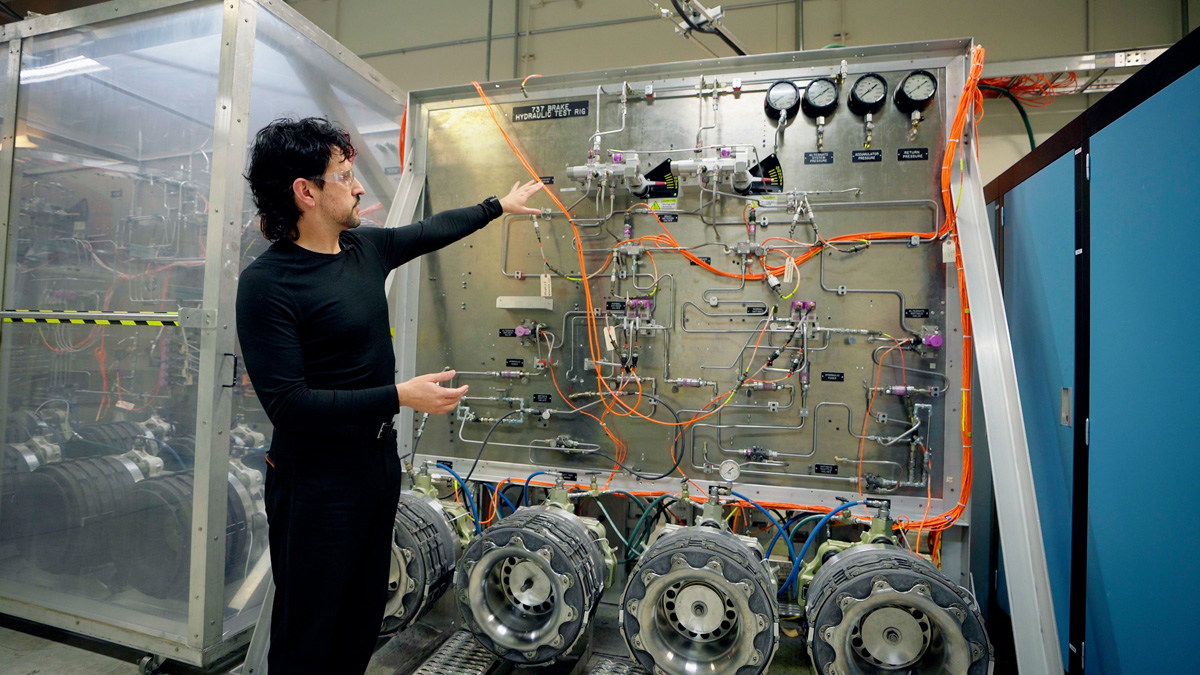 Nima Forghani, a brake systems engineer, shows off the 737 Brake Hydraulic Test Rig that the 737-10 development team used to test the enhanced braking system. (Wen Huber photo)
“The engineering challenge sort of has its own artistic element to be able to finesse the braking control commands such that when the brakes come on, you don’t get a sudden deceleration feeling or, most importantly, we don’t blow any tires in most adverse conditions when landing on wet runways or icy runways,” said Forghani.
“We’ve been building on the experiences we’ve had since the 737NG, so the 737-10 brake control laws and the tuning are our latest and greatest versions used in BCA airplanes,” Forghani added.
Meeting the requirements
The 737 MAX Development team says the certification tests and safety assessments to date have validated that the enhanced 737-10 brakes meet the program’s requirements and the certification regulations.
“We’re really happy with these brakes, and I think our customers are going to be very pleased with them too,” said Preston.
He added that “this has been a huge team effort,” with contributions from Design Engineering (Systems and Structures) and Aero Performance, along with the two brake suppliers and the Boeing Test & Evaluation team.
“A lot of groups came together to really make this program a success,” said Preston.
For more information:
- Learn more about the 737-10’s maximum brake energy test as pilots apply worn-down brakes to stop the airplane without thrust reversers.
- Visit the Boeing Commercial Airplanes 737 MAX product page to learn more.