Rocket stage that will power next Artemis mission is ready to roll

Teams complete final checks on a first-of-its-kind configuration for the Artemis III core stage set to ship by barge.

April 17, 2026 in Space Launch System, Space

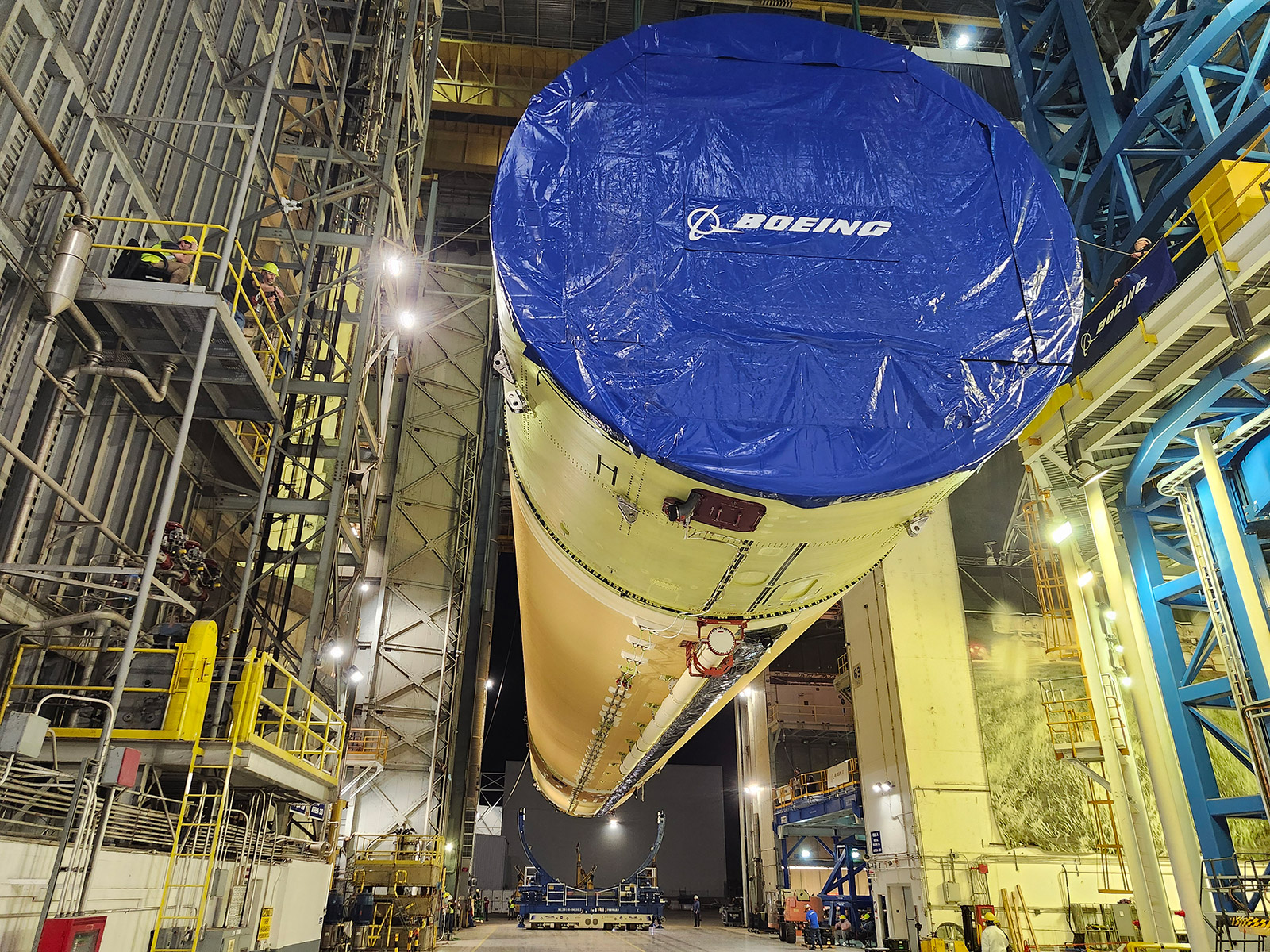
The lift and integration of the CS-3 TFF into the shipping cradles at MAF (Boeing photo)

Boeing teams are finishing final checks on a first-of-its-kind configuration for the core stage that will power the next Artemis moon mission. Their work is the last step before rollout from the Michoud Assembly Facility (MAF) in New Orleans to NASA’s Pegasus barge for delivery to NASA’s Kennedy Space Center (KSC) in Florida.

Why it matters: Only 10 days after the successful Artemis II mission, Team Boeing is set to roll out the third Boeing-built core stage, moving it one step closer to final assembly, integration and testing.

This core stage will power the Artemis III mission, which will test systems and operational capabilities in low Earth orbit to prepare for an Artemis IV moon landing in 2028. 

What’s different: Unlike previous rollouts, Team Boeing is only moving out the Top Four-Fifths (TFF) of Core Stage 3 (CS3), meaning it will not have a flight engine section installed for the transit from the factory to KSC, which is currently in final assembly in the VAB.

With the engine section ready for integration at KSC, the CS3 TFF is the last major component for CS3 being shipped from MAF to KSC. This new shipment process is a part of Boeing’s accelerated production effort, which started in 2022, to move CS Engine and final integration work to KSC’s High Bay 2.
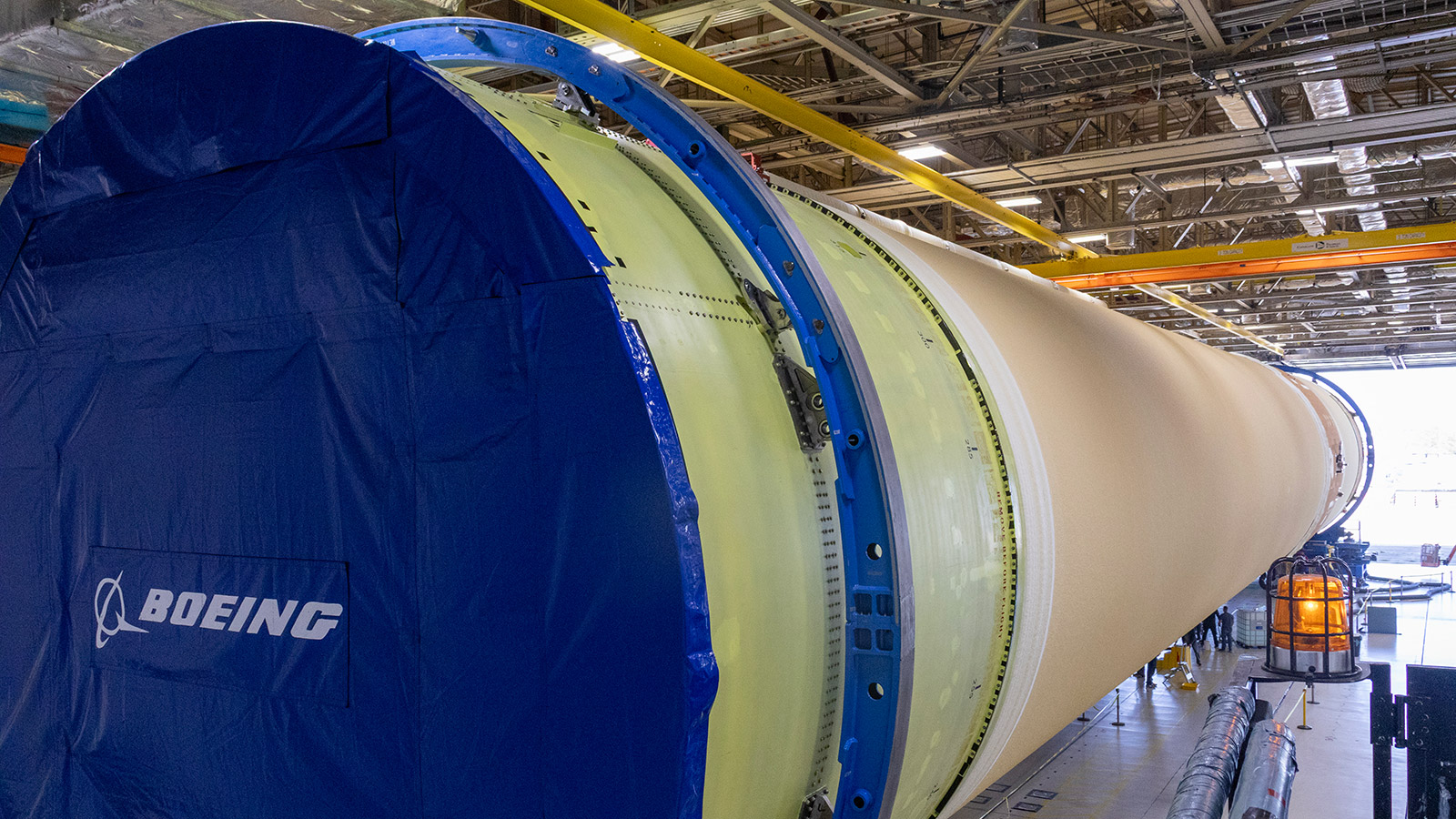
Core Stage 3 Top Four-Fifths in Final Assembly at MAF (Boeing photo)

How they did it: Since April 2025, Boeing teams have been preparing for this move. Drawing on lessons learned from the Core Stage 2 rollout, the move team implemented enhancements such as upgraded transporters, new purge equipment for barge transit, and transport hardware custom-designed for the CS3 TFF.

The rollout and barge operations are performed in close collaboration with NASA and industry partners, prioritizing safety at every step.

“Personnel and flight hardware safety are still our top priority. Having successfully completed several similar rollouts, the team knows what to watch for and has put contingency plans in place. ‘Moving at the speed of safe’ is still our mantra!” said Rick Hoepfner, Boeing move team lead.

The move: On April 20, NASA, Boeing and other industry teams will escort the core stage from the MAF to NASA’s barge, where it will be shipped to KSC for integration with the remaining rocket elements.

The planned move covers about 1.4 miles (2.25 kilometers) and takes several hours beginning early in the morning.

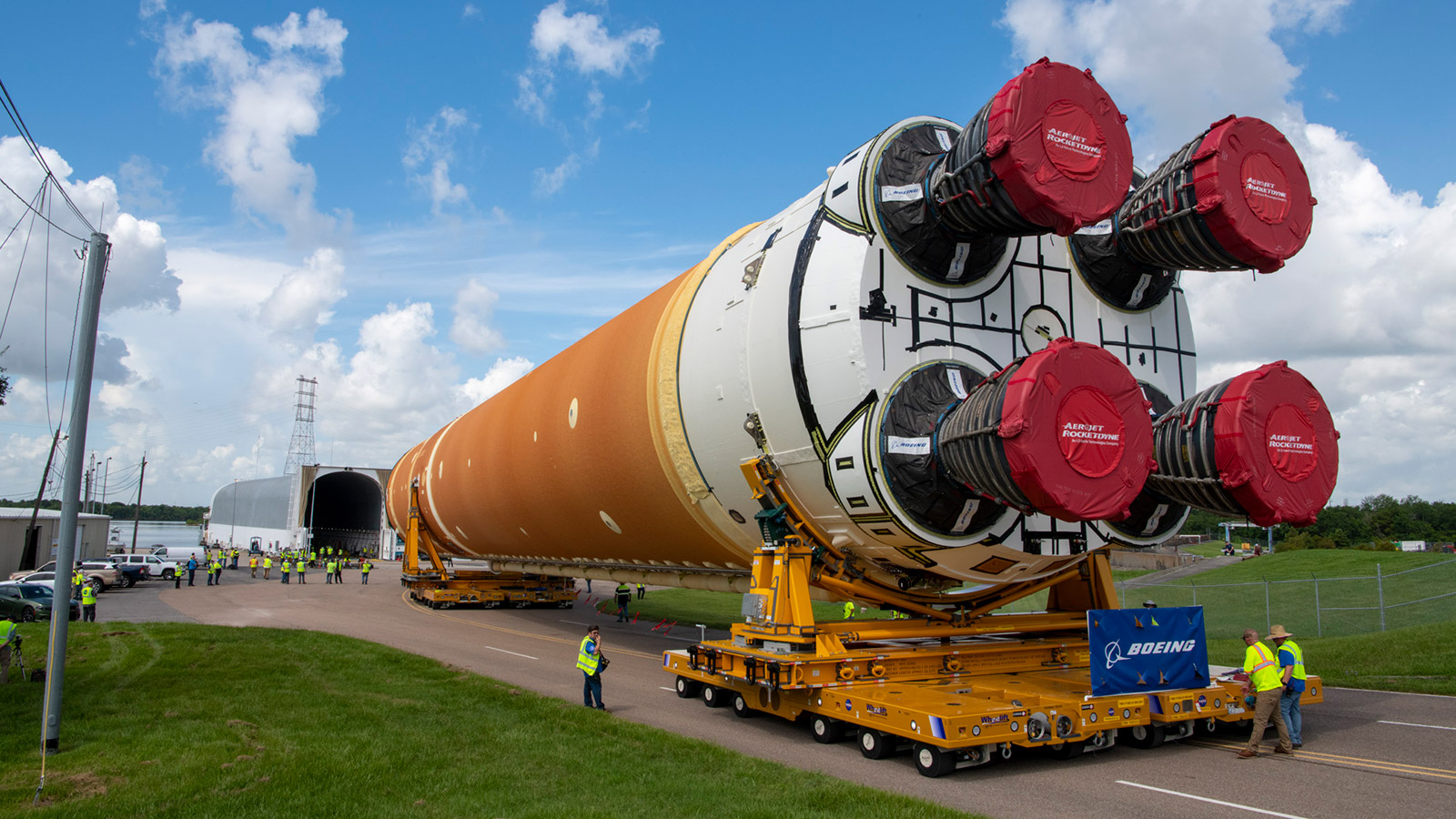
Core Stage 2 on its way into the Pegasus barge, July 2024. (© Boeing photo)

The big picture: Boeing has accelerated its production cadence on the SLS rocket and implemented a new production process. This is the first time the top four‑fifths of a core stage will be shipped to KSC and integrated with the engine section in the Core Stage Vertical Integration Center (CSVIC), which enables parallel production in the VAB.

“This rollout is a milestone that reflects years of work to enhance our production processes,” said Natasha Wiest, Space Launch System, Core Stage Program Manager. “With the CSVIC ready to receive the TFF for integration, the team gains enhanced 360-degree vertical access that enables concurrent operations to efficiently complete the remaining tasks and be ready for stacking on the Mobile Launcher later this year.”

By Casey Cappa