Airline pilots advance 777-9 human factors testing

Operator crews faced surprise simulated malfunctions; their real-time responses helped validate flight deck design.

May 26, 2026 in Commercial

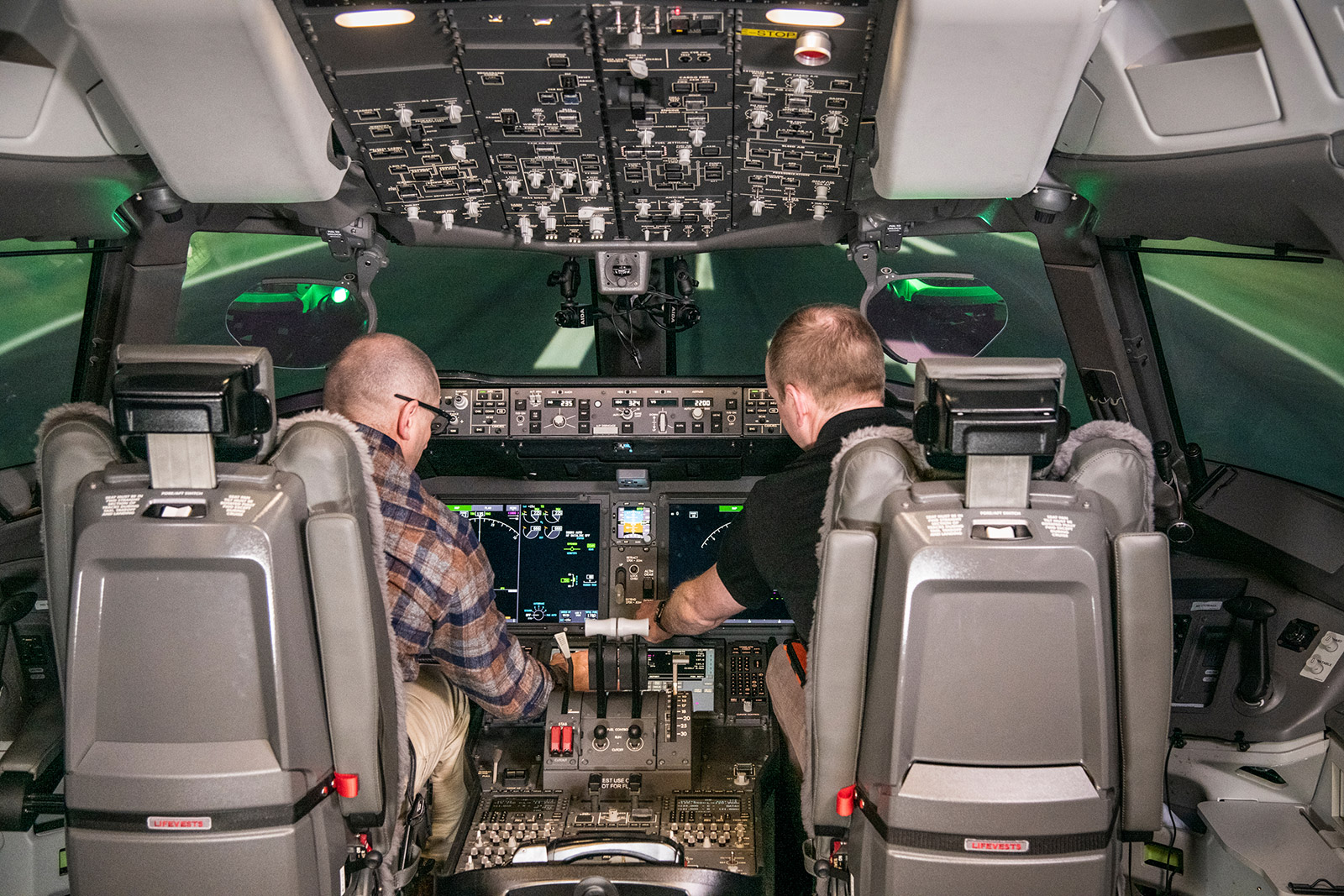
Capts. Gary Mandy (left), 777X chief technical pilot, and Tanner Sims, Engineering test pilot, develop operational scenarios presented to airline crews in the 777-9 simulator. (Marian Lockhart photo)

Airline pilots from around the world helped complete the fourth and final phase of simulator evaluations to show the 777-9 flight deck enables crews to safely perform all necessary tasks. The multi-year effort, led by Boeing engineers and pilots, involved more than 200 customer pilots.

The 777-9, the world’s largest twin-engine jet, is the first Boeing airplane to use simulator evaluations with airline pilots to help show compliance with the newest human factors regulations governing flight deck design.

  • The FAA issued updated guidance on human factors following the Aircraft Certification, Safety & Accountability Act passed in 2020 and born out of learnings from the 737 MAX accidents in 2018 and 2019.  
  • “This is the first time we’re taking a look at the flight deck in its entirety against these new human factors regulations,” said Capt. Tanner Sims, Engineering test pilot.

Human factors focus: Human factors involves designing and developing the interfaces between a product or service and the people who will operate, maintain, support, build or use it. Its goal is to optimize how humans interact with a given system.

  • “You could think of Phase 4 as the graduation event for this flight deck,” said Arjun Rao, flight deck engineering manager.

What they did: For this phase, crews from five customer airlines participated in flight scenarios in Boeing’s Seattle simulator, ranging from full gate-to-gate flights to partial scenarios evaluating a specific aspect of the design. When Boeing intentionally introduced system malfunctions during the flight profiles, crews took appropriate actions, followed checklists to address the issue and completed the simulated flight to a safe landing.

  • “Each crew was completely naïve to what we were testing,” said Sims. “We wanted their true, unbiased reaction to a particular situation.”

Boeing teams observed and documented pilots’ decisions and interactions with hardware and systems.

  • “We were looking at everything – at the flight deck, checklists, alerting – it’s all-encompassing,” said Capt. Gary Mandy, 777X chief technical pilot.

The team dedicated months to craft the scenarios to mirror real-world operations.

  • “We extensively researched and relied heavily on our tech pilots with commercial experience to help us match the look and feel of a revenue flight,” said Yoslin Herrera, flight test engineer.
  • “We wanted to present the most realistic situation, as if an airline crew were starting their normal day,” said Mandy, who has more than 20 years of operational experience flying Boeing widebody airplanes. “Every part of this was highly rehearsed and trained.”

Customer reactions: Participating pilots relayed their enthusiasm for the experience – and the 777-9.

  • “We can’t thank you enough for including us in the 777-9 human factors testing,” said one participating pilot. “I’m excited for the delivery of the outstanding 777-9.”
  • “It was a truly unique experience to work with you,” another airline pilot shared. “I had a wonderful time and learned a lot from it…I am looking forward to flying the [newest] 777.”

What’s next: The program will submit data from the study to the U.S. Federal Aviation Administration to support certification of the airplane. Delivering the first jet in 2027 is a key priority for Boeing.

The insights gained will also benefit future Boeing airplanes, the team said.

  • “As a pilot, I appreciate a well-designed system, from displays to switches to interaction with procedures,” said Sims, Engineering pilot. “This effort helps us validate our design and understand even more deeply how we can make our airplanes the best we can for the pilots who operate them.”
  • “When I see the first 777-9 being delivered, I’m going to have a tear in my eye because my team was part of this journey,” said Rao, flight deck engineering manager.
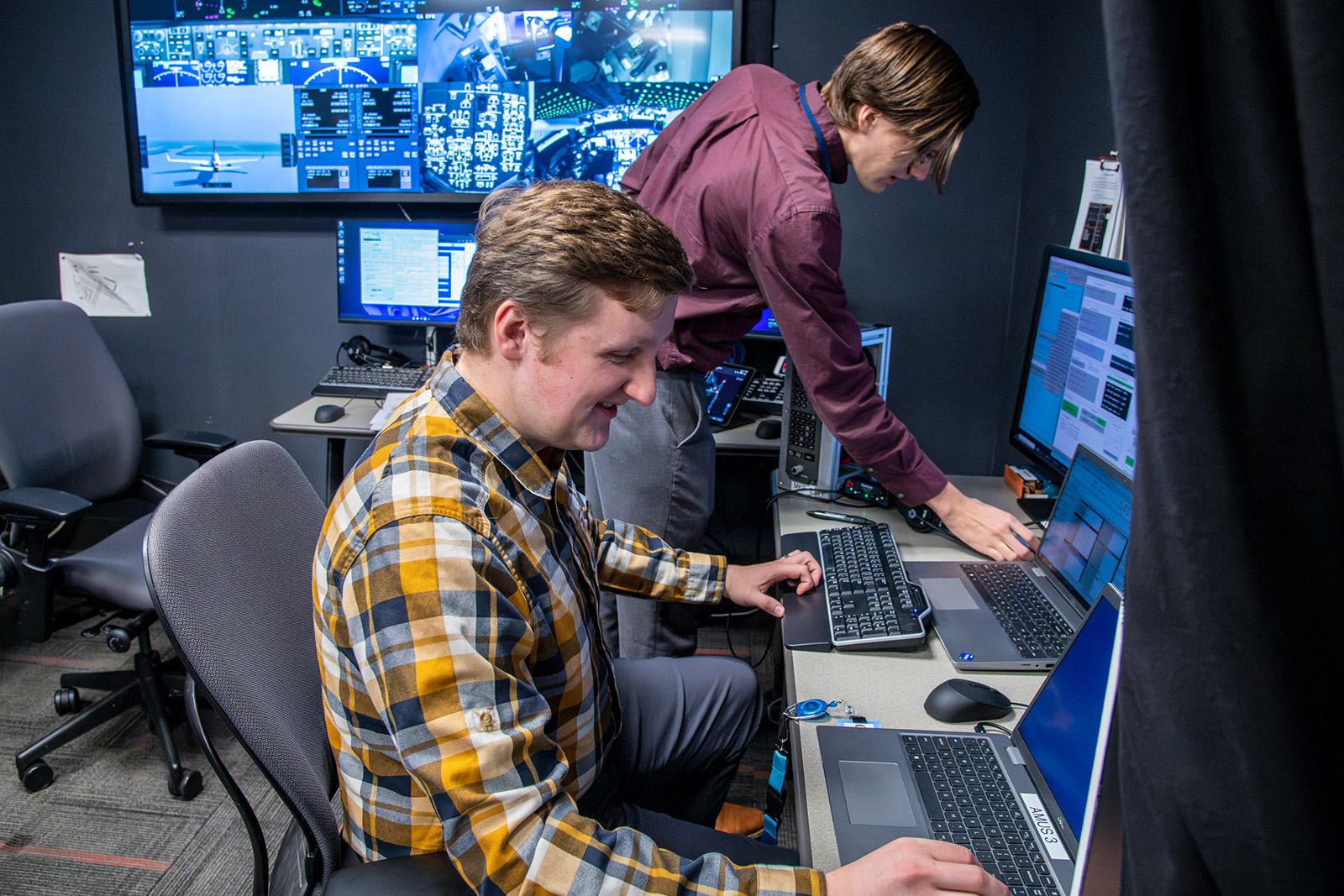
Engineers Keith Spitzer (foreground) and Ryan Check configure Boeing’s engineering simulator in Seattle. (Marian Lockhart photo)

A meaningful moment: Ryan Check, a second-generation Boeing engineer who stepped into the role of an air traffic controller during the evaluation, said the experience was a career highlight.

  • “I always dreamed of working at Boeing, and it’s the best job in the world,” Check said.

Flight deck enhancements: The 777-9 flight deck was designed to achieve a high level of commonality with the 777 and 787 Dreamliner while incorporating advancements for flight crews, including:

  • Large-format displays with touchscreen capability.
  • The option for dual head-up displays like the 787 Dreamliner.
  • A redesigned pilot seat that offers greater comfort.
  • A unique control and indicator for the 777-9 folding wingtips that clearly highlights whether wingtips are extended, in motion or folded.

By the numbers:

  • 4: Phases in the 777-9 flight deck human factors evaluation, spanning three years
  • 7: Locations where testing was conducted (Dubai, Frankfurt, Gatwick, Hong Kong, Miami, Seattle, Singapore)
  • 70: Approximate number of flight scenarios developed
  • 118: Days of testing
  • 200+: Airline pilots who participated
  • 800: Hours of preparation in Boeing’s engineering cab for the fourth phase, in more than 150 planning sessions
  • 10,000+: Notes written by observers to document information and responses to the simulated conditions in the fourth phase
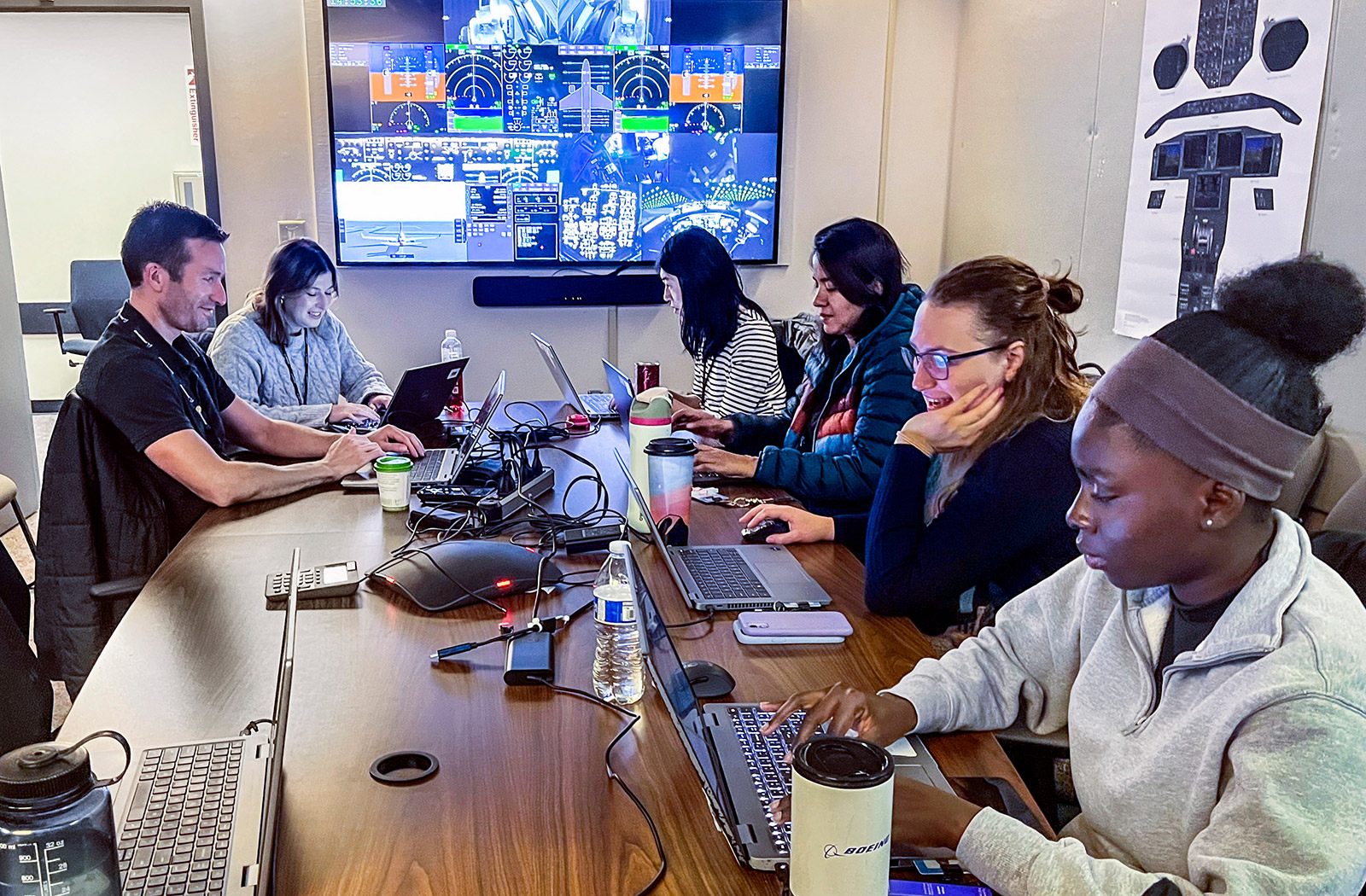
Engineers Brad Gilmer, Miriam Binman, Susan Cheng, Shipra Gupta, Erin Malooly and Arame Sow prepare to observe airline crews and document pilots’ interactions with the flight deck and each other. (Marian Lockhart photo)