
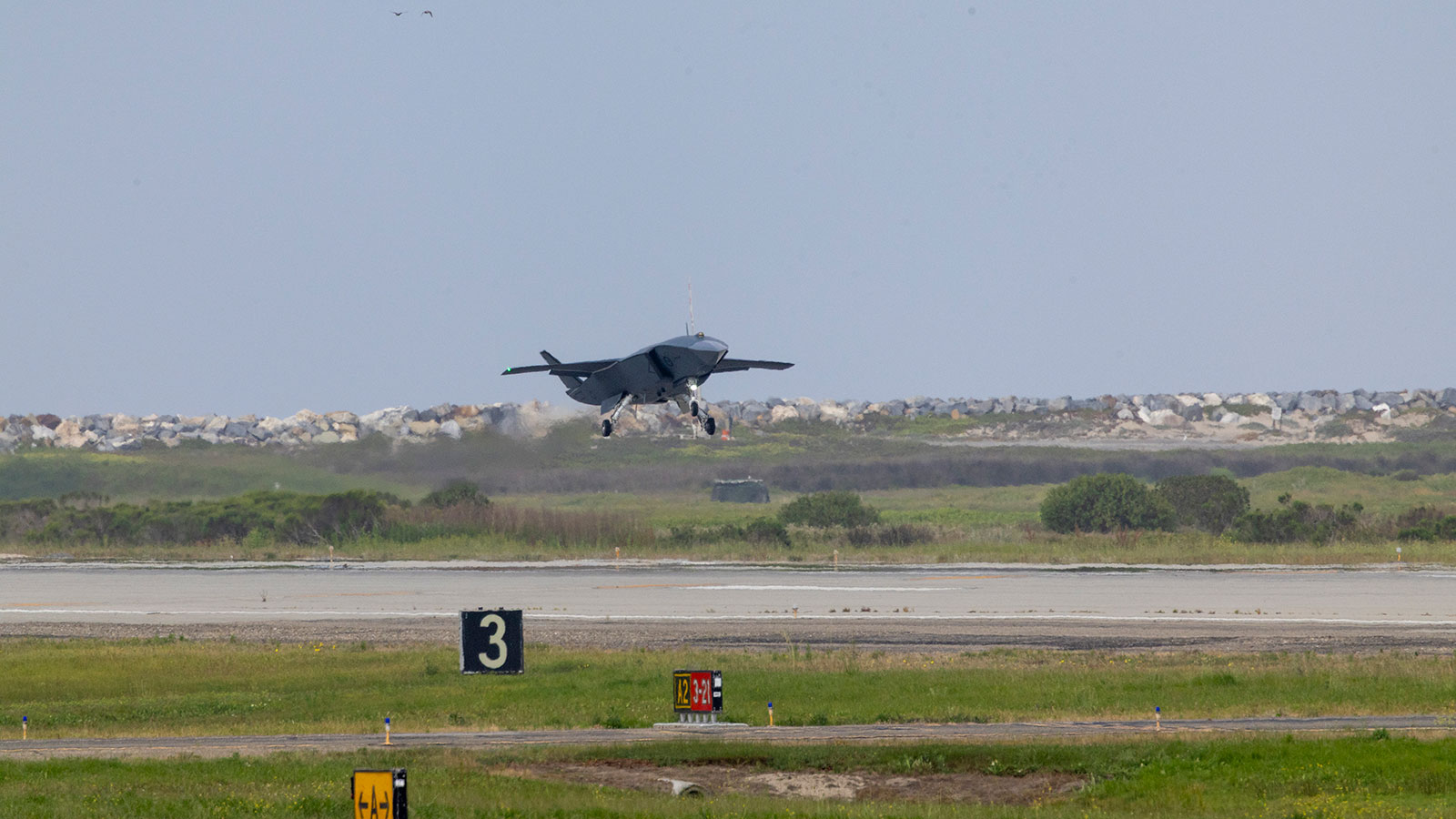
The MQ-28 recently completed three operational flight tests on the Point Mugu Sea Range at U.S. Naval Base Ventura County, Point Mugu, California, to validate autonomous operations and demonstrate rapid deployment and sustained operations from an allied location.
- The deployment is the Australia-developed MQ-28’s first international operation in allied airspace and signals growing global interest in uncrewed autonomous combat capability.
Why it matters: This testing shows the MQ-28’s ability to operate seamlessly from allied facilities, which helps Boeing demonstrate the aircraft’s maturity and potential export opportunities to international customers outside Australia.
- “The activity at Point Mugu is part of Boeing’s ongoing flight test program to mature the MQ-28 and demonstrate operations from allied locations,” Glen Ferguson, MQ-28 global program director said. “MQ-28 is using this location to further prove the maturity of the program and inform future exportability.”
How they did it: Tests at Point Mugu validate autonomous systems while following required airspace, range safety and regulatory approvals.
- MQ-28 took flight three times, each for a specified amount of time, over the Pacific Ocean.
- Range safety procedures, certified range assets and coordination with authorities are used to mitigate risk.
The big picture: MQ-28 is part of a broader Boeing family of systems designed to be modular, affordable and to reduce risk to crewed platforms. Developed by Boeing Australia and supported by the Royal Australian Air Force, the aircraft’s flexible design underpins diverse mission sets and payload integration, enabling customers to tailor capabilities to their requirements.
By Amy Dukes