
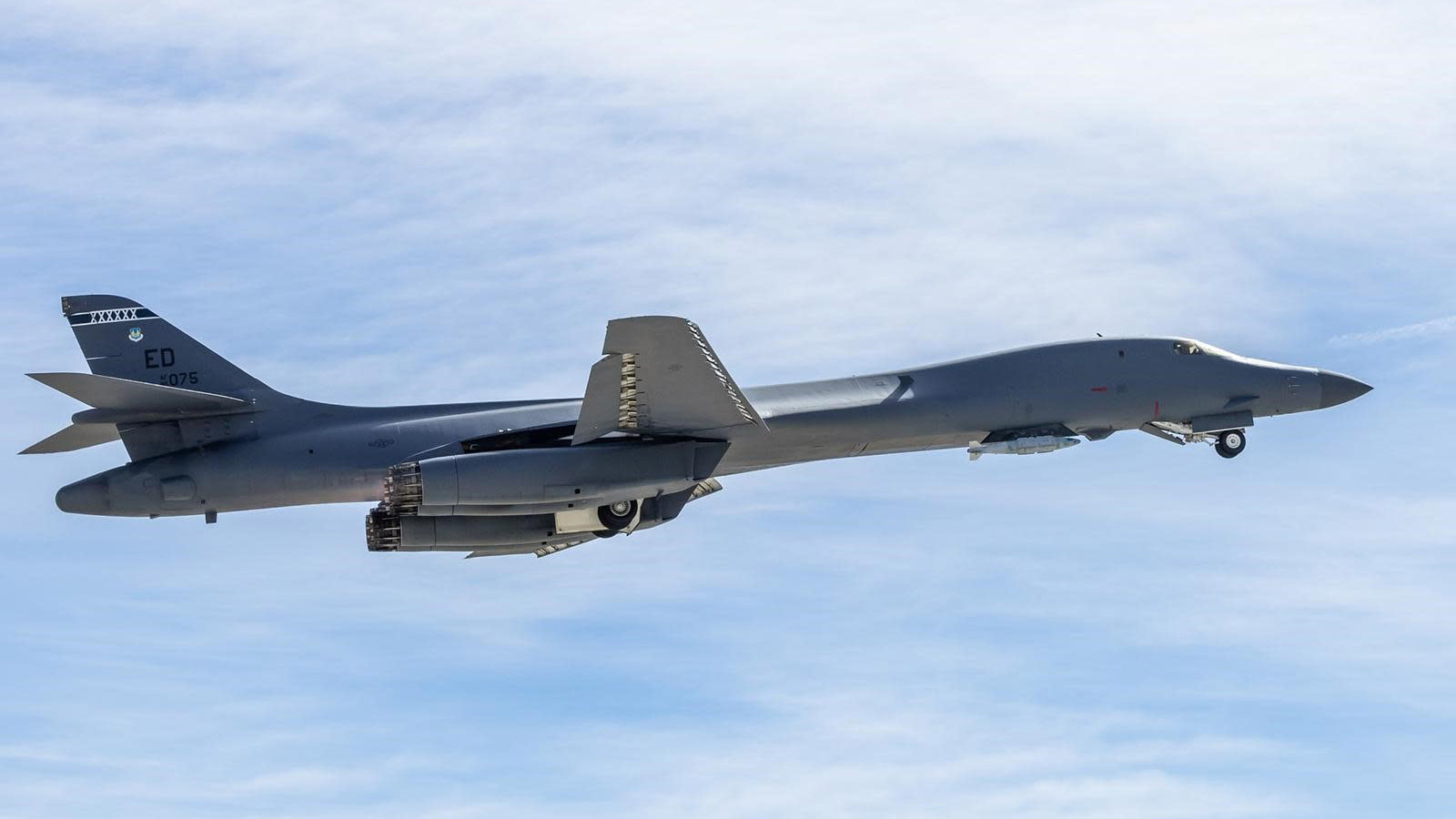
Engineers at the Boeing Oklahoma City site recently completed the preliminary design review (PDR) for integrating the Load Adaptable Modular (LAM) pylon onto the B-1.
Why this matters: This design milestone increases mission flexibility for the B‑1 with external payload options, including the potential to integrate advanced munitions like hypersonic missiles and future standoff weapons. That added capability helps ensure the B-1 remains a relevant, capable platform as the U.S. Air Force modernizes its bomber fleet.
- “This team’s innovation helps make this possible,” said Lynsay Brannock, Boeing B-1 program manager. “Without things like the LAM pylon, we would not be where we are today and finding new ways for this aircraft to support a variety of missions.”
How it works: The LAM pylon mounts to the B‑1 using six existing hard points that were originally intended for external carriage of the Air-Launched Cruise Missile.
- Those hard points have largely gone unused since the removal of the aircraft’s nuclear role under the Strategic Arms Reduction Treaty. The pylon repurposes them for new payloads.
How they did it: The Oklahoma City team developed much of the LAM concept under Boeing Independent Research and Development, giving the program a head start and accelerating delivery.
- “This is only just the beginning of the incredible things we can do to support this aircraft,” Brannock said. “Our team is committed to finding new capabilities for this aircraft that gives commanders more options and keeps the B-1’s place a pillar of the USAF’s bomber fleet.”
The big picture: Work like this is happening as the Air Force commits significant funding to keep the bomber fleet modern and ready. Investments now planned for the B-1 and B-2 through the next five years make clear that practical upgrades are central to keeping speed, range and striking power available for the U.S. Air Force.
- “This increased customer investment reflects the Air Force’s need to preserve proven capabilities while fielding next‑generation systems,” said Jayson Ridge, executive director, Bombers Modifications & Upgrades. “They’re funding upgrades like the LAM pylon because practical, cost‑effective improvements buy operational flexibility, speed and range for commanders today — and they buy time for a smooth transition to future platforms.”
What’s next: The PDR included leaders from Air Force Materiel Command, along with key industry suppliers helping drive the program toward critical design review, aircraft modification, and the ground and flight testing needed to field the capability rapidly.
- “This design milestone shows mission-focused engineering turning local innovation into true peacekeeping capability,” Ridge said. “OKC Bombers teammates achieved this design milestone with the discipline and collaboration required to keep platforms like the B-1 relevant and ready — just what the warfighter deserves.”
By Peter Agnitsch