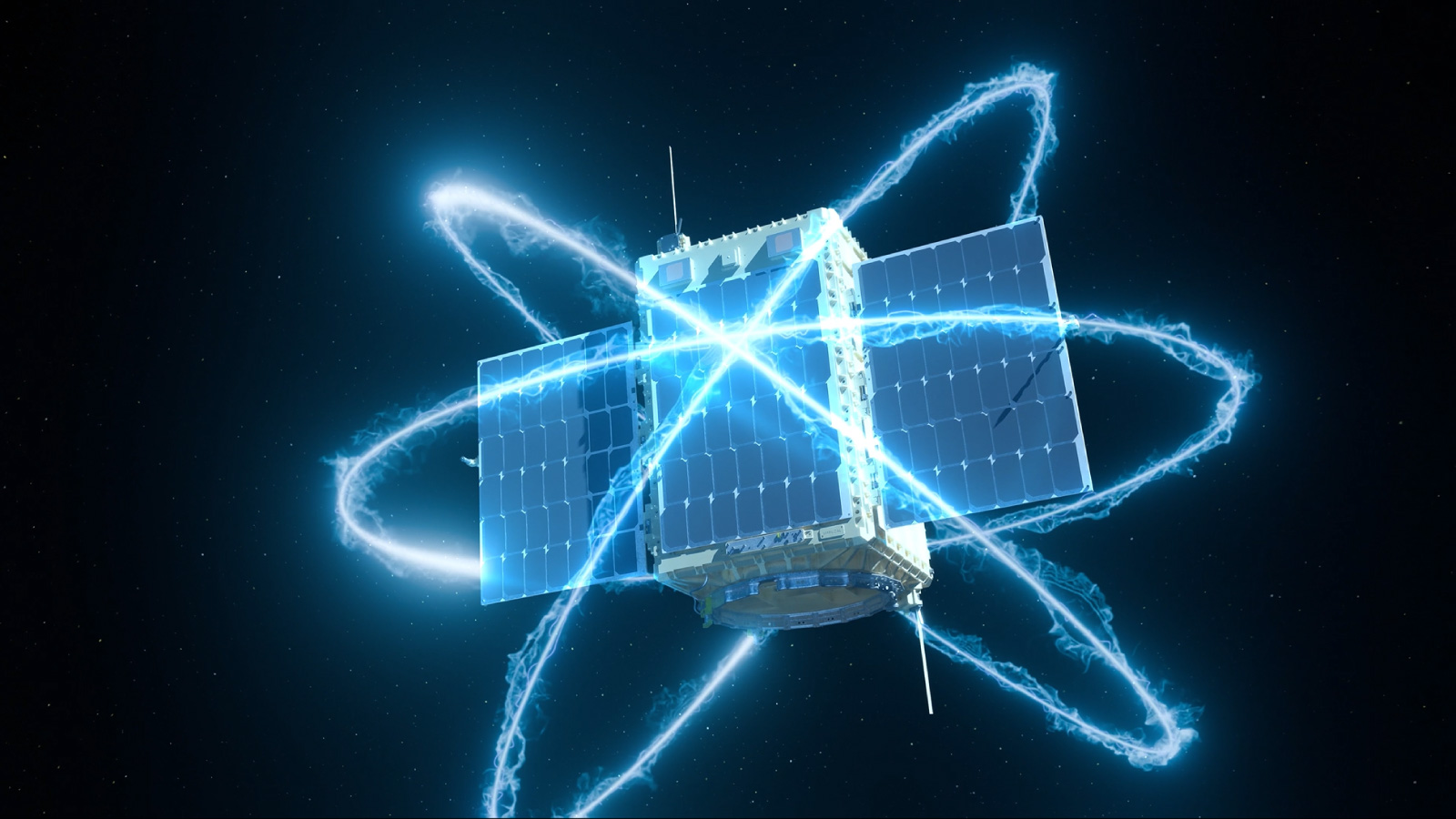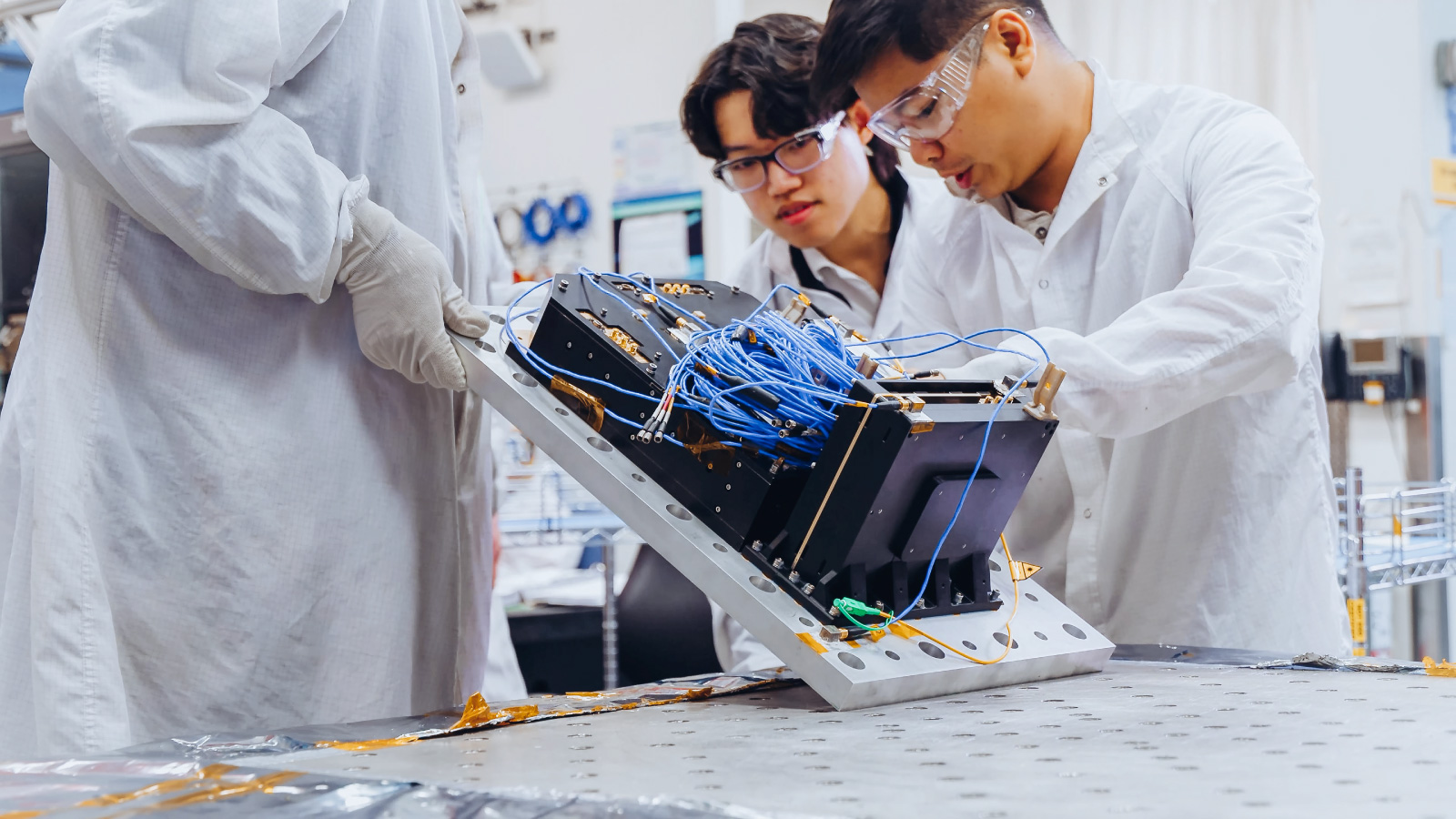
Boeing has reached a major milestone in its effort to help build a future global quantum internet, successfully demonstrating a key quantum networking capability on compact, space-qualified flight hardware and moving the Q4S mission into final spacecraft integration.
- The achievement marks meaningful progress for Q4S, Boeing’s pathfinding quantum networking mission, which is designed to test whether entanglement swapping can work on hardware rugged enough for launch and orbit.
- The mission is planned to launch in 2027 and operate for about a year in space.
Why it matters: Quantum networking is still early, but the stakes are big. A global quantum internet could one day connect distant sensors, clocks and computing systems with greater precision, stronger network integrity and more resilient communications. For Boeing, Q4S is about proving that one of the field’s core building blocks can move out of the lab and into a real mission environment.
- Quantum experiments often depend on large, delicate lab equipment and generous power budgets. Space offers none of those luxuries. Hardware has to be compact, durable and efficient enough to survive launch, operate in orbit and still deliver meaningful performance.
Driving the news: Boeing did not just show the concept in theory. The team demonstrated high-fidelity entanglement swapping during ground testing on a compact, space-qualified payload, then completed environmental qualification testing and delivered the flight hardware for final spacecraft integration.
- Lane Ballard, Boeing chief technology officer, said the goal is to turn a promising scientific capability into something useful in the real world.
- “Q4S is about taking an important quantum capability and proving it on mission-ready hardware,” Ballard said. “That is how breakthrough science becomes useful technology.”
How it works: At the center of the Q4S mission is entanglement swapping, a quantum networking process that helps extend quantum links beyond simple point-to-point connections. That matters because future quantum networks will need ways to connect information across much larger distances.
- If that capability matures, the long-term implications could stretch well beyond a single demonstration mission. Quantum networks could eventually support more precise timing for navigation and distributed systems, help verify the integrity of critical links, and enable new sensing architectures across air, ground, sea and space.
- Over time, they could also help connect advanced quantum sensors and quantum computers across global distances.
The big picture: Q4S is not just a one-off science exercise. It is part of Boeing’s broader effort to move quantum networking toward practical aerospace and defense applications.
- Jay Lowell, chief scientist for Boeing’s Quantum Systems organization, said that is why performance under real mission constraints matters so much.
- “One of the hardest parts of quantum networking is maintaining strong performance while working within the size, weight and power limits of a spacecraft,” Lowell said. “These test results show that we can produce high-fidelity swaps on a payload engineered for space, not just for a controlled lab bench. That is a meaningful step toward practical quantum networks.”
What’s next: As Boeing moves Q4S toward launch, the team expects the mission to generate data that helps shape future quantum networking architectures and informs follow-on systems. Boeing also expects to submit technical results from the program for peer review.
By Zeyad Maasarani