
From June 20 to July 5, nine Founding-era documents of the United States, transported by the National Archives Freedom Plane to commemorate America’s 250th anniversary, will be on display at the Museum of Miami in Florida. This stop is especially fitting, given Florida's illustrious achievement as the birthplace of commercial air travel. To honor that, Boeing looks at a piece of American aviation history that defined an era and the Florida-based company that helped revolutionize an industry – Pan American World Airways.
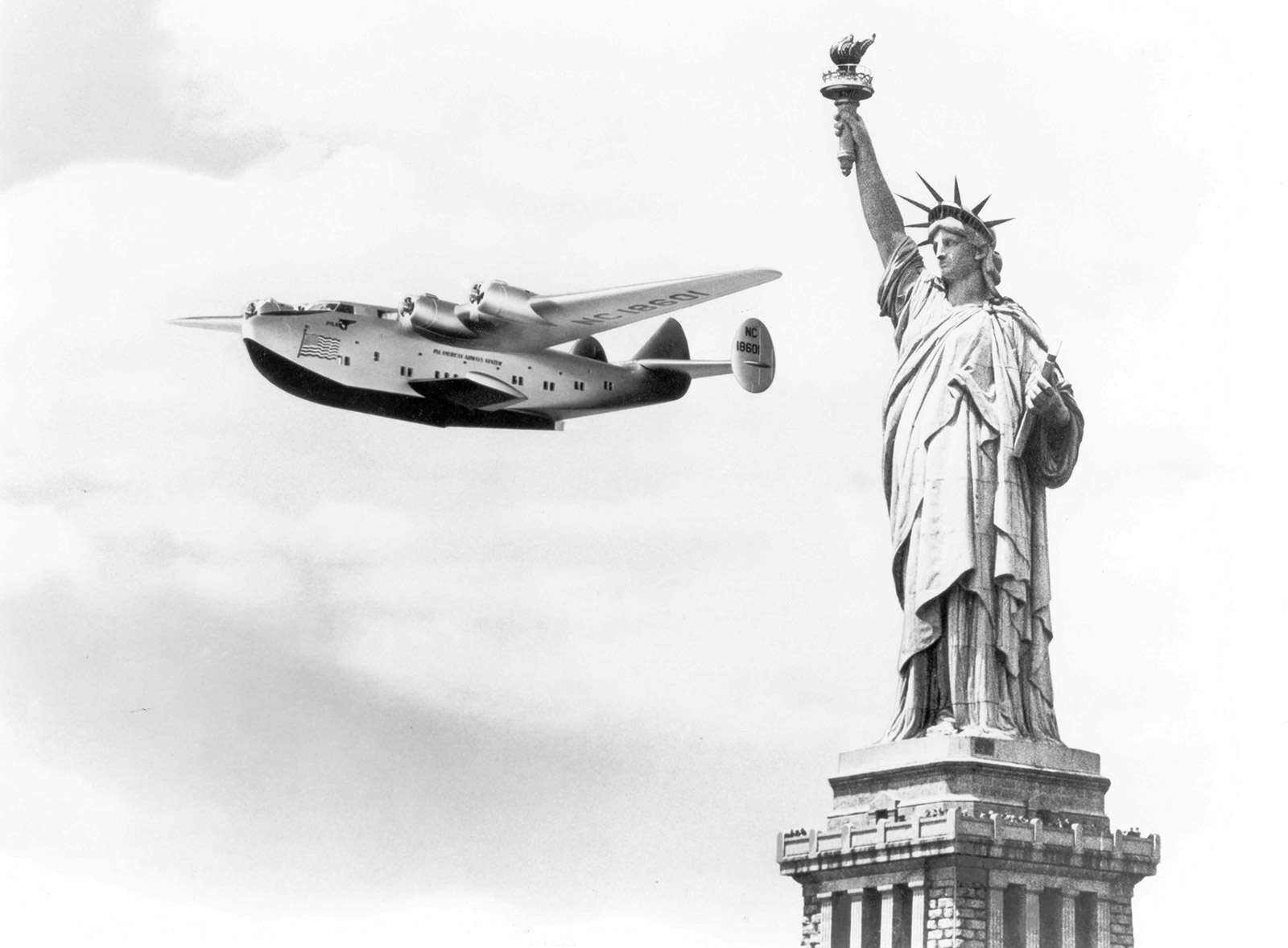 Pan American Airways B 314 passing the Statue of Liberty postcard, 1939. Public Domain.
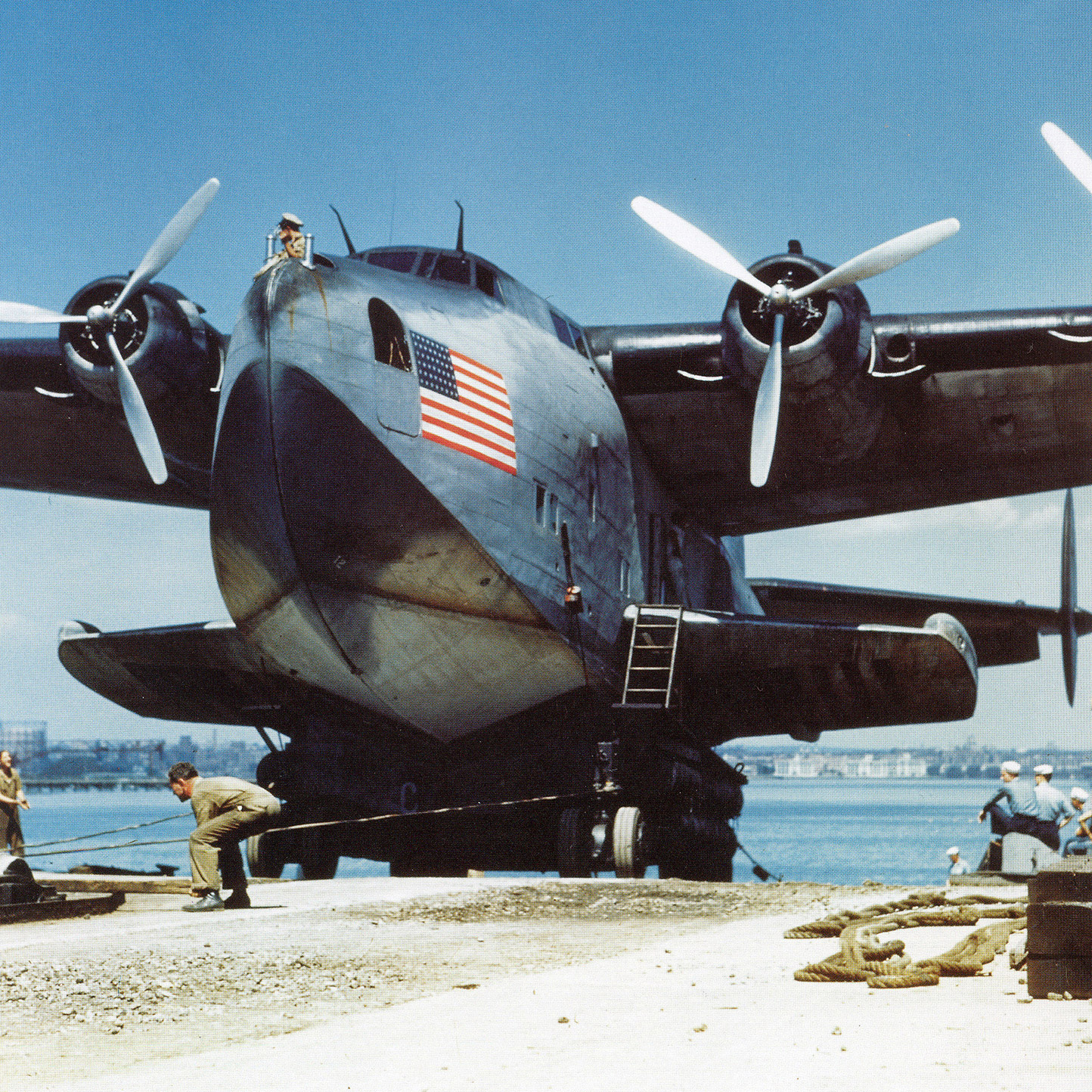 Maintenance performed on PAA B314, c. 1930s. Photo: Pan Am Historical Foundation
On July 21,1936 Pan Am awarded Boeing a contract for six Model 314 Clippers. While not Boeing’s most successful airplane, the clipper would become an iconic symbol of the Golden Age of Aviation, a time in American history where commercial air travel boomed. Airplanes became more popular, travel became more glamorous, and airlines like Pan Am set the standard for the customer experience.
By the time Boeing sold the first Clipper to Pan American, 22 years had passed since the world’s first commercial flight. On January 1, 1914, pilot Tony Jannus flew former St. Petersburg mayor Abram C. Pheil 21 miles across Tampa Bay in a Benoist XIV flying boat. The flight was 23 minutes, and the passenger paid five dollars. Thus began the history of commercial air travel.
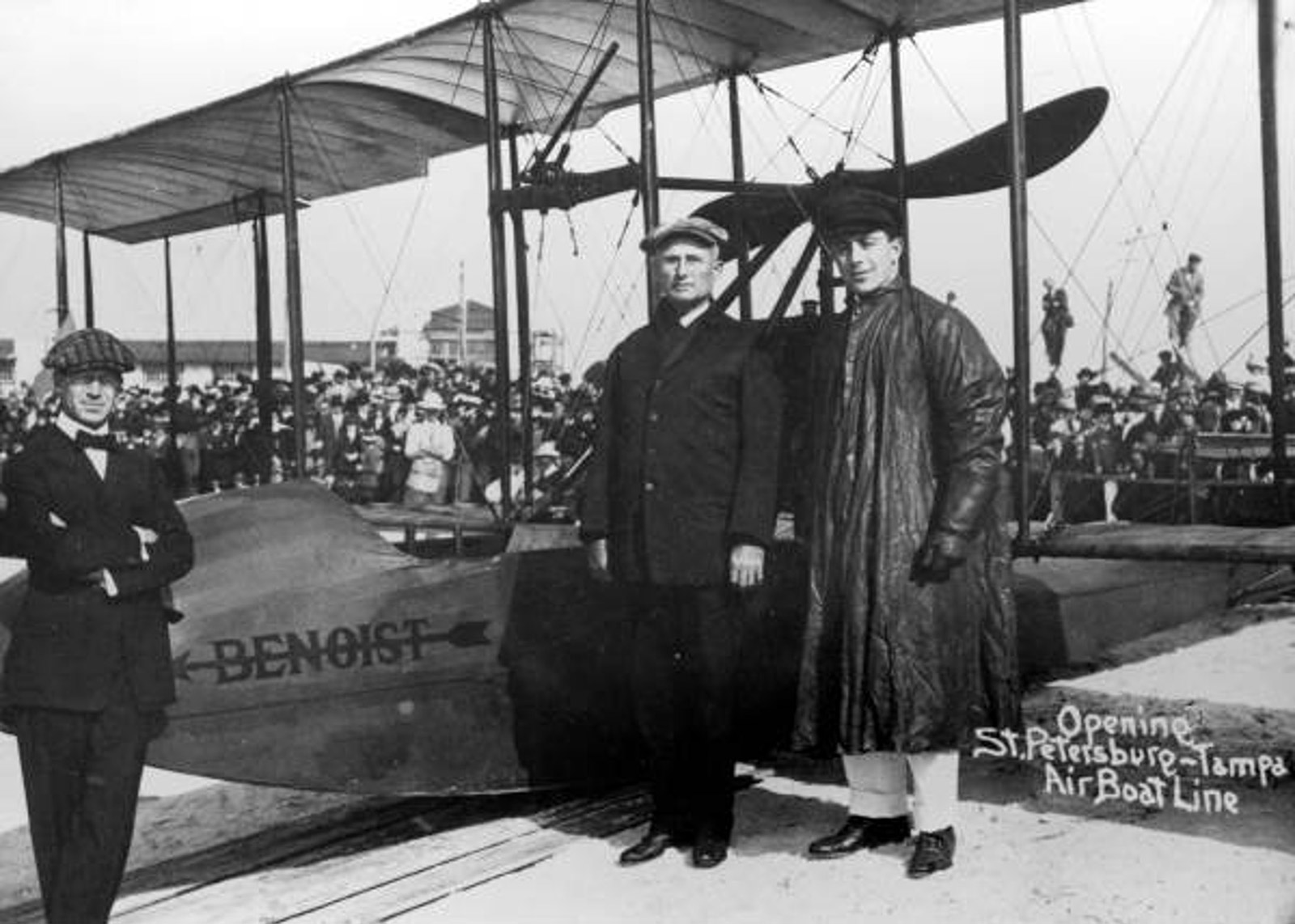 First commercial flight, 1914. Public Domain.
In 1927, Juan Trippe co-founded Pan American Airways, headquartered out of Key West, FL. Operations officially launched in October of that year with an airmail flight from Key West to Havana, Cuba. Scheduled passenger flights began in January of 1928.
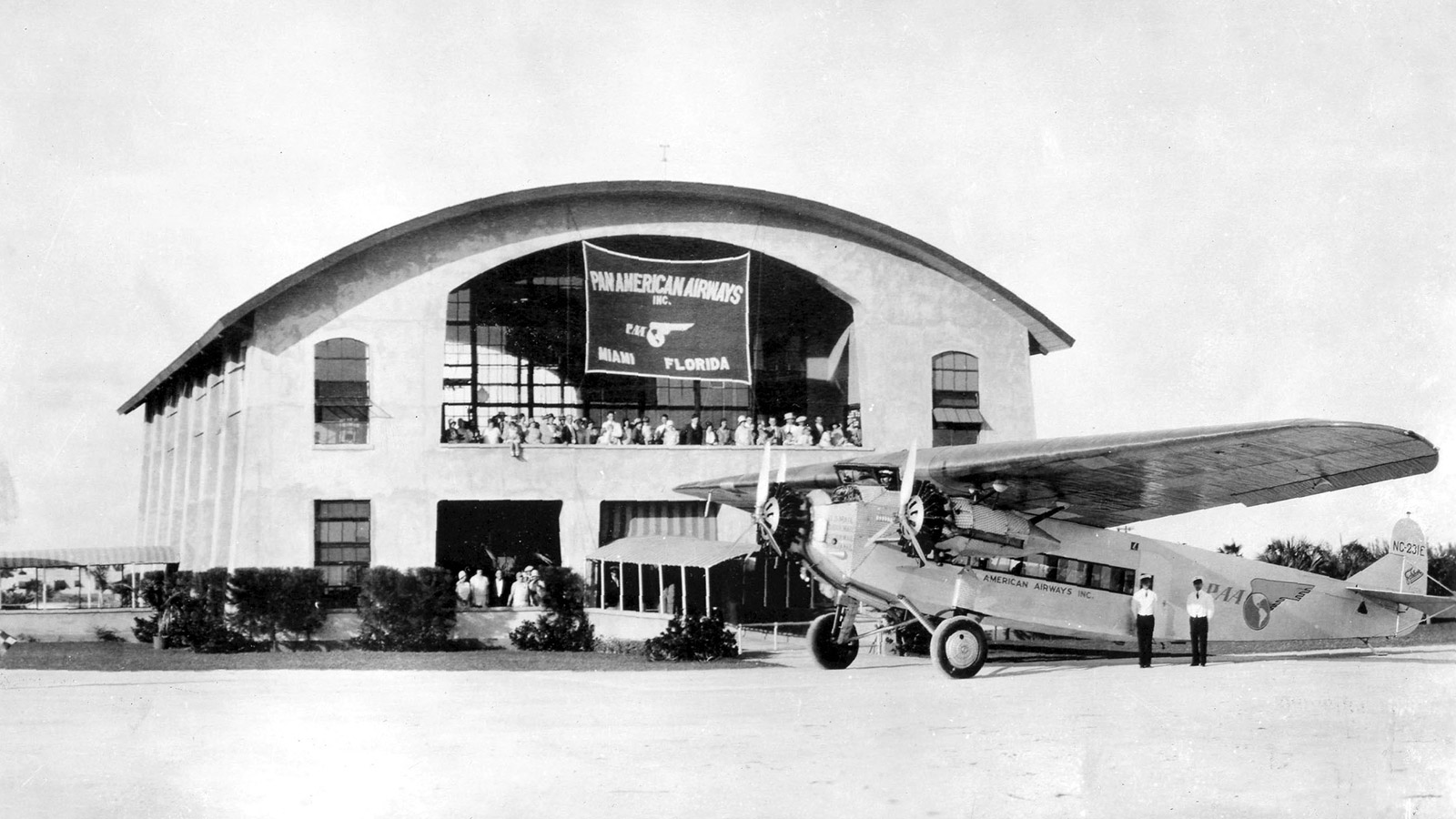 Fokker F-10 at Pan American Field, Miami, FL., c. 1930s. Photo: Pan Am Historical Foundation.
The official “Golden Age” of aviation took place during the interwar years, the time between the two world wars (1919-1939). As the airplane industry became more prominent, technological advances and piqued public interest made it possible for companies to expand their services. When Charles Lindbergh made his famous solo flight across the Atlantic in 1927, the public's eagerness to fly rose to an all-time high.
Boeing Air Transport, an airline formed to carry the mail in 1927, capitalized on this with the Model 40, a Boeing airplane designed to carry both mail and passengers. (Two passenger seats were added to the 40A, and four to the 40C.) The following Model 80A became the company’s first airplane designed for passenger comfort. Flown by Boeing Air Transport (later United Air Lines), it was also the first plane to have flight attendants.
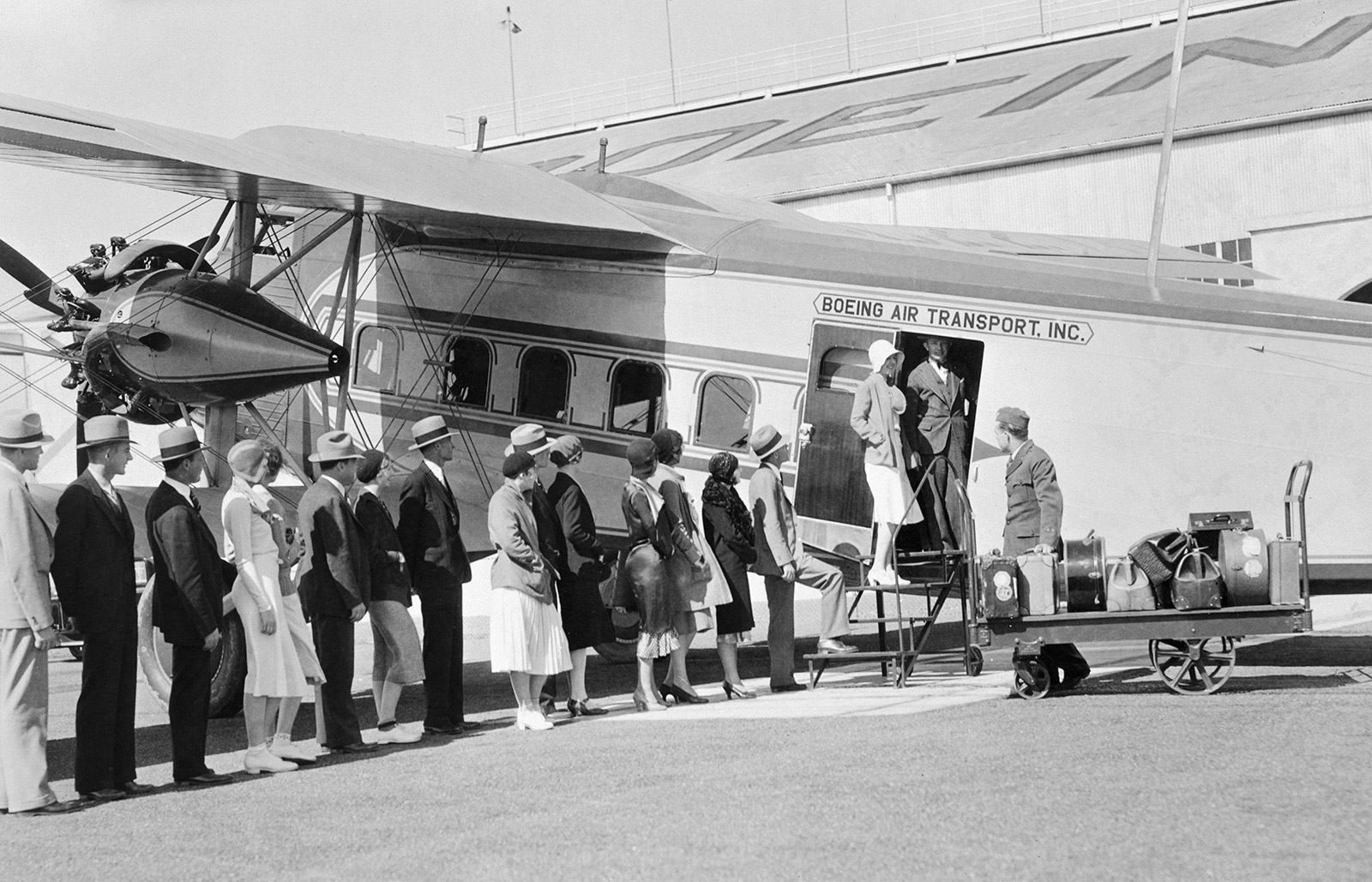 Passengers boarding the Model 80A, 1930.
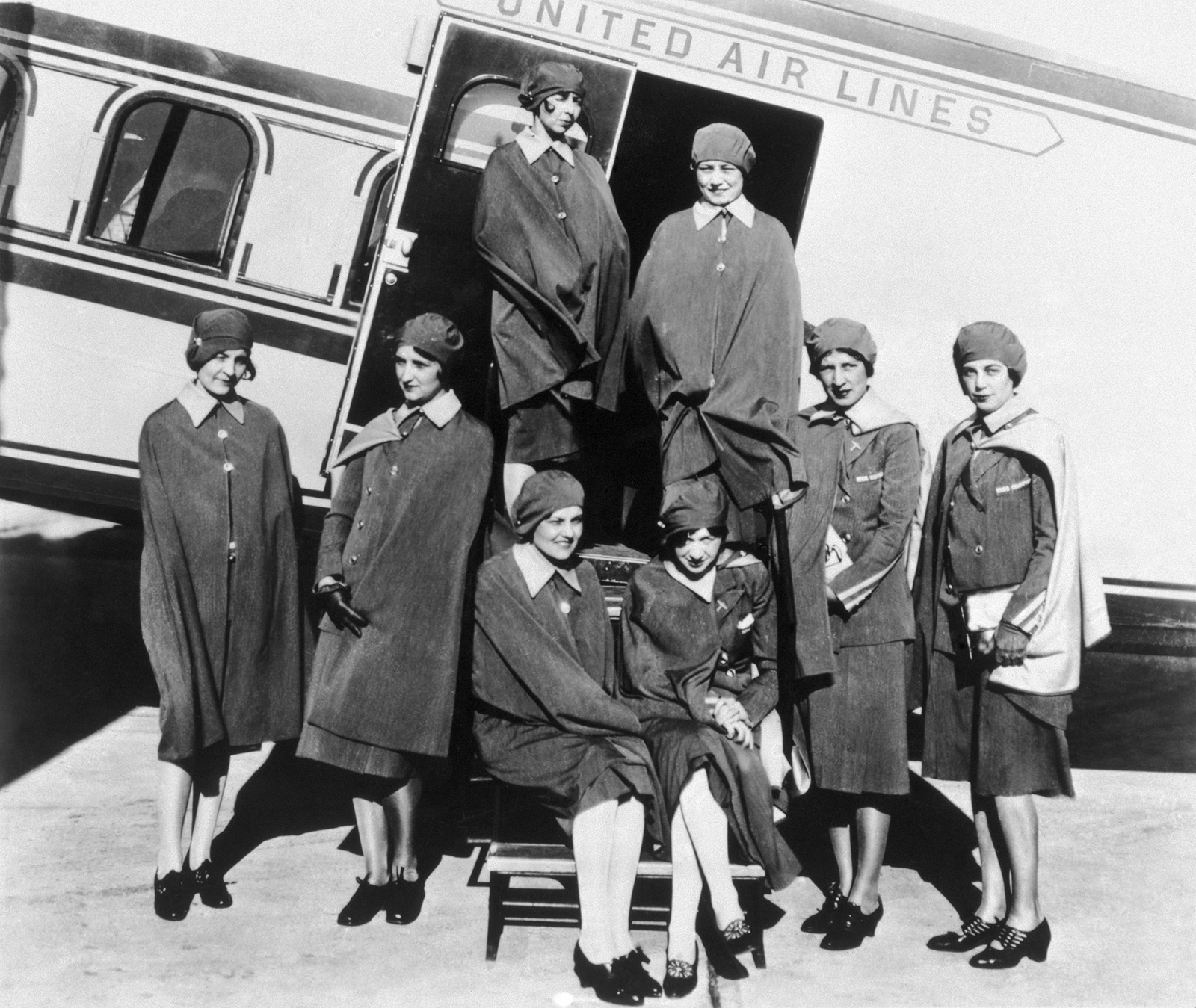 Ellen Church and “The original eight” c. 1930. Started by Ellen Church and Boeing Air Transport, the world’s first female flight attendants were registered nurses tasked with ensuring customers felt safe.
In 1933, Boeing’s Model 247 made its inaugural flight. This revolutionary all-metal aircraft would go down in history as the world’s first modern commercial airliner. It would also set the stage for airline companies who were looking for airplanes to expand their fleets.
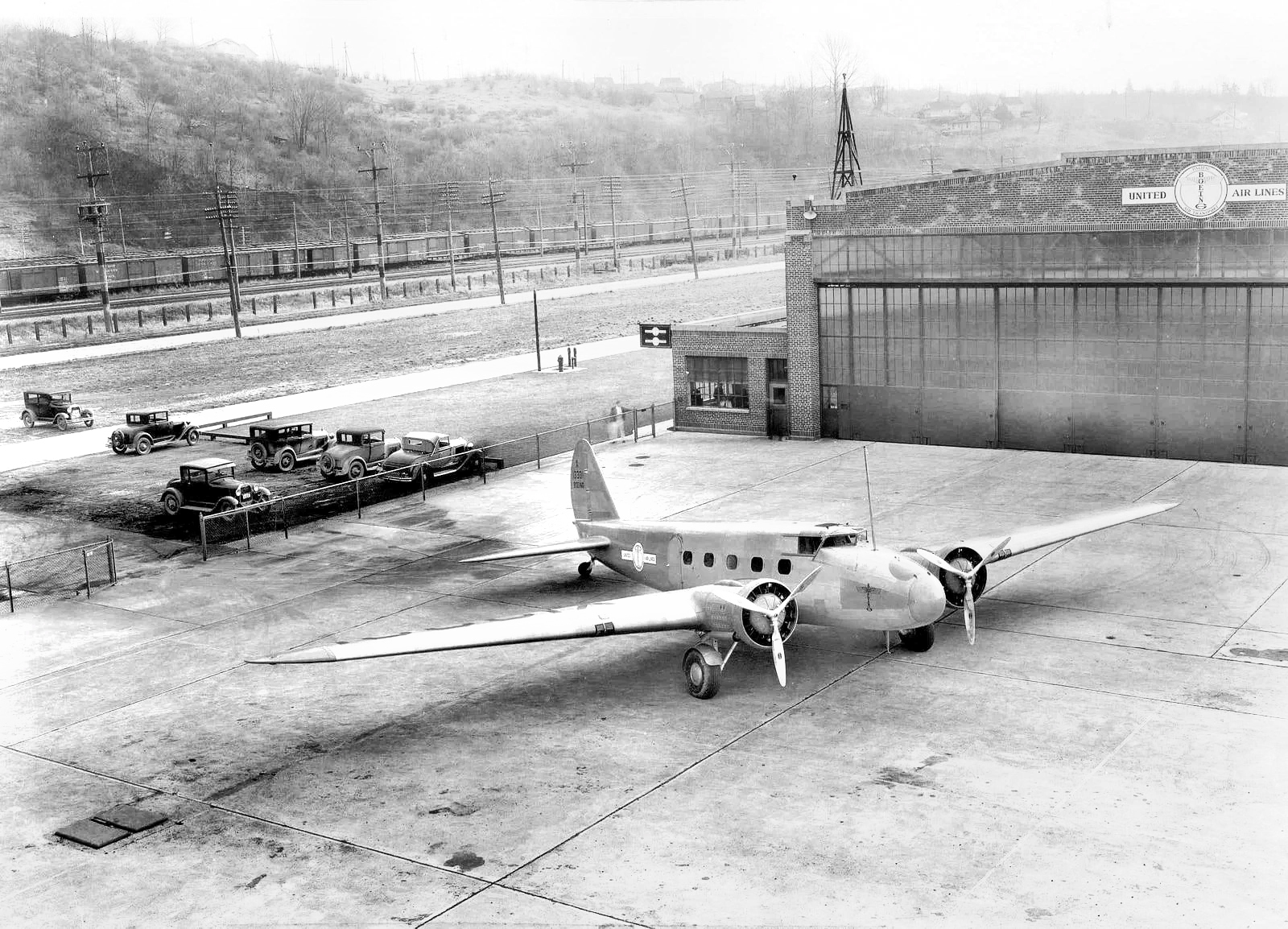 United Airlines Model 247, 1933.
The Model 247 was also the inspiration for the airplane that would reshape the commercial industry – the DC-1. The DC-1 was a prototype designed by the Douglas Aircraft Company upon the request of Jack Frye of Trans World Airlines (TWA) after Boeing turned down his order for 247s due to a backlog of orders for United. Frye took his business elsewhere and the DC-series was born.
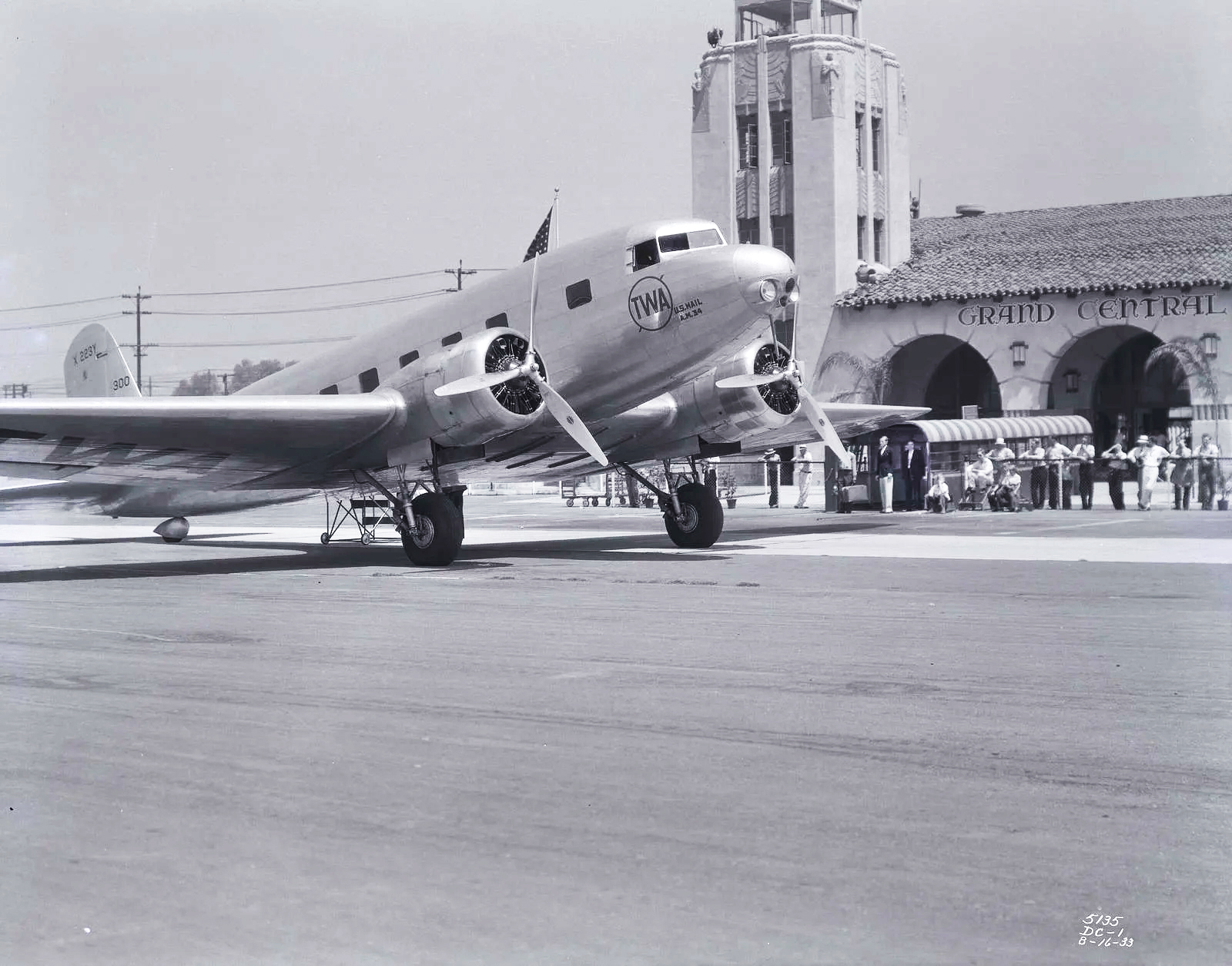 TWA’s DC-1 in Santa Monica, CA, 1933.
The DC-2 followed, then the DC-3, which became the first airplane to successfully make a profit without government subsidies. By 1938, it accounted for approximately 95% of all commercial flights. The DC-3 flagship, the Douglas Sleeper Transport (DST), was the epitome of luxury. There were 14 plush seats in four main compartments, seven seats that could be folded down from the ceiling and another seven that could be folded into sleeping berths. American Airlines received the first DC-3 in June of 1936, and over the next two years, 30 airlines would purchase the airplane, including Pan American.
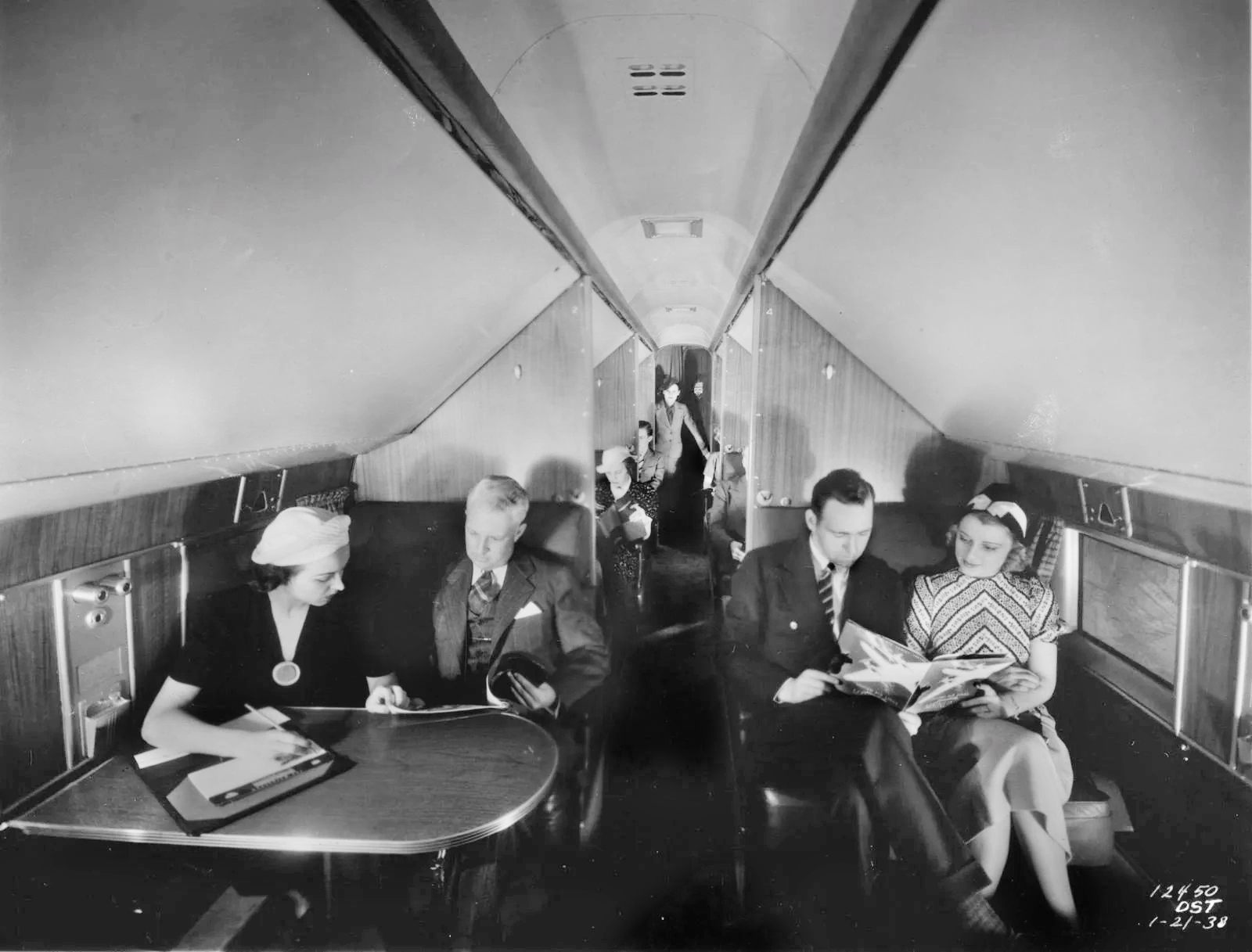 Interior of the DST, 1938.
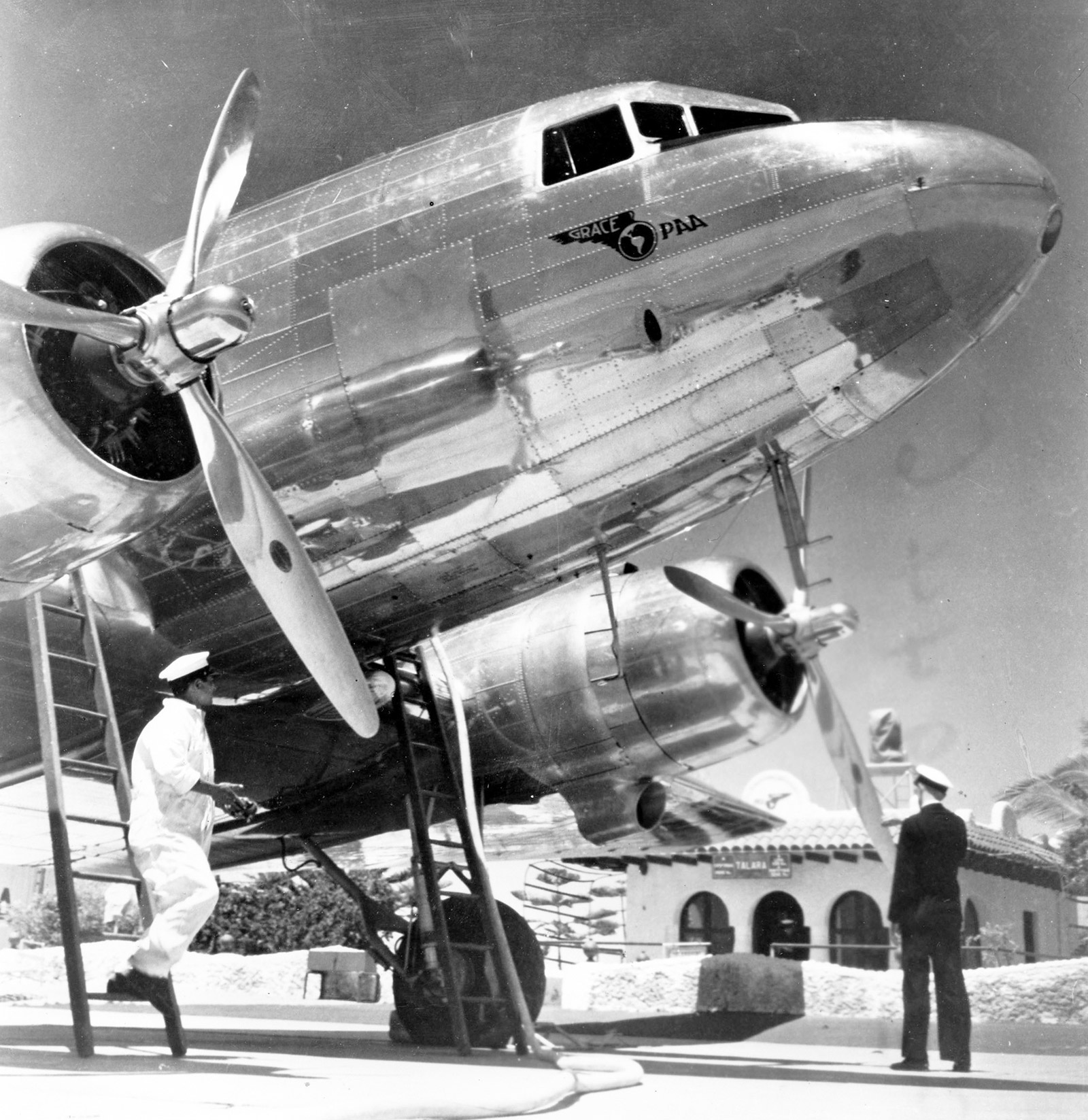 PAA DC-3 Panagra, c. 1930s. Photo: Pan Am Historical Foundation.
Pan American also became a pioneer of transoceanic commercial travel with their fleet of “Flying Clippers” – a combination of Boeing, Sikorsky and Martin aircraft. Routes to China, the Caribbean, Europe and Latin American expanded American’s horizons by making the world more accessible to the flying public. These flights were notoriously expensive, costing anywhere from $12,000 to $40,000 in today’s currency, but the opulence of Pan Am flights were a far cry from earlier commercial ones. With spacious interiors, full-service amenities and sleeping berths, the airplane had become a hotel in the skies.
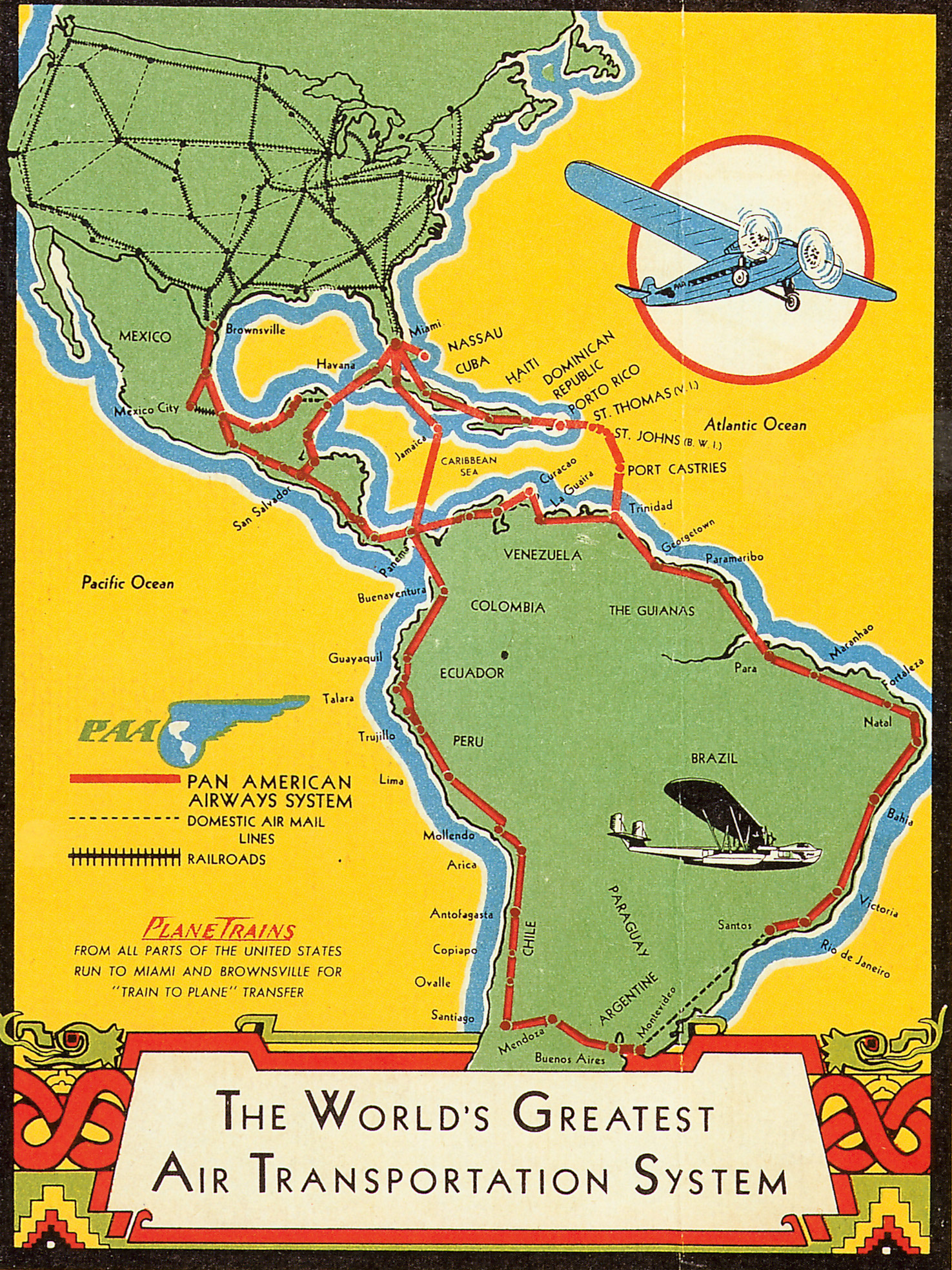 PAA Transportation map, c. 1930s. Photo: Pan Am Historical Foundation
Another revolutionary aircraft, the Boeing 307 Stratoliner (1939), was the first commercial airliner with a pressurized fuselage. While only 10 were built, the application of Boeing’s patented cabin pressure regulator, not only made travel more comfortable but safer. Airplanes like the popular DC-3 were only able to fly 8,000 to 10,000 feet but pressurization allowed the Stratoliner to fly up to 20,000 feet. This eliminated the need for the oxygen masks, reduced severe turbulence and helped alleviate altitude sickness. The new standard for high-altitude flying had been set.
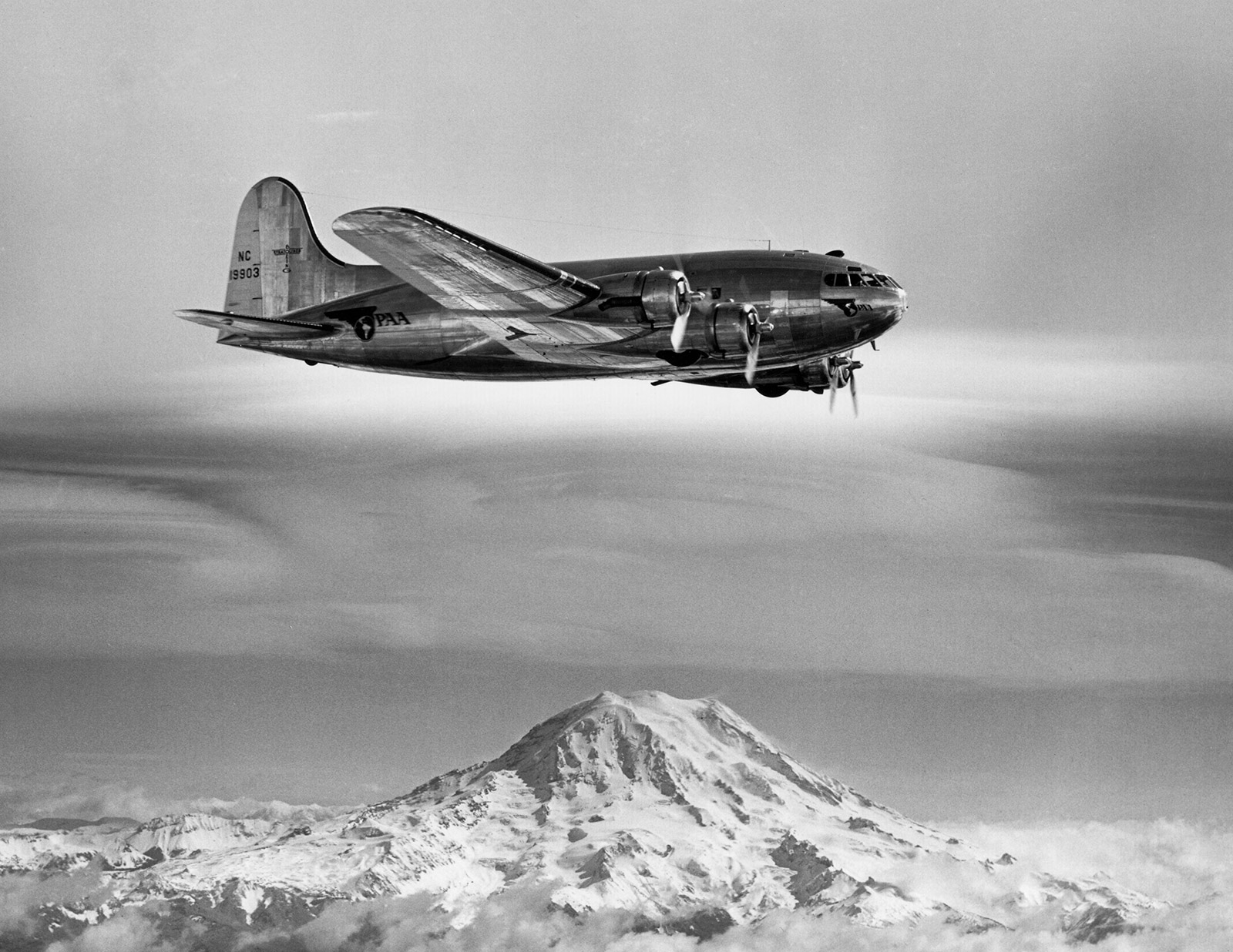 Pan American Stratoliner flies over Mt. Rainier. They would only purchase three.
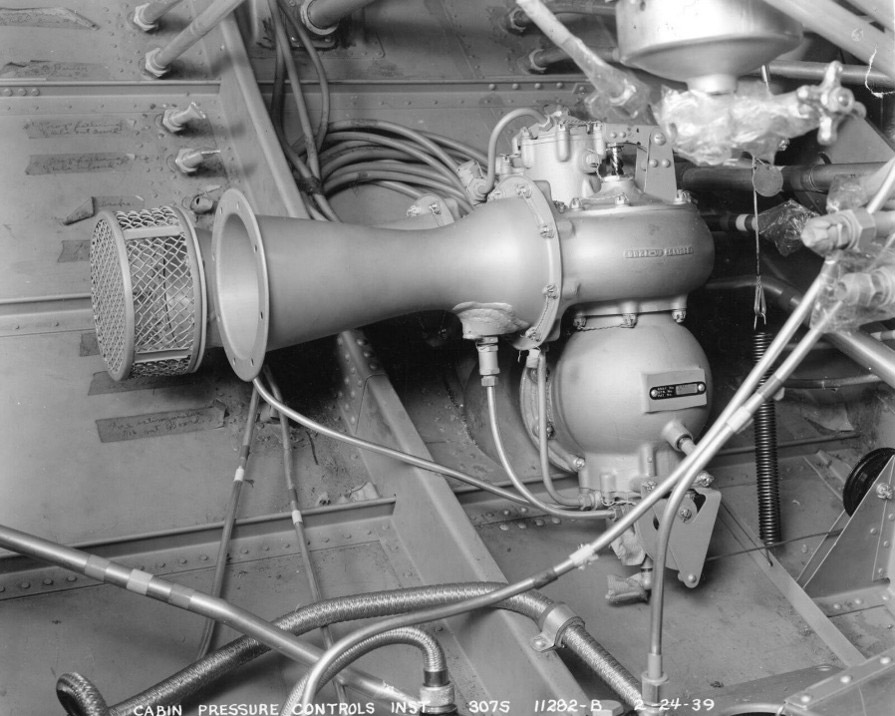 Cabin Pressure Controls Installation, 1939
Glamorous and iconic, the Golden Age of Aviation represented a period in American history where people collectively experienced a technological revolution. From those building the planes to the passengers flying in them, the aviation industry during the interwar years gave the United States what it needed to become a leader in aerospace. Innovations like the all-metal fuselage, cabin pressurization and an enhanced passenger experience, defined America’s airways and shaped the industry forever.
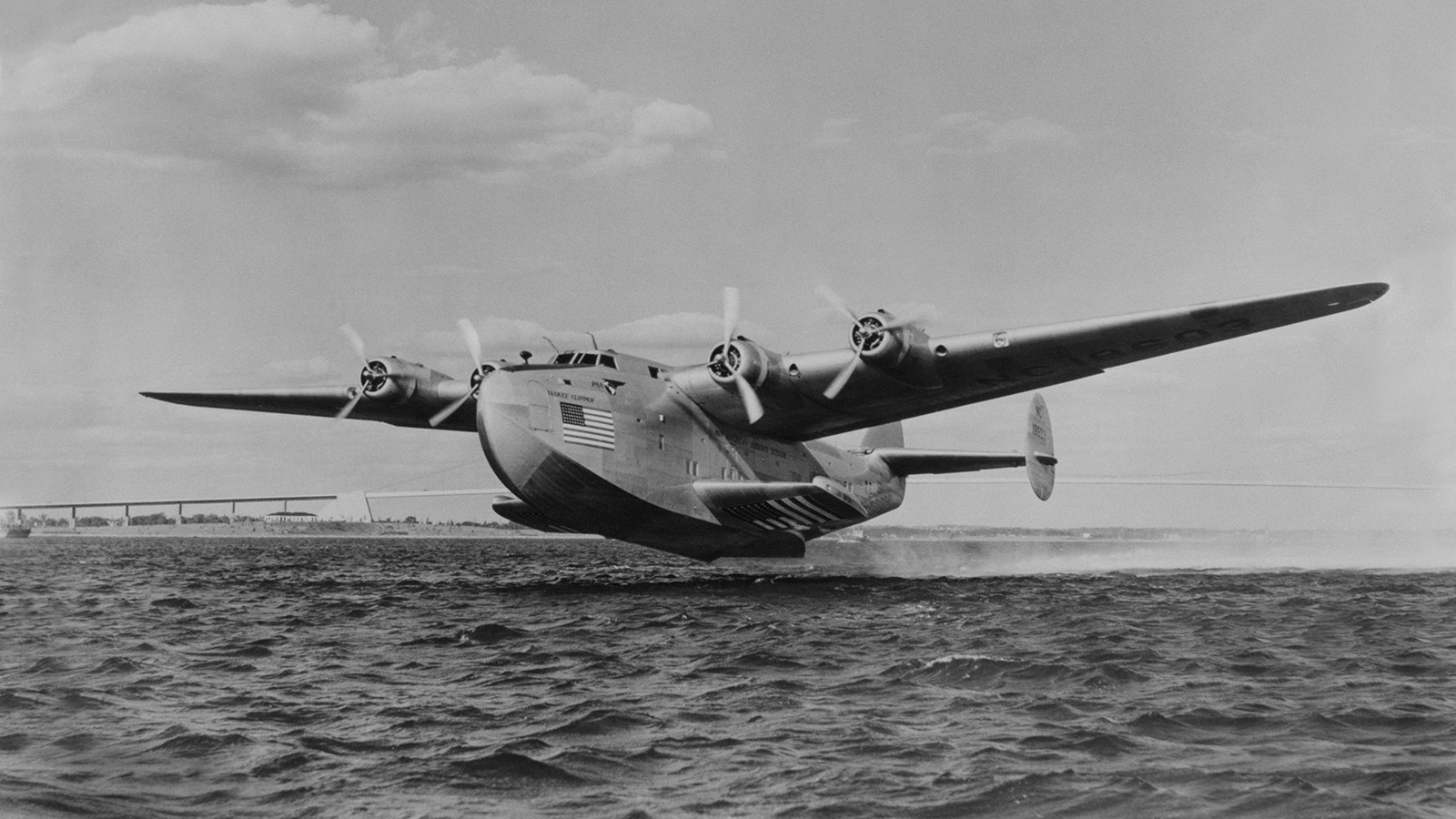 314 Clipper taking off, c. 1930s. With the clipper, Pan American became the first airline to offer commercial flights to Hawaii.
Pan American operated for 64 years before ceasing operations in 1991. During that time, the small Florida company became the primary international airline operating out of the United States for much of the 20th century. Their relationship with the Boeing Company would eventually usher in the jet age with the 707 and the world’s first jumbo jet, the 747.
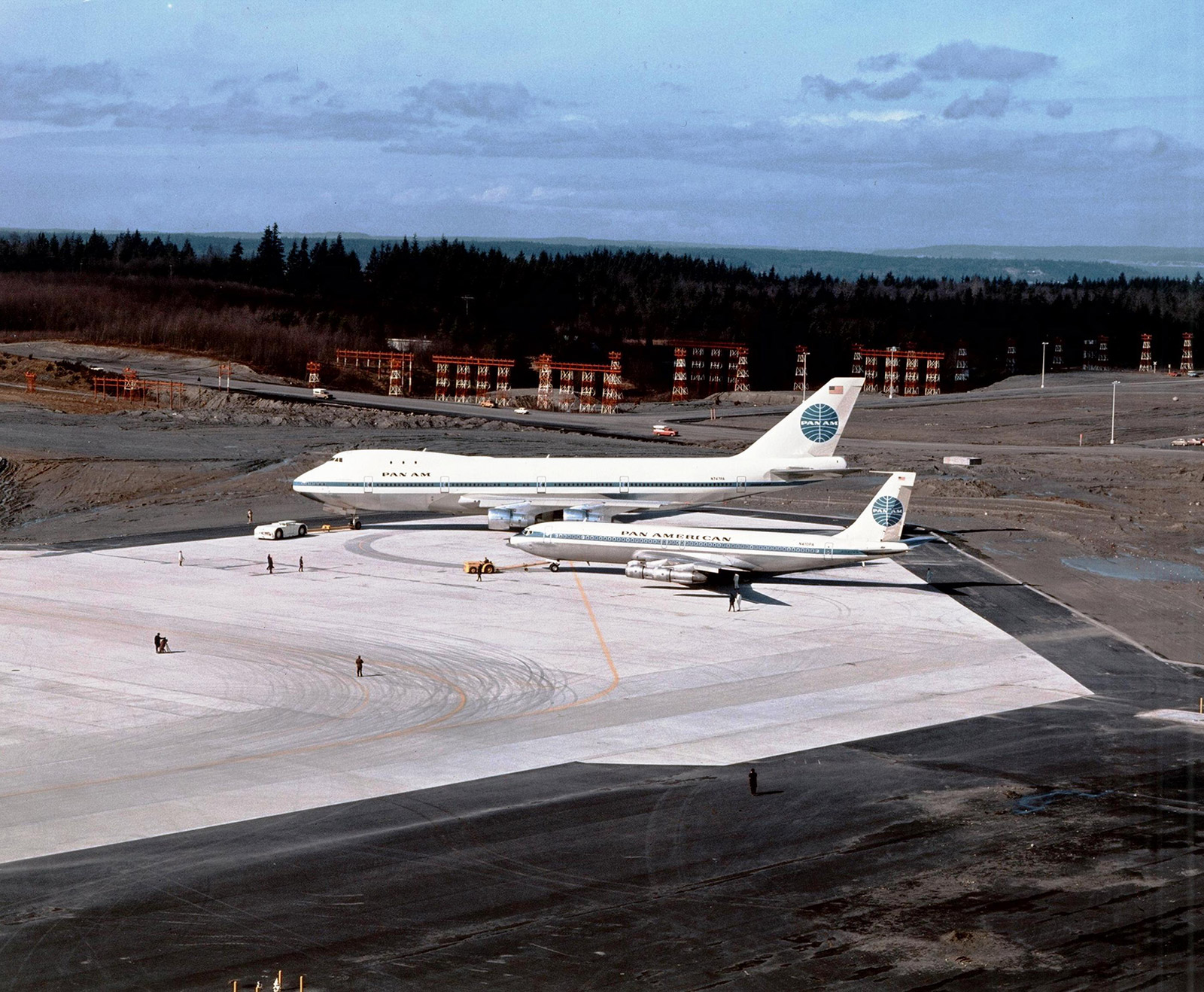 Rollout for Pan Am’s 747, 1969. Pan American was the launch customer for both the 707 and the 747, two aircraft made possible by the success of the commercial air travel industry.
As Boeing celebrates the Florida stop of the National Archives Freedom Plane Tour and marvels at the Founding-era documents that helped shape America, the company remembers the time period that lay the foundation for the Freedom Plane itself and the very route that it travels.
By Anna Italiano