Last AV-8B Harrier jet flies away into history

Boeing teammates bid farewell to an iconic fighter jet that first imagined vertical takeoff and landing.

June 22, 2026 in Innovation, History, Defense

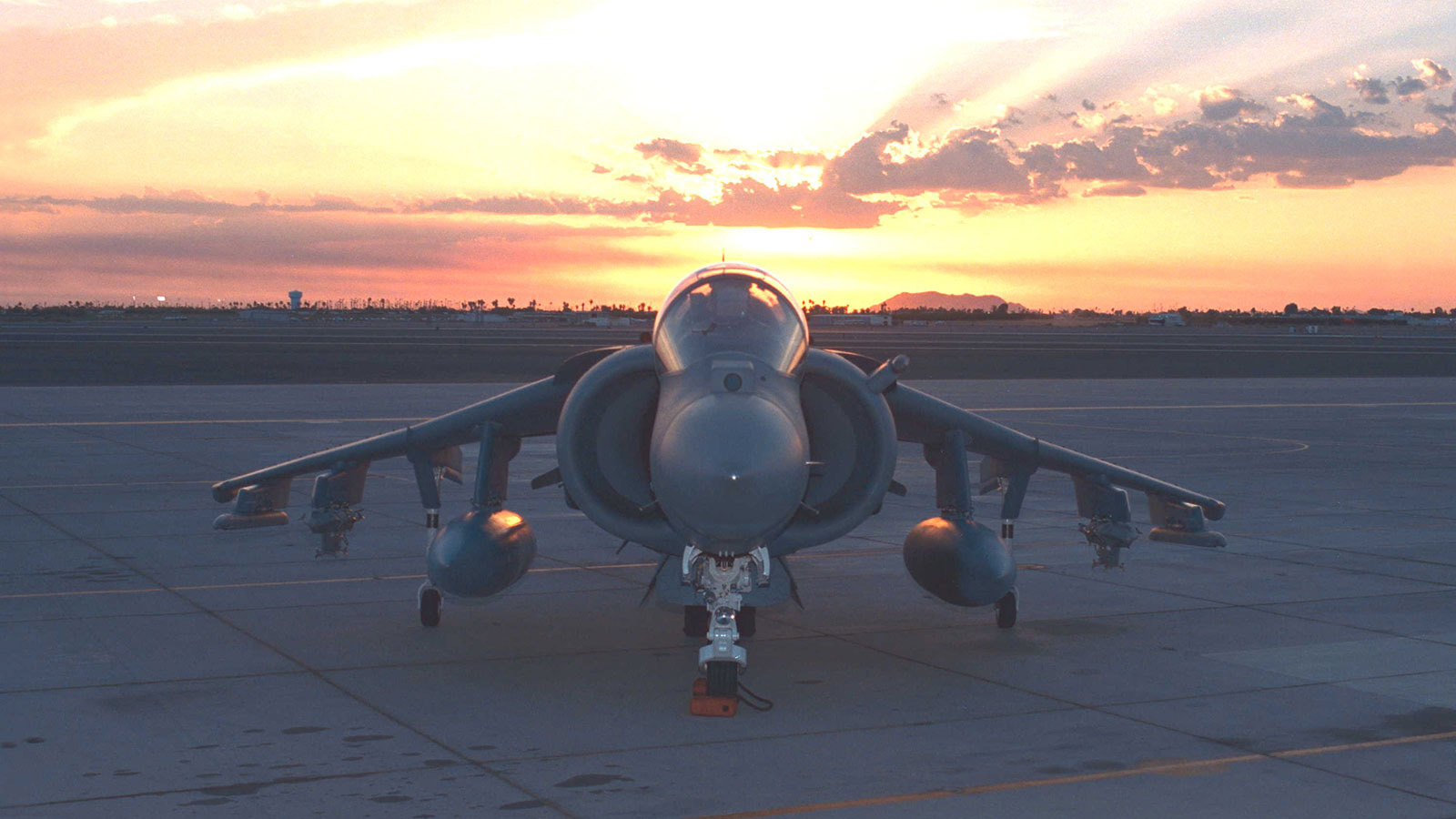
Color photo of jet on runway at sunset Above: AV-8B Harrier II at sunset. Date unknown. All photos courtesy of the Boeing Archives.

On June 3, the last AV-8B Harrier jet flew out of the U.S. Marine Corps Air Station at Cherry Point, North Carolina. An icon of the Marine Corps since the 1970s, the Harrier expanded the capabilities of the military by doing something other jet aircraft couldn’t — take off and land vertically (V/STOL).

Hawker Siddeley, a group of British manufacturing companies that produced aircraft, began working on a vertical takeoff warplane in 1957. Originally named the Hawker Siddeley Harrier, this “first generation” Harrier jet was designed in response to post-World War II concerns raised by NATO strategists about the vulnerability of large runways from nuclear or conventional attacks. The first prototype was ordered by the Royal Air Force in 1965 and was aptly named “Harrier” after the bird of prey in 1967.
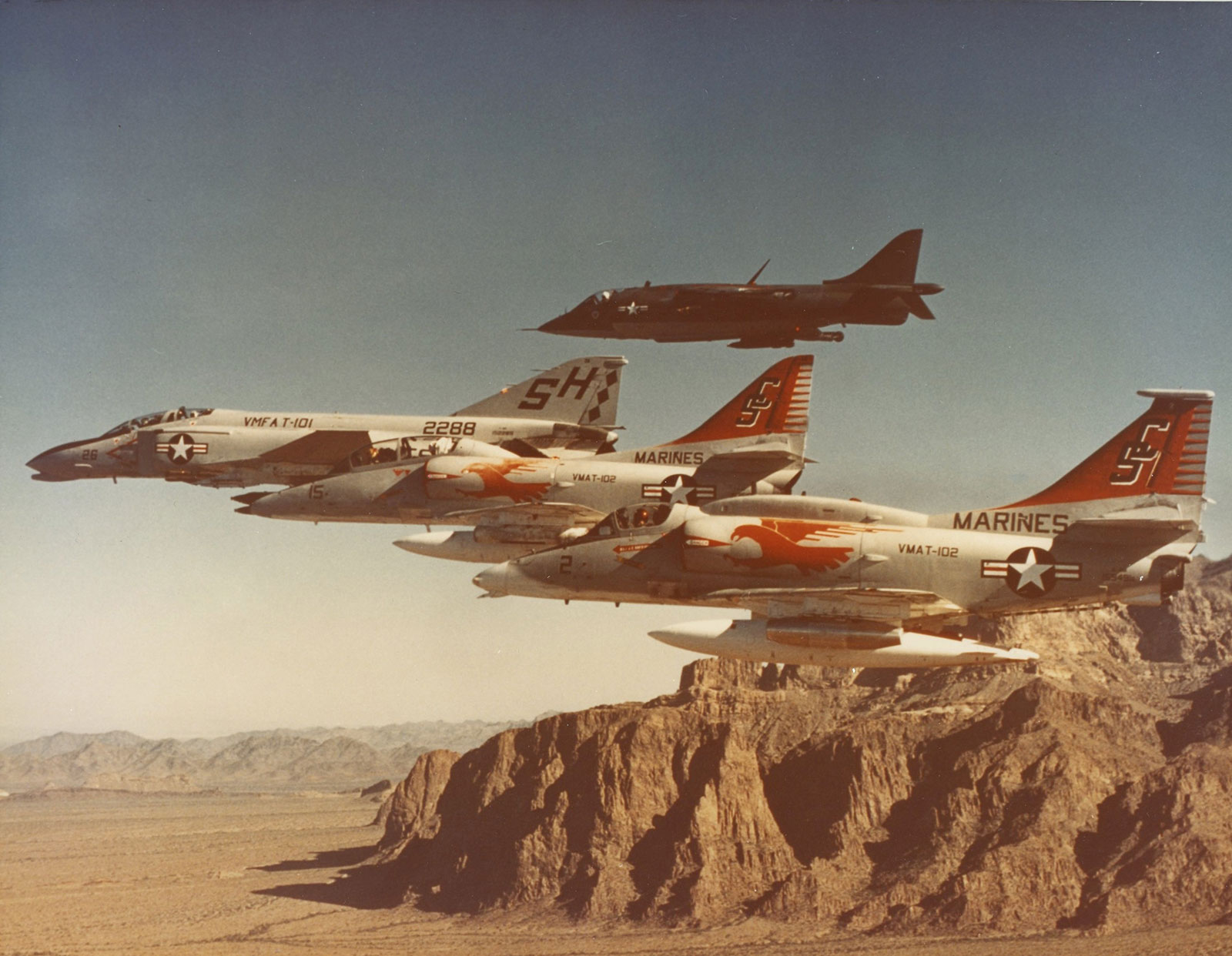
color photo of jets flying by mountains AV-8A, F-4J Phantom, TA-4 Skyhawk, A-4 Skyhawk, November 1977.

By the time the British government began discussing manufacturing Harriers in the United States, McDonnell Douglas was already well-versed in the manufacture and design of fighter jets, having produced the FH-1 Phantom, the F2H Banshee, F3H Demon, F-101 Voodoo and F-4 Phantom II under the McDonnell Aircraft Corporation. (McDonnell merged with Douglas Aircraft Company to form MCD in 1967). The heritage company partnered with Hawker Siddeley in 1969 to prepare for the U.S. production of the Harrier jet. The resulting McDonnell Douglas/British Aerospace partnership would go on to produce many firsts in military jet design and production.

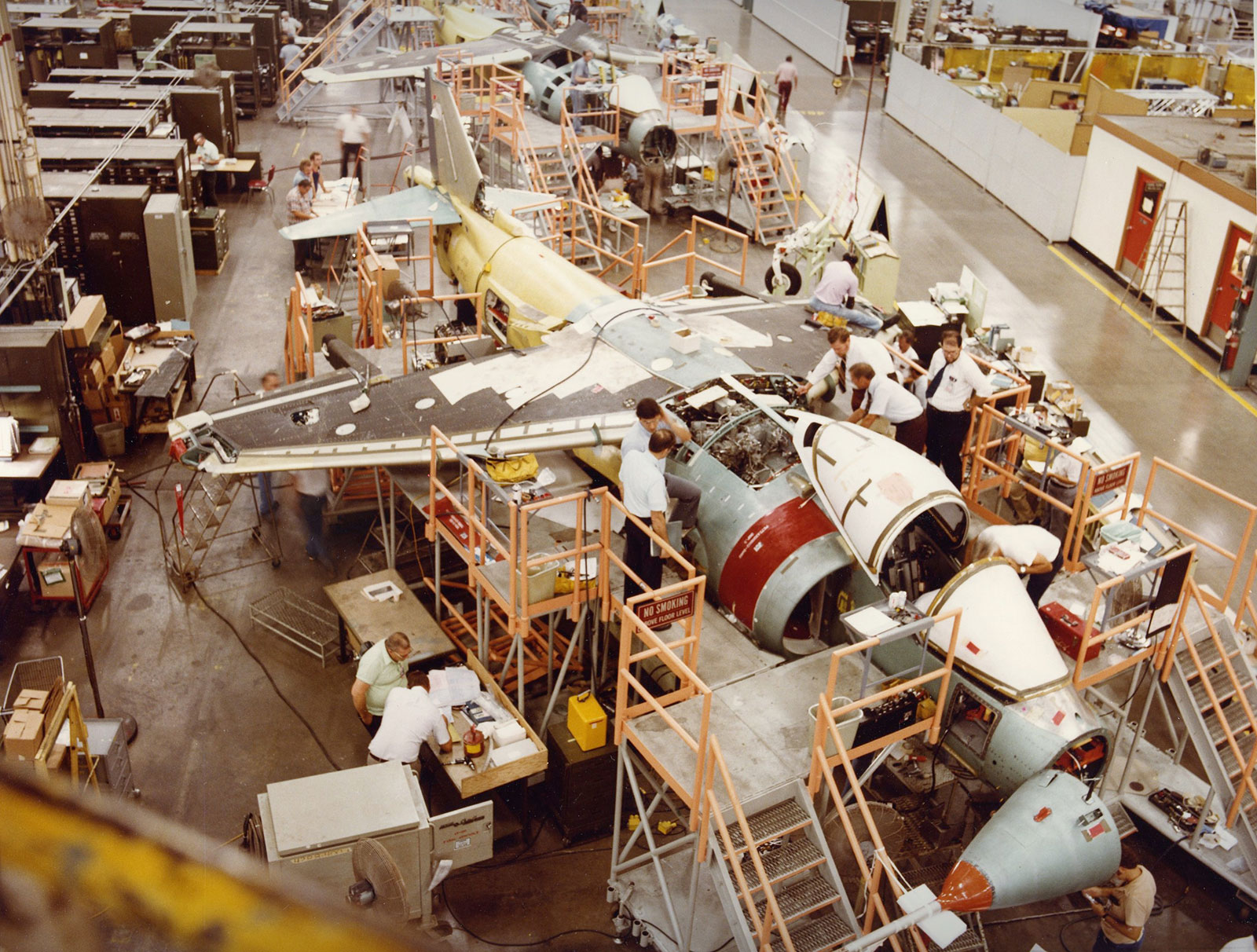
color photo of people working on aircraft in factory AV-8B in assembly in St. Louis, July 1981

In May 1975, McDonnell Douglas proposed the AV-8B as a new version of the Harrier to meet the requirement for an advanced vectored thrust V/STOL light attack aircraft. The YAV-8B prototype flew on Nov. 9, 1978, marking the beginning of the AV-8B Harrier II program.

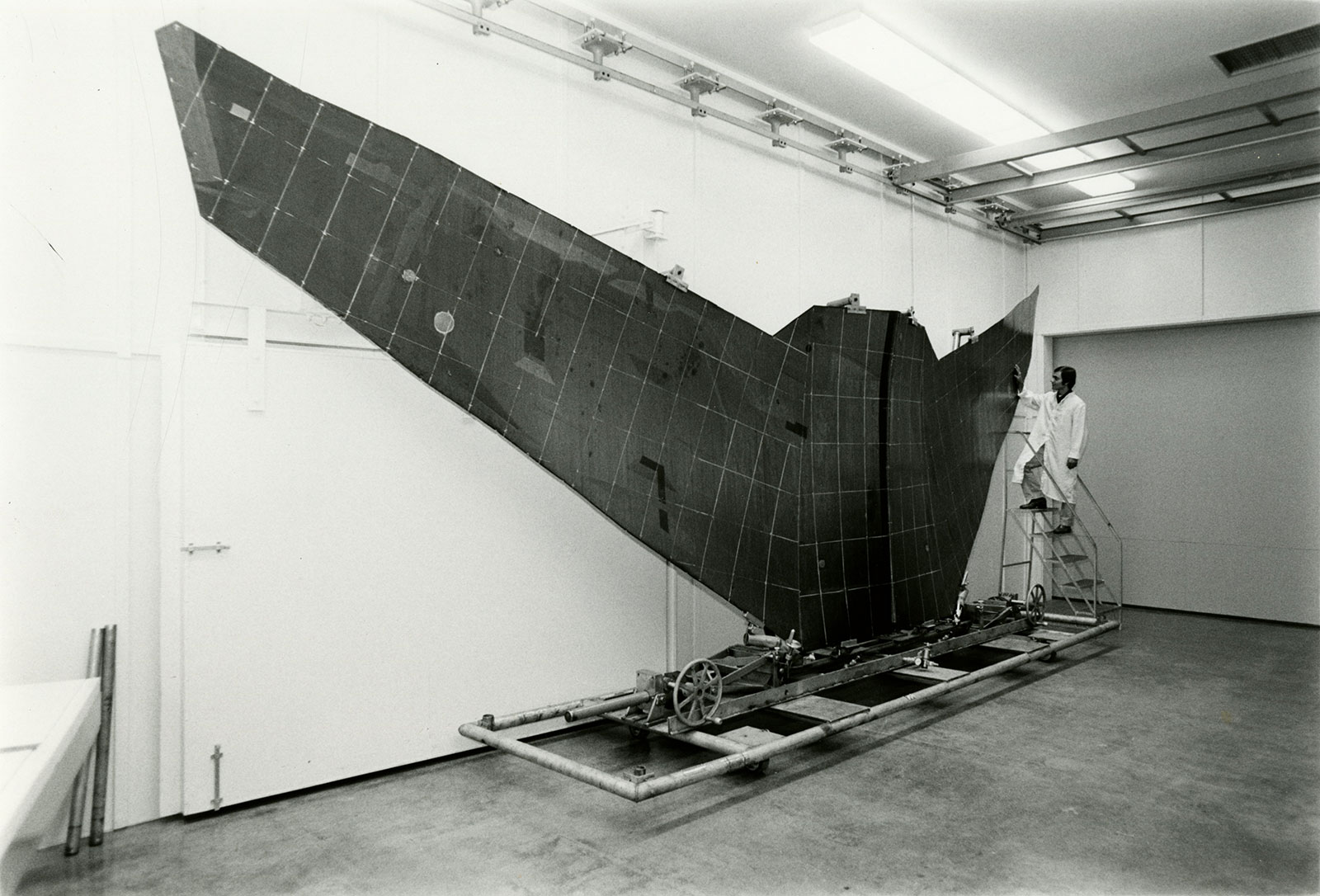
black and white image of composite wing Large-scale use of carbon-epoxy composites for the wing and fuselage saved weight and added strength to the improved Harrier II design. The one-piece wing was more aerodynamic and could carry more fuel and weapons. Many of these techniques were applied across the fighter and attack industry and are standard practice today.
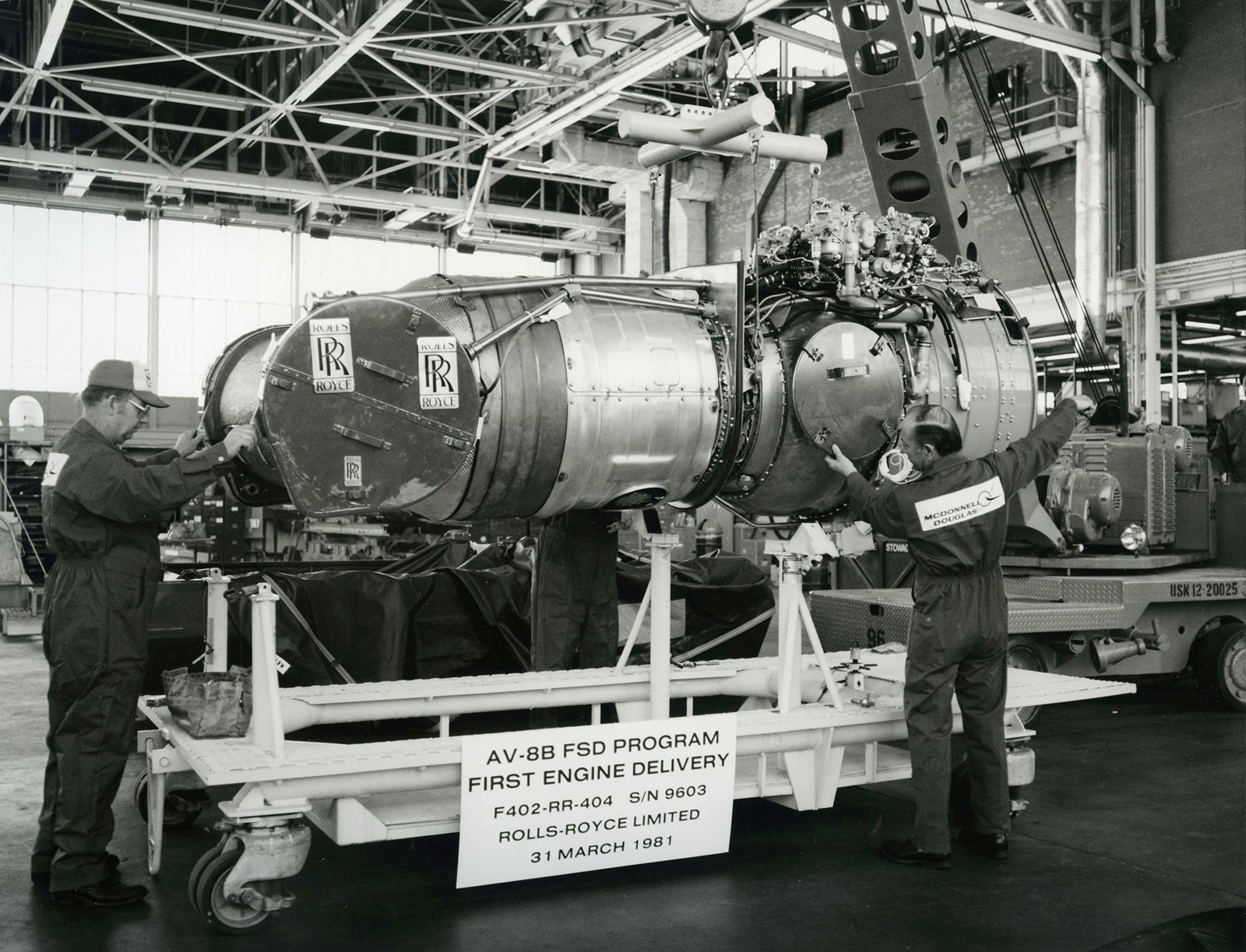
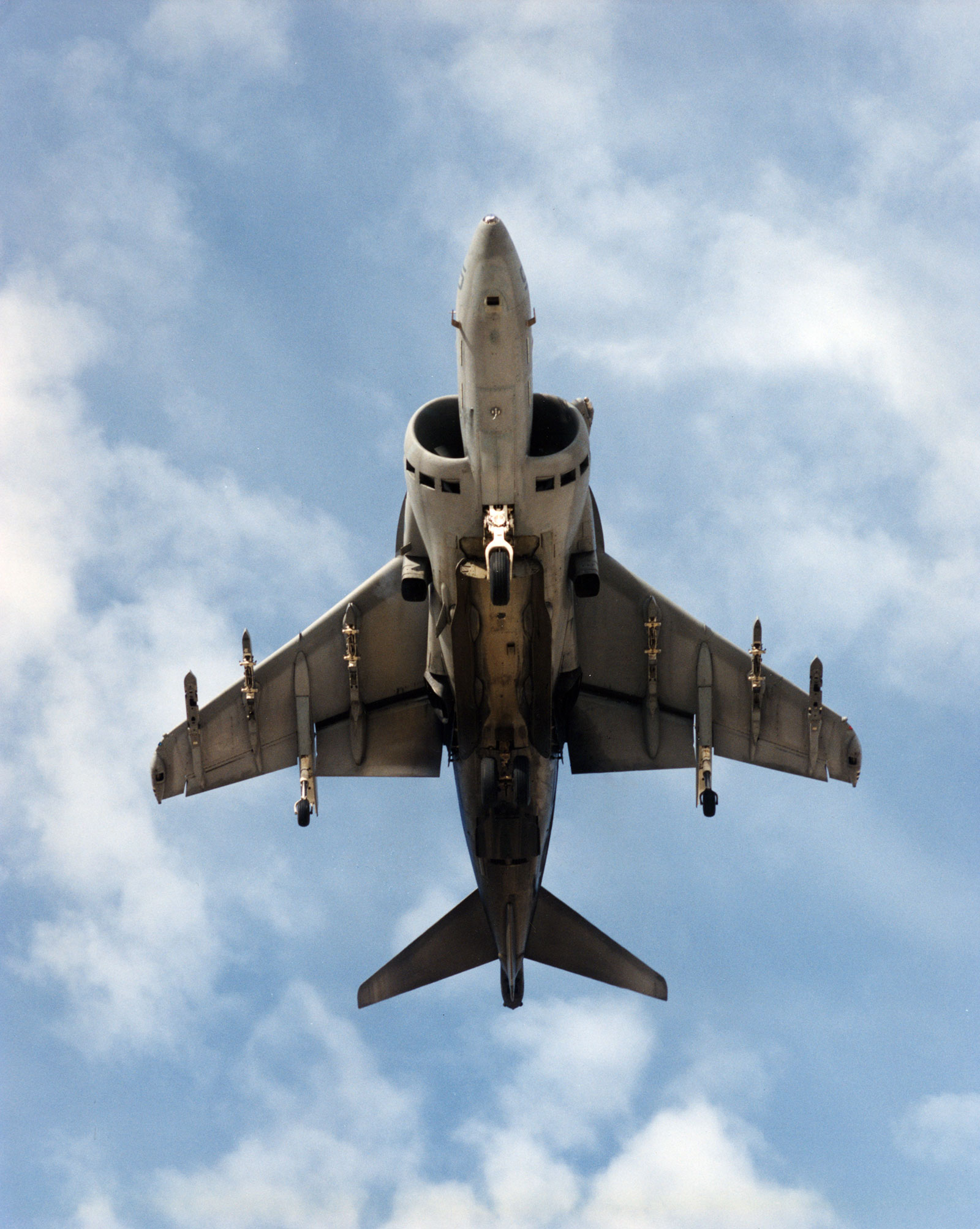
black and white image of people working on engine McDonnell Douglas teammates unload an AV-8B Rolls-Royce Pegasus 11 engine at the St. Louis plant on March 31, 1981. Improved engine inlets more efficiently fed air to the higher-thrust Pegasus engine. Strakes along the underside provided more lift and control while the aircraft was hovering.
color image of under side of Harrier jet AV-8B Harrier II Hovering. View of the inlets and strakes.

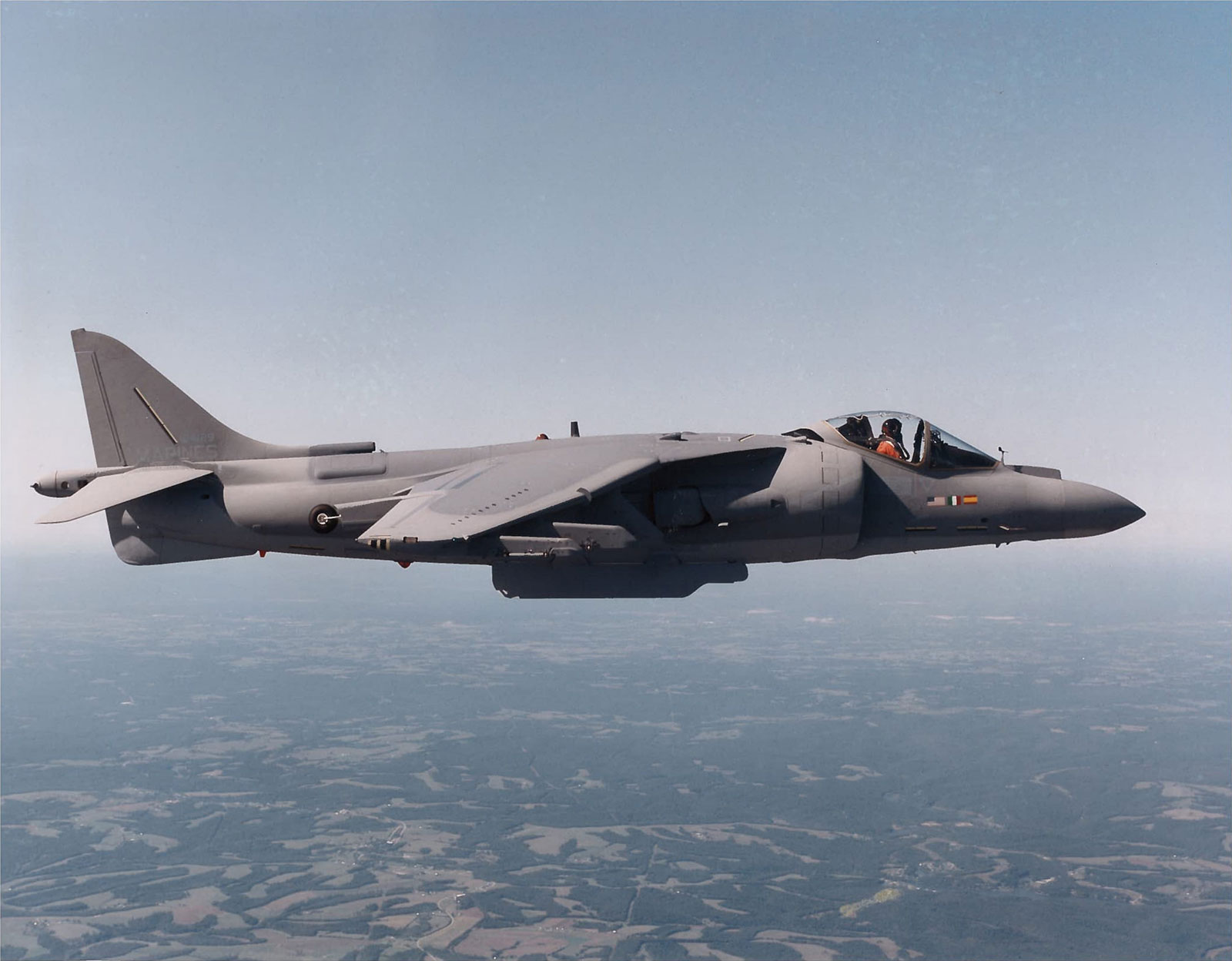
In the 1990s, the United States, Spain and Italy coordinated efforts to develop the AV-8B Harrier II Plus, which first flew Sept. 22, 1992. This upgraded version had a more powerful engine and advanced radar and avionics, allowing aircrew to fly and fight in darkness and in adverse weather conditions.

Close-up color photo of AV Harrier II Plus flying AV-8B Harrier II Plus, September 1992, marked with the flags of the United States, Spain and Italy

Production of both versions ended in 2003 with the St. Louis, Missouri, delivery of the last AV-8B to Spain. A total of 340 aircraft were delivered, including AV-8B attack jets, TAV-8B two-seat trainers and YAV-8B prototypes. The aircraft remains in front-line service with the navies of Italy and Spain.

The official ceremony marking the end of the AV-8B’s service this month was a meaningful sendoff not only for the USMC but also for the employees who worked on the Harrier program. 

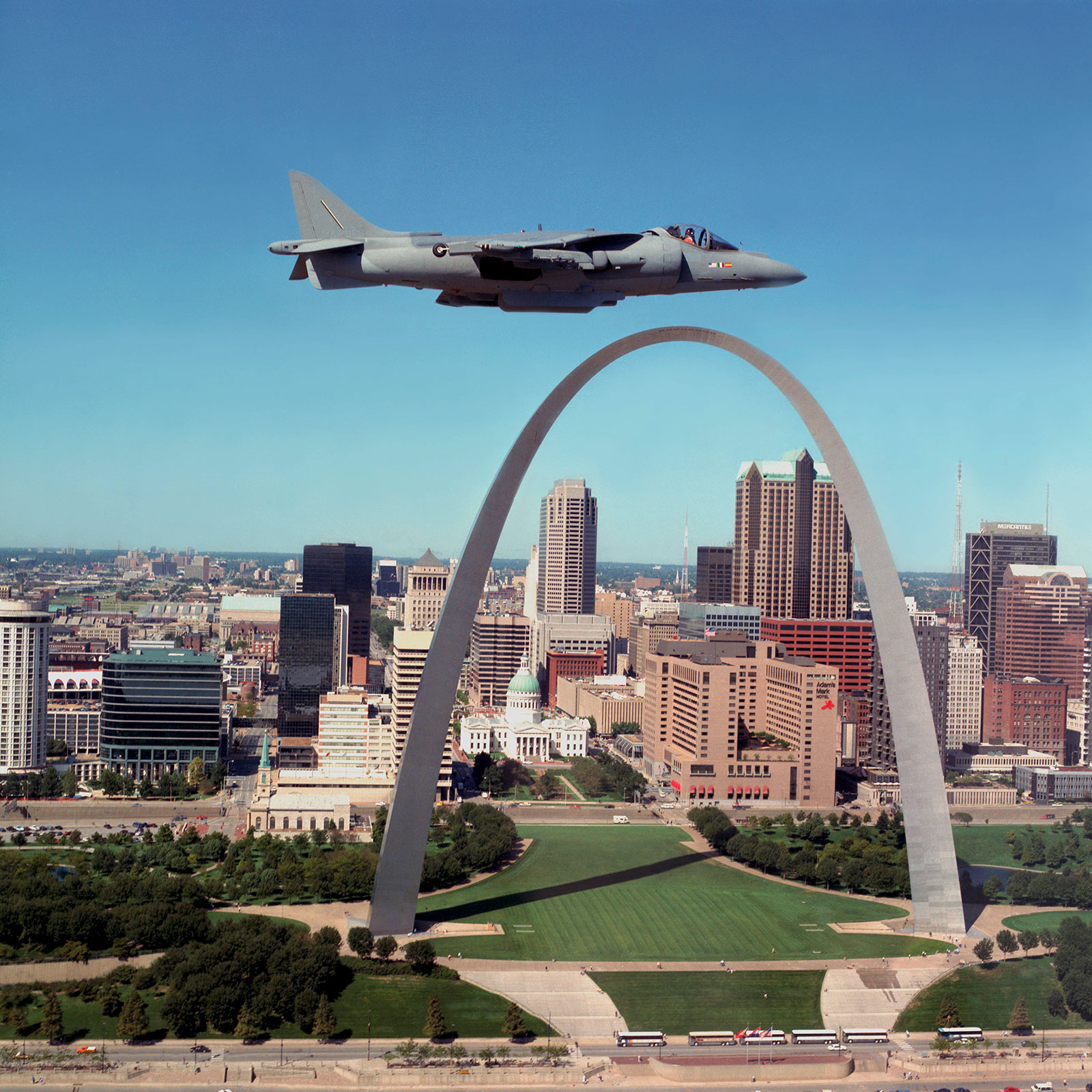
Color photo of Harrier flying over St. Louis arch AV-8B Harrier II Plus flies over St. Louis, c. 1990s

T-45/AV-8B Chief Engineer Michelle Brunick had an especially personal connection.

“I’ve never forgotten the first time I saw the Harrier hover effortlessly over the Mississippi River at a St. Louis air show. I was 8 years old and that moment of amazement was one of the many that fed my desire to pursue engineering. I never imagined my career would one day connect me to this remarkable aircraft. As the Harrier’s sundown date approached, countless Boeing employees, retirees, industry partners and customers shared how their careers began with this iconic aircraft. The Harrier has clearly earned a special place in the hearts of all who have contributed to its legacy.”

And their hard work will not be forgotten. Even though the aircraft will no longer serve the U.S., the legacy of the AV-8B Harrier remains a symbol of the collaborative innovation that spanned five decades and will continue to live on at Fighterland U.S.A.

By Anna Italiano and Kevin Kelly