
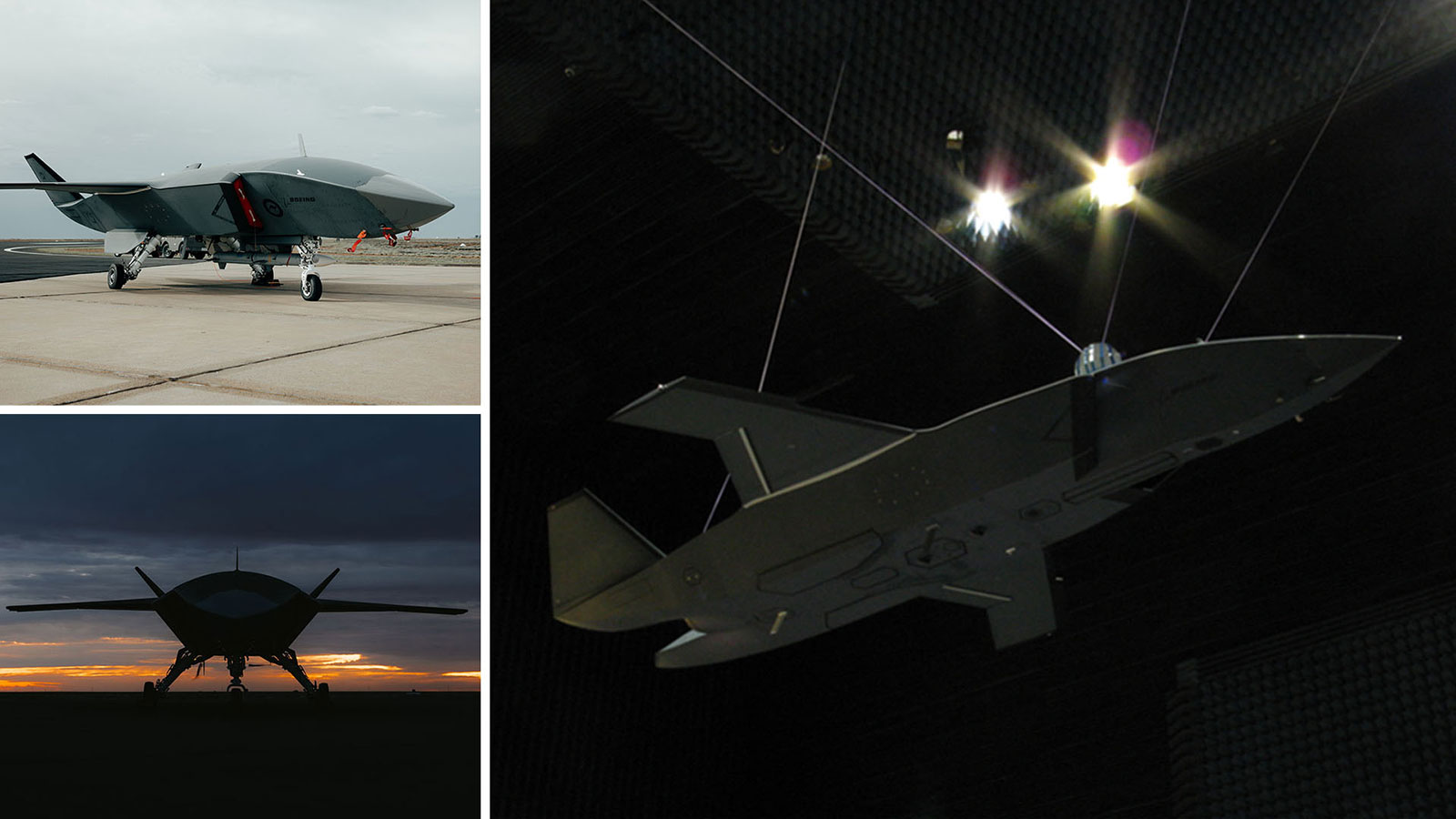
Boeing has validated the MQ-28’s stealth performance through radar cross section (RCS) testing that demonstrates the collaborative combat aircraft is harder to detect and better able to operate in contested environments.
Why it matters: The MQ-28 is designed to operate alongside crewed aircraft in roles such as surveillance and electronic warfare. The aircraft’s proven low-radar profile helps protect it, expanding mission options for customers.
Driving the news: RCS testing was conducted on an MQ-28 to provide customers with objective, repeatable data about its ability to avoid detection and safely complete its mission.
- The results confirm the effectiveness of the MQ-28’s design, production and material choices in minimizing radar detection.
- This data supports procurement and certification and guides tactics and countermeasures.
How they did it: RCS testing measures how much an aircraft reflects radar energy and at what ranges enemy radars could detect it.
The bottom line: Validated stealth adds to the MQ-28’s proof points as a mature, proven collaborative combat aircraft capability for allied air combat operations.
Per Brad Thompson, director for Phantom Works Australia, “The combination of a highly capable platform, stealth features and advanced autonomy provides unprecedented ability for air forces to extend their mission effectiveness and operational flexibility.”
By Belinda Egan