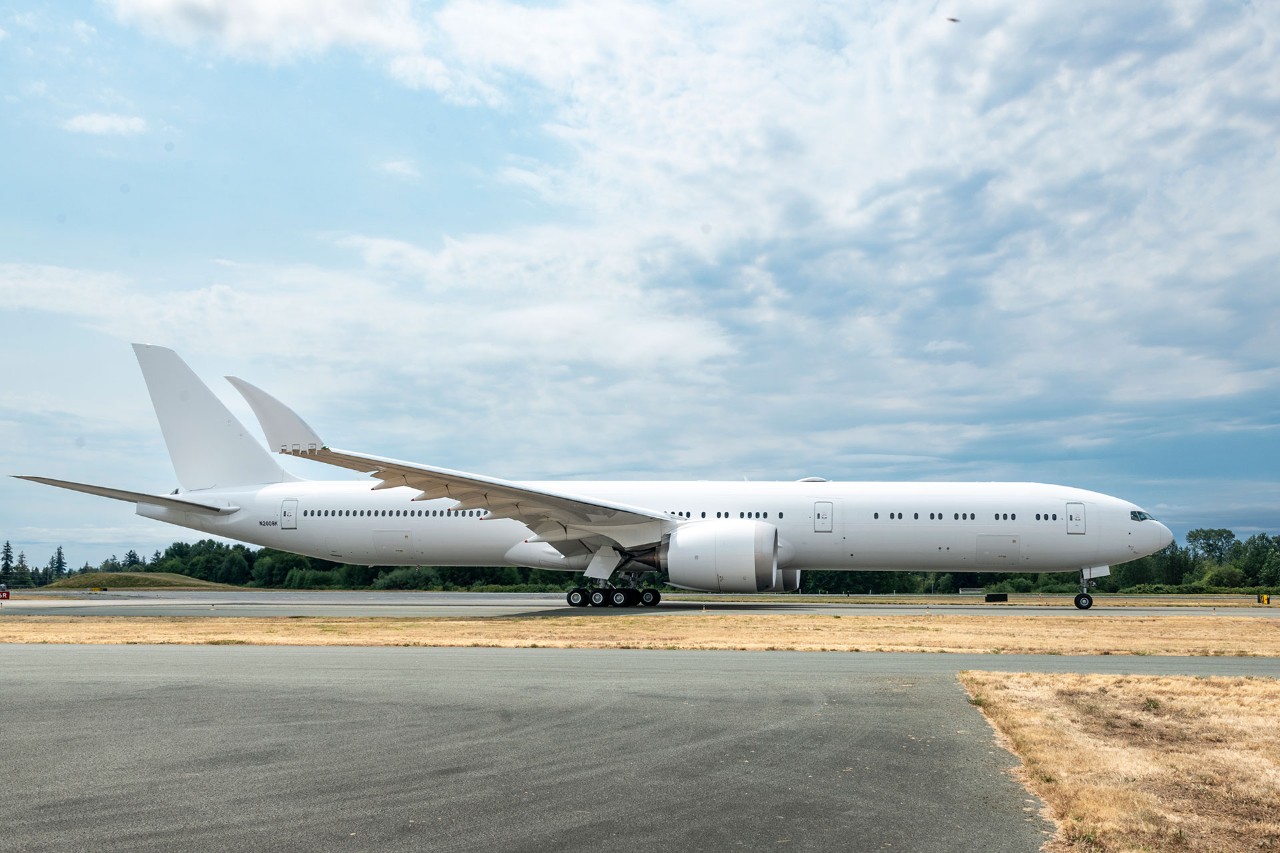
The 777-9 that Boeing will use to conduct extended operations (ETOPS) and function and reliability testing flew for the first time Friday, completing an approximately three-hour profile over Washington State, Idaho and Oregon.
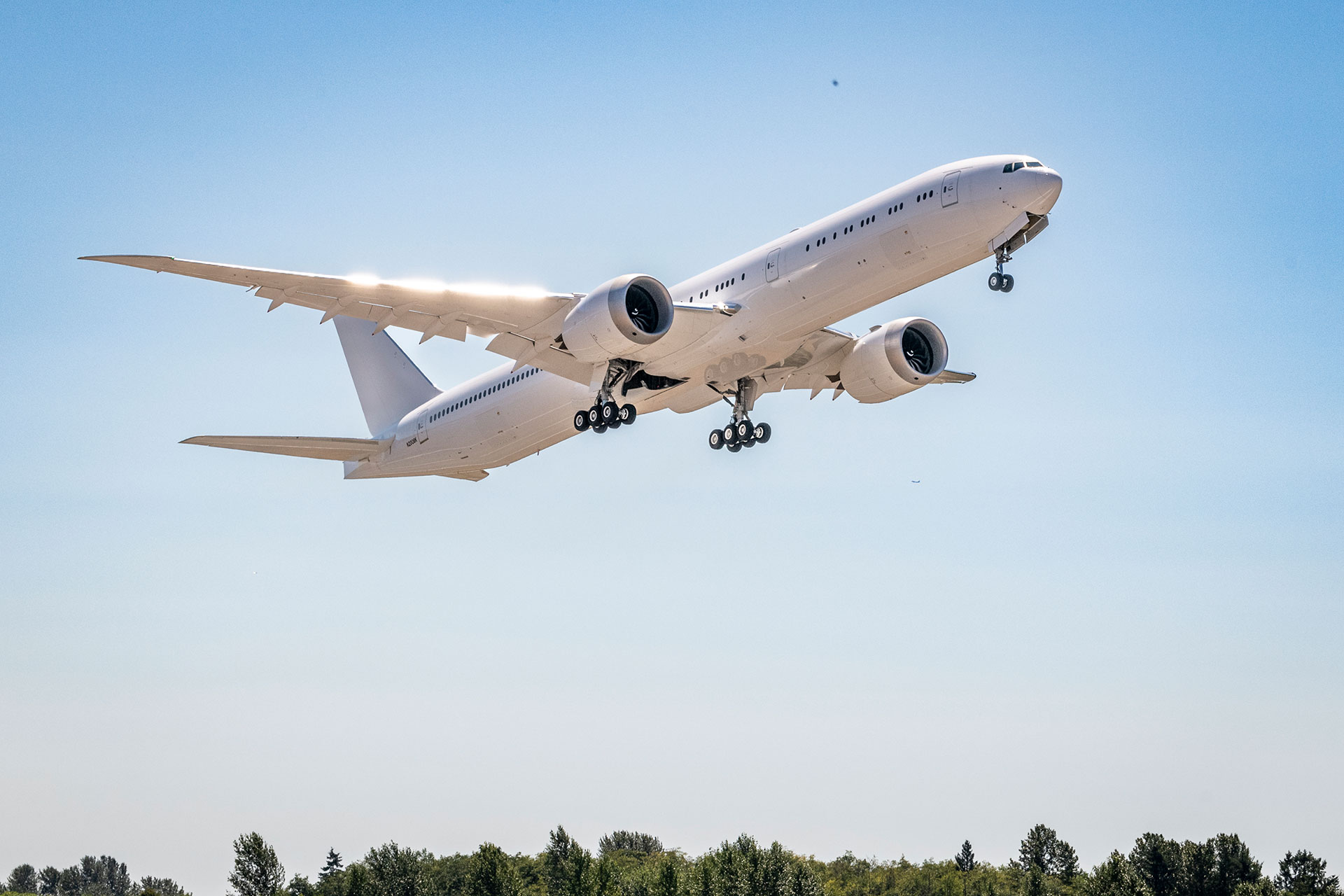 The seventh 777-9 takes off on its first flight. (Marian Lockhart photo)
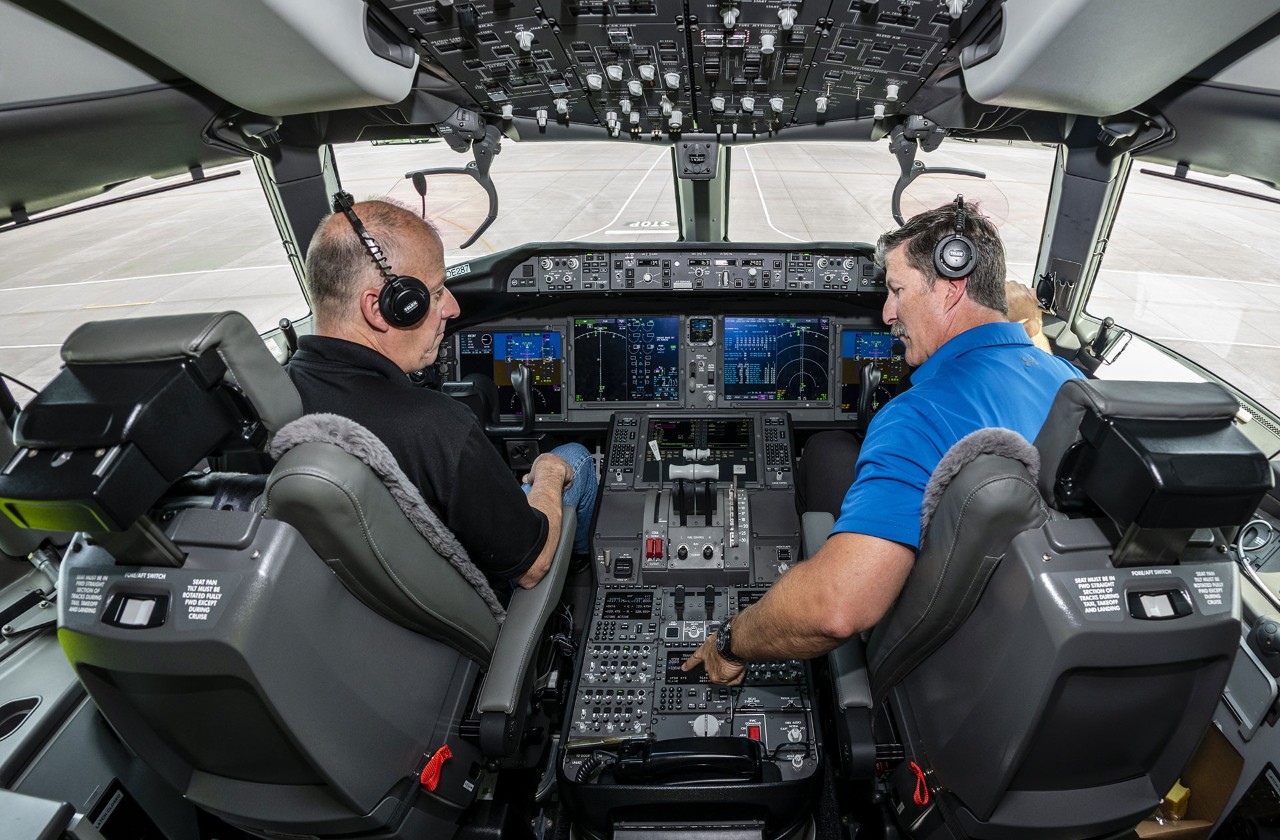
Capt. Dan Mangel and Capt. Jake Miller completed a standard first-flight profile that tested the airplane’s systems and structures, which were monitored onboard by systems operators Scott Brihn and Zachary Lewis; flight analysts Seth Town, John Theeringer and Michael Deutsch; instrumentation specialist Lauren Meyer; and propulsion analyst Kinsey Bilyeu. The airplane landed at Paine Field in Everett, Wash., at 5:35 p.m. PT.
- “The purpose of today’s first flight is to test the entire airplane as a system, and then all the individual systems to make sure they’re functioning properly,” said Capt. Dan Mangel, Engineering pilot. “The airplane performed beautifully on its first flight; it was great to fly.”
Why it matters: Regulatory approval for ETOPS will allow operators to fly the airplane extended distances from an airport suitable for landing, opening more direct routes that save time and fuel. Following extensive analysis, lab tests and engine tests, as well as validation of the maintenance program, ETOPS testing will include proving flights to demonstrate the 777-9 can safely and reliably conduct trans-oceanic routes and support extended diversions.
Function and reliability testing will simulate routine operations in a variety of conditions to demonstrate the airplane can operate safely and reliably in service.
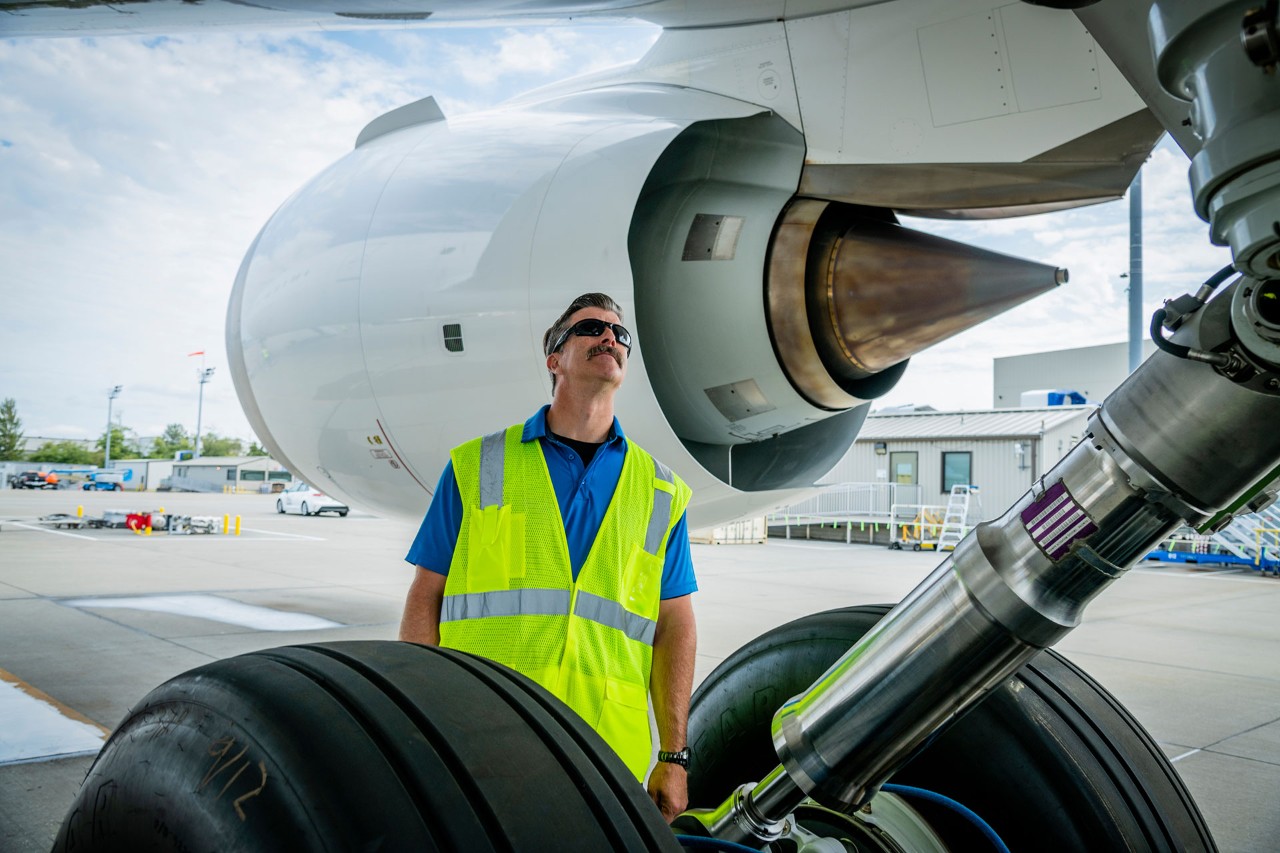
Preparing for flight: Teams rolled the airplane out of the Everett factory, applied a white livery, fueled the airplane, completed engine runs and conducted a taxi test in the weeks and days before flight.
- “It’s quite a milestone, but it’s not the end of the line,” said JeRae McCoy, 777X Change Incorporation & Refurbishment conformities manager, who supported the build of the airplane. “We’ve got more work to do to certify this airplane and begin deliveries. We’re going to keep working together to get there.”
Continuing a legacy: The 777-9 will continue the 777 family’s history of long-haul, twin-engine efficiency: The original 777 entered service with ETOPS approval. Its first revenue flight 31 years ago, between London and Washington, D.C., was an ETOPS flight.
Testing, certification, delivery: The 777-9 program has logged more than 4,800 flight test hours across the 777-9 test fleet. In addition to the dedicated test airplanes, production-configured airplanes – like this seventh 777-9 to fly – are supporting certification work ahead of first delivery in 2027, the company said.
- “Airplane development is not easy, but it is such a worthy endeavor because we are creating incredibly capable airplanes that will safely transport people around the world for generations,” said Terry Beezhold, 777-9 vice president and program manager. “A big thank you to our team for their continued hard work and to all of our 777X customers.”
About the family: The 777X family – the 777-9, the 777-8 Freighter and the 777-8 passenger airplane – are the newest members of Boeing’s market-leading widebody family. Boeing teammates designed them to maximize efficiency and environmental performance, drawing on technologies proven on the 777 and 787 Dreamliner and new innovations, according to the company.
- Customers have ordered more than 650 777X airplanes.