Back to Boeing: An aviation enthusiast who couldn’t stay away

Complex integration work and the chance to establish best practices drew engineer home.

July 13, 2026 in Commercial, Our-People

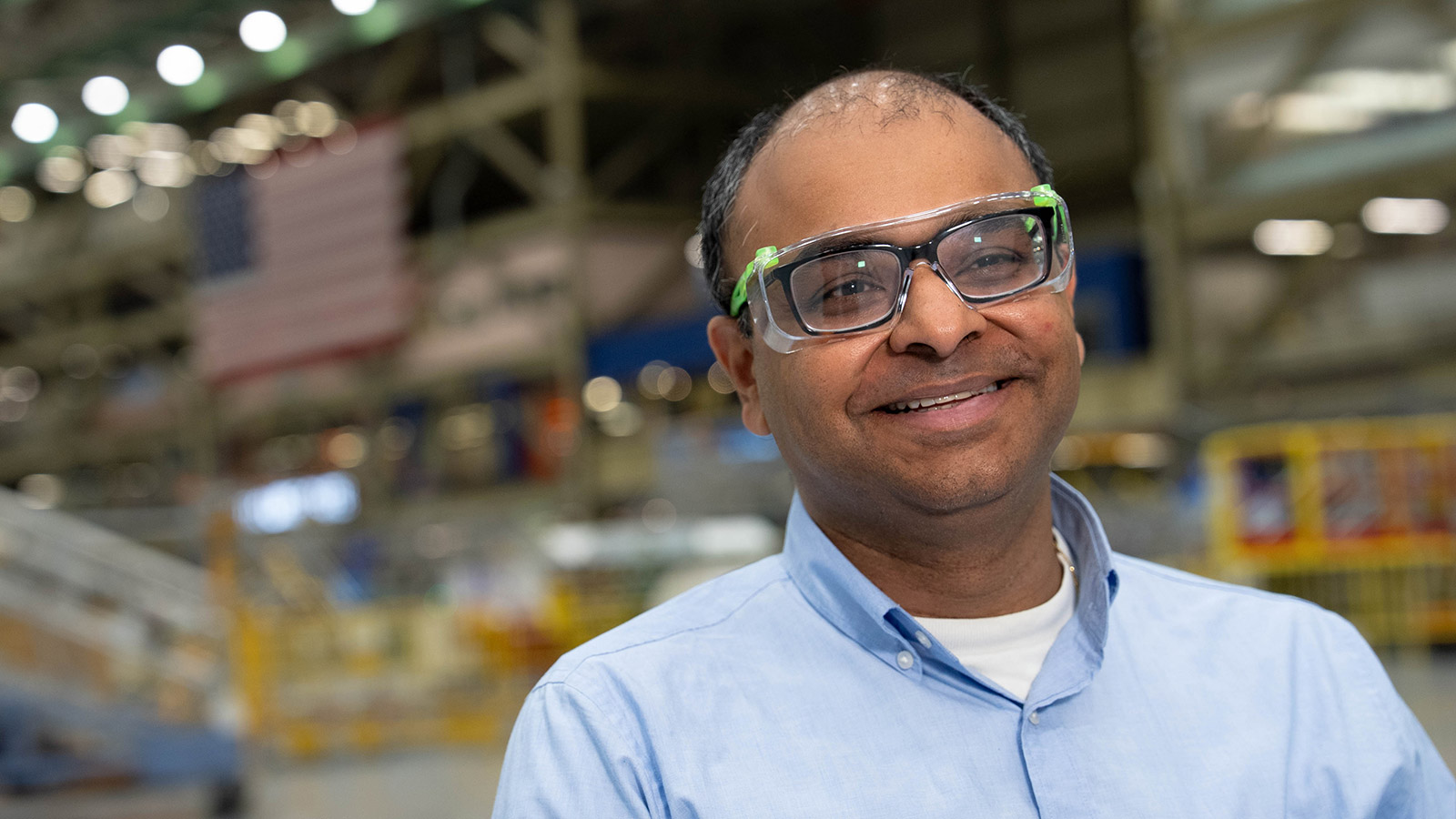
A medium-close portrait of a smiling man wearing clear safety glasses and a light blue button-up shirt, standing inside a large industrial hangar. The background is softly out of focus and shows bright overhead lights, structural beams, and a blurred American flag. Anish Taylor first joined Boeing in 2006. (Maddie Crisalli photo)

Ever since he was a child, Anish Taylor knew he wanted to do something related to airplanes. Though he once aspired to be a commercial airline pilot, he moved into engineering — and the feeling hasn’t faded. 

“When I see it take off, it’s special,” Taylor said. 

Taylor returned to Boeing in 2021 after two years away as an aerodynamics engineer working on propulsion airframe integration, bringing back experience from outside the company to shape how engines and airframes interact. 

Taylor initially joined Boeing in 2006 as a flutter engineer, moved into propulsion airframe integration in 2012, left for work outside Boeing, then returned when the right opportunity opened up.
“Designing for how millions of people fly in a metal tube at high speeds is both technical and consequential.” — Anish Taylor, Boeing Aerodynamics Engineer

He rejoined the company after a difficult stretch for the industry and views the current workforce as a fresh start. 

“Designing for how millions of people fly in a metal tube at high speeds is both technical and consequential,” Taylor said. 

He was drawn back by the opportunity to work with teams doing integration work, programs needing certification, and the chance to shape how new engine architectures are evaluated and integrated. For example, Taylor is helping define how Boeing and engine partners exchange technical data on the future architecture concepts and collaborate on development.

Taylor says one of the most interesting parts of his job is acting as a communicator, sharing both his expertise and his passion for the industry. 

“We position engines on the wing; a complex interaction between the jet and the airframe,” Taylor said. “You get a lot of wing designers, you get a lot of propulsion folks, but not many people who bring the two together.” 

Taylor’s work focuses on complex integration problems handled inhouse, mentoring, cross-discipline collaboration, and restoring technical rigor for future aircraft. “We’re setting the rules again,” he said. “And that’s exciting.”

By Maddie Crisalli

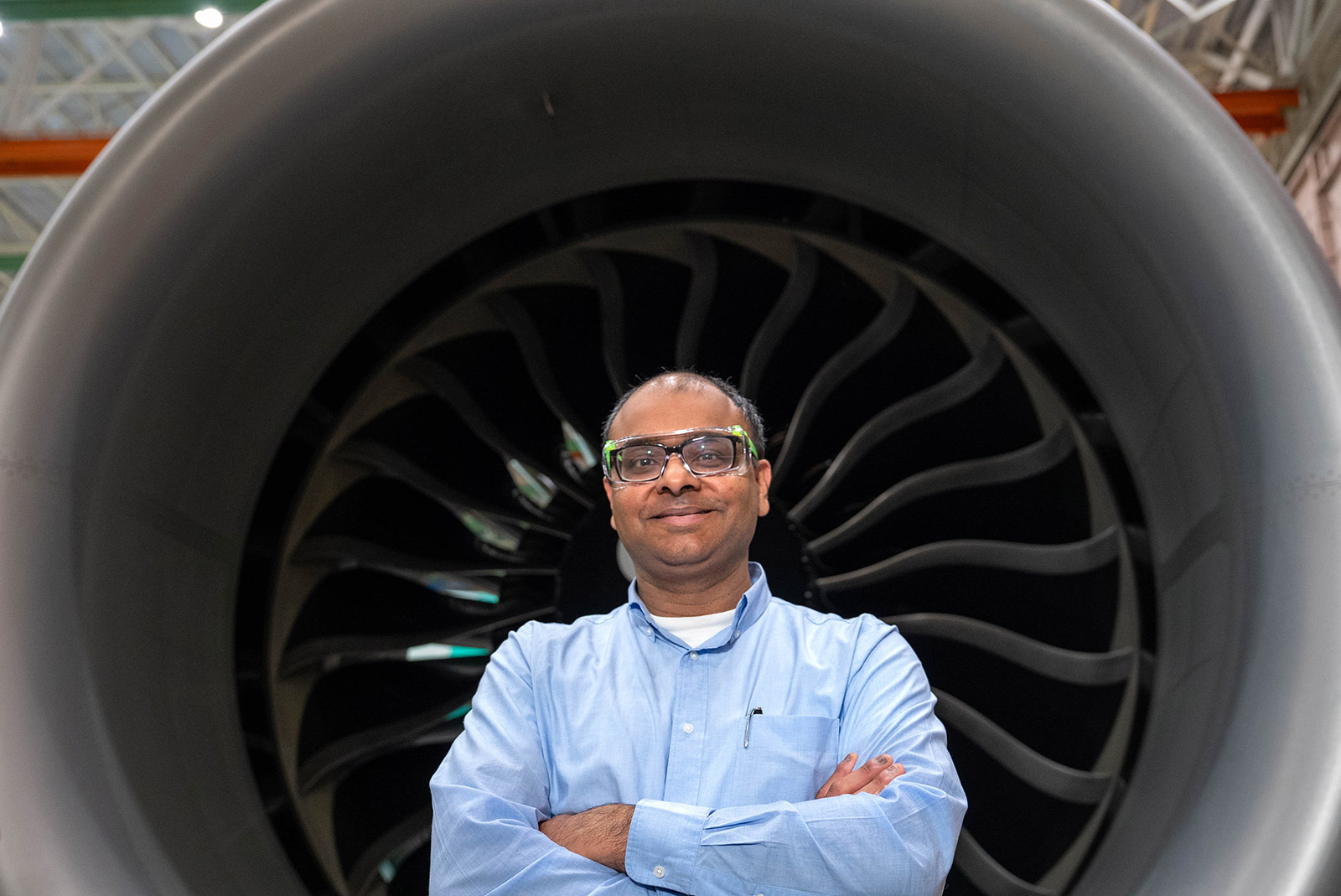
A wider shot of the same man standing with his arms crossed in front of a large jet engine. He wears safety glasses and a light blue shirt; the dark engine fan blades form a circular, ribbed backdrop that fills most of the frame. Designing for how millions of people fly in a metal tube at high speeds is both technical and consequential,” Taylor said. (Maddie Crisalli photo)