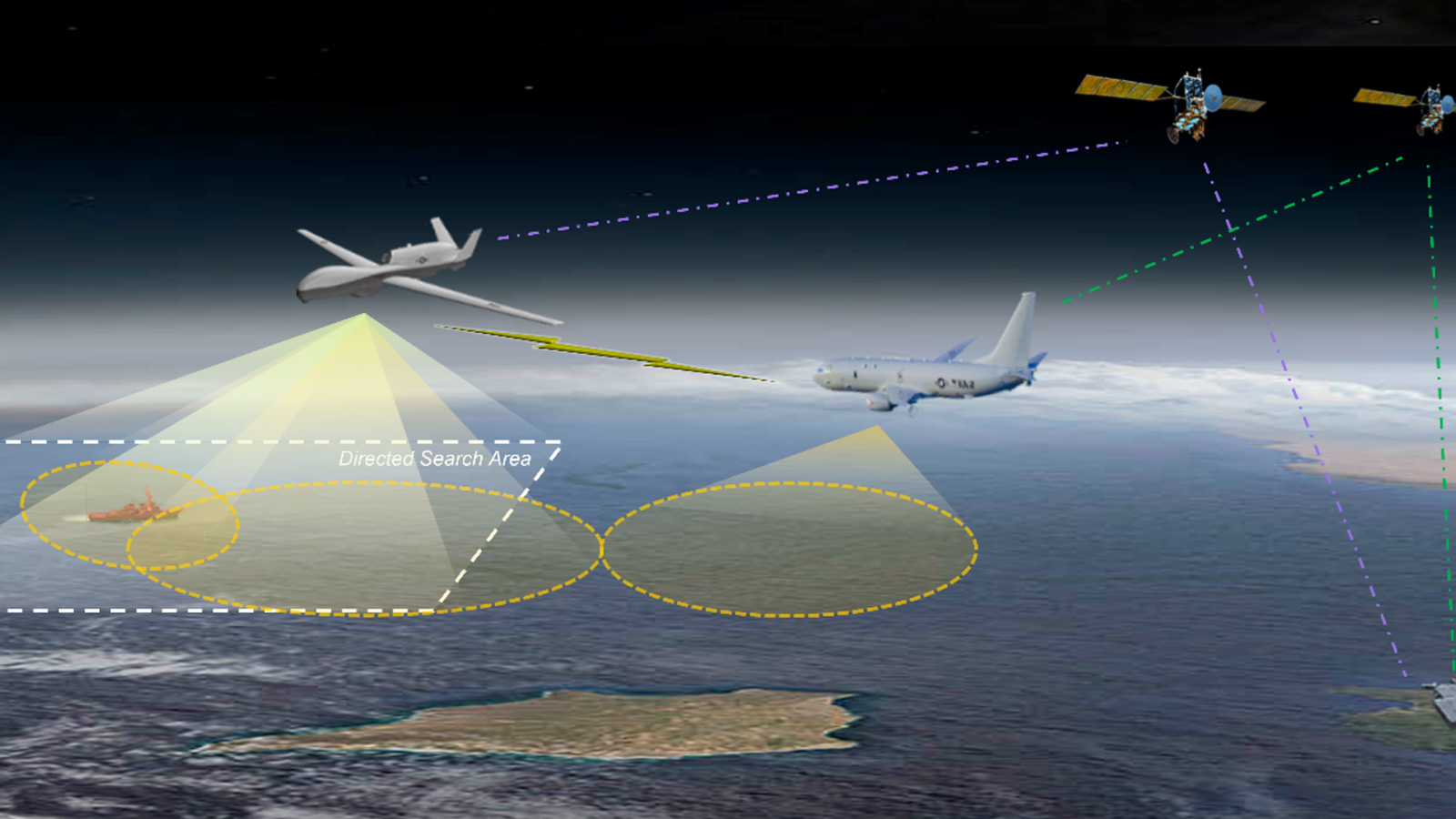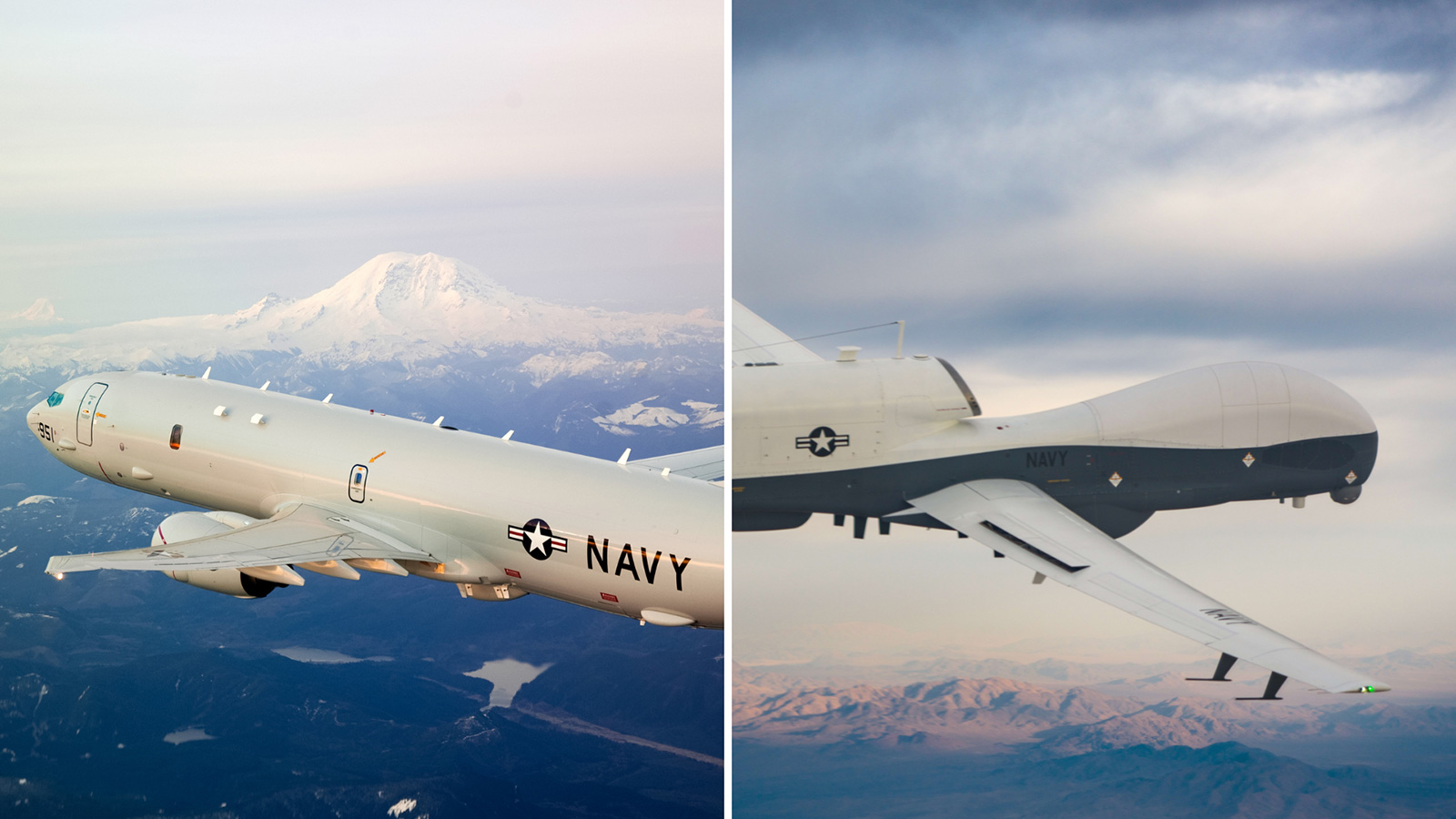
Boeing and Northrop Grumman successfully simulated teaming between a manned P-8A Poseidon and unmanned MQ-4C Triton, demonstrating how the platforms can share intelligence, mission planning and execution. This jointly funded technology collaboration applied universal standard interfaces to make integration across platforms quicker and more cost effective for operators.
Standards-based manned-unmanned teaming
- In the lab demonstration, a P-8A operator issued machine readable, machine actionable mission tasking to a simulated MQ-4C Triton using UCI formatted messages.
- The P-8A cued the Triton transit to a specific area. After receiving the request, the Triton autonomously planned and executed a transit to the area, employed sensors per the tasking, processed findings onboard, and reported results back to the P-8A Poseidon.
- Data routes included satellite relay to reflect realistic operational communications. Mission management and autonomy layers communicated via OMS/UCI rather than custom point to point interfaces.
Operational and interoperability advantages
- Using UCI, the platforms can collaborate with any U.S. or allied asset sharing the same interface — reducing operator workload by distributing the mission tasks and accelerating commander decisions, making integration across platforms quicker and more cost effective.
- UCI is a machine-to-machine collaboration standard based on Open Mission Systems and Autonomy - Government Reference Architecture.
- Boeing’s and Northrop Grumman’s commitment to investing and partnering are accelerating capabilities for U.S. and international partners.
Experts:
Tory Peterson, vice president, Boeing P-8 Program: “This Poseidon-Triton teaming demonstration unlocks real-world capability and interoperability for the U.S. and allies. We’re investing so that current and future global P-8A operators can expand the scope and effectiveness of their missions with low risk, evolutionary enhancements on the most advanced maritime patrol and reconnaissance aircraft already in service.”
Jane Bishop, vice president and general manager, global surveillance division, Northrop Grumman: “MQ-4C Triton and P-8A are the backbone of the U.S. Navy’s maritime patrol and reconnaissance force, delivering complementary capabilities unmatched by any other platforms. This demonstration underscores the flexibility of our systems, our unwavering industry investment and the strength of our industry partnerships. Our commitment to pushing the boundaries of advanced technology ensures that the U.S. and allied nations operators maintain an unparalleled edge against evolving maritime threats.”