Innovative seeker concept passes rapid testing

Capability built from commercial components offers low-cost, scalable solution for use across portfolios.

August 11, 2026 in Defense

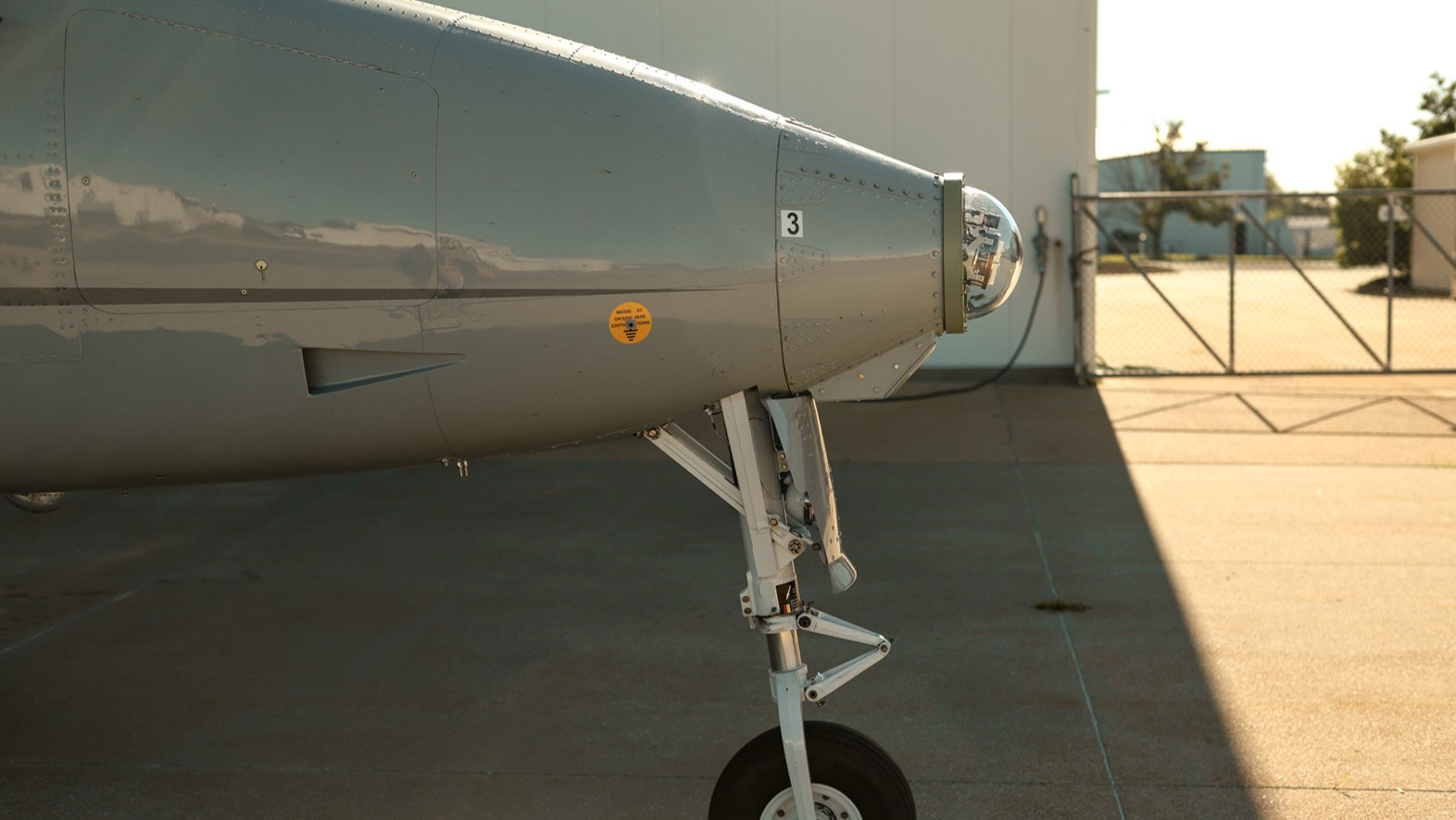
Boeing’s Ultra Low-Cost Seeker sits mounted to a Beechcraft 1900 ahead of a captive carry test flight to evaluate baseline seeker target detection and tracking Boeing’s Ultra Low-Cost Seeker sits mounted to a Beechcraft 1900 ahead of a captive carry test flight to evaluate baseline seeker target detection and tracking. (Photo by Chris Bishop)

Boeing is maturing an Ultra Low-Cost Seeker (ULCS) through testing milestones as it develops an affordable radar seeker for offensive and defensive weapon programs.

  • The team successfully tested the sensor’s design in an anechoic chamber to limit signal reflections, captive carry, and in high-speed flights on a scaled-down rocket.

Why it matters: ULCS reflects a new approach to seeker architecture, manufacturability, and affordability -- designed to dramatically reduce per-unit costs and enable precision munition employment at scale across programs.

  • In support of the Department of War’s priorities, ULCS uses a modular open systems design for rapid, high-volume production.
  • Boeing is evaluating the seeker technology for use across its integrated air and missile defense, direct attack, and cruise missile portfolios.

Driving the news: Earlier this summer, Boeing completed multiple test events, including captive carry testing from a passenger aircraft to representative-environment testing.

  • A Beechcraft 1900 flew ULCS over land and maritime environments to confirm baseline target detection and tracking.
  • At Spaceport America®, New Mexico, ULCS tracked an Unmanned Aerial Vehicle from the ground and was also placed on a surrogate rocket to track a reflector drone.
  • In all tests, ULCS survived acceleration and vibration and successfully detected and tracked targets.

How it works: The system uses commercial off-the-shelf components that Boeing adapted for military use.

  • After prototyping, rapid testing showed ULCS can survive military applications such as powered flight and acceleration.
  • ULCS is intended to support affordable mass for air, land, or maritime strike missions in all weather conditions and against moving targets.

Zoom in: Boeing is drawing on internal seeker-development and production experience for ULCS.

  • ULCS leverages our seeker expertise developed on programs like PAC-3 MSE, but delivers a different seeker capability that can be applied at low cost to numerous defensive and offensive products to address lower-complexity threats.

What they’re saying:

  • Bob Ciesla, vice president, Boeing Precision Engagement Systems: “We are developing ULCS with the goal of sharing a common sensor architecture across several of our programs. It is modular, producible and built with Weapons Open Systems Architecture to speed integration and future changes.”
  • Steve Wright, Boeing senior manager for weapon sensors and advanced guidance: “We still have more work to do but the rapid testing our teams have completed prove that this capability is real and will fundamentally change how we look at seeker affordability across our programs.”

What’s next: After rapid testing of ULCS, teams are analyzing test data and applying lessons learned to guide further development, including multiple flight tests in 2027 that more closely model end-use configurations.

Go deeper: Read more about Boeing's PAC-3 seeker here.