35 years ago, the C-17 first took flight

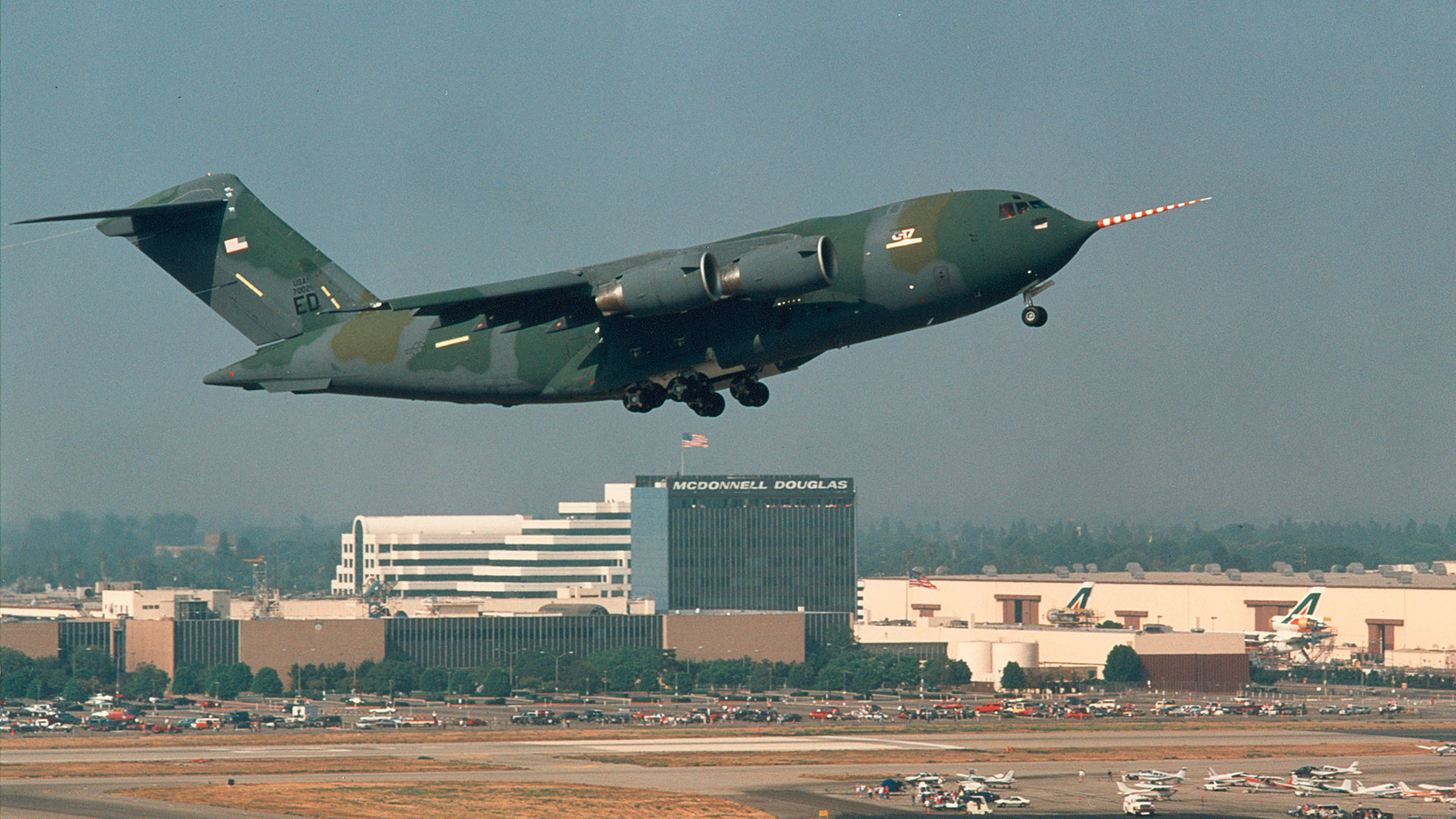
The C-17 Globemaster III completed its first test flight in September 1991, launching a new chapter in heavy airlift that will continue through 2075.

September 15, 2026 in Services, History, Defense

A large military cargo aircraft is flying low over an airport runway during landing approach, with its landing gear down and nose light visible. In the background are airport buildings, including a building labeled “McDonnell Douglas,” along with parked aircraft and runway areas under a hazy sky. First flight of the C-17 Globemaster III, September 15, 1991 in Long Beach, California. All photos courtesy of the Boeing Archives.

For decades, the C-17 Globemaster III has played an important airlift role around the world from humanitarian aid to combat missions. The high-wing, four-engine transport delivers large equipment, supplies and troops directly to small, austere airfields anywhere in the world. The aircraft holds dozens of world records, has completed millions of flight hours and is being maintained and modernized with intent to execute critical missions through 2075.

Sept. 15 marks 35 years since the aircraft’s first flight. Learn more about its journey as Boeing celebrates this milestone and readies the iconic platform for nearly five more decades of flight.

In the late 1960s, Boeing heritage company McDonnell Douglas began work on a response to a U.S. Air Force request for an Advanced Medium STOL (Short Takeoff and Landing) Transport (AMST). The resulting YC-15 prototype first flew on Aug. 26, 1975 and introduced a number of innovative features such as externally blown flaps, a system that uses engine exhaust to increase lift at low speeds. However, the Air Force decided against the AMST aircraft and terminated the program.
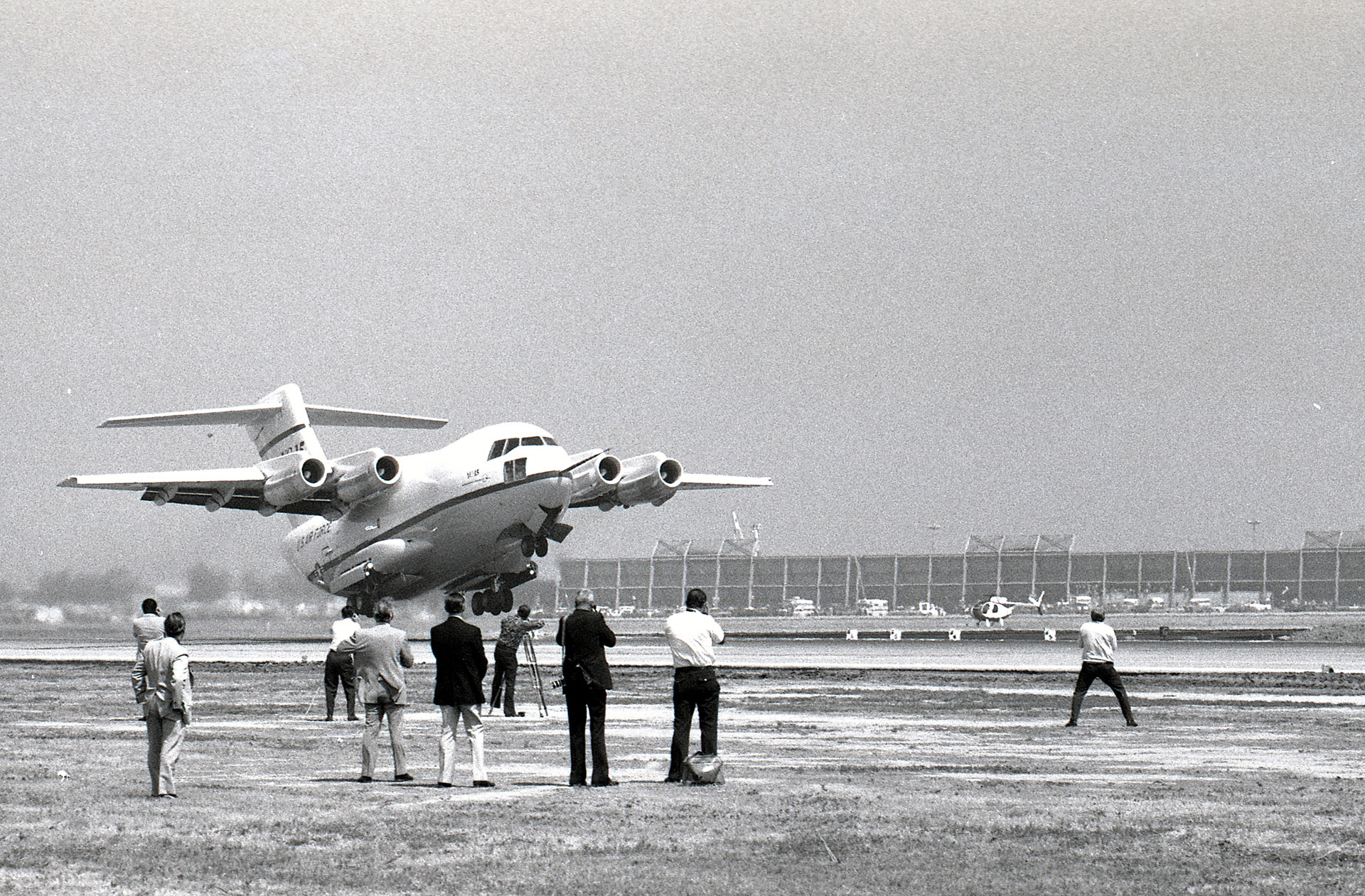
A black and white photo. A jet transport aircraft lifts off from a runway while several people stand nearby watching the takeoff. First flight of the YC-15

Although the YC-15 never went into production, much of its design was used to develop a proposal for the later C-X (Cargo Transport Aircraft-Experimental) program, which sought a larger transport that could be refueled in flight and use unpaved airfields so that it could fly anywhere in the world. McDonnell Douglas won the contract with its C-17 proposal in August 1981, meeting or exceeding all Air Force design specifications.

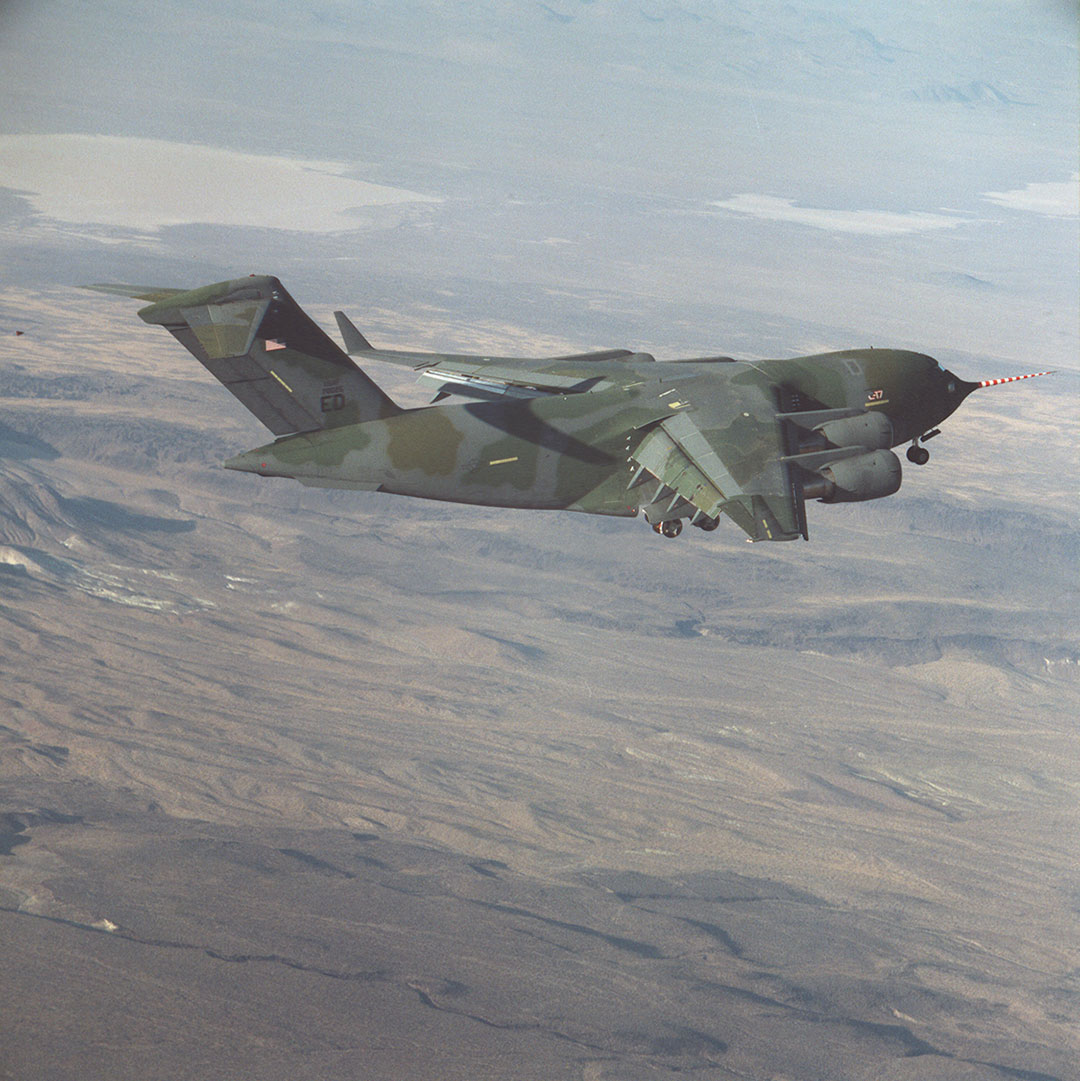
A camouflaged military cargo aircraft flies over a desert landscape, viewed from behind and slightly above, with its landing gear extended and a red-and-white striped probe extending from the nose. Aerial shot of the C-17 during its first flight
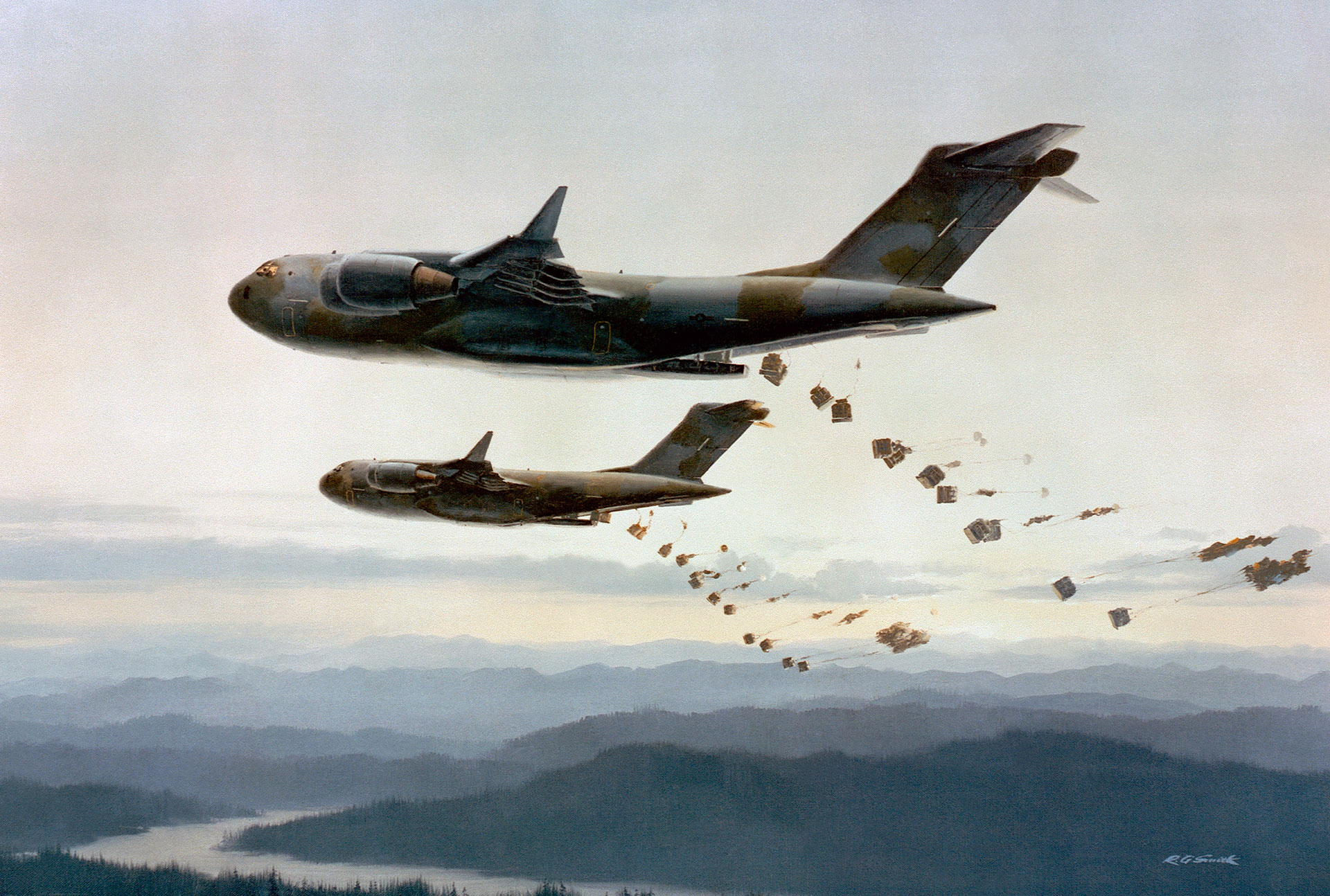
A military cargo aircraft flying over layered mountains releases multiple bundles of supplies or cargo from its rear, with a second aircraft flying below it in the same formation. Painting of C-17-Globemaster IIIs by R.G. Smith. The C-17’s name connects it to a legacy of heavy-lift cargo aircraft produced by heritage company Douglas: The C-74 Globemaster and C-124 Globemaster II.

Painting of C-17-Globemaster IIIs by R.G. Smith. The C-17’s name connects it to a legacy of heavy-lift cargo aircraft produced by heritage company Douglas: The C-74 Globemaster and C-124 Globemaster II.

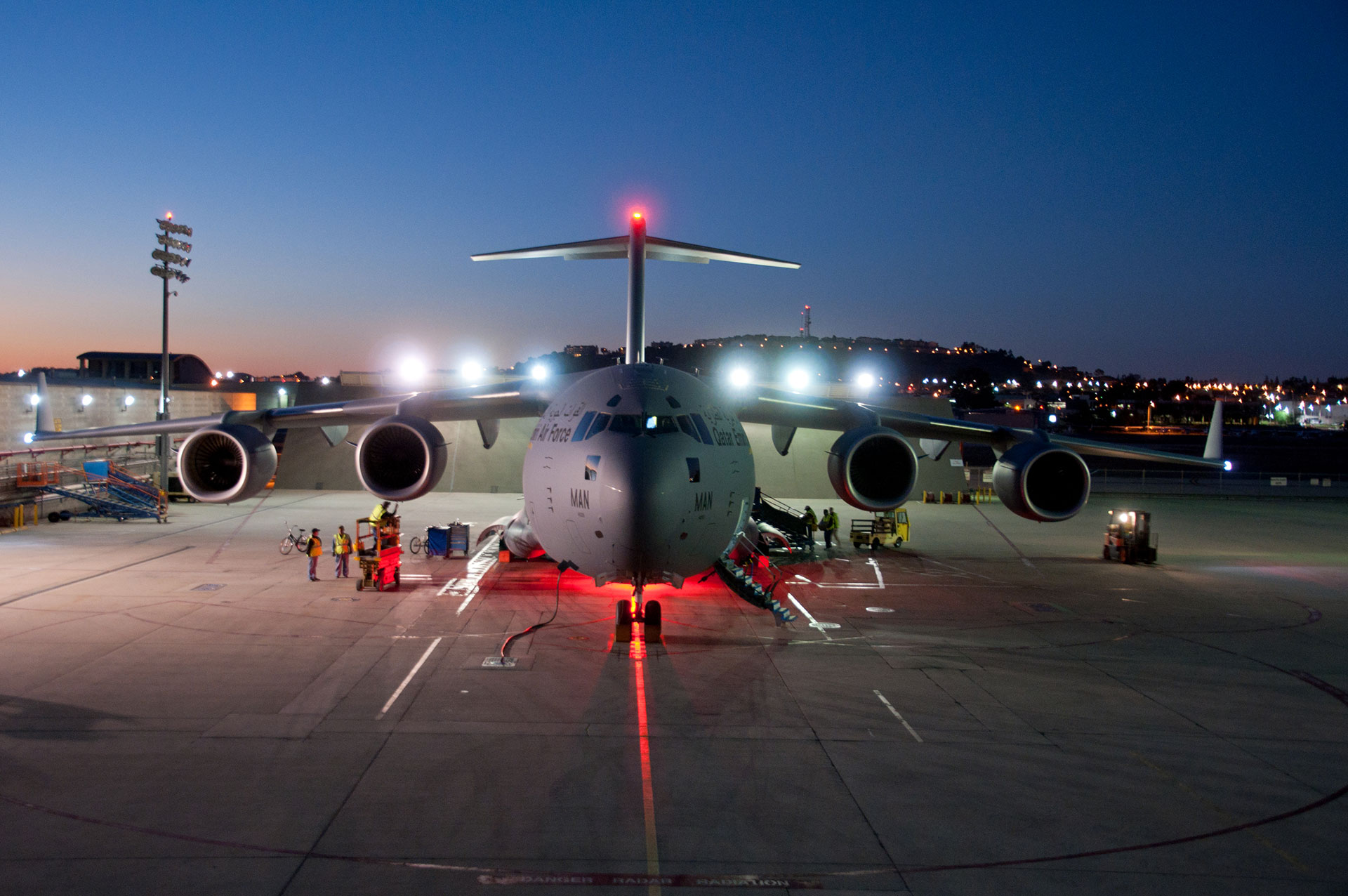
C-17 production at Long Beach ended in 2015. 275 C-17s currently operate, flying countless missions supporting tactical airlift, strategic delivery and humanitarian aid across the globe.

A large cargo aircraft is parked on a runway at dusk, viewed from the front with ground crew and service equipment around it under bright airport lights. The final production C-17 at Long Beach, November 2015

Boeing Global Services supports and modernizes these aircraft through an outcome-based services contracting structure that includes performance-based logistics, sustainment engineering, depot-level maintenance and on-base field services support.

In July, the company announced an agreement with AI data optimization company Pelico to modernize how C-17 heavy maintenance is planned and executed, and the Repair and Modification Services Team recently performed the first known field replacement of C-17 horizontal stabilizers.

Earlier this year, Boeing began outfitting C-17s with a new Air Data Reasoner, giving maintenance teams the ability to synchronize tens of thousands of data points to better predict maintenance needs so that parts can be positioned where they’re needed, when they’re needed. The U.S. Air Force also awarded Boeing a contract to modernize the flight deck of the C‑17 to help resolve avionics obsolescence and introduce an open architecture that enables plug‑and‑play enhancements that can be made affordably, as mission needs evolve.

Recent innovations, upgrades and strategic partnerships aim to preserve the proven, dependable airlifter and keep it at the forefront of performance, efficiency and interoperability for many decades to come.

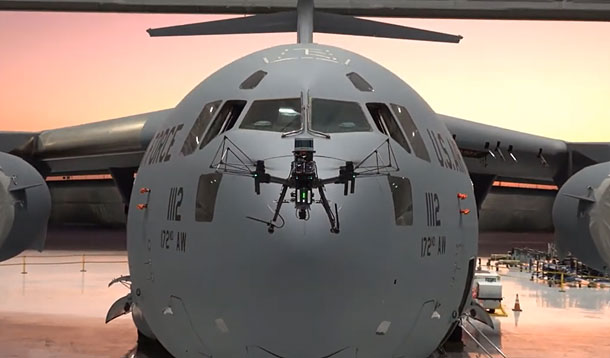
Front view of a large gray U.S. military cargo aircraft inside a hangar, with a drone mounted on its nose and the rear ramp open behind it. A drone completes a maintenance inspection of a C-17

By Allison Balderrama