
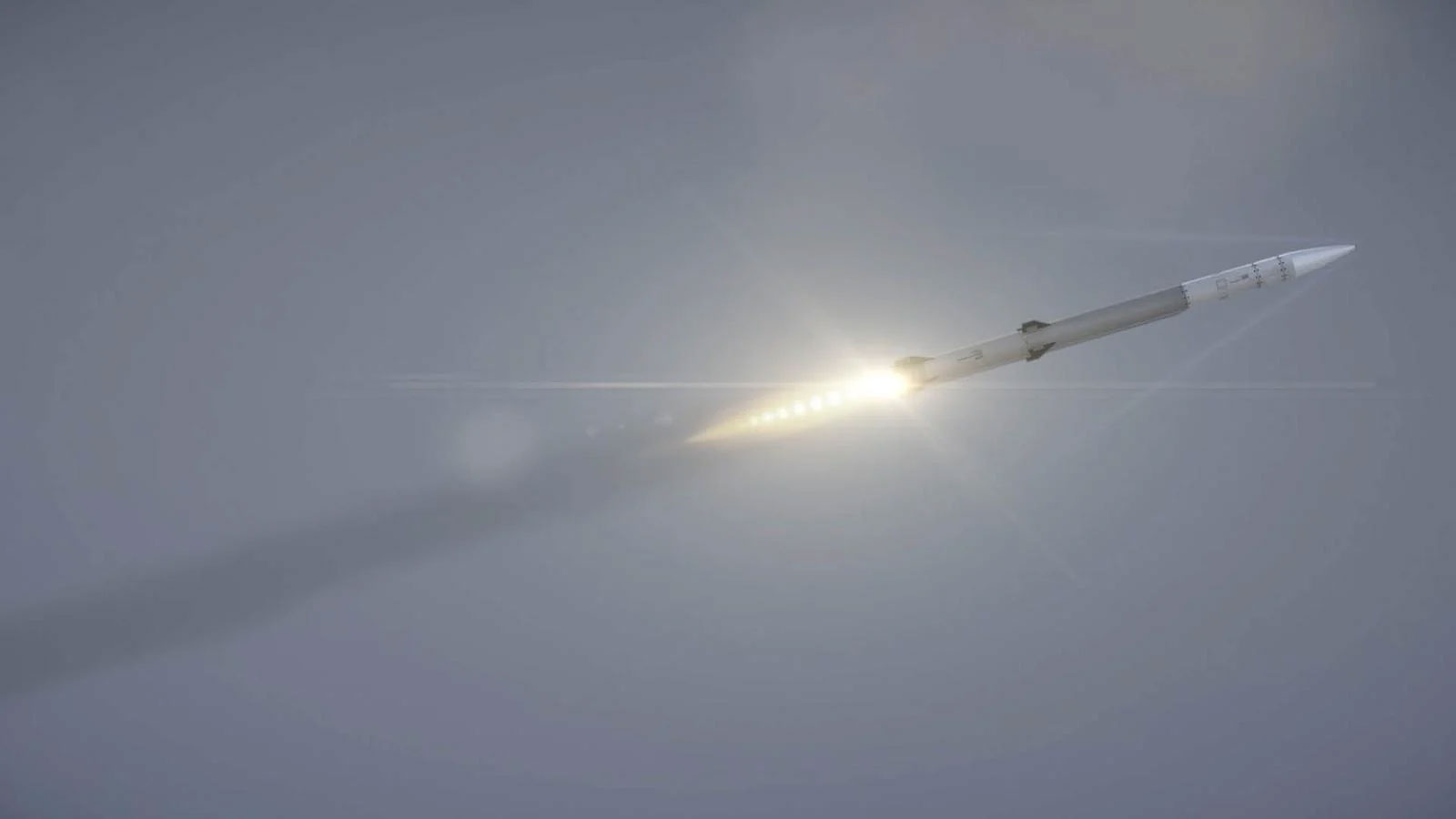
The U.S. Army selected Boeing to advance to the next phase of competition for the Integrated Fires Protection Capability (IFPC) Increment 2 Second Interceptor — a capability that will be designed to protect fixed and forward operating bases from cruise missiles, militarized unmanned aerial systems (UAS) and related aerial threats.
Why it matters: This down-select provides Boeing the resources to deliver an affordable, high-performance midrange interceptor that fills the gap between other short- and long-range defenses and allows for more interceptors in each magazine for base defense.
Driving the news: The U.S. Army’s decision begins Phase 2 of its IFPC Increment 2 Second Interceptor competition, with a detailed design, system development, integration, demonstration and a competitive capability demonstration to validate performance against Army requirements.
How it works: Boeing’s interceptor combines seeker technology, a compact form factor, a solid rocket motor supplied by Anduril Rocket Motor Systems and a Modular Open Systems Architecture (MOSA).
- MOSA enables faster, lower-cost upgrades by allowing seeker, avionics or software blocks to be swapped without redesigning the entire weapon.
- The design targets an effective engagement radius to defend against midrange threats.
Zoom in: Last December, Boeing partnered with Anduril for their innovative solid rocket motor capacity and to build an agile industry team capable of producing at scale for the IFPC Increment 2 Second Interceptor competition.
The big picture: Boeing’s solution emphasizes affordability, magazine depth, and speed-to-target to help address cruise missile and UAS threats emerging in recent conflicts.
What they’re saying:
- Bob Ciesla, vice president of Boeing Precision Engagement Systems: “Our scalable production approach is designed to provide a reliable, affordable layer of defense against a range of aerial threats to protect the warfighter with practical, dependable capability when it matters most.”
- Jim Bryan, executive director of Boeing Integrated Air and Missile Defense: “We welcome the opportunity to continue in this competition. By combining proven seeker expertise with a purpose-built interceptor, we are delivering thoughtful, effective advances in air and missile defense that meet mission needs.”
Go deeper: Read more about Boeing and Anduril’s strategic partnership here.
By Chris Bishop and Brett Anker