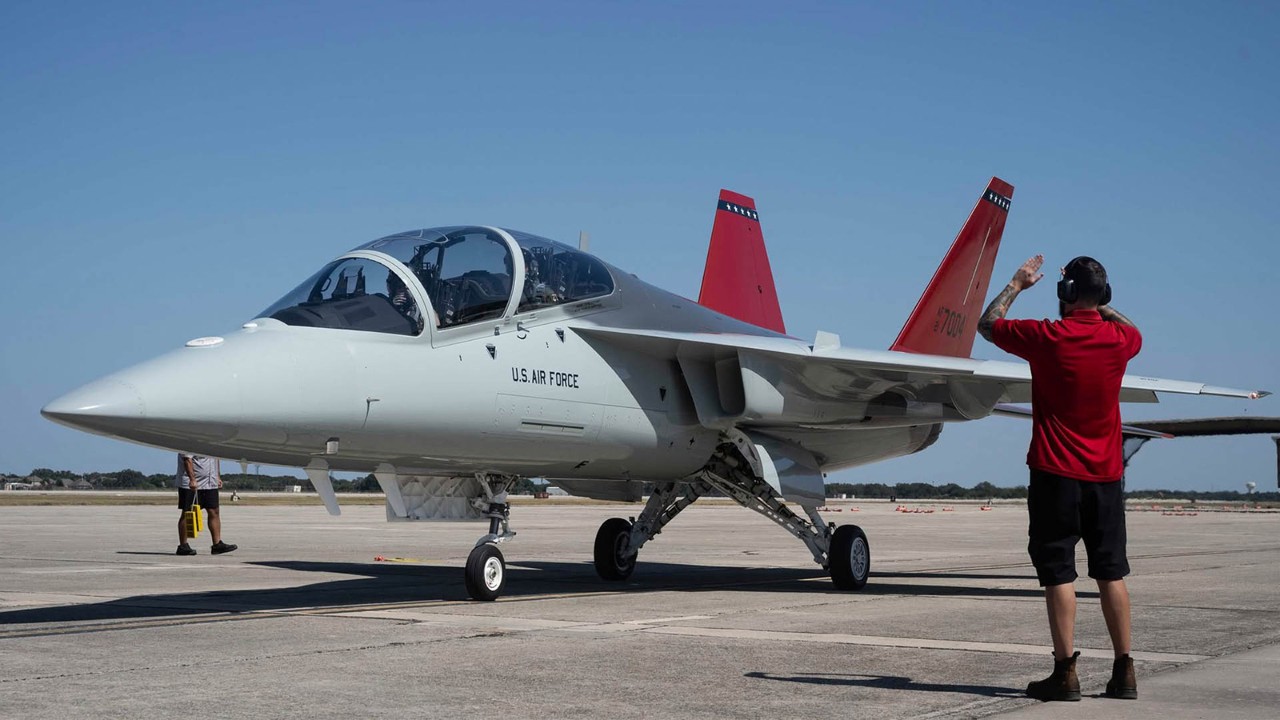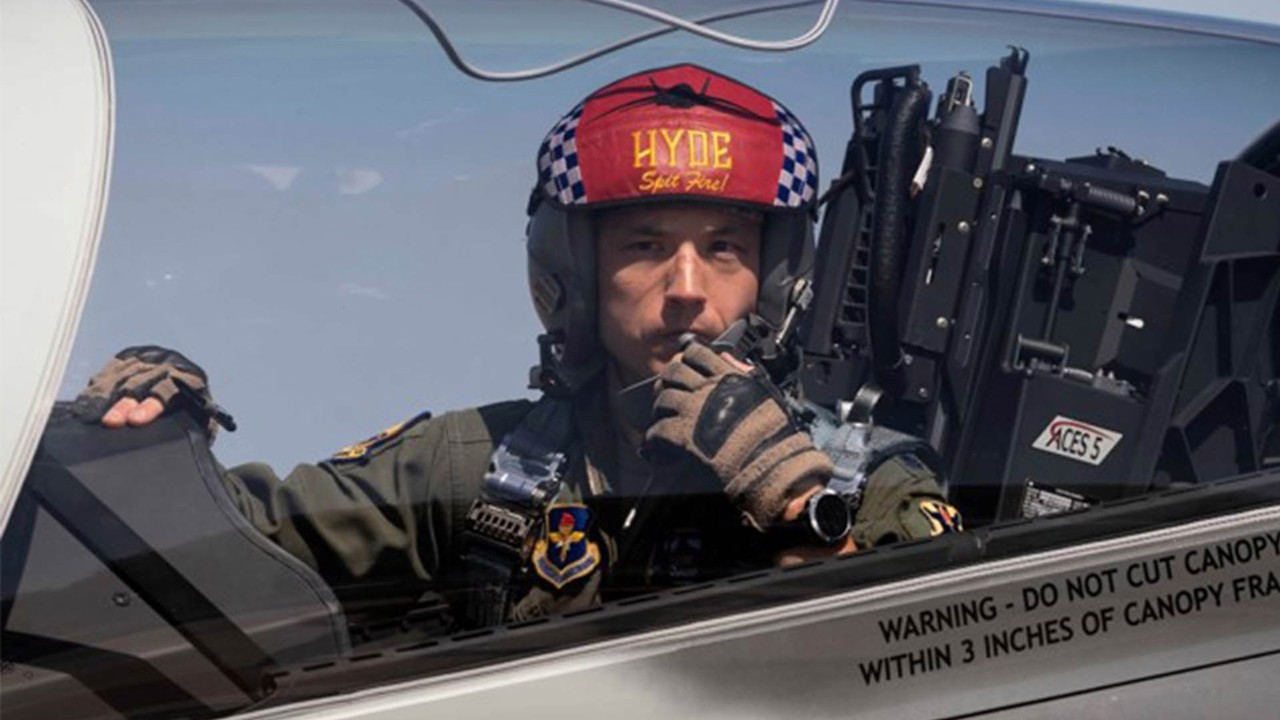
Landing a T-7A Red Hawk advanced trainer on Runway 15L at Joint Base San Antonio-Randolph, Texas, Steve “Bull” Schmidt, T-7A chief pilot for Boeing Test & Evaluation, and U.S. Air Force Lt. Col. Michael “Hyde” Trott, 99th Flying Training Squadron commander, represent a new era of pilot training for future aviators. A group of soon-to-be instructor pilots observes as the aircraft taxies to the intake hangar.
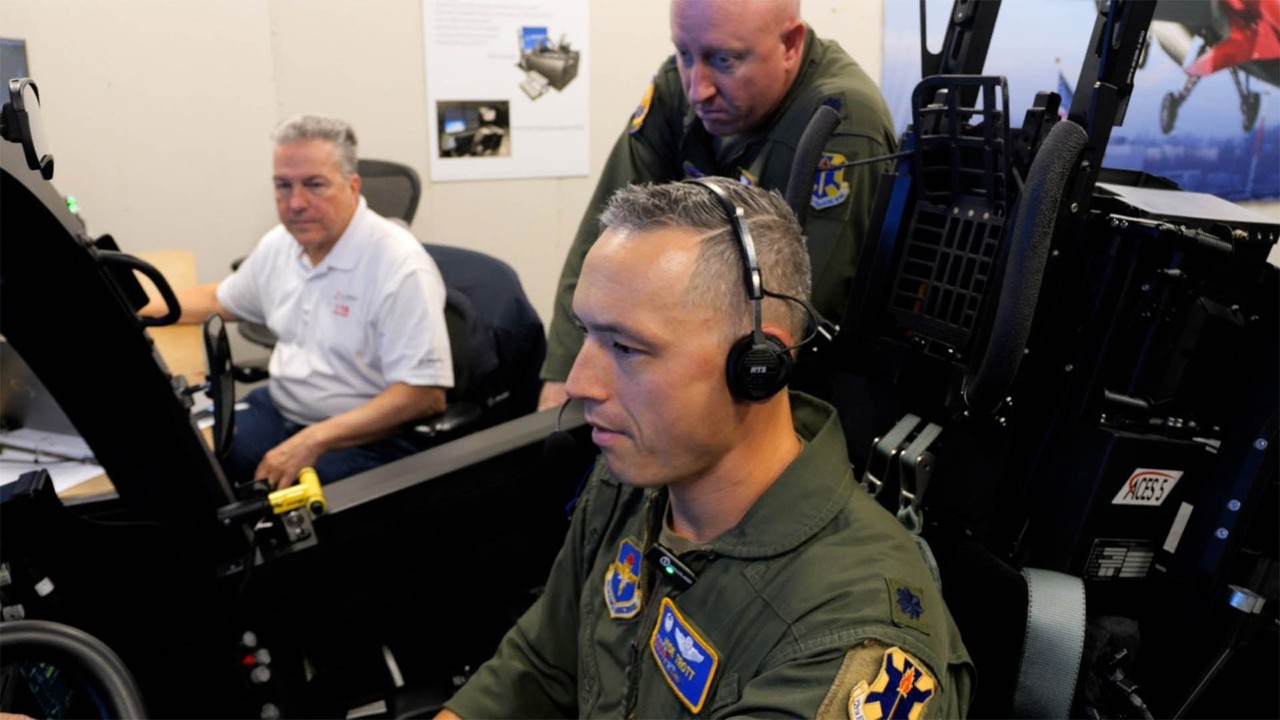
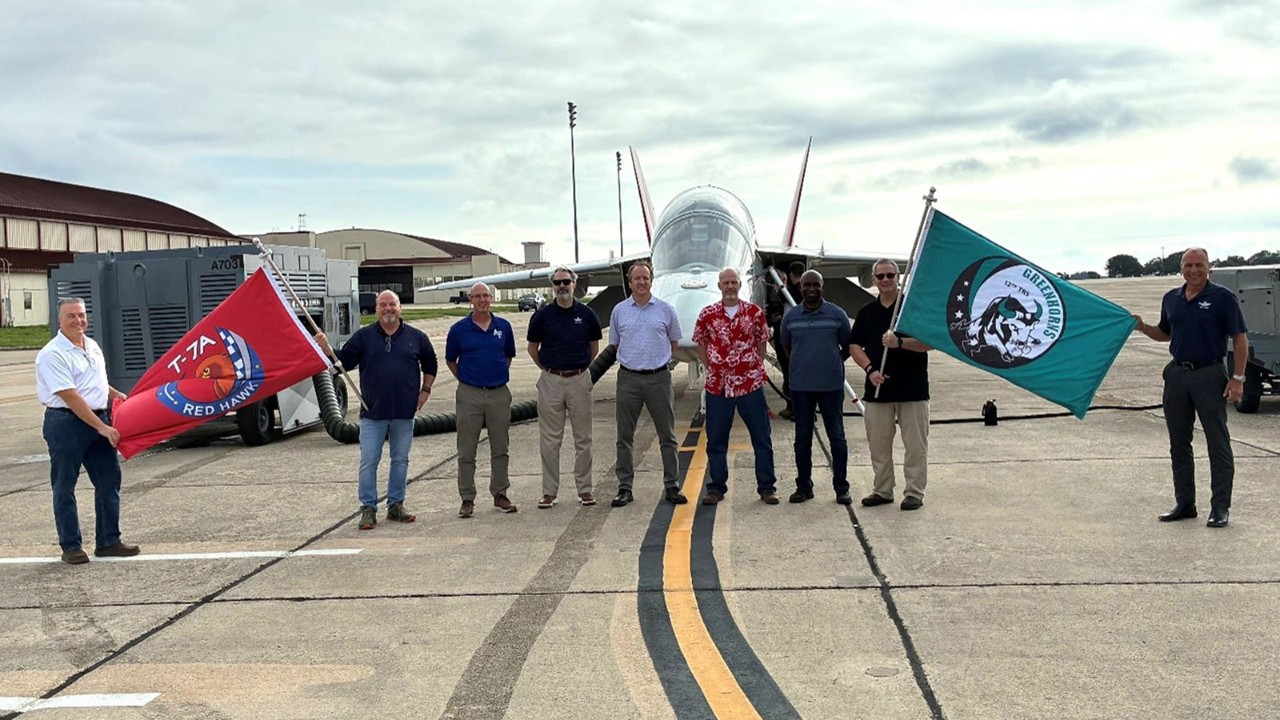
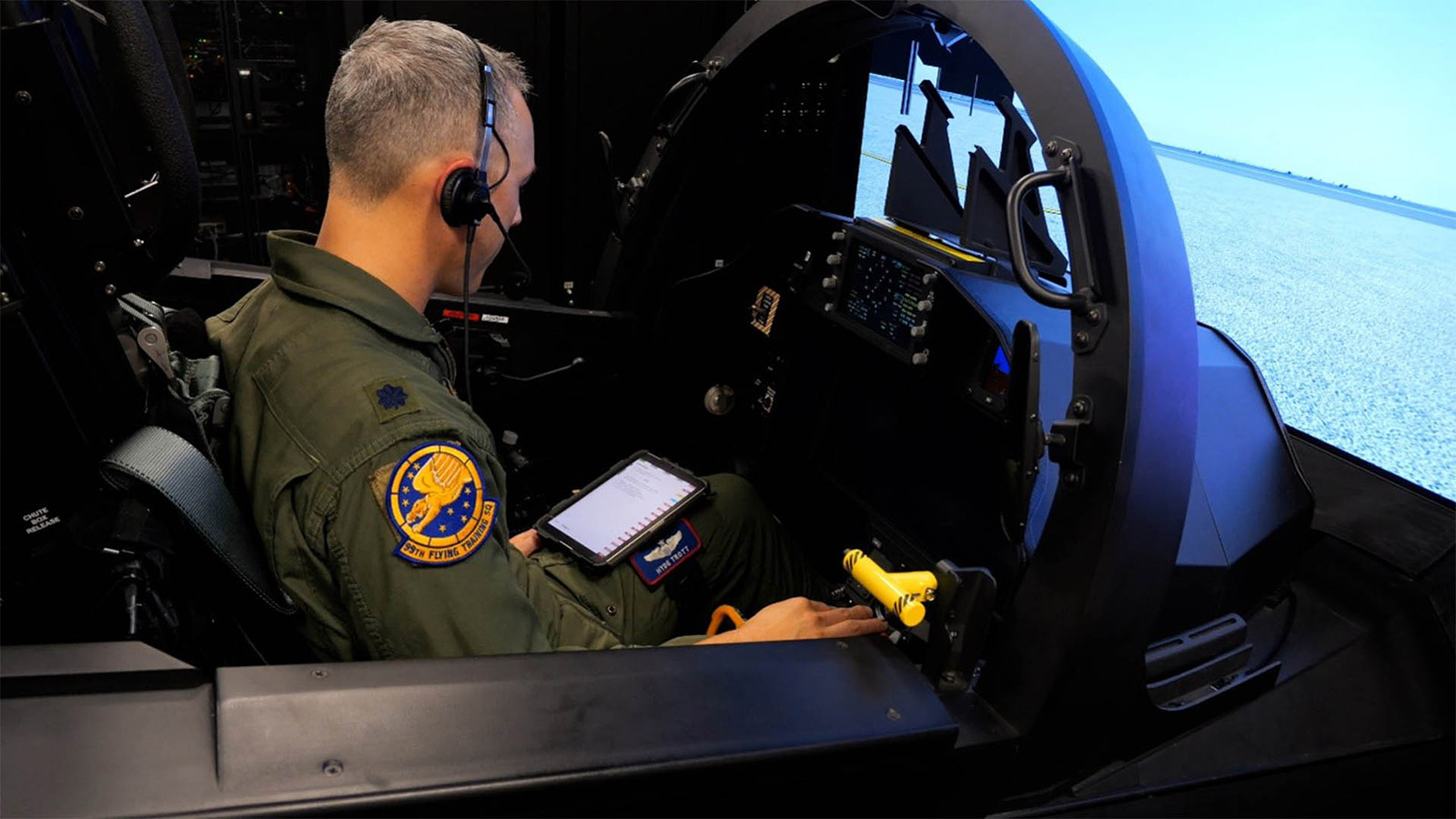
The seven contract instructor pilots have since completed their 31-day T-7A Red Hawk simulator course, marking a first for the U.S. Air Force and Boeing team. A second group of Initial Operational Test & Evaluation pilots and weapons systems officers has also completed this first phase of T-7A training.
Why it matters: The students were the first in history to use recently installed T-7A Red Hawk ground-based training system simulators at the U.S. Air Force’s Air Education and Training Command.
- The class establishes a new instructor base for the T-7A training system.
- The milestone prepares them to instruct peers, who will be responsible for training future fighter and bomber pilots and weapon systems officers.
“This outcome is the culmination of many years of design, build, test and instructional design development,” said Nathan Schelp, senior director, Government Training Engineering. “I’m so proud of this team of instructors and training services teammates hitting this milestone and ensuring our customers will learn to fly high-performance aircraft safely and proficiently.”
How it works: The simulators are designed to give aircrew a greater sense of realism before they climb into the cockpit of a T-7A Red Hawk. The training program was developed by teams in Defense, Space & Security and Global Services.
- The devices use 8K high-fidelity imagery and resolution.
- Integrated live, virtual and constructive capabilities add to the training environment.
“Before new pilots climb into the cockpit of a T-7A Red Hawk, they will have gone through some of the most realistic and demanding training ever,” said Steve Dobronski, T-7A Ground Based Training software engineer.
From the ground up: The program is also celebrating the accumulation of test points from flight tests at Edwards Air Force Base, California, which clears the way for the graduates to begin training in the actual aircraft delivered to JBSA-Randolph — thus enabling the team to deliver new capabilities for future instructors, and student fighter and bomber pilots.
“This team worked through challenges and constraints and still delivered a tested syllabus and data package for the advanced trainer on schedule,” said Sophia Halloran-Ritter, T-7A Red Hawk Engineering & Manufacturing Development program manager. “Reaching this point required total trust and dedication between our Boeing enterprise teams and the U.S. government.”
The big picture: The milestones follow years of training program development. A total of 351 airplanes and 46 leading-edge simulators are part of the U.S. Air Force program of record for fighter and bomber training.
What’s next: U.S. Air Force instructor pilots are beginning their Type 1 sortie training emphasizing aircraft familiarization and fundamental operations, including takeoffs and landings, navigation, instrument approaches, and systems employment. The training is a critical step in building Air Force instructor pilot cadre who will go on to teach at the Undergraduate Pilot Training bases in the years to come.
By Randy Jackson and Glynnis Richard