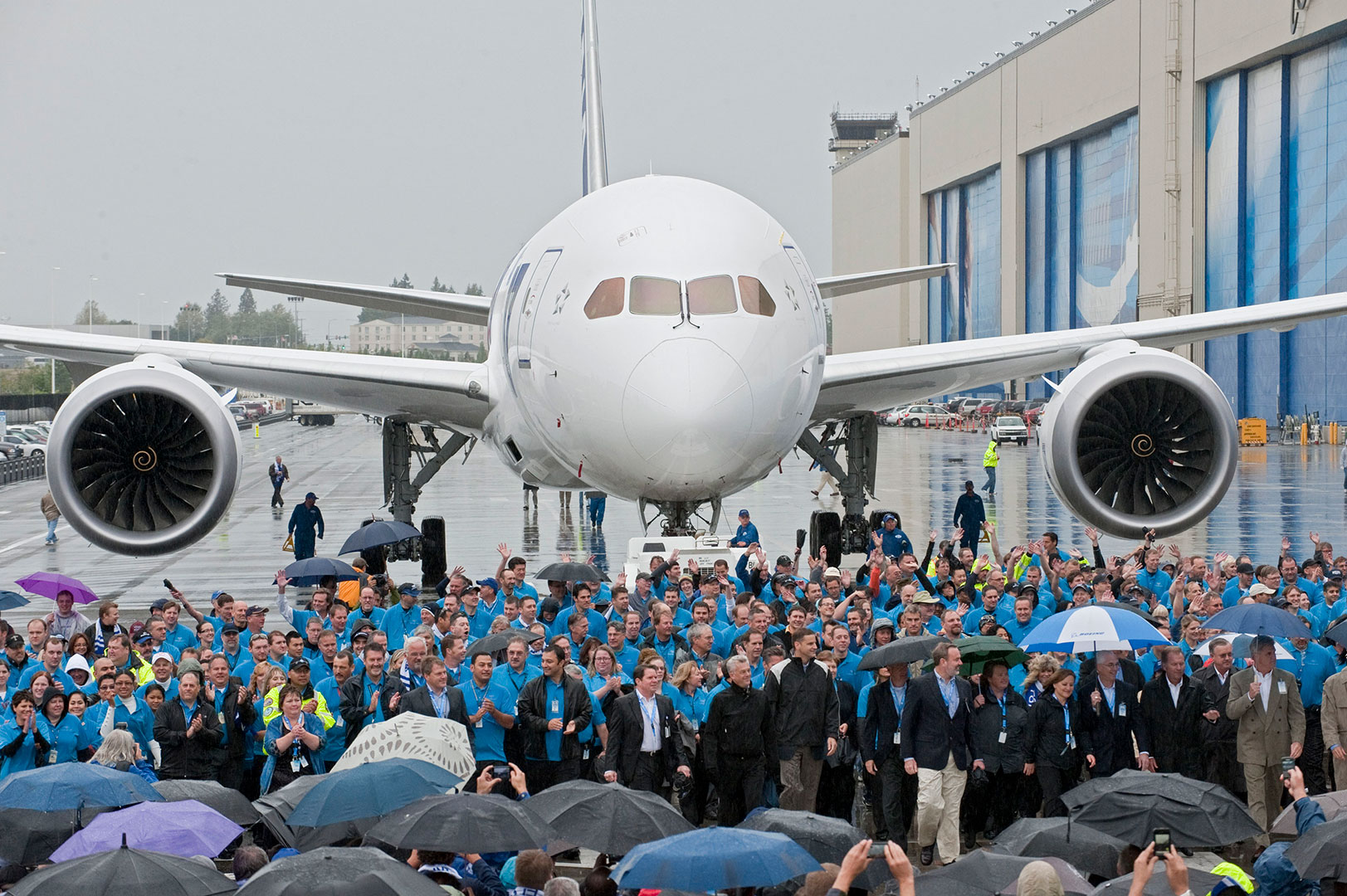
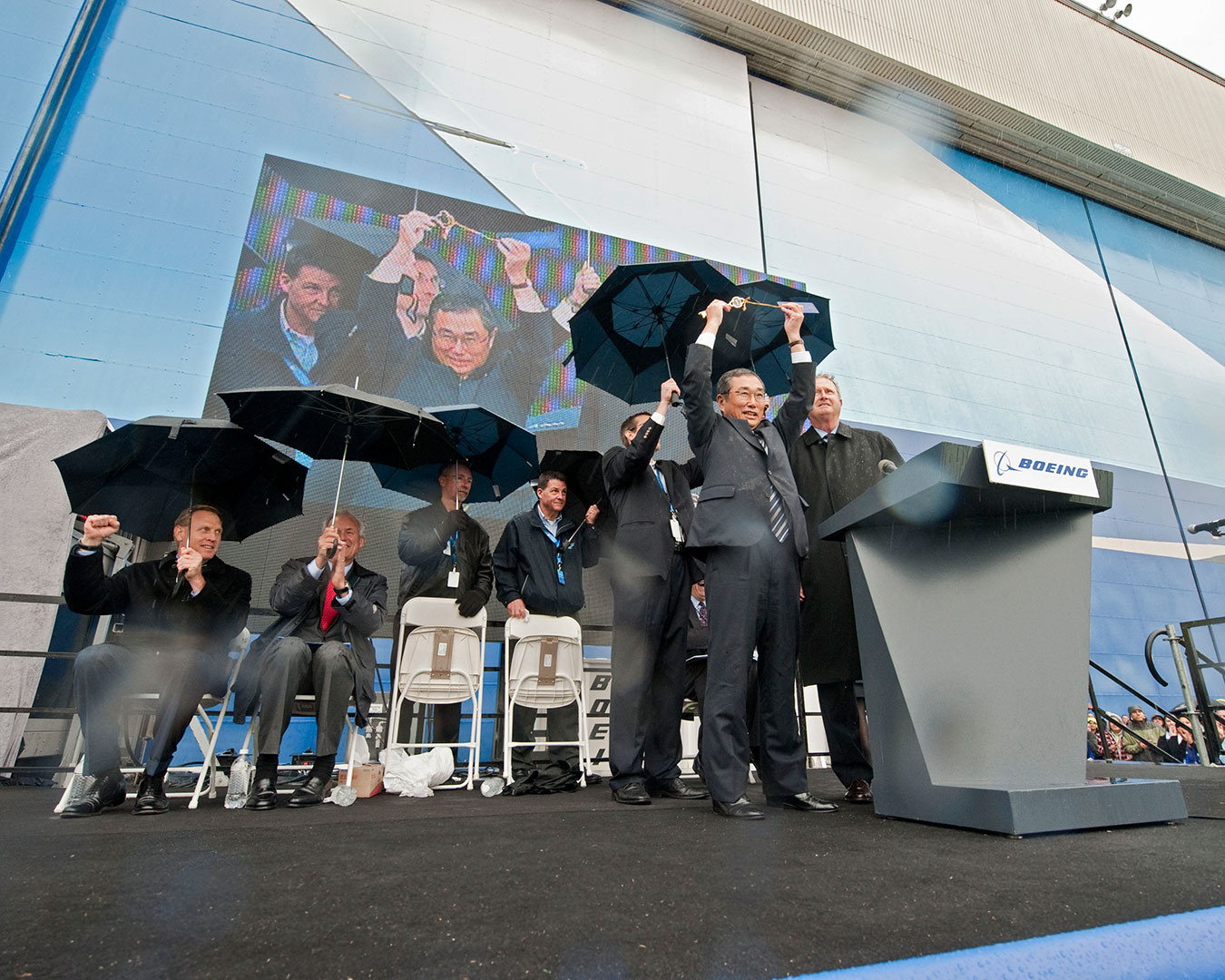
To mark the occasion, Boeing leaders handed over a ceremonial key to the new jet to then-ANA President and CEO Shinichiro Ito.
What that key unlocked for the 787 15 years later was far more than symbolic:
- More than 1,300 787 airplanes delivered to the global fleet, the fastest of any widebody program in history.
- More than 550 new nonstop routes have been opened between city pairs that were never previously served.
- More than 1 billion passengers have been carried to more than 85 countries.
Entry into service: The jet’s takeoff to Tokyo was just the beginning as the airplane prepared to enter service a month later, on Oct. 26, 2011.
“The real test is when you put it into service with our customers, how it performs,” said Mike Fleming, vice president of 787 customer services and support in 2011 and now senior vice president of Commercial Airplane Programs and Customer Support.
Early in service, the program fell short on some promises: deliveries were late and initial reliability did not meet customer expectations. Fleming said the team focused on recovery and delivered reliability improvements.
In the decade and a half since that first delivery, Fleming believes the 787’s performance has proven its value, giving airlines the ability to launch new routes, serve short-haul markets and fly long-haul missions.
“The 787 has become the workhorse for many of our customers’ fleets,” Fleming said. “It’s certainly one of the most versatile widebodies we’ve ever produced.”
A legacy that remains personal: For many, the 787’s lasting impact is rooted in the people who brought the Dreamliner to life in 2011 and those who continue to build on that work every day.
- “That first delivery represented the cumulative work of a lot of people,” Fleming said. “It was all of our partners and suppliers that worked closely with us, our customers who worked closely with us to shape the airplane so that it had the features that delivered the performance that they were anticipating in the market.”
- “Now I go to the airports and see all the 787s, I just kind of sit there and look around and go, ‘Look what we did,’” said Mike Carriker, the 787 chief pilot in 2011, who has since retired. “Fifteen years from now, I hope they’re saying, ‘Damn, that’s a great jet.’”
For others, the 787’s legacy is a story that’s still being written with the same sense of momentum that has always defined the 787: continuous progress, evolving capability and a family of airplanes with a long runway ahead of it.
“15 years ago, we never would have imagined that we'd be at 1,300 airplanes by this period of time. But the airplane family does so well. I could see it being another several thousand airplanes and then we'll improve it,” Sinnett said. “We’ll continue to make changes to the airplane. We'll look at other versions of the airplane. I mean, there's a lot ahead for this airplane family.”
By Kaitlin Stansell