
In October 1929, Archie League helped a small biplane land in heavy fog at Lambert Airport in St. Louis, Missouri – the first recorded instance of a pilot being guided to safety through a crisis by air traffic control. League had been on the job for 10 months at that point; when he was hired by the city on Jan. 1, 1929, he officially became the first air traffic controller in the United States. With a wheelbarrow and flags, he paved the way for an industry that became critical to the safety of airplane travel.
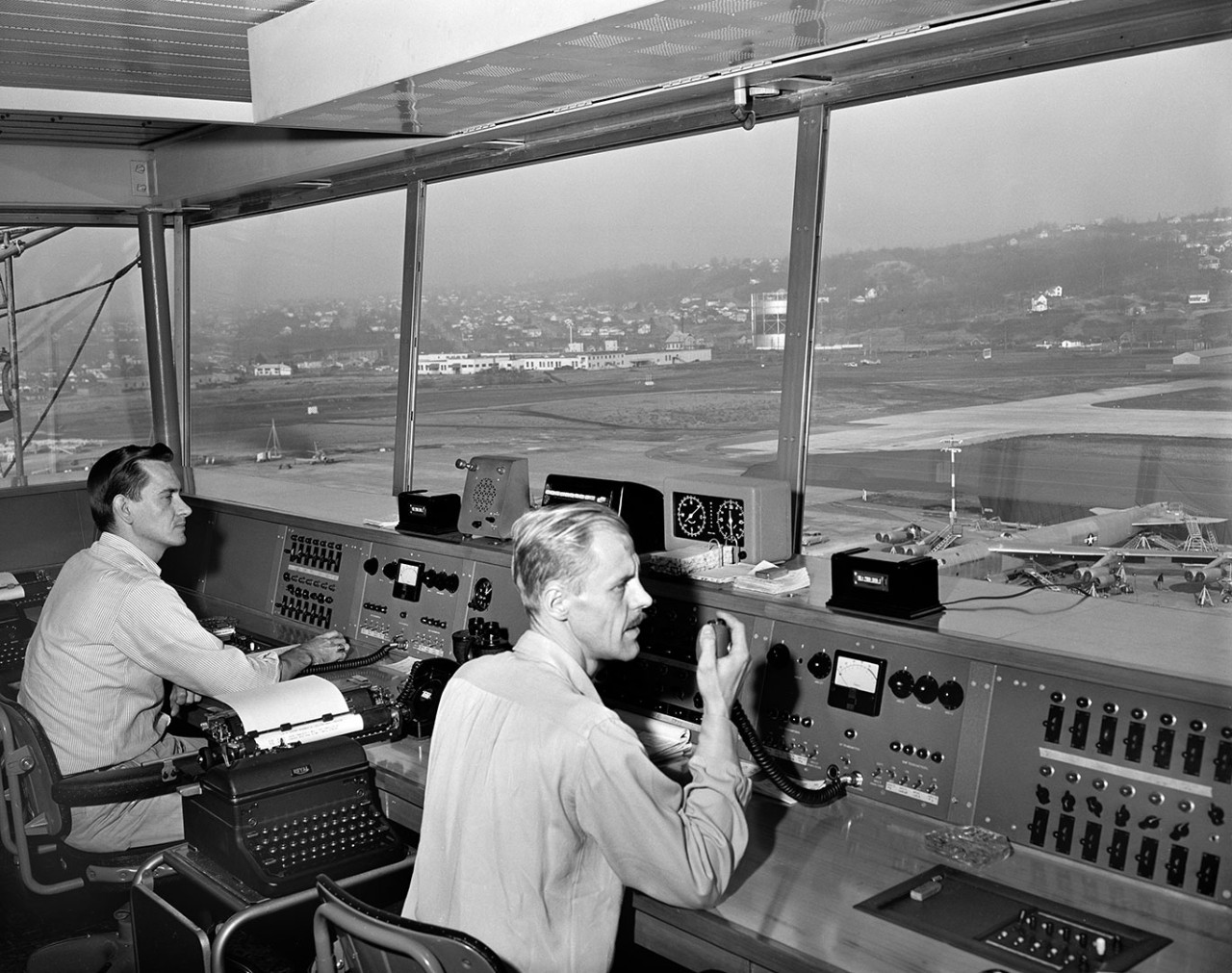
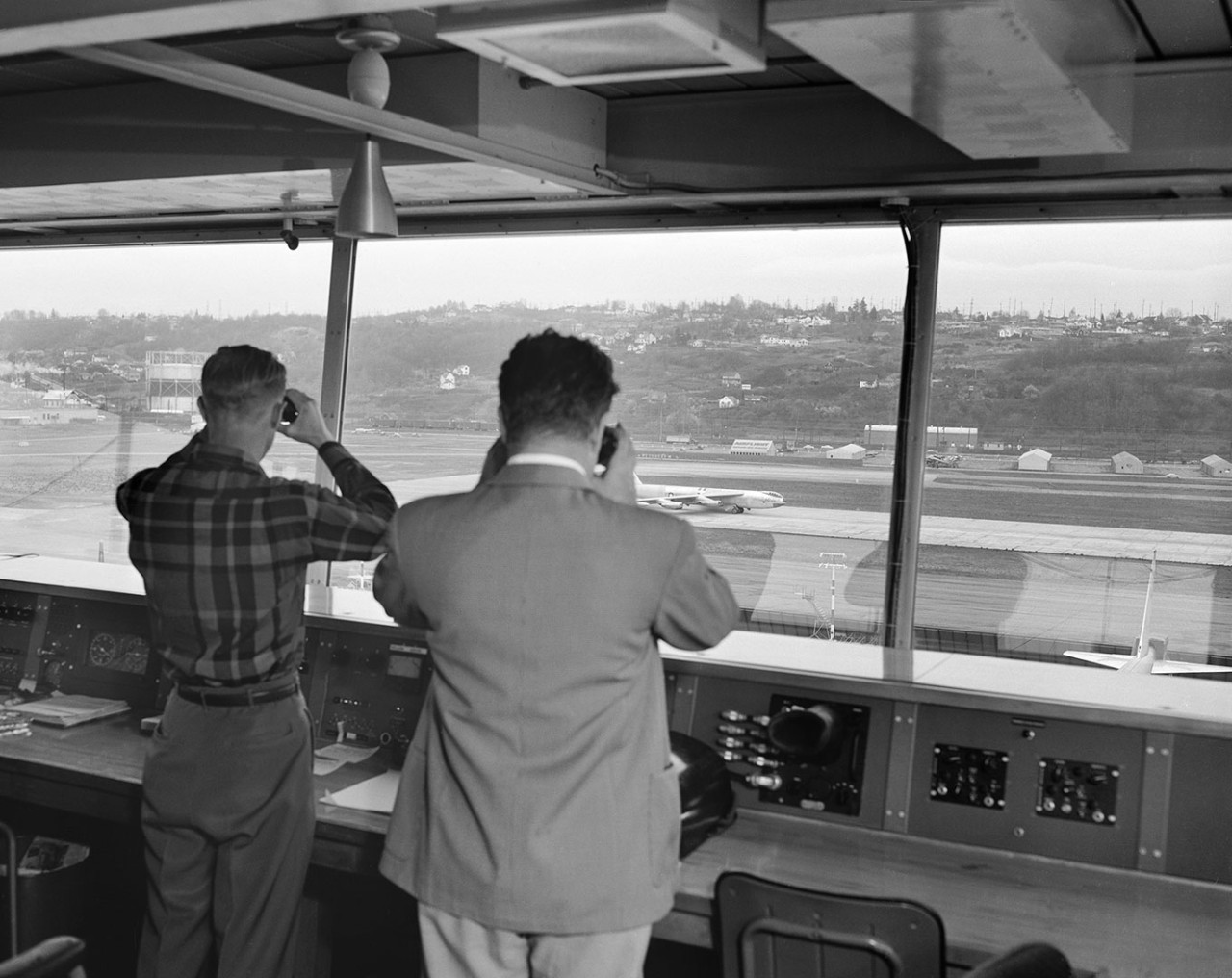
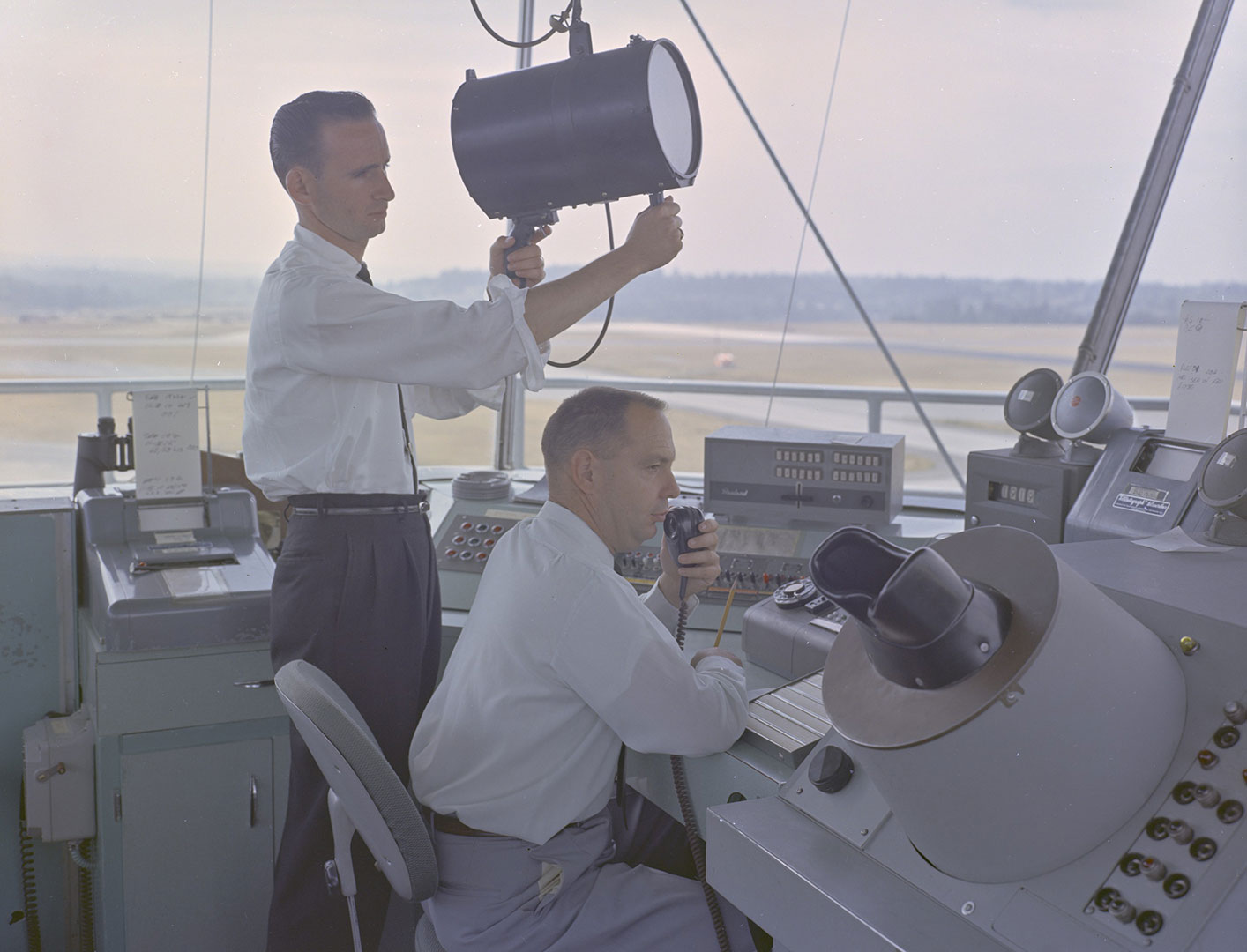 Interior views of the control tower at Sea-Tac Airport, 1961. (All photos courtesy of the Boeing Archives unless noted otherwise)
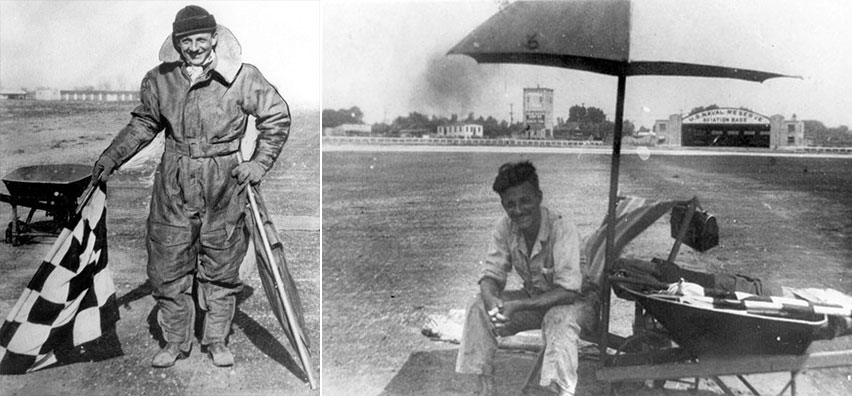 Archie League poses at Lambert Airport, St. Louis. His communication tools were a red flag for "hold" and a checkered one for "go." (Photo on the left courtesy of the Federal Aviation Administration. Photo on the right courtesy of the National Archives.)
The role of the control tower and its operators have evolved significantly since those early years, as have the tools pilots use to communicate. Before League, pilots would rely on their own visual cues and basic navigation equipment to help guide them to safety. But as air travel became more popular, safer and more efficient methods became a priority. So, companies like Boeing adapted accordingly.
To celebrate air traffic controllers like League, Boeing looks back at historical moments of air travel that helped lay the groundwork for an industry that is essential to the safe and reliable transportation of aircraft across the world.
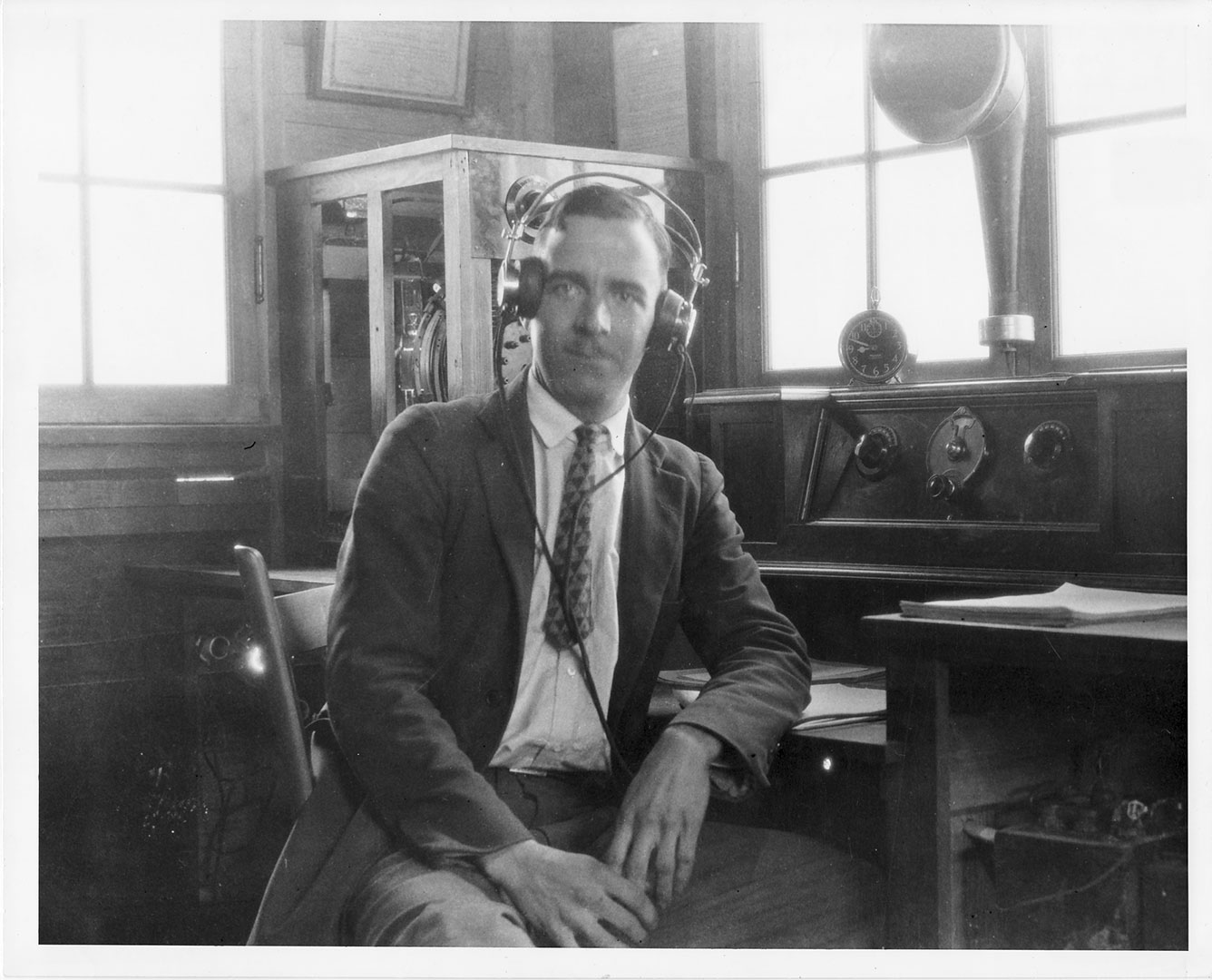 Pacific Air Transport Medford radio operator George Johnson in the radio room, c. 1926. Pacific Air Transport was formed to deliver the mail and passengers, launching the service in Medford, Oregon, on Sept. 15, 1926. The company was acquired by Boeing Air Transport in 1928 but continued to operate under its original name. Official ground radio stations in the United States were established by the U.S. Post Office Department on Aug. 20, 1920. They were placed along transcontinental air mail routes to provide weather and aeronautical data to aviators via Morse code. These eventually expanded into airway radio stations.
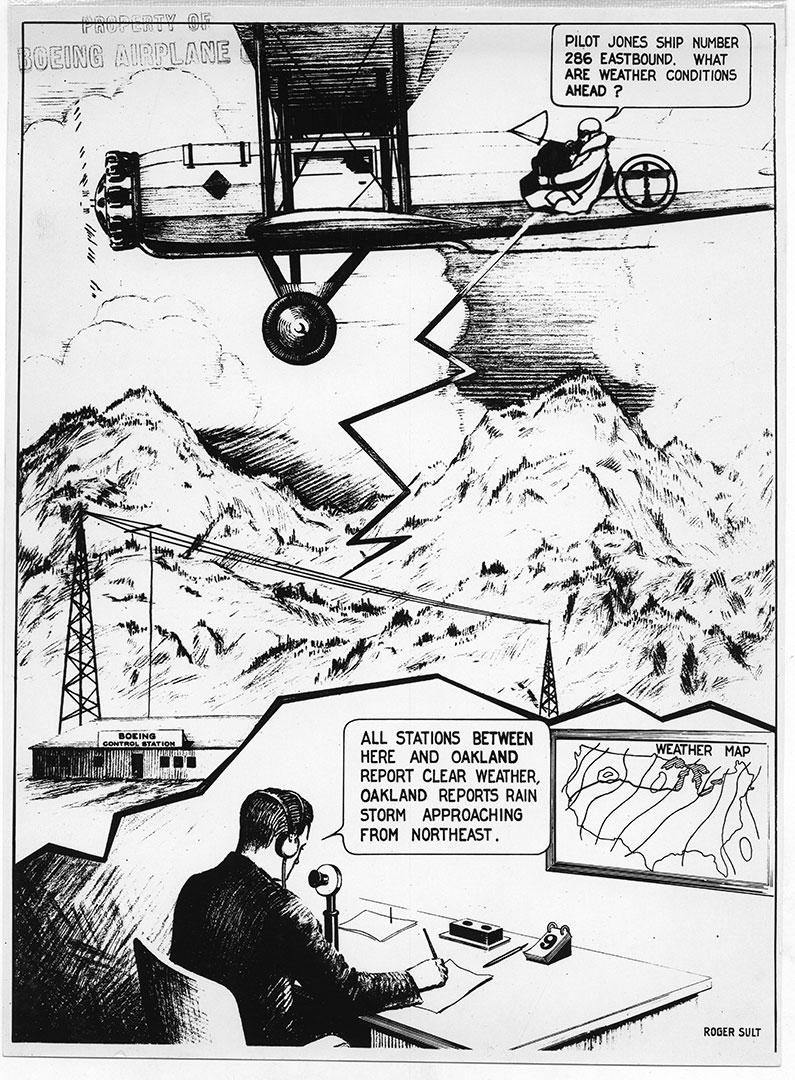 An illustration of two-way radio voice communications between pilot and ground station, 1928. In the late 1920s, Bill Boeing’s brother-in-law and radio communications pioneer, Thorp Hiscock, developed a two-way, high-frequency radio system for voice communications that could be mounted in the flight decks of commercial airplanes. Installations of the radio began in 1930 and were first used in Boeing’s Model 40B on a flight from Cheyenne, Wyoming. Pilots and controllers speaking directly was often faster and more practical than exchanging messages via telegraph key.
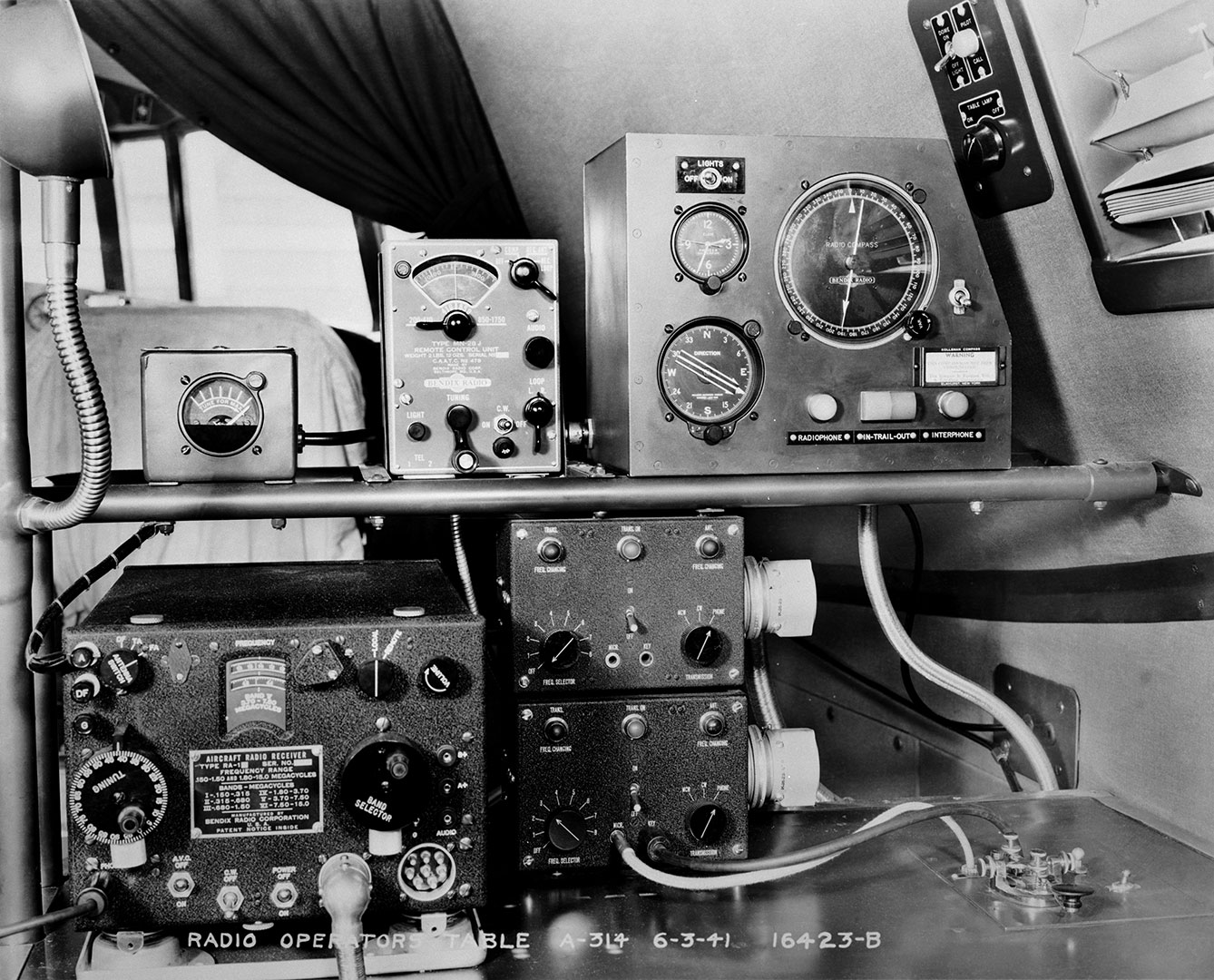 Radio operators table, Boeing 314 Clipper, 1941. The radio operator sat at a large, dedicated desk on the massive, 21-foot upper flight deck, located directly behind the pilots and alongside the navigator.
Archie League officially joined the federal service in 1937. He eventually became the FAA's Air Traffic Service director and retired as an assistant administrator in 1973, after serving for 36 years. From hand signals to flags to two-way radios, air traffic control has evolved with the planes themselves. Today, air traffic control remains a vital resource for preventing collisions, ensuring safe and orderly traffic flow and providing essential support to pilots of all aircraft.
By Anna Italiano